
Table of Contents
A backward tilt can mean the dog is relaxed, showing appeasement during a greeting, feeling worried or fearful, listening to a sound behind it, or experiencing physical discomfort. The exact meaning depends on the rest of the body language and whether this posture is a new behavior.
- Read the whole body: soft eyes and a loose posture indicate friendly appeasement, while a hard stare and stiffness signal fear or a need for space.
- Compare the carriage to your Pug's natural button or rose shape before assuming they are pinned.
- Sudden, one-sided flattening paired with head shaking, scratching, or a bad odor often points to an infection requiring veterinary care.
- Do not rely on this sign alone to predict a bite; always assess the trigger and distance.
What the backward tilt actually looks like on a Pug
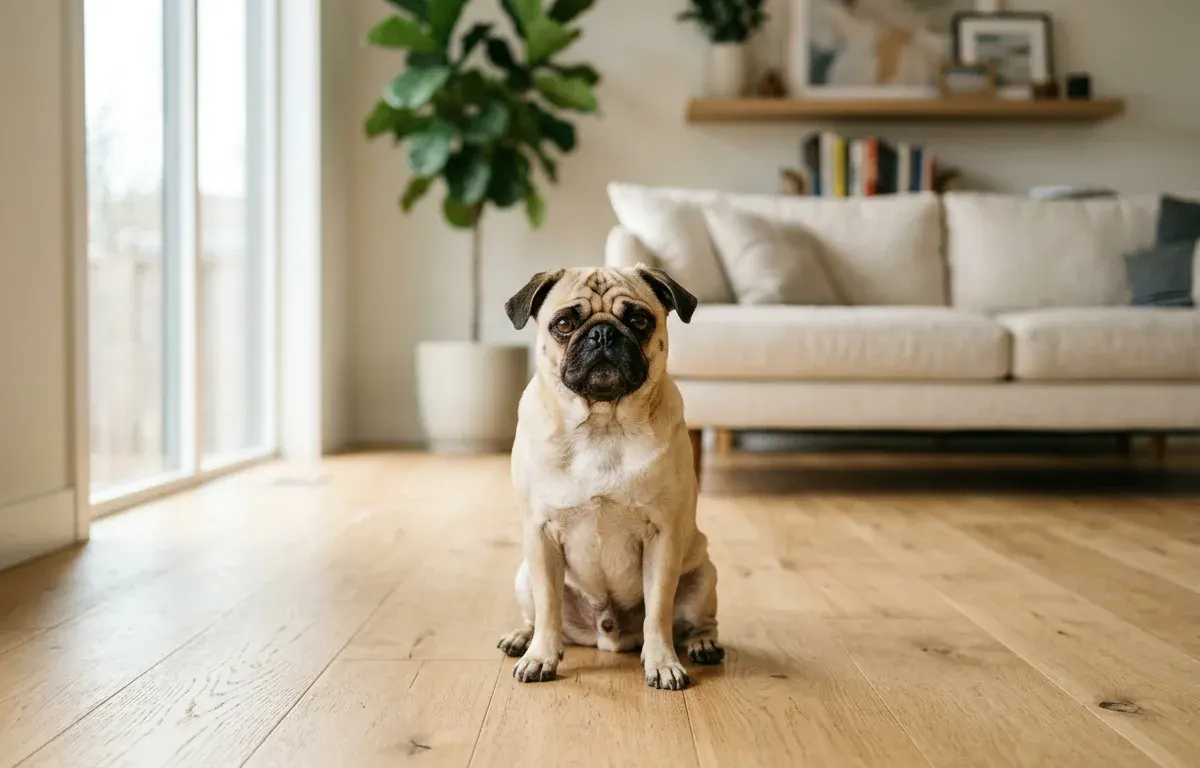
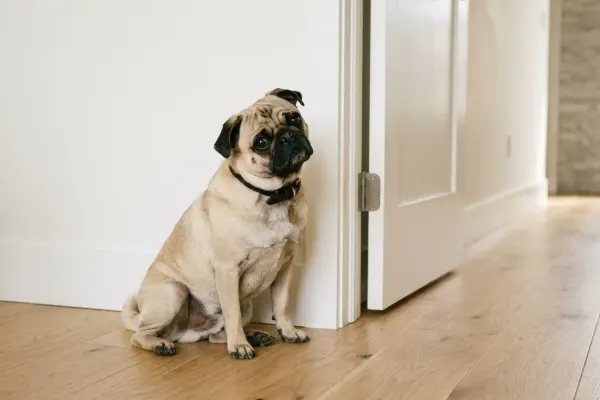
Before interpreting what this posture means, it helps to distinguish a slight backward or sideways angle from flaps held low and out, or those pressed tightly to the head. A Pug’s small, folded anatomy creates a different baseline compared to breeds with upright types.
According to the American Kennel Club (AKC), the breed standard defines two normal shapes: button and rose. Both are thin, small, and soft. This means a Pug’s natural resting state can sometimes mimic a pinned look. When observing your dog, establish its usual carriage and compare both sides. Note whether the change is momentary, triggered by a specific event, one-sided, or persistent. Understanding Pug anatomy, infection risks and care provides a helpful baseline for recognizing when the carriage signals discomfort rather than emotion.
Is the natural shape held backward? Button vs rose types
Sometimes, yes. The button or rose shapes fold rather than stand upright. They can look lower or farther back than another dog’s at rest. Use your own pet’s normal carriage as the baseline. A sudden, tight, or one-sided change is far more meaningful than the fold itself.
Read the whole body before deciding what it means
To tell a friendly interaction from stress or defensive risk, you must observe the dog’s entire posture. Soft eyes, a loose wiggly body, and a relaxed mouth make the backward tilt low-concern. Conversely, a closed tense mouth, whale eye (showing the whites of the eyes), crouched or stiff posture, freezing, and a hard stare completely change the reading. If you see these tense signs, give the worried dog space instead of more touch.
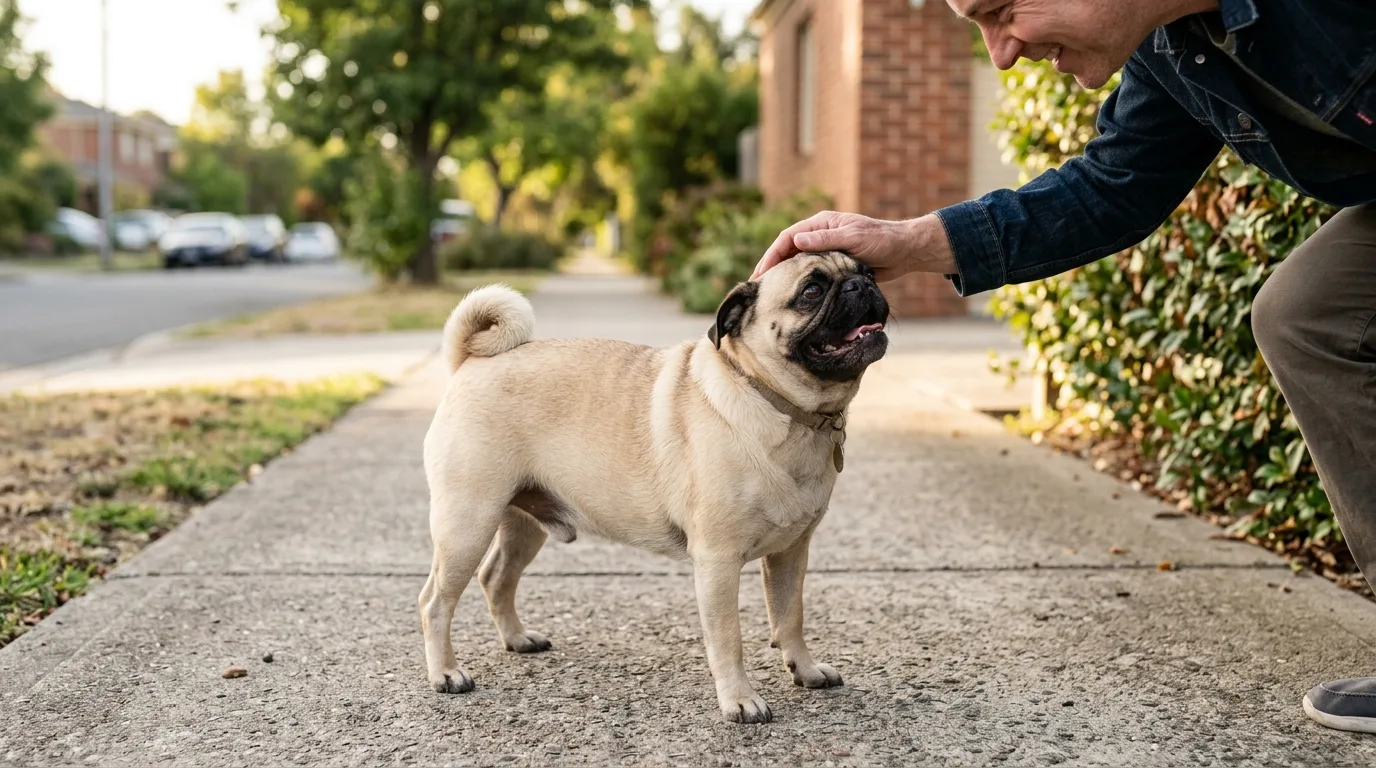
According to the American Veterinary Society of Animal Behavior (AVSAB), as dogs become nervous or defensive, their mouths close and they pin them back. Therefore, owners must interpret this posture alongside facial expression and body language. Similarly, noticing why Pug dogs lick so much can help identify anxiety early. Excited greetings might also feature flattening, which is why reading the tail carriage and looseness is crucial. For instance, Pug excitement urination often happens with a low sweeping tail and a slight backward pull, signaling overwhelming positive arousal rather than fear.
Slight tilt with a loose body: greeting, appeasement, or attention
A slight backward or sideways tilt during a loose, wiggly greeting is often an appeasing, socially cautious, or attentive signal. If the Pug has soft eyes, a relaxed face, easy movement, and seeks contact voluntarily, the posture is usually not a warning.
Tightly pinned with tension: fear, defensive arousal, or a need for space
Pinning alone does not predict a bite. However, holding them tightly down combined with freezing, a hard stare, a closed tense mouth, growling, or bared teeth means the dog may be frightened or defensive. Stop approaching, add distance, and keep children and other dogs from crowding the dog.
Common reasons a Pug pulls them backward
Treat this posture as a change in attention or emotional state, not a fixed translation. The useful categories for a Pug are relaxed social appeasement, uncertainty or fear, defensive arousal, listening behind, and physical discomfort. Always rank the meaning by the surrounding signals and the timing of the behavior, rather than using a flattening severity scale alone.
For example, noise or physical exertion can make a Pug look unsettled. Understanding Pug snorting triggers and warning signs helps separate normal respiratory noise from body-language signals of distress.
The posture shows the Pug is worried or overwhelmed
Create space and lower the demand. Let the Pug turn away, skip forced greetings, avoid reaching over its head, and move it away from the trigger if it stays tense. Reward calm behavior at a comfortable distance. Early socialization, guided by a Pug Bull Dog puppy training timeline, helps build confidence. You should consult a qualified professional if an adult dog’s fear is frequent, worsening, or involves growling or snapping.
One side back: listening and orientation
One side swiveling back while the body stays loose usually reflects attention to a sound behind the dog. It is more likely ordinary orientation when the movement is brief, asymmetric, and not paired with avoidance, stiffness, scratching, odor, discharge, or touch sensitivity.
When the backward tilt may signal pain or illness
The posture becomes a health concern when the change is persistent, sudden, one-sided, or paired with head shaking, scratching, redness, swelling, a foul odor, discharge, or pain on touch. These are signs consistent with local inflammation that warrant prompt veterinary guidance.
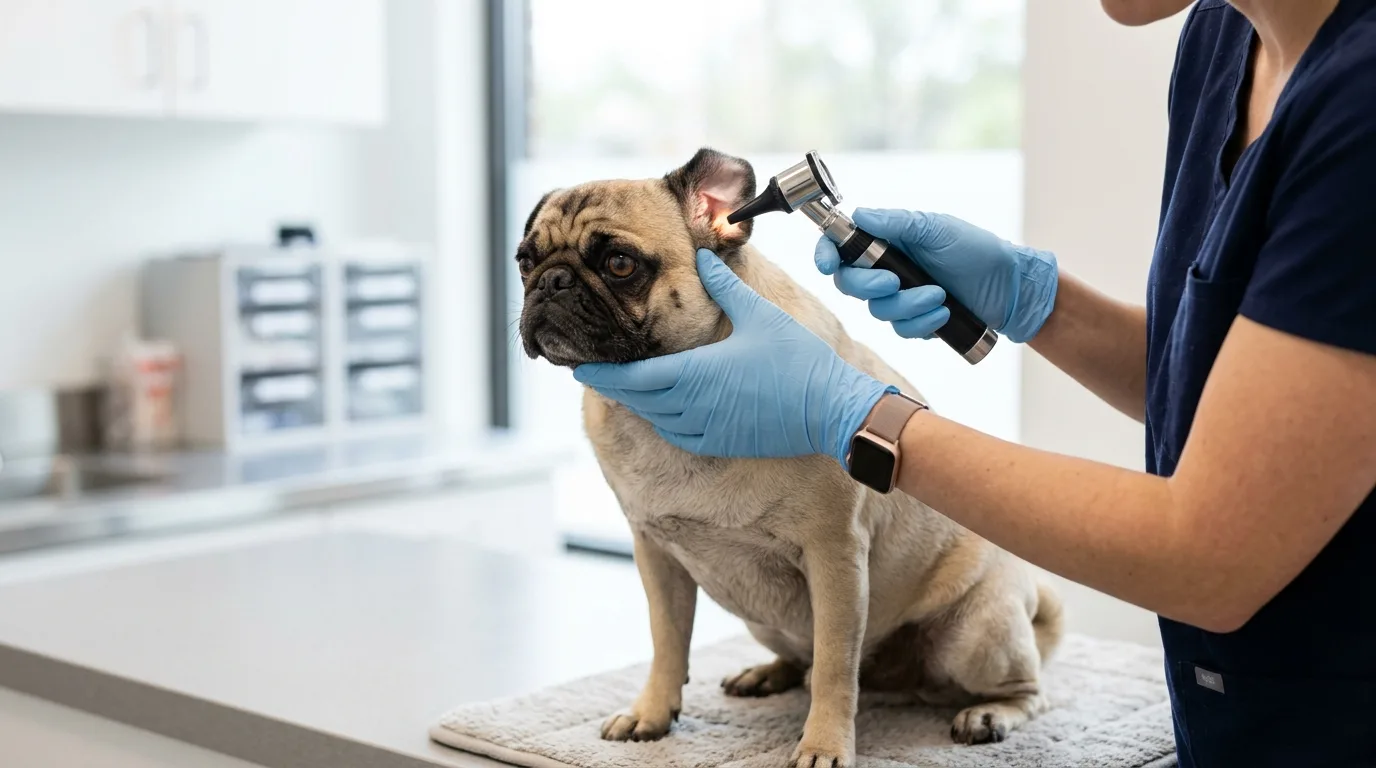
According to the Merck Veterinary Manual, clinical signs of otitis externa (outer infection) include head shaking, a foul odor, redness, swelling, and scratching. Only a veterinary exam can identify the underlying cause, whether it involves foreign material, parasites, yeast, or bacteria. Virbac notes that allergies are the leading cause of such infections in dogs. Understanding a comprehensive daily Pug care routine can help owners spot these physical changes early.
Red flags that need veterinary advice
Contact a veterinarian promptly if the pinned look appears alongside pain, repeated head shaking or scratching, a bad smell, discharge, redness, swelling, a new one-sided change, or distress when touched. Seek urgent advice for balance problems, falling, a marked head tilt, or severe pain, as these can indicate deeper middle or inner issues.
Note: Do not put vinegar mixtures, essential oils, or leftover medication into a painful or inflamed area unless a veterinarian tells you to. Irritating home remedies can worsen swelling and secretions.
Why self-treatment can miss the cause
You cannot safely treat the discomfort at home without knowing the exact cause and whether the eardrum remains intact. Problems can involve allergies, parasites, foreign material, yeast, bacteria, or deeper disease. Treatment depends on exam findings. A veterinarian may use an otoscope and cytology to evaluate the canal before choosing the appropriate treatment.
A 60-second observation checklist for the backward tilt
Pause before touching or correcting your dog. Follow this simple checklist to observe the situation:
- Check whether the flaps are normal for your Pug’s baseline shape.
- Scan the eyes for softness or a hard stare.
- Look at the mouth for relaxation or tight closure.
- Assess the body for looseness versus stiffness.
- Identify any external triggers or recent changes in the environment.
- Check for physical signs like redness or odor.
If the behavior recurs, record a short video from a safe distance and share it with a veterinarian or qualified professional.
FAQ
Why does my Pug pull them back when I pet it?
It is often relaxed or socially appeasing if the Pug chooses contact and has soft eyes, a loose body, and a relaxed face. Stop and give space if the dog turns away, stiffens, repeatedly lip-licks, freezes, or seems sore around the head.
Is the pinned-back look always aggression?
No. This posture can mean fear, uncertainty, appeasement, listening, or discomfort. Treat tight pinning combined with a hard stare, a stiff body, growling, bared teeth, or freezing as a request for distance and a possible safety concern.
Why is this position held all the time?
First, compare it with your Pug’s normal button or rose shape. If the posture is new, asymmetric, or paired with scratching, head shaking, odor, discharge, redness, or pain, arrange a veterinary assessment to rule out an infection.
Should I clean the area if they are held back?
The position alone is not a reason to clean. If there are signs of discomfort or inflammation, seek veterinary guidance. Inappropriate home remedies can irritate the area and worsen the problem.
Leave a Reply