
Table of Contents
Do pug dogs pee when they are excited? Yes, pug puppies frequently leak urine when highly stimulated. Excitement urination is an involuntary physiological reflex where a sudden surge of adrenaline temporarily relaxes immature urethral sphincter muscles. It is not behavioral defiance or a house-training failure. Most young pugs outgrow this reflex as their neuromuscular bladder control matures, provided owners implement low-arousal greeting routines and avoid scolding.
- Excitement urination is an involuntary reflex triggered by sudden emotional arousal, not deliberate disobedience.
- Young puppies are most susceptible because pelvic floor and sphincter muscles are still developing.
- Body language during excitement urination involves eager tail wagging and jumping, differing from the cowering posture of submissive urination.
- Scolding or punishing an excited pug worsens accidents by elevating anxiety and emotional overarousal.
- Veterinary evaluation is necessary if urination occurs during sleep, contains blood, or begins suddenly in an adult pug.
What is excitement urination in pugs?
Excitement urination is the involuntary release of urine during moments of intense emotional stimulation. When a pug experiences sudden happiness, such as when family members return home, when guests arrive, or during energetic play, the central nervous system releases a burst of adrenaline. This sympathetic nervous surge overwhelms the puppy’s developing urinary tract, causing the urethral sphincter to open momentarily.
Unlike purposeful elimination, excitement urination happens rapidly while the dog is actively engaging with people. The volume of urine is usually small, ranging from a few drops to a modest puddle. Understanding the distinctive physical traits of the pug breed helps explain why this occurs: their compact toy build means a smaller bladder capacity, which leaves less margin for error when muscle tension spikes. Excitement urination is purely neuromuscular. The dog does not consciously decide to void; rather, high physiological arousal bypasses voluntary bladder control before the brain can signal restraint.
How common is this in pugs and why?
Excitement urination is widespread among toy breeds, and pugs are especially prone due to their affectionate, people-focused nature. Bred historically as companion dogs, pugs form deep social bonds and greet human companions with whole-body enthusiasm. Their excitement often manifests as energetic jumping, vocal snorting, and rapid body movement.
According to training and developmental guidance from the American Kennel Club, puppies show the highest incidence of excitement urination between early puppyhood and 12 months of age as neuromuscular sphincter control matures. As pugs experience intense arousal, their vocal cords and airway can also trigger why pug dogs snort alongside sudden muscle relaxation in the pelvic floor. The frequency diminishes steadily as the dog reaches physical maturity near 12 months.
| Factor | Puppy Pug (Under 1 Year) | Adult Pug (Over 1 Year) |
|---|---|---|
| Sphincter Muscle Tone | Incomplete, easily overwhelmed by adrenaline | Fully developed, maintains tone under stimulation |
| Bladder Reservoir Size | Small, fills rapidly relative to body mass | Normal adult capacity (100 to 200 ml) |
| Arousal Threshold | Low, easily overstimulated by greetings | Moderate, better emotional regulation |
| Primary Action Required | Low-arousal routines and gradual desensitization | Medical screening if onset is sudden |
What triggers should owners watch for?
Specific social scenarios consistently trigger excitement urination in susceptible pugs. Recognizing these patterns allows owners to alter the environment before an accident occurs:
- Doorway Greetings: Returning home after an absence triggers peak excitement as the pug rushes to the door.
- New Visitors: Unfamiliar guests who lean over, speak in high-pitched voices, or reach down abruptly raise emotional arousal.
- High-Impact Physical Play: Vigorous wrestling, chasing, or ball games can elevate excitement past the bladder control threshold.
- Anticipation of Walks or Meals: Preparing leashes, rattling food bowls, or opening treat containers can spark excitement leakage.
During these moments, observing body language is vital. A pug experiencing excitement urination typically wags its tail, keeps its head up, and maintains forward movement. In contrast, observing what it means when pugs pull their ears back alongside a low body crouch often signals submissive or fear-based urination rather than pure excitement.
How to differentiate excitement urination from other urinary issues?
Treating urinary accidents effectively requires identifying the exact cause. Excitement urination must be distinguished from submissive urination, incomplete house-training, and underlying medical pathology:
- Excitement Urination: Occurs during joyful, high-energy greetings or play. Body language is confident, happy, and forward-moving with an active tail wag.
- Submissive Urination: Occurs in response to perceived dominance, scolding, direct eye contact, or looming postures. Body language includes tucked tails, flattened ears, lip-licking, and cowering.
- House-Training Lapses: The dog actively seeks an indoor spot to eliminate, sniffs the ground, squats fully, and empties the entire bladder without high emotional stimulation.
- Medical Incontinence: Involuntary leakage happens passively while the dog is resting or sleeping, without any emotional trigger.
| Diagnostic Category | Primary Emotional State | Posture and Body Language | Typical Timing |
|---|---|---|---|
| Excitement Urination | High joy, eagerness, arousal | Upright, tail wagging, bouncing | Mid-greeting, door opening, active play |
| Submissive Urination | Fear, appeasement, insecurity | Cowering, ears pinned back, rolling over | When approached, scolded, or looked at directly |
| House-Training Issue | Calm, routine elimination need | Sniffing floor, circling, full squat | When bladder is full, away from owner |
| Medical Incontinence | Neutral, unaware of leakage | Lying down, sleeping, standing calmly | Resting, rising from bed, continuous dribbling |
Quick science-backed causes
The biological mechanism of excitement urination involves the autonomic nervous system. Under normal resting conditions, the sympathetic nervous system stimulates the internal urethral sphincter to stay contracted while the parasympathetic system keeps the detrusor bladder muscle relaxed.
When sudden excitement occurs, a rapid release of adrenaline floods the bloodstream. In young dogs whose pelvic floor neural pathways are not fully myelinated, this hormonal surge causes transient autonomic dysregulation. The internal sphincter briefly relaxes while intra-abdominal pressure rises from jumping and tail wagging, resulting in urine escape. According to clinical veterinary guidance published on PetMD, this process is entirely involuntary.
Practical management for pug owners
Managing excitement urination requires behavioral modification and environmental management rather than obedience discipline. Because the root cause is emotional overarousal, the primary goal is keeping daily interactions calm and predictable.
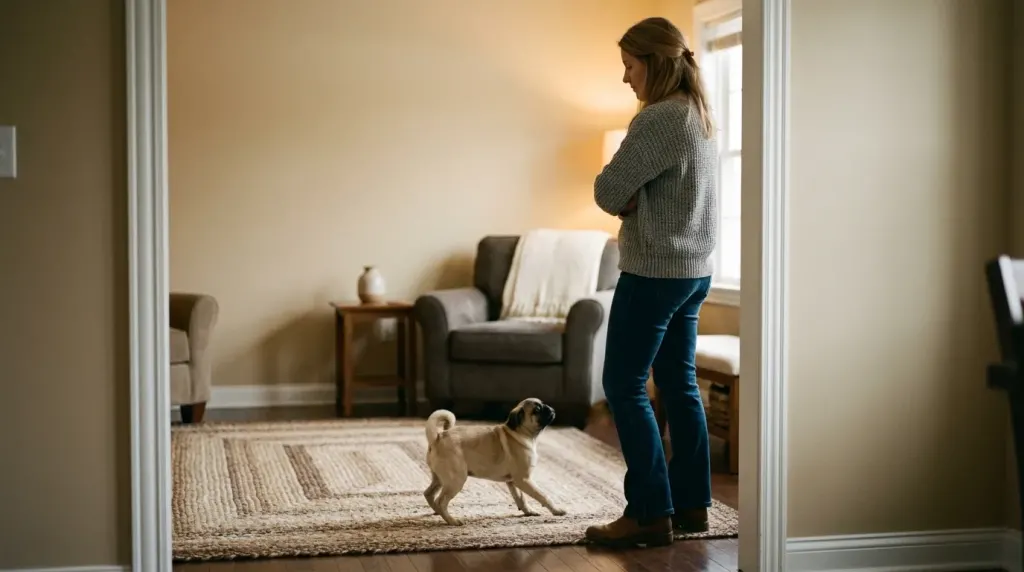
For indoor protection during the training phase, using a washable belly band or checking the proper size dog diaper for a pug can protect carpets and furniture while your puppy matures. Clean all indoor accidents with an enzymatic cleaner to remove organic odor molecules completely.
Training and behavior strategies
Implementing structured greeting protocols reduces arousal levels before the pug reaches the threshold of involuntary urination. Follow these practical steps:
- Keep Greetings Completely Low-Key: When entering your home, ignore your pug for the first two to three minutes. Avoid eye contact, verbal greetings, and petting until the dog settles all four paws on the floor.
- Relocate Greetings Outdoors: If your pug routinely leaks at the front door, meet your dog outside in the yard or on a patio where accidents do not matter.
- Redirect Arousal with an Incompatible Task: Teach your pug to grab a favorite chew toy or sit upon greeting. Carrying a toy in the mouth gives the dog an emotional outlet and lowers autonomic excitement.
- Reward Calm Postures: Offer quiet praise and treats only when your pug displays relaxed body language, such as sitting quietly or lying down.
These techniques align with established guidelines in a training routine for a young pug puppy, reinforcing emotional control through positive reinforcement.
Note: Never scold, yell at, or push your pug when an accident happens. Punishment adds fear and anxiety to the situation, transforming a simple excitement problem into chronic submissive urination.
Sample at-home routine
Here is a practical, 10-minute structured protocol for arriving home:
- Minute 0 to 2: Enter the doorway calmly without speaking or making direct eye contact. Walk past your pug and place your bags down.
- Minute 2 to 4: Step directly into the backyard or designated pee spot. Encourage your pug to empty its bladder outdoors before any physical interaction.
- Minute 4 to 6: Once the bladder is empty, bend at the knees, keep your voice low and gentle, and stroke your pug under the chin or chest rather than over the head.
- Minute 6 to 10: If the dog begins bouncing or breathing rapidly, stand up calmly, fold your arms, and pause attention until relaxed breathing resumes.
When to seek veterinary care
While excitement urination in puppies under 12 months is generally developmental, urinary changes in adult or senior pugs warrant thorough medical investigation. Certain health conditions mimic behavioral urination or weaken the urinary sphincter.
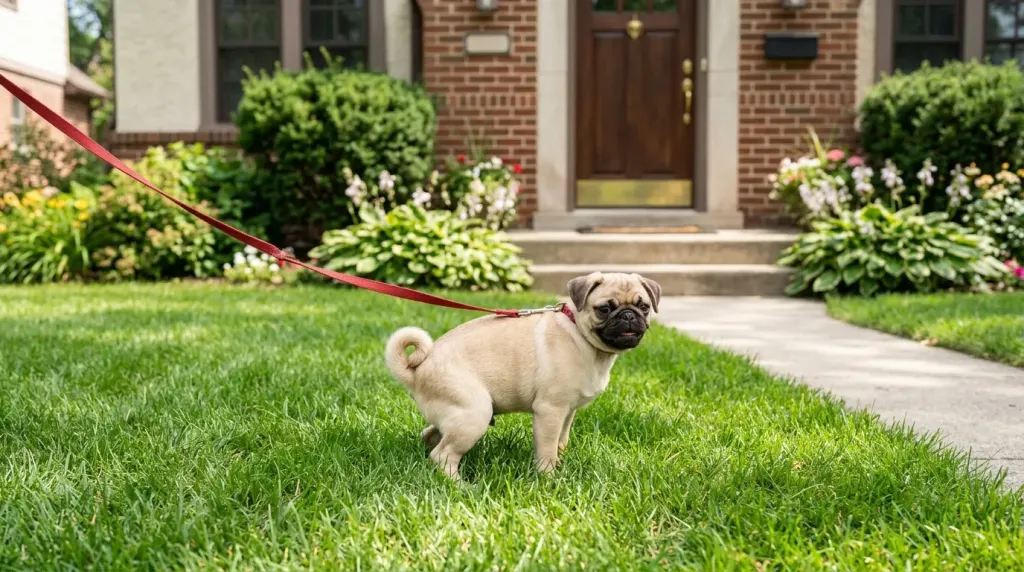
Maintaining a consistent daily healthcare routine for a pug includes tracking urination frequency and urine clarity. If your pug experiences pain while urinating, strains without producing urine, or licks the genital region obsessively, schedule a clinical examination immediately. Sudden urinary leakage in an adult pug that was previously clean indoors should always be treated as a medical issue until diagnostic tests prove otherwise.
Warning signs requiring prompt veterinary evaluation:
- Presence of visible blood or pink discoloration in the urine (hematuria)
- Vocalizing, whining, or straining during urination (dysuria)
- Urine leaking while the dog is asleep or resting on its bed
- Sudden increase in daily water intake (polydipsia) accompanied by frequent urination
- Foul-smelling, cloudy urine or persistent genital licking
- Onset of accidents in an adult or senior pug with no previous history of leakage
Diagnostic considerations
When evaluating urinary issues in pugs, veterinarians follow a standard diagnostic pathway to rule out physical pathology:
- Complete Urinalysis: Tests urine specific gravity, pH, protein, glucose, ketones, and microscopic sediment to detect bacteria, white blood cells, or bladder crystals.
- Urine Culture and Sensitivity: Identifies specific bacterial strains responsible for urinary tract infections (UTIs) and determines the most effective antibiotic.
- Abdominal Radiographs or Ultrasound: Screens for bladder stones (uroliths), anatomical abnormalities such as ectopic ureters, or bladder wall thickening.
- Assessment for Sphincter Incompetence: Evaluates whether hormonal changes or anatomical factors cause urethral sphincter mechanism incompetence (USMI). According to peer-reviewed veterinary literature indexed in the National Institutes of Health repository, acquired urinary incontinence affects between 3% and 20% of spayed female dogs, requiring medical management rather than behavioral training.
This distinction is particularly important when pugs are considered senior dogs, as age-related sphincter weakness and cognitive dysfunction syndrome can alter bathroom habits.
Myths and misconceptions about pug behavior
Several persistent myths surrounding excitement urination cause owners to adopt counterproductive training methods. Clarifying these misconceptions helps protect the human-canine bond:
- Myth 1: The pug is peeing out of spite or stubbornness. Dogs do not possess the cognitive spite required to urinate as revenge. Excitement urination is a physiological reflex driven by the nervous system.
- Myth 2: Rubbing a pug’s nose in urine teaches them not to do it. This outdated practice creates intense fear, increases anxiety, and leads to severe submissive urination or hidden elimination.
- Myth 3: Withholding drinking water will prevent excitement accidents. Limiting water intake is dangerous and can lead to dehydration, concentrated acidic urine, and urinary tract infections.
- Myth 4: Excitement urination means your pug can never be fully house-trained. Pugs can achieve complete house-training. Excitement urination operates through a separate pathway from voluntary elimination habits.
Understanding your pug’s temperament
Pugs have been celebrated for centuries as devoted companions. Their classification as pugs as loyal lap dogs reflects their intense desire to stay physically close to human family members. This strong attachment explains why separations, even short ones, generate intense emotional reunions.
While pugs are often depicted as low-energy couch companions, balancing the energy levels and exercise needs of active pugs plays a significant role in emotional regulation. A pug that receives daily exercise, mental stimulation, and structured sniff walks exhibits lower baseline arousal during greetings, significantly reducing the likelihood of excitement-induced bladder leaks.
Frequently asked questions about pug excitement urination
Do all pugs experience excitement urination?
No, not all pugs experience excitement urination. While it is common in puppies due to developing pelvic muscles and high arousal levels, some individual dogs have naturally higher sphincter tone or calmer greeting temperaments that prevent leakage.
Can excitement urination be completely eliminated?
Yes, most young pugs gradually outgrow excitement urination as their urethral sphincter muscles and neuromuscular bladder control mature with physical development. Consistent implementation of low-key greetings and redirecting the dog’s focus to calm activities accelerates this natural improvement.
When is medication appropriate for urinary issues in pugs?
Medication is appropriate when diagnostic tests confirm a medical condition rather than behavioral excitement. For example, if a veterinarian diagnoses urethral sphincter mechanism incompetence (USMI), medications such as phenylpropanolamine or estriol may be prescribed to increase urethral muscle tone. True developmental excitement urination in young puppies does not require medication.
Leave a Reply