
Table of Contents
Do pug dogs fart? Yes, as all dogs do, and they have a reputation for being gassier than long-nosed breeds. Their flat face makes them gulp air, but the amount of gas varies by dog and is often driven more by eating speed and diet than by anatomy alone.
- Swallowed air is the largest source of dog flatulence.
- Fast eating, sudden diet changes, and hard-to-digest ingredients worsen gas.
- Using a slow-feeder bowl and splitting meals can safely reduce flatulence.
- New or persistent gas paired with vomiting, diarrhea, or weight loss requires a veterinarian.
Do Pugs Fart More Than Other Dogs?
Flatulence is normal in every dog as gut bacteria ferment food. Flat-faced breeds such as Pugs and Bulldogs do tend to pass more gas because they swallow more air. Still, the amount varies greatly between individuals.
Gas comes from three sources: swallowed air, fermentation inside the gut, and diffusion from the blood. Swallowed air is the largest contributor to flatus. Because Pugs have compressed airways, they gulp air while eating, drinking, and heavy breathing. When you add fermentable ingredients to that trapped air, the result is more frequent flatulence. Understanding why Pugs snort gives a good picture of how their anatomy shapes their daily habits and breathing patterns.
Why Pugs Fart So Much
Pugs produce gas through two main pathways. They take in air from the outside, and their digestive system ferments carbohydrates and fibers on the inside.
| Source of gas | What increases it |
|---|---|
| Swallowed air (aerophagia) | Eating too fast, heavy panting, short-nosed anatomy |
| Colonic fermentation | High-fiber foods, dairy, beans, sudden diet changes |
Does the flat face make Pugs swallow more air?
Partly. Pugs are brachycephalic, meaning their narrow airways make them gulp air (aerophagia) during meals and heavy breathing. Since swallowed air is the largest source of flatus, this anatomy explains a tendency toward gas, but it does not account for every episode. Diet and eating speed matter just as much. If you are already checking whether Pugs snore due to their airway, you can expect some swallowed air to follow.
Why some Pug farts smell worse
Most flatus is odorless. The smell comes from sulfur-containing gases, such as hydrogen sulfide, which the gut produces when fermenting certain foods. An occasional stinky fart is normal. If the foul gas is a new development and happens frequently, especially alongside diarrhea, it deserves a discussion with your veterinarian.
What Causes Pug Farts: Everyday Triggers
Beyond anatomy, the common drivers for pug gas are fast eating, sudden diet changes, hard-to-digest ingredients, dairy, high-fat table scraps, and too many treats. Before changing anything, track your dog’s food and stool for several days.
- Eating too fast: Gulps down air alongside the kibble. Try a slow-feeder bowl.
- Abrupt food switches: Upsets the gut microbiome. Transition any new food over 7 to 10 days.
- Table scraps: Human food is often too rich or fatty. Stick to a balanced Pug diet.
- Treat overload: Treats add fermentable ingredients. Keep treats to a minimum and factor them into the correct Pug feeding portions.
Which foods make Pugs gassy?
Dogs make more gas when food is hard to digest or rich in fermentable ingredients. According to VCA Animal Hospitals, soybean meal, peas, certain fibers, dairy, beans, and high-fat foods are common culprits. Tolerance is individual. Review the labels on your dog’s food, but let a veterinarian guide persistent cases rather than banning ingredients outright.
Can eating too fast make a Pug fart more?
Yes. Fast eating increases swallowed air, the biggest source of flatus. Slowing your dog’s intake with smaller meals, a slow-feeder or a food puzzle can help. If you have multiple dogs, feeding them separately reduces competition and slows them down. Change one thing at a time and watch whether the gas improves.
How to Reduce Gas in Pugs Safely
Start with low-risk changes to cut routine gas.
- Keep the diet consistent: Feed a highly digestible, low-residue food and avoid frequent brand hopping.
- Slow the eating: Use a maze bowl or food puzzle to force your Pug to chew and swallow slowly.
- Split the daily ration: Divide the food into smaller, more frequent meals to reduce the volume of air swallowed at one time.
- Skip the table scraps: Keep rich, fatty human foods out of the bowl.
- Add a gentle post-meal walk: A short walk within 30 minutes of eating encourages gut motility. Keep in mind how active Pugs are and avoid strenuous exercise that causes heavy panting.
Managing Pug flatulence is mostly about managing air intake. A slow feeder and smaller meals address the root cause of aerophagia without requiring a disruptive diet change.
How should owners test whether a change helps?
Log meals, treats, eating speed, stool, and gas for several days, then change one low-risk thing at a time. Transition any new food gradually over about 7 to 10 days, because a sudden switch can itself cause gas and hide the real trigger. Tracking a daily Pug care routine will help you spot patterns. If gas persists or symptoms appear, stop self-experimenting and call a vet.
When Pug Farting Is a Concern
See a veterinarian when excessive gas is new or persistent, or when it comes with diarrhea, vomiting, weight loss, poor appetite, blood or mucus in the stool, a hard or painful belly, or marked lethargy. Gas alone is not a diagnosis, but these combinations may point to disease such as malabsorption, inflammatory bowel disease (IBD), or intestinal parasites.
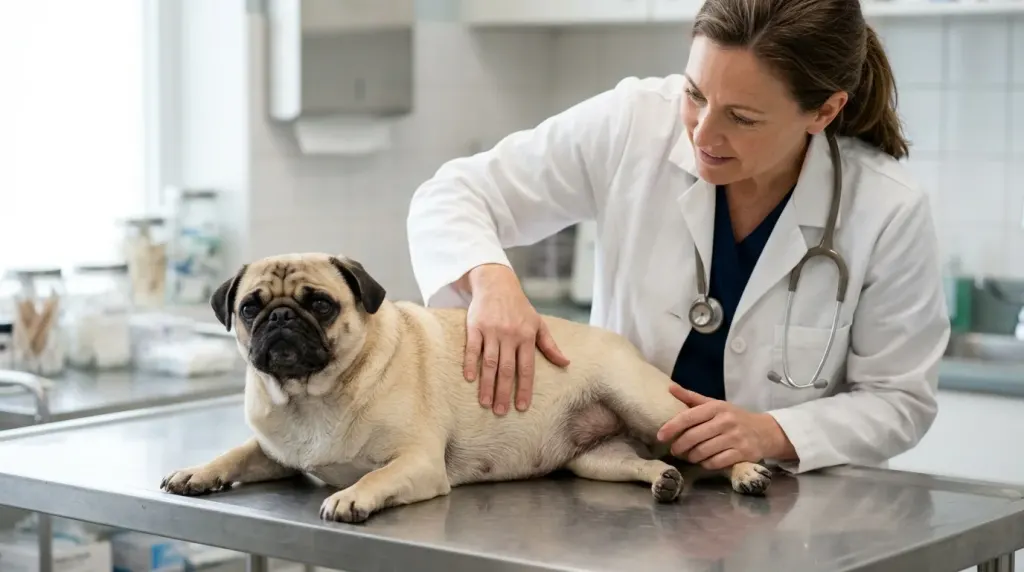
If you notice abdominal discomfort, such as a Pug that keeps moving and won’t lie down, have a professional evaluate the dog.
Which symptoms with gas are red flags?
Contact a veterinarian if your dog experiences gas along with any of the following symptoms:
- Vomiting or diarrhea
- Weight loss or appetite loss
- Blood or mucus in the stool
- A swollen or tender abdomen
- Weakness or lethargy
Note: These symptoms may signal more than a feeding issue and should not be managed by trial-and-error diet changes. Do not give your dog human anti-gas medications without a veterinarian’s explicit instruction.
FAQ About Pug Gas
Why do pugs fart so much when sleeping?
A sleeping Pug simply releases gas as it moves through the gut. Relaxed muscles, combined with snoring-related air swallowing, make the gas more noticeable at rest. Sleep itself does not create extra gas. Look at the whole day’s diet and eating speed, and note whether the gas is new or excessive.
Are smelly pug farts normal?
An occasional smelly fart is normal, since odor comes from sulfur gases formed during digestion. If foul gas becomes frequent or arrives with diarrhea, vomiting, weight loss, or appetite changes, have your Pug checked by a veterinarian.
Can changing a pug’s food stop gas immediately?
Not right away. Diet changes take several days, and a sudden switch can itself cause gas. Transition gradually over about 7 to 10 days and avoid rapid food-hopping. Review treats and meal patterns first, and involve a vet for persistent problems.
Do slow feeder bowls help gassy pugs?
They can, when fast eating is part of the problem, because slower eating cuts swallowed air. A slow feeder or food puzzle is not a cure for every cause. Persistent gas or gastrointestinal symptoms still need a vet rather than a bowl alone.
Leave a Reply