

Table of Contents
When prospective owners ask, "Do French Bulldogs have health problems?", veterinary clinical evidence confirms that they do. French Bulldogs experience high rates of medical conditions primarily caused by their flat-faced (brachycephalic) head shape and compact body structure. Primary-care epidemiological research confirms that 72.4% of French Bulldogs had at least one recorded health disorder in a single year. Major health concerns include Brachycephalic Obstructive Airway Syndrome (BOAS), Intervertebral Disc Disease (IVDD), skin fold allergies, chronic ear infections, and digestive sensitivities.
- Clinical epidemiological research confirms that 72.4% of French Bulldogs suffer from at least one medical disorder annually.
- Brachycephalic airway obstruction (BOAS) and spinal malformations (IVDD) represent the most severe, life-threatening conditions for the breed.
- Skin fold dermatitis, otitis externa (ear infections), and gastrointestinal issues account for the most frequent veterinary visits.
- UK VetCompass life tables show an average life expectancy at birth of 4.53 years, heavily affected by early complications.
- Proactive weight control, selective breeder screening for BOAS, temperature regulation, and proper care significantly lower health risks.
How Common Are Health Problems in French Bulldogs?
Veterinary data provides a clear picture of the breed’s overall disease burden. According to a 2018 VetCompass study by the Royal Veterinary College (RVC), 72.4% of French Bulldogs had at least one recorded health disorder in a single year.
A follow-up RVC study in 2021 compared Frenchies to other breeds and found they face significantly higher odds for 20 out of 43 common canine disorders. Specifically, the breed showed 42.14 times higher odds for narrowed nostrils (stenotic nares; OR 42.14, 95% CI 18.50 to 95.99) and 30.89 times higher odds for brachycephalic obstructive airway syndrome (BOAS; OR 30.89, 95% CI 20.91 to 45.64) compared to non-French Bulldogs. Dr. Dan O’Neill, Senior Lecturer in Companion Animal Epidemiology at the RVC and lead author of the studies, notes that the rapid rise in French Bulldog popularity occurred before extensive health data was available, masking the scale of these issues from many buyers. Digestive sensitivities are also prevalent, and understanding why French Bulldogs throw up helps owners identify gastrointestinal enteropathy before dehydration develops. As the current population ages, veterinarians expect the prevalence of age-related conditions to rise as well.
What Health Issues Do French Bulldogs Commonly Have?
The most frequent diagnoses fall into five main categories. The VetCompass data highlights the following prevalence rates among the studied population:
| Disorder Group | Prevalence | Common Examples |
|---|---|---|
| Cutaneous (Skin) | 17.9% | Skin fold dermatitis, allergic skin disease |
| Enteropathy (Digestive) | 16.7% | Diarrhea, colitis |
| Aural (Ear) | 16.3% | Otitis externa (ear infections) |
| Upper Respiratory | 12.7% | BOAS, stenotic nares (narrow nostrils) |
| Ophthalmological (Eye) | 10.5% | Corneal ulceration, cherry eye |
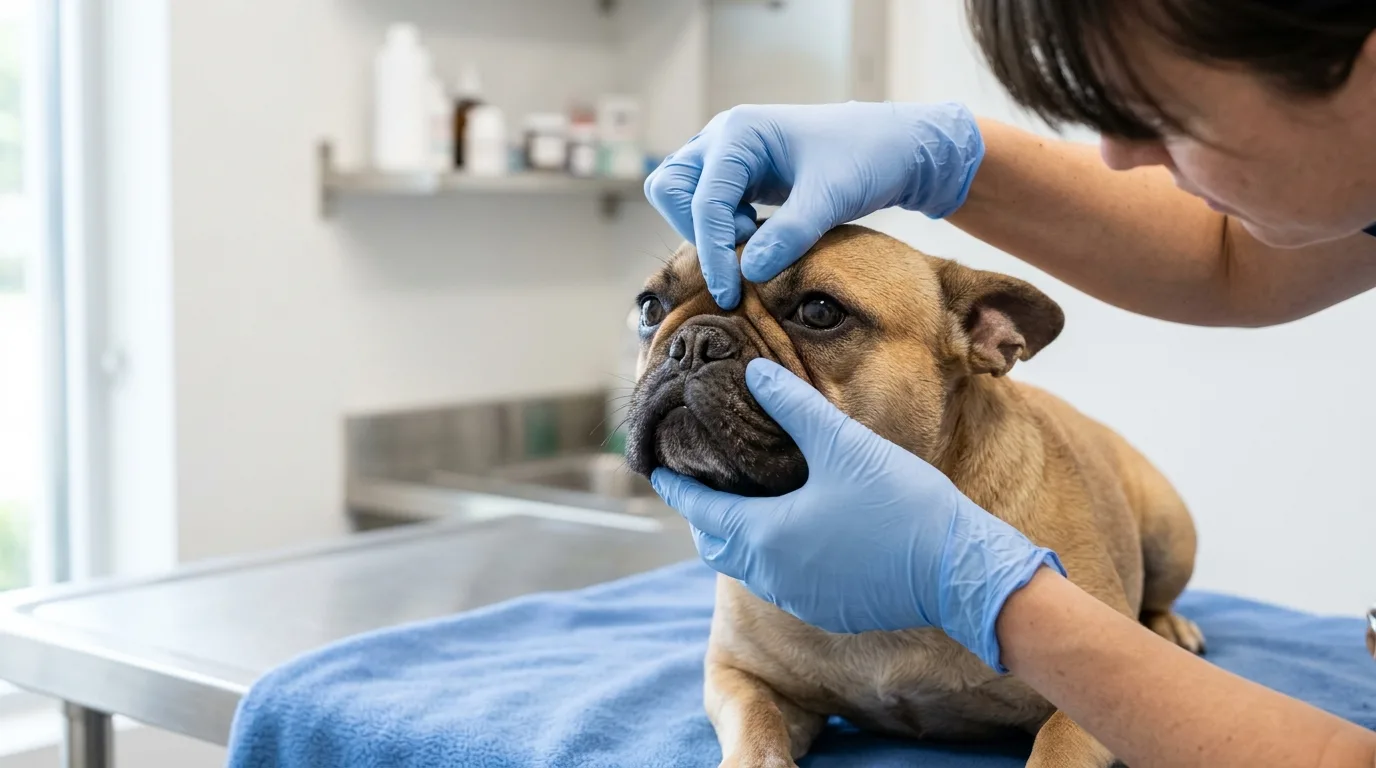
Their brachycephalic (flat-faced) head shape and compact bodies directly cause many of these problems.
Breathing and Airway Problems (BOAS)
Brachycephalic Obstructive Airway Syndrome affects a large share of the breed due to narrowed nostrils, elongated soft palates, and compressed airway anatomy. Clinical studies using plethysmography found up to 89.9% of French Bulldogs show measurable airway obstruction, with over half considered clinically significant. This restricted airflow and swallowing of excess air explains why French Bulldogs fart so much, as their digestive and respiratory systems struggle to cope with the physical strain of breathing.
Spinal Disease and IVDD
French Bulldogs have elevated rates of intervertebral disc disease (IVDD) and vertebral malformations like hemivertebrae. Their short spines and lack of a tail mean the vertebrae are often compressed or abnormally shaped. These spinal problems can cause sudden pain, rear leg weakness, or permanent paralysis. Before bringing a puppy home, prospective owners should understand the risks of IVDD in French Bulldogs because emergency spinal surgery is both common and expensive.
Skin, Ear, and Eye Conditions
Skin fold dermatitis and ear infections (otitis externa, affecting 14% of the breed) are the most frequently diagnosed conditions overall. Their deep facial wrinkles trap moisture and bacteria, requiring daily cleaning. Their prominent eyes are also vulnerable to scratches and corneal ulcers. Owners must be diligent about checking for red or irritated eyes and performing routine ear cleaning to reduce otitis externa risk. While less life-threatening than BOAS, these chronic conditions require constant management.
Are French Bulldogs Healthy Overall?
Most Frenchies live happy daily lives, but they carry a much higher disorder burden than the average dog. The primary concern is not just the frequency of minor illnesses. While owners must constantly manage daily care, such as investigating why a French Bulldog’s eyes are red to prevent corneal damage, the real danger lies in the concentration of severe, life-altering conditions. Along with BOAS and IVDD, veterinary experts at Tufts note that the breed is predisposed to brain tumors (gliomas), heart base tumors, and pulmonic stenosis. Veterinary epidemiological research indicates that the French Bulldog can no longer be viewed as a typical dog from a health perspective due to its high concentration of conformational disorders.
Average Lifespan and Longevity
The breed’s lifespan is shorter than many people realize. In a 2022 UK VetCompass life-table analysis, French Bulldogs had an estimated life expectancy at birth of just 4.53 years (95% CI 4.14 to 5.01). This was the lowest life expectancy among all evaluated breeds. While some dogs certainly live 10 to 12 years, the overall population average is heavily dragged down by the sheer volume of young dogs dying or being euthanized due to severe spinal or respiratory disease. Buyers often hear an average lifespan of 10 to 12 years from breeders, but the clinical data paints a different picture. Observing how much French Bulldogs sleep helps owners distinguish between normal resting habits and lethargy caused by underlying respiratory fatigue. The 4.5-year life expectancy at birth reflects the reality that many Frenchies do not survive their early adult years without major medical intervention.
What Increases or Reduces Health Risk in French Bulldogs?
Risk is not fixed at birth. Owners can take measurable steps to reduce complication rates:

- Breeder screening: Reputable breeders use BOAS grading schemes and Orthopedic Foundation for Animals (OFA) clearances to ensure they only breed healthy adults.
- Weight management: Studies show a direct statistical link between obesity and the severity of airway obstruction.
- Heat avoidance: Their compromised airways make them sensitive to heat stroke. Owners must understand whether French Bulldogs can run safely and treat all outdoor activities with caution to prevent overheating.
- Surgical timing: Discuss when to neuter a French Bulldog with a vet, as altering hormones too early can impact joint and bone development.
Note: If a French Bulldog shows blue gums, open-mouth gasping, or collapse during warm weather or exercise, move the dog to a cool area and seek emergency veterinary care immediately.
Diet, Weight, and Everyday Care Considerations
Maintaining a lean body condition through appropriate feeding supports airway and skin health. Carrying even one extra pound puts substantial strain on a brachycephalic dog’s breathing. Owners should monitor treats carefully, checking which human foods are safe before sharing snacks, and ensuring that daily calorie intake aligns with their dog’s low activity level.
Why Is the Breed Prone to So Many Health Problems?
Most of these disorders stem from selective breeding for an extreme body shape. The same anatomy prized in the show ring directly predisposes the dog to airway obstruction, skin fold infections, and spinal malformations.
Comparing the original breeding purpose vs. current conformation shows how the modern demand for flatter faces and more compact bodies has driven the health crisis. Due to their dense bone structure and heavy front bodies, learning why French Bulldogs cannot swim illustrates how extreme physical proportions create safety hazards around water. In response to these issues, organizations like the UK Kennel Club have moved the French Bulldog to Category 2 on their Breed Watch list, meaning judges must penalize exaggerated physical features that harm the dog’s health.
Understanding why the breed is so popular helps explain why breeders continue producing dogs with these traits despite veterinary warnings.
Frequently Asked Questions
What percentage of French Bulldogs have health problems?
According to the Royal Veterinary College’s VetCompass data, 72.4% of French Bulldogs experience at least one documented health disorder in a given year. The breed has significantly elevated risks for respiratory, skin, and spinal issues compared to the general dog population.
Is it ethical to get a French Bulldog?
Many veterinarians advise against buying flat-faced breeds due to their severe health compromises. If you decide to get one, buying from a breeder who rigorously tests their dogs for BOAS and spinal issues is the most ethical approach. Adopting a rescue is another alternative.
What is the most serious condition to watch for?
Brachycephalic Obstructive Airway Syndrome (BOAS) and Intervertebral Disc Disease (IVDD) are the most critical conditions. Both can be life-threatening and often require expensive emergency surgeries to resolve.
Do all Frenchies need surgery eventually?
Not all require surgery, but a large percentage do. The RVC reported an 800% increase in BOAS surgeries over recent years, with French Bulldogs accounting for almost half of all such procedures.



Leave a Reply