

Table of Contents
Do French Bulldogs shed? Yes, they lose hair lightly to moderately year-round. Their short coat drops fine strands continuously, with a noticeable increase in volume during the spring and fall seasonal transitions.
- The American Kennel Club rates Frenchie coat drop at a 3 out of 5.
- Short hair still goes through a natural growth (anagen), resting (telogen), and shedding (exogen) cycle.
- Sudden bald patches, severe itching, or inflamed skin indicate abnormal hair loss rather than seasonal molting.
How much hair do French Bulldogs actually lose?
Yes, they drop fur on a regular basis. Many new owners ask whether a French bulldog does actually shed a lot. While they are not a hypoallergenic breed, they certainly do leave hair around your home, so French bulldogs are considered moderate shedders. The American Kennel Club (AKC) places their coat-loss level at a 3 out of 5, which classifies them as moderate. This process is highly manageable compared to heavy double-coated breeds like German Shepherds or Huskies, but owners will still find fine strands embedded in car seats, clothing, and furniture fabrics.
When considering what a French Bulldog is in terms of standard physical characteristics, their smooth coat is one of their lowest-maintenance features. However, it still continuously cycles through old and new hair. There is a common misconception that short-haired dogs do not leave hair behind, but the reality is that their individual strands are simply less conspicuous.
The biological hair cycle explained
Every single dog hair follicle goes through a natural, continuous four-phase biological cycle: active growth (anagen), transitional regression (catagen), resting (telogen), and shedding (exogen). In short-haired breeds like the Frenchie, the anagen growth phase is genetically programmed to be extremely brief. The hair reaches its maximum determined length, typically around half an inch to an inch, very quickly. Once it reaches this length, the follicle transitions into the telogen phase, which is a resting phase where the hair shaft remains anchored in the follicle. Finally, during the exogen phase, the old hair detaches and is released to make room for a new strand, according to veterinary dermatology research from the University of Zurich.
Because this growth cycle is so short, the turnover rate is relatively high compared to breeds with continuously growing hair. The strands that fall out are short, stiff, and often completely translucent at the root, meaning they can easily weave their way into upholstery fabrics and car carpets, becoming difficult to vacuum. Keeping the underlying skin matrix healthy is the absolute best way to regulate this biological cycle. Overall systemic hygiene, from gentle brushing to knowing how to express a French Bulldog’s glands when impacted to relieve systemic inflammatory stress, plays a critical supportive role in maintaining normal follicle function and preventing stress-induced alopecia.
Single versus double coat structures
Most Frenchies possess a single coat, meaning they completely lack the dense, fluffy, insulating undercoat found in many working breeds designed for cold climates. A single layer typically drops significantly less volume overall. However, depending on what French Bulldogs were originally bred for and their specific genetic lineage, often tracing back to different terrier crosses in the 1800s, a small number of individuals may carry a mild double coat. These specific dogs tend to leave slightly more fur around the house, particularly when the ambient weather changes, and they require slightly more frequent brushing.
The fluffy coat variation
People often wonder if the longer coat makes a difference, and whether fluffy French bulldogs do in fact shed more than the standard breed. Fluffy Frenchies have a noticeably longer, softer, and wavier coat, which is caused by a recessive genetic trait for long hair. While this genetic variance changes the physical length and texture of the strands, it does not significantly alter the follicle’s biological lifecycle or turnover frequency. However, because the individual hairs are longer, the loose fur clusters together and is much more visible on rugs, hardwood floors, and upholstery. This visual clustering creates the distinct impression that a fluffy variant drops a lot more hair than the standard short-coated dog, even though the actual number of follicles cycling remains roughly the same.
Seasonal hair loss cycles
If you are trying to figure out exactly how often French bulldogs drop their fur, the reality is that they do shed a steady, low amount of hair every single day. Beyond this continuous daily baseline, you can expect two distinct periods of increased coat blow-out, occurring during the transitions from spring to summer and from fall to winter.
During these transitional weeks, the dog’s body responds to shifts in daylight hours (photoperiods) and temperature changes. This biological trigger pushes a much larger portion of the hair follicles into the resting (telogen) phase simultaneously, causing them to release the old coat to make way for new growth. In the spring, they drop the slightly denser winter coat; in the fall, they drop the summer coat to grow a marginally thicker layer for winter insulation.
If your dog begins losing an unusual amount of coat outside these expected seasonal windows, especially while exhibiting secondary symptoms like a French Bulldog’s red eyes, inflamed paws, or facial swelling, it is almost certainly an allergic reaction rather than a standard cycle. Routine seasonal molting is even, mild, and not very itchy, whereas allergic reactions cause severe discomfort and patchy baldness.
Coat color and shedding myths
Prospective owners frequently ask what coat color means for grooming, and whether a certain French bulldog sheds the least. The reality is that the volume of hair a dog loses is determined entirely by coat structure, follicle density, and individual genetics, not by pigmentation. There is no verified scientific evidence linking traditional colors like fawn, brindle, or pied to the amount of hair a dog leaves on your couch. Breeders will occasionally claim that certain coat variations are “low-maintenance” to market rare or expensive puppies. However, the mechanics rely strictly on the biological follicle cycle rather than the melanin type present in the hair shaft.
It is vital to note that dogs with dilute colors, specifically blue, lilac, or Isabella, are highly prone to a condition called Color Dilution Alopecia (CDA). This is a genetic skin disorder where the pigment clumps abnormally within the hair shaft, causing it to become brittle and fracture easily at the skin level. CDA causes progressive, patchy hair loss, and secondary bacterial skin infections like folliculitis are common. Owners often mistake the early stages of this progressive thinning, which usually begins on the trunk and flanks, for heavy molting. True CDA requires veterinary dermatological management.
Causes of excessive hair loss
If a Frenchie begins dropping an abnormal amount of fur, leaving visible bald patches, it often signals an underlying dermatological or systemic health issue. This is exactly why my readers frequently ask if their French bulldog is shedding so much due to an allergy. Environmental allergies, parasitic infections like Demodex mites, and hormonal imbalances (such as hypothyroidism or Cushing’s disease) are common culprits.
Atopic dermatitis (environmental allergy) is frequently reported in the breed. Triggers like tree pollen, house dust mites, and mold spores cause intense immune responses and systemic itching. The resulting scratching, rubbing against furniture, and chronic licking physically break the hair shafts and create inflamed, weeping bald patches known as hot spots.
Note: According to the MSD Veterinary Manual, hair loss crosses into abnormal territory when it results in obvious bald spots or visible coat thinning. Always consult a veterinarian if you notice red skin, crusting sores, foul odor, or relentless scratching.
The impact of diet and Omega-3 fatty acids
A balanced, species-appropriate diet plays a direct structural role in maintaining strong follicles and an intact dermal barrier. Food lacking sufficient high-quality animal protein or essential fatty acids will quickly lead to a dry, dull, and brittle coat that falls out prematurely.
Veterinary dermatologists frequently recommend supplementing with marine-sourced Omega-3 fatty acids (specifically EPA and DHA) to support the skin barrier. Guidelines from clinical resources like OmegaQuant indicate an evidence-based maintenance dose of approximately 50 to 75 mg of combined EPA and DHA per kilogram of body weight per day. For an average 10 kg adult Frenchie, this equates to roughly 500 to 750 mg daily. For dogs actively suffering from allergic dermatitis, therapeutic doses are often pushed much higher under veterinary supervision.
Feeding a premium diet featuring named animal proteins, for instance choosing lamb for French Bulldogs, and supplementing properly, like when feeding salmon to a Frenchie, ensures the dog receives the necessary building blocks for healthy keratin production.
Tips for managing your dog’s coat
Managing a Frenchie’s coat requires consistent, gentle grooming routines rather than aggressive, sharp-toothed scraping tools designed for thick double coats. Their skin is notoriously sensitive, and using the wrong brush can cause painful micro-abrasions that lead to bacterial infections.
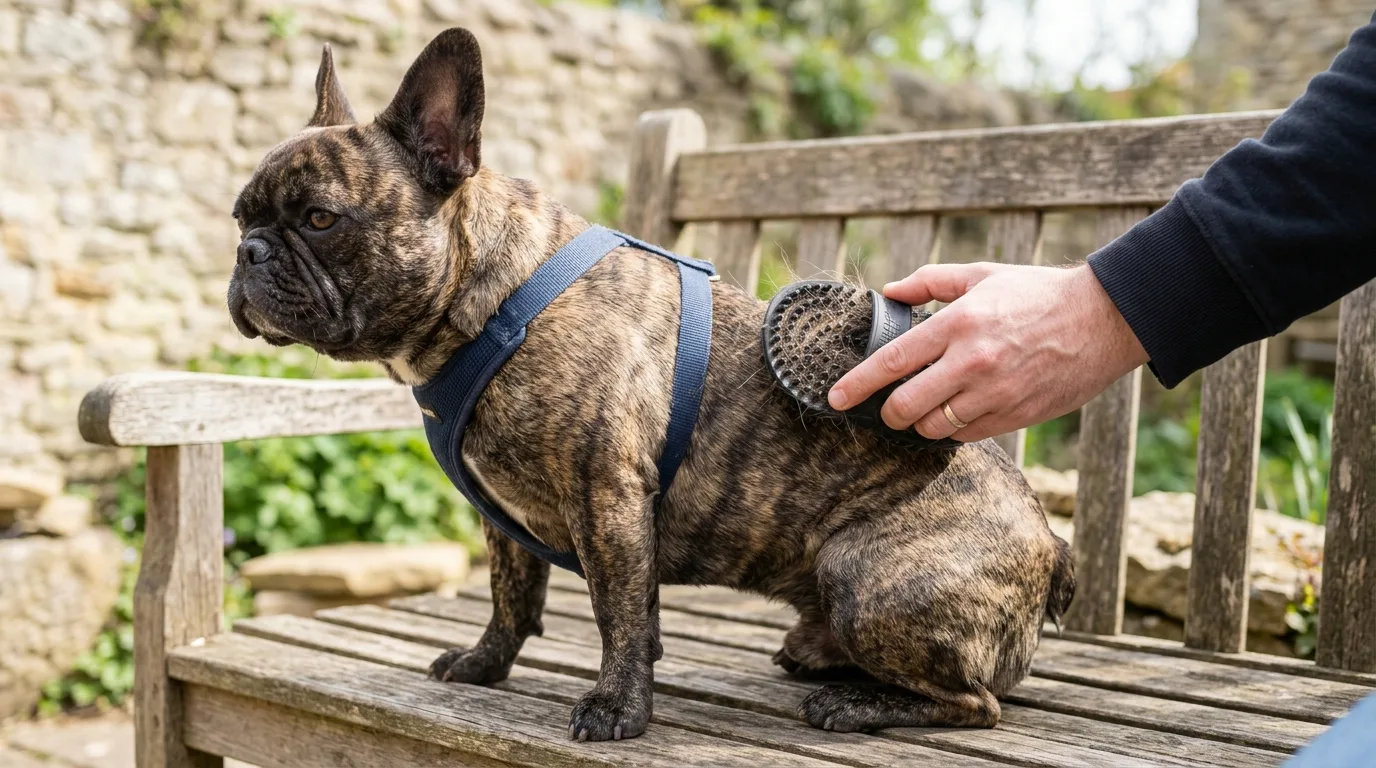
- Select the right tools: Brush the coat regularly, adjusting the frequency based on your dog’s current shedding condition, using a soft rubber curry brush (such as a Kong ZoomGroom) or a specialized grooming glove. These rubberized tools gently massage the skin, distribute natural sebaceous oils across the epidermis, and effectively grip loose surface hairs without scratching. Natural boar-bristle brushes are excellent for a finishing polish to add shine and remove fine dander. However, stiff wire slicker brushes or metal deshedding blades (like the FURminator) should be completely avoided on a standard short coat, as they can easily damage the skin and strip healthy guard hairs.
- Avoid over-bathing: Bathe the dog using a gentle, oatmeal-based or hypoallergenic dog shampoo only when visibly dirty or smelling of strong odors, typically no more than once every four to eight weeks. Over-bathing strips the skin’s natural protective lipid layer, causing severe dryness, flaking (dandruff), and a rebound effect that actually increases reactive hair loss as the skin struggles to repair its barrier. If the dog gets muddy paws or a dirty underbelly, opt for targeted spot-cleaning with pet-safe wipes rather than a full submersion bath.
- Maintain complete hygiene: Peripheral tasks like cleaning a French Bulldog’s ears and meticulously wiping their deep facial folds should be done on a strict weekly schedule. Keeping these specific areas completely dry and free from trapped moisture, food debris, and yeast overgrowth prevents secondary fungal infections. These infections cause intense localized itching, leading the dog to scratch aggressively and permanently damage the surrounding healthy coat.
By maintaining this gentle, consistent routine and prioritizing high-quality nutrition, you can keep loose fur entirely under control while actively monitoring for any broader French Bulldog health problems.
Frequently asked questions
Do Frenchies undergo seasonal molting?
Yes, they do experience distinct molting phases. While they will drop a small number of fine hairs year-round due to the natural follicle cycle, they experience a noticeably heavier coat turnover during the spring and autumn months as the ambient temperatures and daylight hours change. During these brief windows, daily brushing is highly recommended.
How do they compare to heavy-coated breeds?
Compared to notorious heavy-coated breeds like Golden Retrievers, Akitas, or Huskies, a Frenchie leaves a relatively low to moderate amount of fur around the house. They do not drop large “tumbleweeds” of dense undercoat. Their short strands are much easier to manage with a basic weekly brushing routine, routine vacuuming, and a reliable lint roller for clothing.



Leave a Reply