
Table of Contents
Are Golden Retrievers prone to bloat? Yes, Golden Retrievers have a deep, narrow thoracic conformation that makes them prone to Gastric Dilatation-Volvulus (GDV). This life-threatening condition occurs when the stomach fills with gas and twists on its axis, requiring immediate veterinary decompression and surgery. You can reduce this risk with simple daily habits: feed two to three smaller meals, keep bowls at floor level, enforce rest after eating, and discuss preventive gastropexy with your veterinarian.
- Golden Retrievers have a deep thoracic conformation that increases their anatomical vulnerability to stomach rotation.
- Non-productive retching, repeated dry heaving without bringing up food, is the most urgent warning sign of GDV.
- True bloat with gastric twisting is fatal without immediate emergency veterinary surgical intervention.
- Daily prevention includes divided meals, slow-feeder bowls, and avoiding vigorous running right after eating.
- Prophylactic gastropexy permanently secures the stomach, preventing fatal stomach twisting.
Gastric Dilatation-Volvulus, commonly called bloat or GDV, is one of the most sudden and serious health crises a dog owner can face. While giant breeds carry the highest statistical rate, Golden Retrievers face a distinct, moderate-to-high risk due to their deep ribcage and active nature. Understanding how this condition develops, recognizing its early warning signs, and establishing preventive habits can save your dog’s life.
Are Golden Retrievers Prone to Bloat? Understanding Breed Susceptibility
Golden Retrievers are classified as moderately to highly prone to bloat because of their thoracic anatomy, body weight, and energetic sporting temperament. In veterinary medicine, the primary physical trigger for bloat is a deep, narrow chest cavity. This conformation leaves ample room within the abdomen for the stomach to distend with gas and rotate on its supporting ligaments.
Similar to other deep-chested working breeds, including the debate over German Shepherd ancestral links to wolves and their domestic evolution, Golden Retrievers inherited a narrow, deep thoracic conformation that creates anatomical space for gastric displacement. With an adult weight typically ranging between 55 and 75 pounds, retrievers possess the body mass and rib depth that place them squarely in the veterinary risk category for gastric torsion.
| Risk Category | Representative Breeds | Conformation Characteristics | Lifetime Risk Level |
|---|---|---|---|
| Highest Risk (Giant Breeds) | Great Dane, Saint Bernard, Irish Wolfhound | Extremely deep, narrow chest; large abdominal capacity | High (over 20% to 40% lifetime risk) |
| Moderate to High Risk (Large Deep-Chested) | Golden Retriever, German Shepherd, Standard Poodle | Deep thoracic cavity, high activity level, 50-80 lb weight | Moderate-High (estimated 5% to 10% lifetime risk) |
| Low Risk (Small & Medium Breeds) | Pug, French Bulldog, Beagle | Barrel-chested, shallow thoracic depth, smaller abdominal volume | Low (rarely develop true anatomical volvulus) |
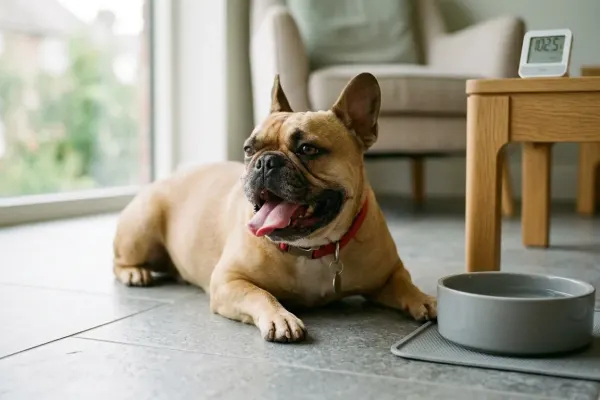
In contrast, smaller companion breeds, such as French Bulldogs as family pets, have compact, barrel-shaped ribcages where true volvulus rotation is exceptionally uncommon. For a Golden Retriever owner, recognizing this physical predisposition is the starting point for daily prevention.
What Is Bloat vs. GDV? The Mechanism Behind Gastric Torsion
The term “bloat” is often used loosely, but veterinary medicine distinguishes between two distinct stages: simple gastric dilatation and true Gastric Dilatation-Volvulus (GDV). Simple dilatation occurs when the stomach fills abnormally with swallowed air, food, or fluid, creating severe discomfort without anatomical displacement.
True GDV occurs when the distended stomach rotates along its longitudinal axis in a clockwise direction. Once twisted, both the entrance from the esophagus (cardia) and the exit into the intestines (pylorus) are completely obstructed. Trapped gases continue to accumulate from ongoing fermentation and swallowed air, causing the stomach to inflate like a balloon.
| Stage | Physical Changes | Clinical Consequence |
|---|---|---|
| 1. Gas Accumulation (Dilatation) | Stomach fills with swallowed air, food, and gastric secretions | Discomfort, belching, initial abdominal tightness |
| 2. Gastric Rotation (Volvulus) | Stomach twists along its longitudinal axis, closing esophageal and pyloric valves | Gas and fluid become permanently trapped; stomach expands rapidly |
| 3. Venous Compression | Enlarged stomach presses against the caudal vena cava and portal vein | Blood flow back to the heart decreases, causing rapid cardiovascular shock |
| 4. Ischemia and Splenic Torsion | Gastric wall blood vessels stretch; spleen twists with the stomach | Stomach wall tissue begins dying (necrosis); spleen becomes congested |
| 5. Systemic Shock | Toxin release, electrolyte imbalance, severe cardiac arrhythmias | Cardiovascular collapse and death within hours without surgery |
While low-energy breeds like Pugs bred for lap dog companionship experience minimal gastric stress from high-intensity physical exertion, energetic retrievers frequently engage in rapid panting and heavy gulping that accelerates gas entrapment. Unlike feline companions, such as gentle and friendly Ragdoll cats whose digestive tracts are rarely vulnerable to acute organ torsion, canines with deep chests possess mobile gastrosplenic ligaments that permit rapid gastric rotation.
As the stomach expands, it exerts intense pressure on the caudal vena cava and the portal vein, the primary blood vessels returning blood to the heart. According to clinical resources from the American College of Veterinary Surgeons, this compression dramatically restricts cardiac output, triggering systemic hypotension and tissue hypoxia. Furthermore, the spleen, which is attached to the stomach by the gastrosplenic ligament, frequently twists alongside the organ, leading to splenic vascular thrombosis and severe cardiac arrhythmias.
Key Risk Factors for Bloat in Golden Retrievers: Anatomy, Diet, and Genetics
Bloat in Golden Retrievers rarely stems from a single isolated cause. Instead, it results from a combination of anatomical traits, feeding behaviors, age, and genetics. Understanding which factors you can control helps minimize your dog’s daily exposure to risk.
Veterinary researchers have investigated canine bloat through prospective epidemiological studies. A landmark study published through the National Center for Biotechnology Information identified several critical risk factors in large-breed dogs:
- Thoracic Conformation: Dogs with a high ratio of chest depth to chest width have significantly higher rates of volvulus because the anatomical space permits greater stomach movement.
- Rapid Eating and Aerophagia: Dogs that bolt their meals swallow large volumes of air along with dry kibble, accelerating gastric distension.
- Single Daily Large Meals: Feeding an entire daily calorie requirement in one large portion stretches the gastric ligaments over time.
- Elevated Food Bowls: Raising food bowls off the floor was historically recommended to ease neck strain, but research demonstrated that elevated feeders actually increased GDV risk in large deep-chested dogs by over 100%.
- Age and Ligament Laxity: Risk increases steadily as dogs grow older, particularly after 5 to 7 years of age, because the internal ligaments supporting the stomach lose elasticity.
- Genetic Lineage: Dogs with a first-degree relative (parent, sibling, or offspring) that suffered bloat have a greater than 60% higher chance of developing the condition.
- Stress and Temperament: Anxious, fearful, or hyperactive temperaments correlate with higher bloat incidence, likely due to altered gut motility and stress-induced panting.
| Risk Factor Type | Specific Factor | Preventive Strategy |
|---|---|---|
| Modifiable (Daily Habits) | Eating speed | Use slow-feeder bowls or puzzle mats |
| Modifiable (Daily Habits) | Meal volume | Divide food into 2-3 smaller daily meals |
| Modifiable (Daily Habits) | Feeder height | Place food bowls at floor level |
| Modifiable (Daily Habits) | Post-meal activity | Enforce 60-90 minutes of calm rest after eating |
| Non-Modifiable (Genetics/Age) | Chest anatomy | Consider prophylactic gastropexy |
| Non-Modifiable (Genetics/Age) | Senior age (>5 years) | Increase daily monitoring and vet checkups |
| Non-Modifiable (Genetics/Age) | Family history of GDV | Discuss preventive surgery during spay/neuter |
Veterinary research shows that gastric ligament elasticity decreases significantly with age; just as geriatric milestones change veterinary monitoring when Pugs reach senior dog age, a Golden Retriever passing five years old requires heightened vigilance for digestive motility changes. Stress and emotional excitability also alter gastrointestinal motility, similar to how acute separation distress manifests in clingy French Bulldogs with high attachment anxiety, causing dogs to pant excessively and swallow excess air.
Symptoms of Bloat in Golden Retrievers: Signs That Require Immediate Vet Care
Recognizing bloat in its earliest moments is the single most important factor determining survival. The hallmark symptom of Gastric Dilatation-Volvulus in dogs is non-productive retching: your Golden Retriever will repeatedly attempt to vomit, bringing up only thick white foam or saliva.
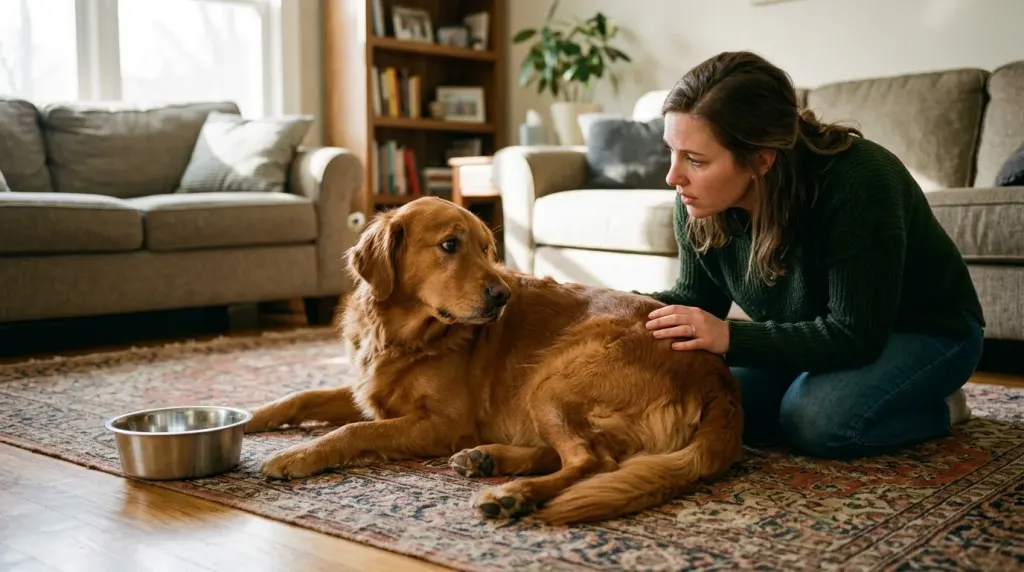
Because Golden Retrievers have deep ribcages, the expanding stomach often sits tucked beneath the ribs during the initial stages. Visible swelling near the flanks may not appear until the condition is advanced. Owners must never wait for an obviously distended belly if behavioral distress is evident.
| Phase | Observable Symptoms | What the Dog Is Experiencing |
|---|---|---|
| Early Phase (Action Required Now) | Repeated dry heaving without vomiting, pacing, whining, inability to settle | Stomach is distending and starting to twist; esophageal exit is blocked |
| Early Phase (Action Required Now) | Excessive drooling, lip licking, looking back at flank, standing with head low | Nausea, rising intra-abdominal pressure, visceral pain |
| Progressive Phase | Abdomen becomes firm and drum-like when tapped, shallow rapid breathing | Stomach is fully rotated; diaphragm is compressed by the enlarged stomach |
| Critical Shock Phase | Pale or greyish gums, weak pulse, extreme weakness, collapse, unresponsiveness | Severe cardiovascular shock, poor tissue perfusion, life-threatening crisis |
While owners often encounter benign arousal reactions like excitement urination in Pugs or young retrievers during greetings, sudden restlessness accompanied by unproductive retching reflects severe abdominal visceral pain. During advanced cardiovascular shock, checking mucous membranes is critical: whereas localized conjunctival inflammation explains red eye irritation symptoms in French Bulldogs, a dog in bloat shock exhibits pale, greyish, or muddy gums due to poor systemic blood perfusion. In deep-chested breeds like Golden Retrievers, the stomach sits high under the rib cage, meaning severe rotation can occur before noticeable abdominal swelling appears. Owners must never delay emergency care while waiting for visible abdominal distension if retching and distress are present.
As noted by the American Kennel Club, recognizing non-productive retching within the first hour gives your dog the best chance of complete recovery.
Emergency Action Plan: What to Do If You Suspect Bloat
Bloat is an absolute medical emergency. There are zero safe, reliable, or effective home remedies. Attempting to massage the stomach, administer simethicone gas drops, or induce vomiting will waste critical minutes and can worsen stomach rupture or aspiration pneumonia.
Follow this immediate action sequence:
- Call the Nearest Emergency Veterinary Hospital: Alert the clinic that you are en route with a suspected GDV case. This allows the medical team to prepare intravenous fluid lines, decompression tools, and the surgical suite before you arrive.
- Transport Calmly and Safely: Gently assist your dog into the car. Avoid compressing the abdominal area, and keep the environment quiet to minimize stress.
- Withhold All Food and Water: Do not offer water or food, as trapped contents will accelerate gastric expansion.
| Hospital Protocol | Purpose | Expected Medical Action |
|---|---|---|
| Initial Stabilization | Restore blood pressure and treat cardiovascular shock | Placement of dual large-bore IV catheters, rapid fluid therapy, pain medication |
| Gastric Decompression | Relieve internal gas pressure and restore venous blood flow | Passage of an orogastric tube or percutaneous trocharization with a sterile catheter |
| Diagnostic Imaging | Confirm whether the stomach is twisted (volvulus) | Right lateral abdominal X-ray showing the classic compartmentalized gas bubble |
| Emergency Surgery | Derotate the stomach, assess tissue health, prevent recurrence | Surgical repositioning, resection of damaged gastric tissue if needed, and gastropexy |
Emergency GDV surgery and post-operative intensive care represent substantial veterinary expenses; just as prospective owners budget for veterinary care when analyzing overall costs of owning French Bulldogs, maintaining an emergency veterinary fund or pet insurance is vital for large-breed owners. During the post-operative recovery phase, creating a low-stress environment is essential, taking inspiration from the calm handling protocols used with Pugs trained as therapy dogs to keep heart rates steady and prevent incision trauma.
According to retrospective surgical data reviewed by the AKC Canine Health Foundation, the overall survival rate for dogs undergoing prompt surgical derotation and stabilization exceeds 80% to 90%. When surgery is delayed until gastric necrosis or cardiac shock develops, mortality rises substantially.
How to Prevent Bloat in Golden Retrievers: Daily Management and Gastropexy
Preventing bloat requires a two-part strategy: managing daily feeding habits to minimize gas buildup, and considering surgical gastropexy to eliminate the risk of fatal rotation.
Daily Feeding and Activity Guidelines
- Divide Daily Meals: Feed two or three smaller meals rather than one large morning or evening bowl. This keeps gastric volume consistent and avoids stretching the stomach.
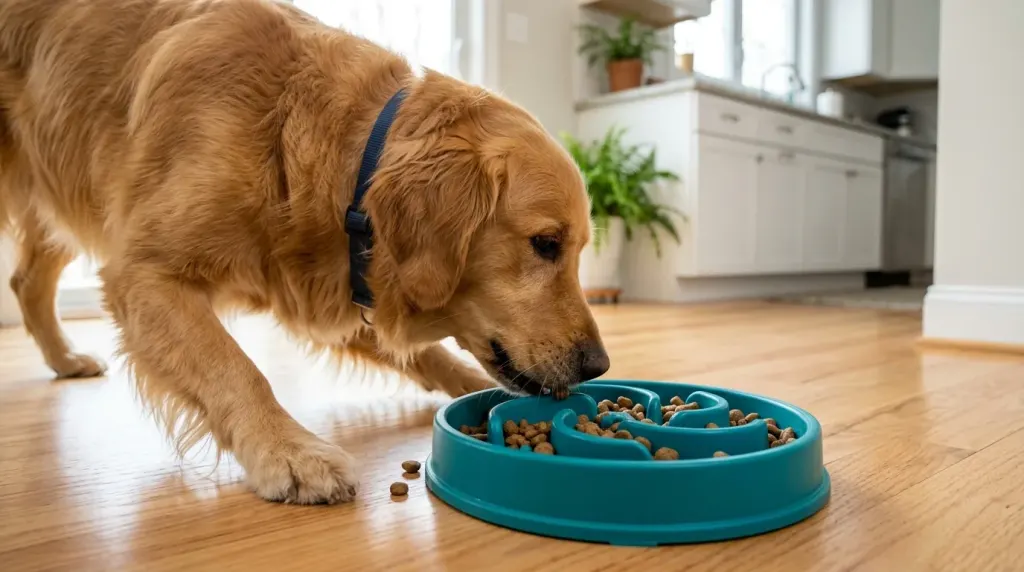
- Use Slow-Feeder Bowls: Interactive puzzle bowls, maze dishes, or muffin tins force your dog to eat slowly, reducing the volume of swallowed air.
- Keep Bowls at Floor Level: Avoid raised feeding tables unless your veterinarian has specifically prescribed them for an esophageal disorder.
- Enforce Post-Meal Rest: Keep your Golden Retriever calm for 60 to 90 minutes after eating. Avoid vigorous running, ball fetching, or rough play directly before and after meals.
- Separate Anxious Eaters: If you have multiple pets, feed your Golden Retriever in a separate room to prevent competitive fast eating.
| Daily Step | Recommended Practice | Habit to Avoid |
|---|---|---|
| Meal Scheduling | 2-3 equal portions spaced throughout the day | Single large meal once every 24 hours |
| Bowl Setup | Standard floor-level slow feeder | Elevated food stands or open trough bowls |
| Activity Timing | 60-90 minutes of quiet rest post-meal | Vigorous sprinting, jumping, or fetching right after eating |
| Water Management | Continuous access to moderate water; avoid gulping after exercise | Chugging an entire large water bowl immediately after strenuous play |
In multi-pet homes, even sharing space with friendly Maine Coon cats can trigger subtle competitive eating behaviors, making separate feeding stations essential to prevent dogs from bolting their kibble.
Surgical Prevention: Prophylactic Gastropexy
The most reliable medical protection against bloat is prophylactic gastropexy. During this elective surgery, a veterinary surgeon permanently attaches the outer muscular layer of the stomach (the pyloric antrum) to the right inner abdominal wall. As the incision heals, strong fibrous scar tissue forms, anchoring the stomach in its normal anatomical position.
A gastropexy does not prevent simple gas buildup, but it virtually eliminates the possibility of the stomach twisting on its axis. Veterinary clinical consensus confirms that prophylactic gastropexy provides reliable long-term protection against fatal volvulus.
Prophylactic gastropexy can be performed through traditional open surgery or minimally invasive laparoscopy. Elective gastropexy is frequently scheduled during routine spaying or neutering, or discussed by breeders managing reproductive cycles such as gestation timelines in French Bulldogs, ensuring the surgical tacking is performed once skeletal growth is complete. Discussing gastropexy during your dog’s regular veterinary checkup provides long-term peace of mind.
Frequently Asked Questions About Bloat in Golden Retrievers
Can a Golden Retriever survive bloat without surgery?
A dog with simple gastric dilatation (gas buildup without twisting) can sometimes be treated medically with decompression and supportive fluid therapy. However, true Gastric Dilatation-Volvulus, where the stomach has rotated, is fatal without emergency surgical derotation and gastropexy to restore blood flow.
Should I use an elevated food bowl for my Golden Retriever?
Standard veterinary research advises against using elevated food bowls for healthy Golden Retrievers. Controlled studies demonstrated that raised feeding stands significantly increased the risk of bloat in deep-chested large breeds. Bowls placed at floor level are the safest option unless a specific condition like megaesophagus is diagnosed.
At what age are Golden Retrievers most prone to bloat?
Bloat can occur in adult dogs of any age, though clinical risk increases steadily as dogs enter their senior years. As Golden Retrievers age, internal supportive ligaments naturally stretch and lose elasticity, allowing the stomach to shift and rotate more easily.
How much does emergency bloat surgery cost for a dog?
Emergency bloat surgery typically ranges between $3,000 and $7,000. This total reflects the cost of emergency stabilization, intensive care hospitalization, intravenous fluids, diagnostic X-rays, anesthesia, surgical derotation, tissue debridement, and gastropexy. Elective prophylactic gastropexy performed during spaying or neutering is significantly less expensive, often costing between $500 and $1,500.

Leave a Reply