
Table of Contents
Are German Shepherds related to wolves? Yes, in evolutionary terms: all domestic dogs (Canis lupus familiaris) descend from an extinct Late Pleistocene wolf ancestor that lived tens of thousands of years ago. However, German Shepherds are not part wolf or modern wolf-dog hybrids. Established in Germany in 1899 from regional working sheepdogs, the breed possesses domestic genetics, social biddability, and physiological adaptations that separate them from wild gray wolves (Canis lupus).
- All domestic dogs share an ancient evolutionary ancestor with wolves, diverging roughly 15,000 to 30,000 years ago.
- German Shepherds were standardized in 1899 from German herding landraces and contain no direct modern wolf parentage.
- True wolf-dog crosses, such as the Czechoslovakian Wolfdog, were developed separately in the 1950s using intentional hybrid pairings.
- Domestic traits like year-round reproductive cycles, starch digestion, and cooperative temperament distinguish German Shepherds from wild wolves.
Are German Shepherds Related to Wolves? Overview and Evolutionary Ancestry
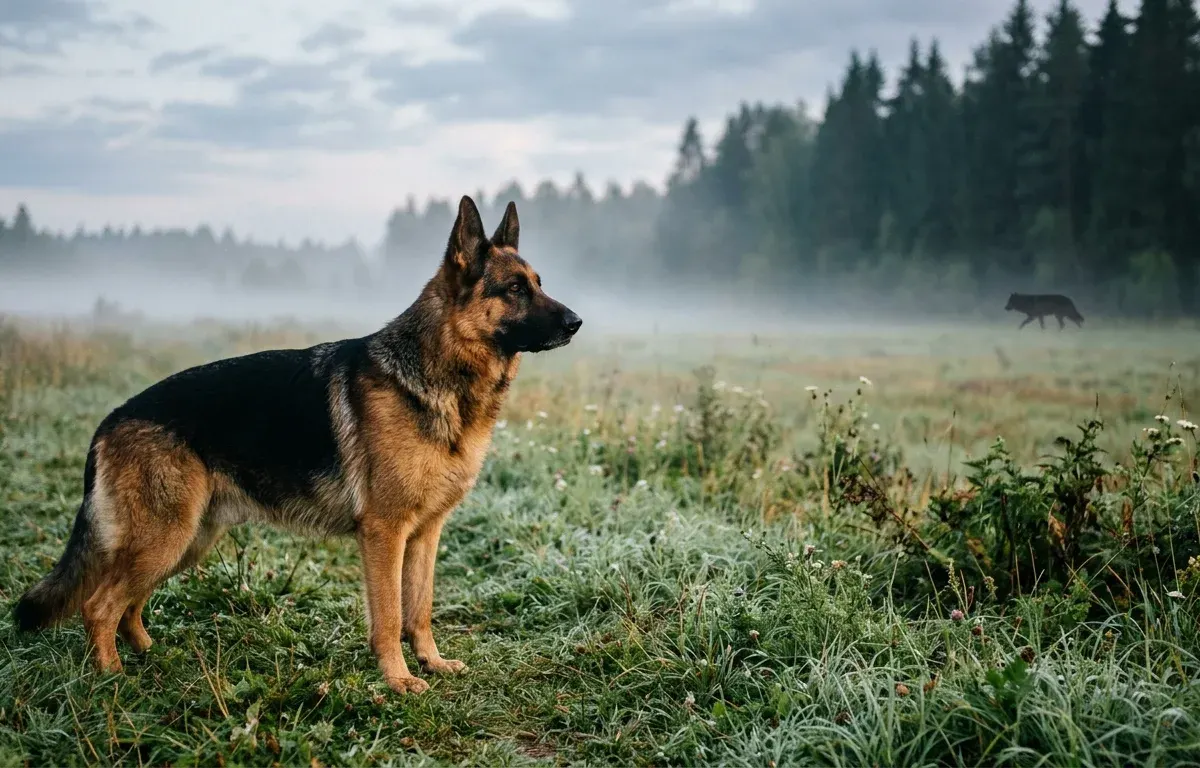
The striking erect ears, robust muzzle, athletic build, and lupine silhouette of the German Shepherd Dog often lead observers to wonder whether the breed has immediate wolf blood. The answer depends on whether we look through the lens of deep evolutionary biology or modern breed development.
From an evolutionary standpoint, the German Shepherd belongs to the domestic dog subspecies Canis lupus familiaris. Every domestic dog breed, from athletic working herders to the gentle and friendly temperament of Pugs, descends from an extinct lineage of Late Pleistocene wolves. Genetic studies confirm that the split between ancient wild wolves and the earliest domesticated canines occurred between 15,000 and 30,000 years ago. Consequently, German Shepherds share a significant portion of their ancestral DNA with gray wolves (Canis lupus), but this relationship is shared equally across all domestic canines, including the beloved companion traits of French Bulldogs.
In everyday terms, however, a purebred German Shepherd is 100 percent domestic dog. They are not wolf-dog hybrids, they do not possess recent wild wolf ancestors in their pedigree, and their cognitive wiring is completely adapted for human cooperation.
Evolutionary Origins and the Canid Tree
To understand how closely German Shepherds sit next to wolves on the evolutionary tree, scientists examine genomic divergence. The genus Canis includes gray wolves, domestic dogs, coyotes, and jackals. All members of this group possess 78 chromosomes (39 pairs), allowing them to produce fertile offspring if interbred.
Despite this genetic compatibility, thousands of generations of natural and artificial selection created profound differences between wild wolves and domestic canines:
- Genetic Drift and Bottlenecks: Domestic dogs diverged from an ancient wolf ancestor that is now extinct, meaning modern gray wolves are evolutionary cousins to domestic dogs rather than direct modern parents.
- Domestication Syndromes: Domestication altered genes regulating the neural crest, producing hallmark domestic traits such as reduced adrenal output, floppy ears in some breeds, varied coat patterns, and reduced skull dimensions.
- Digestive Adaptations: Domestic dogs evolved multiple copies of the AMY2B gene, which produces pancreatic amylase. This allows dogs to digest complex carbohydrates and starches far more efficiently than carnivorous wild wolves.
While German Shepherds retain physical traits that resemble wild canines, their genomic baseline remains firmly domestic.
Canine Domestication: How Dogs Diverged from Ancient Wolf Ancestors
The process of canine domestication fundamentally altered the physiology and reproductive biology of dogs compared to wild canids. Wild wolves are seasonal monoestrous breeders, entering estrus during late winter so pups arrive in mild spring conditions. In contrast, domestic canines maintain spontaneous ovarian cycles throughout the year.
The study of canine reproductive cycles, including canine gestation in Pugs and pregnancy duration in French Bulldogs, illustrates how domestic dogs maintain consistent physiological patterns across diverse breeds, whereas wild canids adhere to rigid ecological timing.
| Biological Marker | Domestic Dogs (Including German Shepherds) | Wild Gray Wolves (Canis lupus) |
|---|---|---|
| Reproductive Periodicity | Bi-annual estrus (throughout the year) | Monoestrous (once per year, late winter) |
| Male Fertility Window | Year-round sperm production | Seasonal spermatogenesis (winter only) |
| Starch Digestion (AMY2B) | High copy number (adapted for mixed domestic diets) | Low copy number (obligate carnivore metabolism) |
| Social Engagement with Humans | Innate gaze response and collaborative orientation | Neophobic, avoidant of prolonged human eye contact |
Breed Origins: Max von Stephanitz and the 1899 Foundation
The true history of the German Shepherd Dog began not in the wilderness, but in the pastoral fields of 19th-century Germany. Before the late 1800s, sheep-herding dogs across central and northern Germany varied widely in coat, color, and ear set, selected strictly for herding ability and endurance.
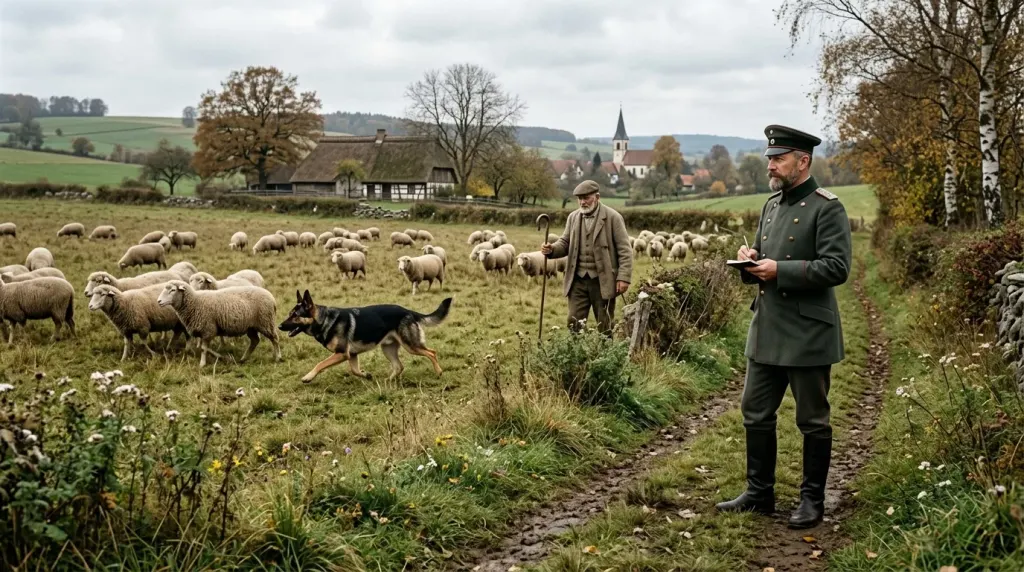
In April 1899, a former cavalry captain named Max von Stephanitz attended a dog show in Karlsruhe. There, he encountered a four-year-old herding dog named Hektor Linksrhein. Von Stephanitz was so impressed by the dog’s intelligence, physical structure, and working drive that he purchased him immediately.
Von Stephanitz renamed the dog Horand von Grafrath, registered him as SZ1 in the newly formed Verein fur Deutsche Schaferhunde (SV), and established him as the foundation sire of the German Shepherd Dog breed. As documented in the American Kennel Club breed history record, Horand was a traditional German working shepherd dog bred by rural sheep farmers, not a captive-bred wolf cross.
While modern urban families often focus on the popularity of French Bulldogs or research the ownership costs of French Bulldogs for indoor living, Captain Max von Stephanitz was dedicated to cultivating working utility, structural endurance, and obedient herding drives in his foundation stock. The myth that German Shepherds are “part wolf” stems primarily from their lupine morphology and early breed marketing. In reality, Captain Max von Stephanitz prioritized utility, biddability, and stable temperament above all else. A wild wolf hybrid would have been disastrous for pastoral flock management, as wolves lack the natural inhibition against harming livestock.
Genetic Distance and the Truth About Wolf Hybridization
When canine geneticists map dog breeds by genetic distance to wild wolves, German Shepherds do not cluster with early basal breeds. Ancient spitz-type breeds (such as the Chow Chow, Akita, and Siberian Husky) and certain pariah hounds demonstrate closer genetic proximity to ancestral canines than modern European herding breeds.
The German Shepherd belongs to the continental European pastoral and working group. Their genetics reflect rigorous selective breeding for livestock control, obedience, and specialized utility.
Standard German Shepherds vs True Wolfdogs
To see the difference between standard domestic dogs and real wolf hybrids, one only needs to examine breeds created through deliberate hybridization.
The clearest example is the Czechoslovakian Wolfdog (Ceskoslovensky Vlcak). Developed in 1955 as a military experiment in Czechoslovakia, researchers crossed Carpathian gray wolves with German Shepherd Dogs. The goal was to combine the trainability and pack loyalty of the shepherd with the stamina, eyesight, and environmental hardiness of the wild wolf.
According to a 2021 genomic divergence study in Genes, Czechoslovakian Wolfdogs exhibit a distinct genomic architecture carrying measurable proportions of wild wolf alleles and high levels of historical inbreeding runs of homozygosity. In contrast, purebred German Shepherds display purely domestic canine SNP profiles.
Similarly, the Saarloos Wolfdog, established in the Netherlands during the 1930s by breeding a male German Shepherd with a female Eurasian wolf, represents a true hybrid lineage. Standard German Shepherds, by contrast, possess no such modern admixture.
Understanding working energy requirements helps prospective owners make informed choices. While working shepherds require substantial space and daily tasks, owners often review the activity requirements of Pugs or assess the apartment living suitability for Pugs when selecting lower-intensity household pets.
Regional Shepherd Dogs and Wild Gene Flow
In remote pastoral environments, livestock guarding dogs working in open mountainous regions have occasionally experienced natural gene flow with local wolf populations. As reported in a study on gene flow between wolf and shepherd dog populations, free-ranging livestock guardian dogs in the Caucasus region exhibited localized hybridization where working dogs and wild wolves shared contiguous geographic ranges.
However, this phenomenon is restricted to free-ranging livestock protectors in specific wilderness zones. Purebred German Shepherds registered with kennel clubs are maintained under closed studbooks, preventing uncontrolled wild outcrossing and ensuring consistent domestic traits.
German Shepherd vs Gray Wolf: Key Differences in Genetics, Physiology, and Behavior
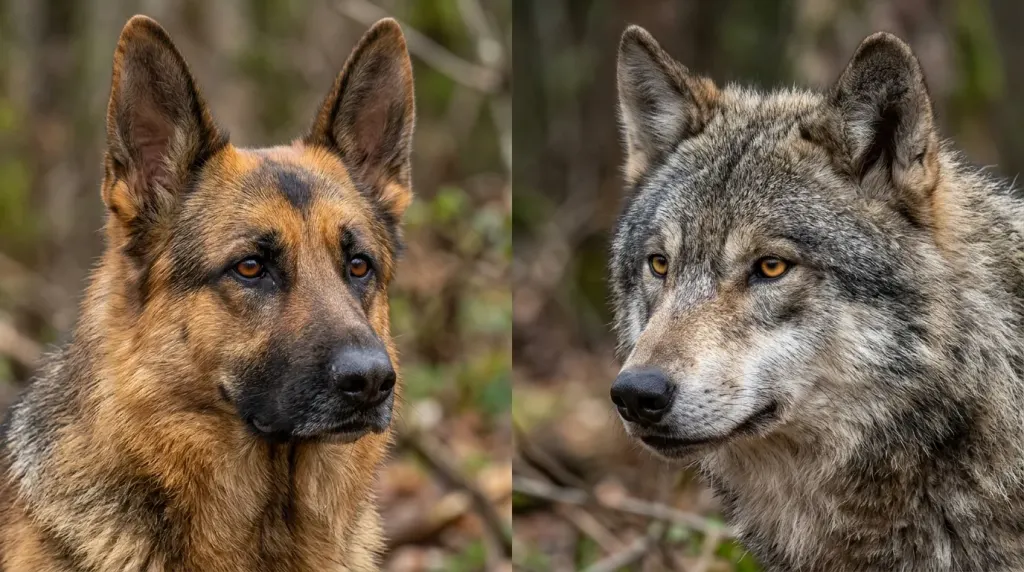
Although a German Shepherd and a gray wolf may share a superficial resemblance in silhouette and coat coloration, their biological and behavioral systems have diverged dramatically.
| Trait | German Shepherd Dog (Canis lupus familiaris) | Gray Wolf (Canis lupus) |
|---|---|---|
| Species Classification | Domestic dog subspecies | Wild canid species |
| Reproductive Cycle | Typically bi-annual estrus (twice per year) | Strictly monoestrous (once per year, late winter) |
| Sexual Maturity | 6 to 12 months | 22 to 36 months |
| Carbohydrate Digestion | High AMY2B gene copy number; efficient starch digestion | Low AMY2B copy number; obligate carnivorous adaptation |
| Social Wiring | Hypersociable toward humans; seeks eye contact and direction | Wary of humans; maintains flight distance and neophobia |
| Vocal Communication | Frequent barking used for alarm, play, and communication | Rarely barks; relies on long-distance howling and scent marking |
| Trainability and Biddability | Exceptional working drive; eager to follow human cues | Independent problem solver; resistant to repetitive obedience tasks |
| Skull and Dentition | Reduced jaw width and bite force relative to skull size | Massive temporal muscles, wider zygomatic arches, larger carnassials |
Physical and Physiological Divergences
The physical divergence between the two animals reflects their distinct ecological niches:
- Reproductive Biology: Female wolves are monoestrous, cycling during a single late-winter breeding season so that litters emerge when spring resources are abundant. Male wolves undergo seasonal spermatogenesis, producing viable sperm only during this reproductive window. German Shepherds, like all domestic dogs, are non-seasonal breeders capable of cycling throughout the year.
- Digestive Physiology: Wolves require a diet dominated by whole animal protein, fat, and bone. German Shepherds possess metabolic pathways capable of processing mixed diets containing cooked starches, grains, and balanced domestic nutrients.
- Cranial Structure: A wolf skull features a wide, flat forehead, prominent sagittal crest, and heavy jaw musculature engineered to crush large ungulate bones. German Shepherd skulls are narrower, with a pronounced stop and refined dentition suited for domestic feeding.
Protective Drive vs Wild Aggression
Owners often evaluate how protective instincts differ between breeds. When evaluating guard dog traits in Pugs or examining reactivity and temperament in Pugs, it becomes clear that companion breeds possess minimal territorial aggression. In German Shepherds, protective behavior is an expression of domestic handler loyalty and alert training, rather than wild predatory aggression.
Note: A German Shepherd displaying reactive or protective behavior is acting on domestic territorial or fear-based drives, not wild wolf instincts. Behavior in domestic dogs is governed by genetics, early socialization, and consistent training.
Breed Temperament, Trainability, and Social Wiring
Behavior is where the gap between wolves and German Shepherds becomes most obvious. Domestication fundamentally reshaped the canine nervous system:
- Human Gaze and Communication: When faced with an unsolvable puzzle, a German Shepherd looks back at its human handler for assistance. A wolf continues attempting to solve the problem independently, rarely seeking human guidance.
- Neophobia and Wariness: Wild wolves possess intense neophobia, meaning they are deeply suspicious of novel objects, unfamiliar environments, and strange individuals. German Shepherds, when properly socialized, adapt readily to urban life, vehicles, and complex working tasks.
- Barking vs Howling: Barking is a hypertrophied domestic communication tool. Adult wolves rarely bark, utilizing short warning chuffs or resonant howls instead.
Cognitive traits vary across domestic breeds based on historical roles. Research into problem-solving and intelligence in Pugs and trainability and cognition in French Bulldogs shows that while companion dogs excel at social problem-solving, German Shepherds excel at complex handler-focused working tasks.
Frequently Asked Questions About German Shepherds and Wolves
Do German Shepherds have wolf DNA?
German Shepherds have ancient wolf DNA in the exact same proportion as all domestic dogs, because the domestic dog (Canis lupus familiaris) evolved from an ancient, extinct wolf ancestor. However, purebred German Shepherds have no recent or direct gray wolf (Canis lupus) DNA in their pedigrees.
Was the first German Shepherd part wolf?
No, the foundation dog of the breed, Horand von Grafrath (SZ1), was a traditional German working sheepdog found in rural Germany in 1899. Although early breeders admired his wolf-like appearance and upright ears, genealogical records and modern genetic evidence confirm he was entirely a domestic herding dog.
What is the difference between a German Shepherd and a Czechoslovakian Wolfdog?
A German Shepherd is a purebred domestic working breed established in 1899. A Czechoslovakian Wolfdog is an official breed created in the 1950s by crossing German Shepherds directly with wild Carpathian wolves to produce a hybrid working animal with verified wild canid genetic contributions.
Are German Shepherds more aggressive because of their wolf-like appearance?
No. Physical appearance has no direct correlation with behavioral aggression. German Shepherds were bred to be courageous, alert, and protective working companions. Their behavior is governed by domestic genetics, responsible breeding, early socialization, and training, not wild predatory instincts.
Leave a Reply