

Table of Contents
When asking how long are French Bulldogs pregnant, the typical canine gestation period averages 63 days (about nine weeks) from the point of ovulation. Because canine sperm can remain viable in the female reproductive tract for several days before fertilization occurs, physical delivery dates generally range between 58 and 68 days when measured from an initial breeding date. Due to their compact pelvic structure and large puppy head dimensions, French Bulldogs require close prenatal monitoring, with scheduled cesarean sections serving as the primary clinical delivery standard.
- The typical French Bulldog gestation period averages 63 days from ovulation, with a normal range of 58 to 68 days from mating.
- Abdominal ultrasound confirms fetal heartbeats around days 25 to 30, while diagnostic X-rays determine precise puppy counts after day 45.
- Maternal caloric intake should increase by 25 to 50 percent during the final three weeks using a growth-formula diet without added calcium.
- A maternal body temperature drop below 100°F (37.8°C) reliably signals that labor will commence within 12 to 24 hours.
- Over 80 percent of French Bulldog litters require planned cesarean deliveries to avoid fatal labor complications.
Dominant Factors Shaping Pregnancy Duration
Canine reproductive biology follows a strict timetable, yet estimating an exact whelping date requires understanding how veterinarians calculate canine gestation.
Basics of the Canine Gestation Cycle
A female dog’s pregnancy length is biologically consistent across breeds. As outlined in clinical guidance from the VCA Animal Hospitals gestation overview, canine gestation averages 63 days from the point of ovulation, while counting strictly from the day of physical mating yields an expected delivery window of 58 to 68 days.
This variation stems from the unique lifespan of canine gametes. A stud’s sperm can survive inside the female reproductive tract for up to five to seven days before fertilizing an egg. If breeding occurs early in the fertile window, fertilization happens several days later, making the pregnancy appear longer when counted from the mating date. Conversely, breeding after ovulation leads to immediate fertilization and an apparently shorter timeline.
For this reason, breeders track serum progesterone levels to establish an accurate due date. Knowing when French Bulldogs go into heat allows owners to schedule blood tests that pinpoint the exact luteinizing hormone surge and subsequent ovulation.
Breed and Litter Size Variations
While the internal clock of fetal development is identical across domestic canines, litter size directly alters the timing of delivery. A standard French Bulldog litter typically ranges from three to five puppies.
Large litters of six or more puppies can stretch the uterine muscle to its physical limit, occasionally triggering labor a few days early (around day 58 to 60). Conversely, small litters of only one or two puppies often fail to produce sufficient hormonal signals (specifically fetal cortisol) to initiate natural labor contractions. This condition, known as single-pup syndrome, can cause the pregnancy to extend past day 65, leading to fetal overgrowth and necessitating urgent surgical intervention.
Maternal Age and Overall Health
The age, physical conditioning, and reproductive history of the dam influence how smoothly the pregnancy progresses. First-time mothers (primiparous dams) or dogs older than five years experience higher rates of primary uterine inertia, where the uterine wall lacks the strength to sustain rhythmic contractions. Responsible breeding management, including artificial insemination protocols described in how to breed French Bulldogs, ensures that only healthy, fully matured females enter a breeding program with prior pelvic evaluations.
Week-by-Week French Bulldog Pregnancy Timeline
Canine gestation divides into three equal trimesters of roughly three weeks each. The following timeline outlines the major fetal milestones and maternal care requirements:
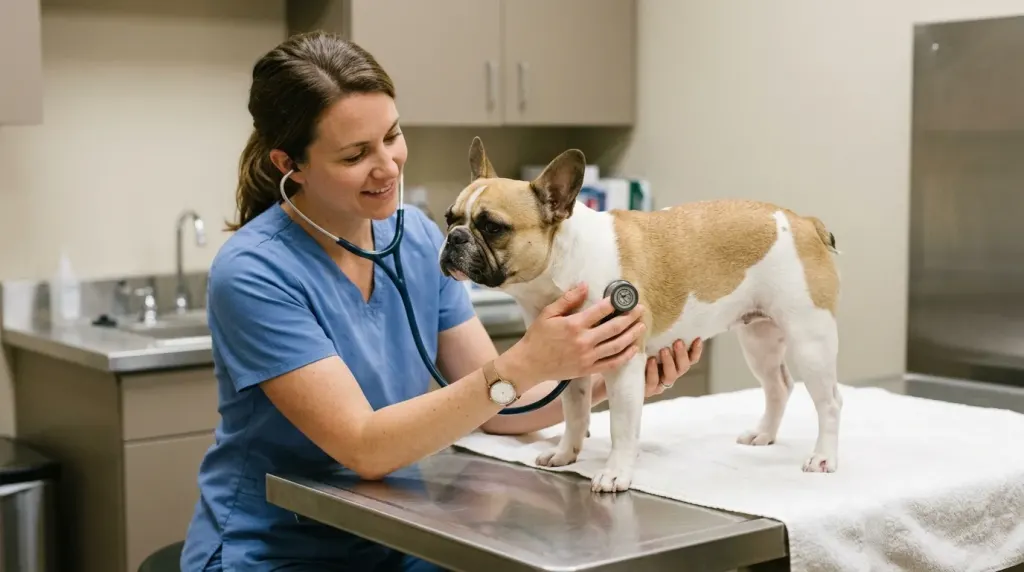
| Gestation Stage | Timeline | Key Fetal Development | Maternal Signs & Care Actions |
|---|---|---|---|
| First Trimester | Weeks 1 to 3 (Days 1 to 21) | Fertilization occurs in the oviducts; blastocysts travel down and implant into uterine horns around days 16 to 18. | Normal appetite and energy; maintain standard adult diet and routine exercise. |
| Second Trimester | Weeks 4 to 6 (Days 22 to 42) | Organogenesis completes; spinal cords, limbs, and facial features form; fetal heartbeats detectable. | Pinking up of nipples; mild morning nausea; confirm pregnancy via ultrasound at day 25 to 30. |
| Third Trimester | Weeks 7 to 9 (Days 43 to 63+) | Skeletons calcify; rapid puppy weight gain; fur and claws develop; lungs reach maturity. | Visible abdominal swelling; transition to puppy food; take X-rays at day 50 to 55; prepare whelping box. |
Weeks 1 to 2: Fertilization and Early Embryonic Movement
During the first 14 days, fertilized eggs develop into blastocysts while floating freely within the uterine horns. Outward physical changes are virtually absent. The mother should continue eating her standard, balanced adult diet without changes in caloric volume. Routine daily activities should remain calm and consistent.
Weeks 3 to 4: Implantation and Rapid Organogenesis
Around days 16 to 18, the blastocysts embed securely into the uterine lining to establish placental attachments. By day 22, embryonic heartbeats begin. Around day 25 to 28, hormonal shifts can cause transient morning nausea or finicky eating habits. Mammary tissue begins to firm slightly, and the nipples take on a deeper pink hue.
Weeks 5 to 7: Fetal Development and Abdominal Growth
By week five, the embryos officially become fetuses as major organs, skeletal framework, and whiskers take shape. Amniotic fluid volumes expand, leading to visible widening behind the ribs. By day 45, fetal bones absorb calcium and begin calcifying, which makes them visible on diagnostic radiographs.
During this stage, natural hormonal shifts alter French Bulldog behavior, often causing expectant mothers to become noticeably more clingy, protective of their resting spots, or seeking quiet, shaded areas of the house.
Weeks 8 to 9: Final Maturation and Whelping Readiness
In the final two weeks, the puppies rapidly gain body mass and position themselves along the uterine horns. The dam’s mammary glands enlarge significantly and may begin expressing watery colostrum. Owners should begin tracking the mother’s resting body temperature twice daily starting at day 57 to anticipate early labor signals.
Signs of Pregnancy and Diagnostic Milestones
Confirming whether a mating resulted in a viable pregnancy requires combining observable physical cues with formal veterinary diagnostics.
Early Physical and Behavioral Changes
Early signs of French Bulldog pregnancy appear gradually during the fourth week:
- Noticeable enlargement and darkening of the nipples (pinking up).
- A clear, odorless mucus discharge from the vulva around day 30, resulting from the formation of the cervical mucus plug.
- Mild lethargy and reduced interest in vigorous play during weeks three and four.
- Gradual expansion of the abdominal circumference beginning around day 35.
Ultrasound vs. X-rays: Timing and Diagnostic Accuracy
Relying solely on visual changes or abdominal palpation can lead to errors, especially in deep-chested breeds like French Bulldogs where false pregnancies (pseudopregnancy) mimic true gestation.
Veterinary diagnostics provide objective clarity:
- Diagnostic Ultrasound (Days 25 to 35): Ultrasound imaging detects fluid-filled gestational sacs and active fetal heartbeats. Normal fetal heart rates should exceed 200 to 220 beats per minute. A drop below 160 beats per minute indicates acute fetal distress. While ultrasound confirms viability, it is unreliable for counting exact litter size.
- Abdominal Radiography / X-rays (Days 50 to 55+): Because puppy bones must calcify to show up on X-rays, radiographs are performed during the final trimester. A radiograph provides an accurate count of puppy skulls and spines. This step is mandatory for French Bulldogs because it allows the veterinarian to compare the width of the largest fetal skull against the dam’s pelvic canal diameter to confirm if a natural delivery is feasible or if a planned C-section is required.
Health Monitoring for Dam and Developing Puppies
Throughout the second half of gestation, record the mother’s body weight weekly. Weight should rise steadily by 15 to 25 percent of her pre-pregnancy mass by week eight. Monitor resting respiratory rates, as the growing uterus compresses the diaphragm, which can exacerbate breathing difficulty in brachycephalic dogs.
Nutrition, Exercise, and Prenatal Care
Supporting a pregnant French Bulldog requires targeted nutritional adjustments and strict activity boundaries.
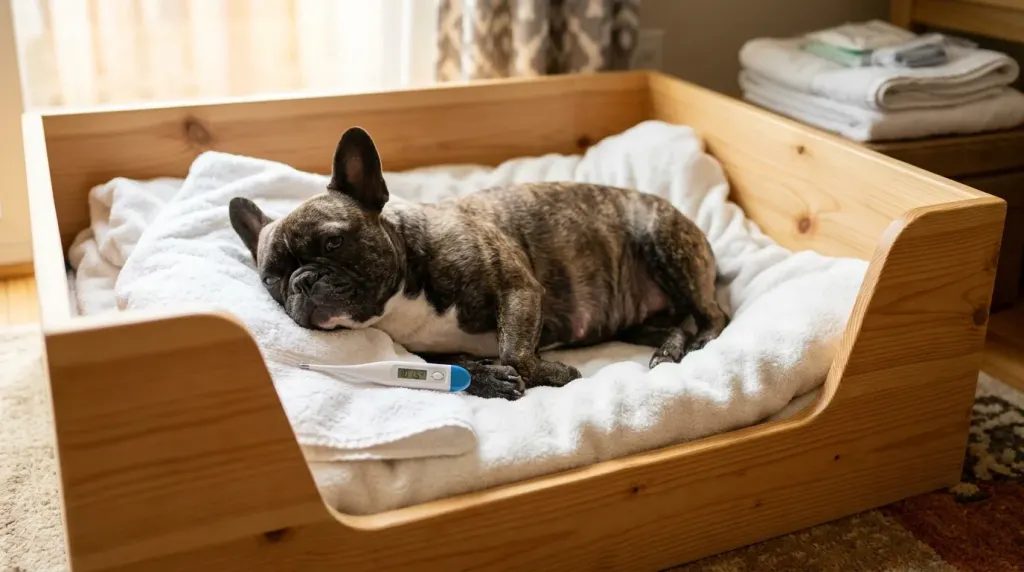
Nutritional Requirements for Pregnant French Bulldogs
During the first five weeks, the embryos grow slowly, so the dam requires no additional calories. Overfeeding early in gestation leads to excessive maternal fat deposition, which narrows the birth canal and elevates surgical risks.
Beginning in week six, fetal growth accelerates rapidly. As recommended in the VCA Animal Hospitals prenatal feeding guidelines, owners should gradually transition the dam to a high-protein, energy-dense puppy or all-life-stages formula. By whelping time, her total daily food intake should be 25 to 50 percent higher than her maintenance baseline, divided into three or four small meals per day to accommodate reduced stomach capacity.
If the dam experiences transient digestive sensitivity during dietary transitions, simple bland additions such as feeding French Bulldogs rice combined with lean poultry can help settle her gastrointestinal tract.
Veterinary Note: Never administer over-the-counter calcium supplements during pregnancy. Routine prenatal calcium supplementation suppresses the mother’s natural parathyroid hormone feedback loop, preventing her body from mobilizing bone calcium when milk production spikes and substantially increasing the risk of life-threatening postpartum eclampsia (milk fever).
Safe Exercise Routines and Rest Requirements
Pregnant French Bulldogs require gentle daily movement to preserve muscle tone without causing thermal or physical exhaustion. Short leash walks during the cool hours of the morning are ideal.
Avoid strenuous running, jumping onto furniture, or rough play with other household pets. Protecting the spine is critical during late gestation, as excess abdominal weight alters posture and increases susceptibility to spinal disc degeneration, including IVDD in French Bulldogs. When lifting a pregnant Frenchie, support her entire body horizontally with one hand beneath her chest and the other under her hindquarters, avoiding any direct pressure on her abdomen.
Preparing the Whelping Box and Nursery Area
Set up a dedicated whelping area at least two weeks before the estimated due date so the dam can acclimate comfortably:
- Choose a quiet, draft-free room with minimal foot traffic.
- Install a whelping box with low sides for easy maternal access and internal safety rails (pig rails) to prevent the mother from accidentally rolling onto her newborn puppies.
- Place clean, absorbent, non-looped bedding inside the box.
- Equip the area with a reliable supplemental heat source, such as a thermostatically controlled heating pad placed under half the box, maintaining the immediate nursery temperature between 85°F and 90°F (29°C to 32°C) during the puppies’ first week of life.
Whelping Risks and When to Contact a Veterinarian
French Bulldogs are classified as an extreme high-risk breeding group. Preparing for delivery means preparing for surgical intervention.
Common Gestation and Delivery Complications
The primary obstacle during French Bulldog delivery is obstructive dystocia. A study published by researchers through the Royal Veterinary College canine dystocia study documented that French Bulldogs face substantially elevated odds of birth complications compared to non-brachycephalic breeds, with over 80 percent of litters delivered through planned or emergency cesarean sections.
Puppies inherit large, broad skulls and wide shoulders, while maternal pelvises remain narrow. When a puppy lodges in the birth canal, natural passage becomes physically impossible. Comprehensive health screenings detailed in French Bulldog breeding practices help identify structural pelvic narrowing well before breeding takes place.
Emergency Labor Warning Signs Requiring Immediate Intervention
Understanding the three stages of canine labor, as outlined by the Cornell University Riney Canine Health Center whelping protocol, helps distinguish normal progression from medical emergencies:
- Stage 1 (Cervical Relaxation): Lasts 6 to 24 hours. The dam becomes restless, pants, shivers, refuses food, and exhibits nesting behavior. Her rectal temperature drops below 100°F (37.8°C), indicating that labor will begin within 24 hours.
- Stage 2 (Active Delivery): Strong abdominal contractions push puppies through the birth canal.
- Stage 3 (Placental Expulsion): Placental tissues pass following each puppy delivery.
Contact an emergency veterinary hospital immediately if any of the following clinical warning signs occur:
- Strong, continuous abdominal contractions last for more than 30 minutes without delivering a puppy.
- More than two hours elapse between puppy deliveries with weak, intermittent straining.
- A dark green or black vaginal discharge (uteroverdin) appears before the first puppy is delivered, signaling acute placental separation and fetal hypoxia.
- Active stage two labor does not begin within 24 hours after the rectal temperature drops below 100°F.
- Total gestation exceeds 68 days from the last breeding date without any signs of labor.
Planning for Cesarean Delivery
Because natural whelping carries severe maternal and fetal mortality risks, veterinary theriogenologists recommend scheduling an elective C-section.
The surgical date is timed precisely using serial blood progesterone testing (waiting until serum levels drop below 2.0 to 3.0 ng/mL, signaling fetal lung maturity) or when ultrasound confirms fetal intestinal peristalsis and mature heart rates. A planned procedure prevents emergency nighttime surgeries, reduces anesthesia risks, and ensures a full veterinary team is present to resuscitate the newborn litter.
Frequently Asked Questions About French Bulldog Pregnancy
What is the average pregnancy duration for a French Bulldog?
A French Bulldog pregnancy averages 63 days when calculated from ovulation per standard veterinary theriogenology guidelines. When measured from the date of physical breeding, normal delivery typically occurs between 58 and 68 days depending on the timing of fertilization.
How do you identify premature labor in French Bulldogs?
Premature labor is characterized by a sustained body temperature drop below 100°F, active uterine contractions, or nesting behavior occurring prior to day 57 of gestation. Puppies born before day 57 often suffer from surfactant deficiency in their lungs and require intensive incubator support.
Does pregnancy cause long-term health risks for the mother?
Repeated pregnancies and surgical deliveries place physical stress on a French Bulldog’s body. Multiple cesarean sections can create internal abdominal adhesions and uterine wall thinning. To protect maternal longevity and spinal health, veterinary guidelines recommend limiting female French Bulldogs to a maximum of two to three litters over their lifetime before spaying.



Leave a Reply