

Table of Contents
Can French Bulldogs eat watermelon? Yes, French Bulldogs can eat seedless watermelon flesh safely in moderation. Watermelon is 92% water and low in calories, making it a healthy, hydrating snack during hot weather. Because Frenchies have flat faces and short airways, always remove every seed and all green rind, then slice the fruit into small bite-sized cubes to avoid choking.
- Seedless red watermelon flesh is safe and hydrating for French Bulldogs.
- The green rind and seeds must be completely removed to prevent choking and intestinal blockages.
- French Bulldogs have brachycephalic jaws, so fruit must be cut into small bite-sized pieces.
- Follow the 10% treat rule: feed no more than 1/4 cup (3-4 small cubes) once or twice weekly.
- Consult a veterinarian immediately if a Frenchie swallows rind or seeds.
Is watermelon safe for French Bulldogs?
Watermelon flesh is classified as non-toxic to dogs by the ASPCA Animal Poison Control Center. French Bulldogs can eat it safely as an occasional treat when the rind and seeds are fully removed. Because this breed has a compact digestive tract and specific airway structures, correct preparation matters more for them than for larger dogs. A poorly prepared piece of fruit can quickly become a mechanical hazard. When deciding what French Bulldogs can eat as safe treats, fresh fruit can offer healthy variety. Unlike some fruits where the risks of feeding peaches to Frenchies involve different concerns like pits, watermelon requires attention strictly on the rind and seeds.
Why the flesh differs from the rind and seeds
The safety of watermelon depends entirely on which part the dog consumes:
| Part | Safety status | Main risk |
|---|---|---|
| Red flesh | Safe | None when fed in moderation |
| Green rind | Unsafe | Too fibrous to digest; choking and blockage hazard |
| Seeds | Unsafe | Accumulation causes intestinal blockage in small dogs |
Nutritional value of watermelon for dogs
Watermelon contains about 92% water and roughly 30 calories per 100 grams. It provides potassium, vitamin A, vitamin B6, and vitamin C. This high water and low-calorie profile makes it a suitable snack for French Bulldogs, a breed that gains weight easily. It delivers necessary hydration without the heavy calorie load found in processed treats.
Why Frenchies overheat easily and need cooling treats
French Bulldogs have shortened muzzles that limit their ability to cool down by panting. Because they struggle to regulate their body temperature in warm weather, cold or frozen watermelon flesh provides a temporary cooling effect. It supplements their hydration but does not replace the need for fresh drinking water.
Watermelon rind and seeds: the parts to completely avoid
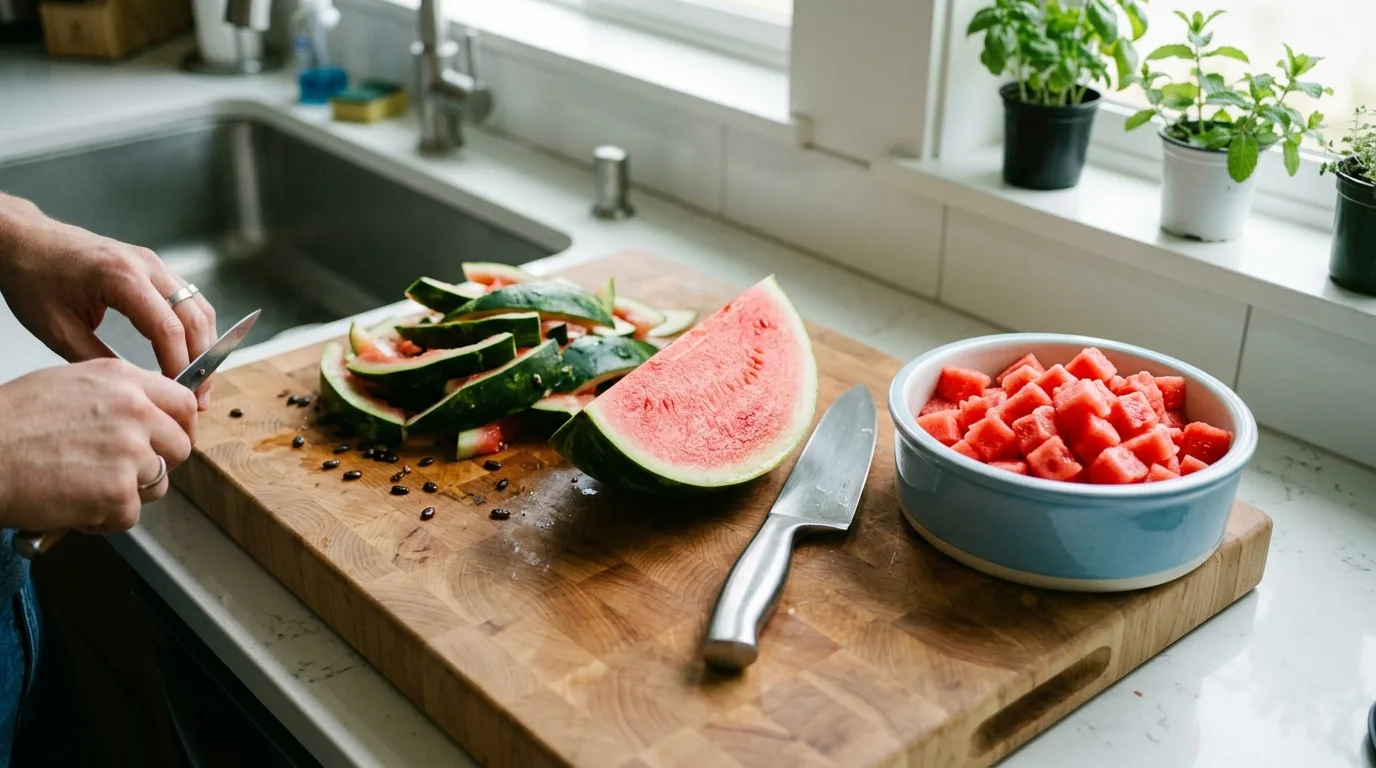
The green rind is highly fibrous and difficult for the canine stomach to break down. Swallowing a chunk can lead to choking or create a physical blockage in the intestines. Both the black seeds and the hard white seeds carry similar risks. They can clump together in the digestive tract of a small dog, causing blockages or severe irritation.
What to do if a Frenchie swallows rind or seeds
Contact a veterinarian or pet poison control center IMMEDIATELY if your dog consumes rind or seeds. Do not induce vomiting unless explicitly instructed by a veterinarian. Do not wait for symptoms to appear before calling for help, as waiting can cause you to miss the critical window for emergency treatment.
If treatment is delayed, you might observe these signs of a severe blockage:
- Signs of persistent throwing up in Frenchies
- A hard, swollen, or painful abdomen
- Lethargy or refusal to eat
- Inability to pass stool
How brachycephalic jaw and airway structure affects eating
French Bulldogs have a brachycephalic (flat-faced) skull shape, resulting in crowded teeth and a shortened jaw. Many dogs with this anatomy tend to swallow food quickly without chewing it properly. This rapid swallowing increases the risk of choking and aspiration, especially for dogs suffering from Brachycephalic Obstructive Airway Syndrome (BOAS). A large, hard piece of fruit can block the airway, leading to emergency shaking signs in Frenchies as they struggle to breathe.
Ways to slow down a fast-eating Frenchie
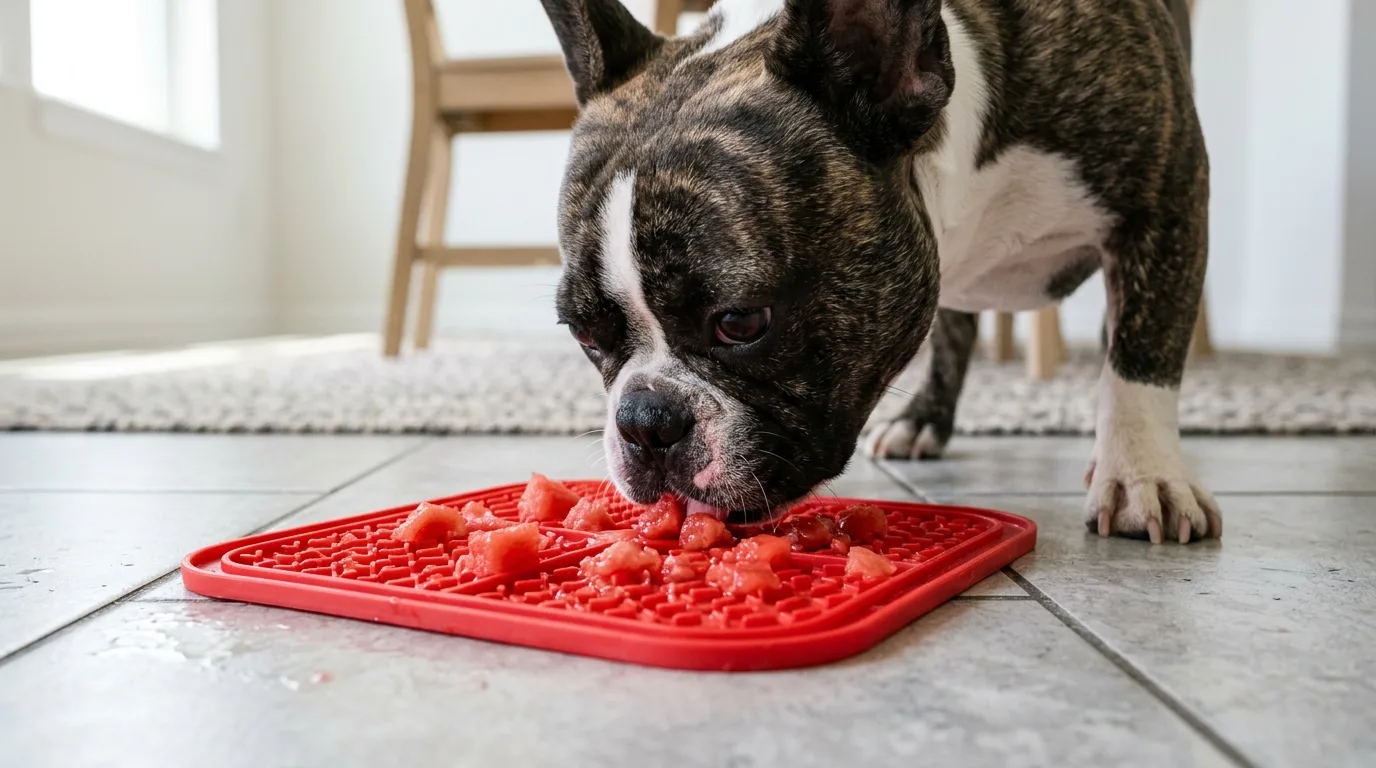
- Cut the watermelon into very small, bite-sized cubes.
- Serve the fruit on a lick mat to force the dog to eat slowly.
- Feed the pieces by hand one at a time.
How much watermelon should a Frenchie eat?
Veterinarians recommend following the 10% treat rule: treats should account for no more than 10% of a dog’s daily calorie intake. A healthy adult French Bulldog weighing 24 to 28 pounds (11 to 13 kg) can safely eat about 1/4 cup of diced watermelon (roughly three to four small cubes) one to two times a week. Keeping the portion small leaves room for other healthy foods, like following a rice portion guide for Frenchies.
| Dog weight/stage | Recommended portion | Frequency |
|---|---|---|
| Puppy (over 12 weeks) | 1 small cube | Once a week |
| Adult (24-28 lbs) | 1/4 cup (3-4 cubes) | 1 to 2 times a week |
Portion differences between puppies and adults
Introduce watermelon to puppies only after they reach 12 weeks of age, starting with a single small piece to monitor their reaction. Adult Frenchies can handle the standard 1/4 cup portion, but feeding them more can lead to diarrhea due to the high water and sugar content.
Watermelon and the sensitive French Bulldog stomach
French Bulldogs are known for their sensitive digestive systems. They often experience flatulence and loose stools when introduced to new foods. When feeding watermelon for the first time, offer only one small piece and observe the dog’s reaction. This helps you understand why Frenchies are prone to farting and allows you to stop feeding the fruit if it causes an upset stomach. Watermelon’s natural sugars can ferment in the gut, exacerbating gas in dogs that already have sensitive stomachs. Slow introduction is the best prevention.
Special cases: Diabetes and weight management
The natural fructose in watermelon can spike blood sugar levels. Dogs diagnosed with diabetes or severe obesity should avoid sweet fruits. Always consult a veterinarian before adding watermelon to the diet of a dog with these health conditions.
How to prepare watermelon safely for Frenchies
Follow these steps to ensure the fruit is safe before offering it to a dog, similar to how to safely prepare salmon for Frenchies:
- Wash the outside of the watermelon to remove dirt and pesticides.
- Slice the fruit and cut away the entire green rind and the hard white layer beneath it.
- Pick out every black and white seed.
- Dice the red flesh into small cubes no larger than half an inch.
- Serve the cubes fresh or freeze them for a cold summer treat.
FAQ about can french bulldogs eat watermelon
Can Frenchies eat watermelon rind?
No. The rind is tough and difficult to digest. It presents a severe choking hazard and can cause intestinal blockages, particularly in small breeds.
Can Frenchies eat watermelon seeds?
No. Seeds must be entirely removed. They can irritate the digestive tract or accumulate in the intestines, leading to a physical blockage.
Is frozen watermelon safe for Frenchies?
Yes. Frozen seedless watermelon cut into small, bite-sized cubes is a safe and hydrating treat for hot days, provided the pieces are small enough to prevent choking.
Can diabetic Frenchies eat watermelon?
Watermelon contains natural sugars that affect blood glucose. Diabetic dogs should only eat it under direct veterinary supervision.
Watermelon is a safe and hydrating snack for French Bulldogs when prepared properly. Serve only the seedless flesh in small portions, and never allow the dog to chew on the rind. For more information on safe diet choices, read about the risks of feeding ham to Frenchies to keep your dog healthy and safe.



Leave a Reply