
Table of Contents
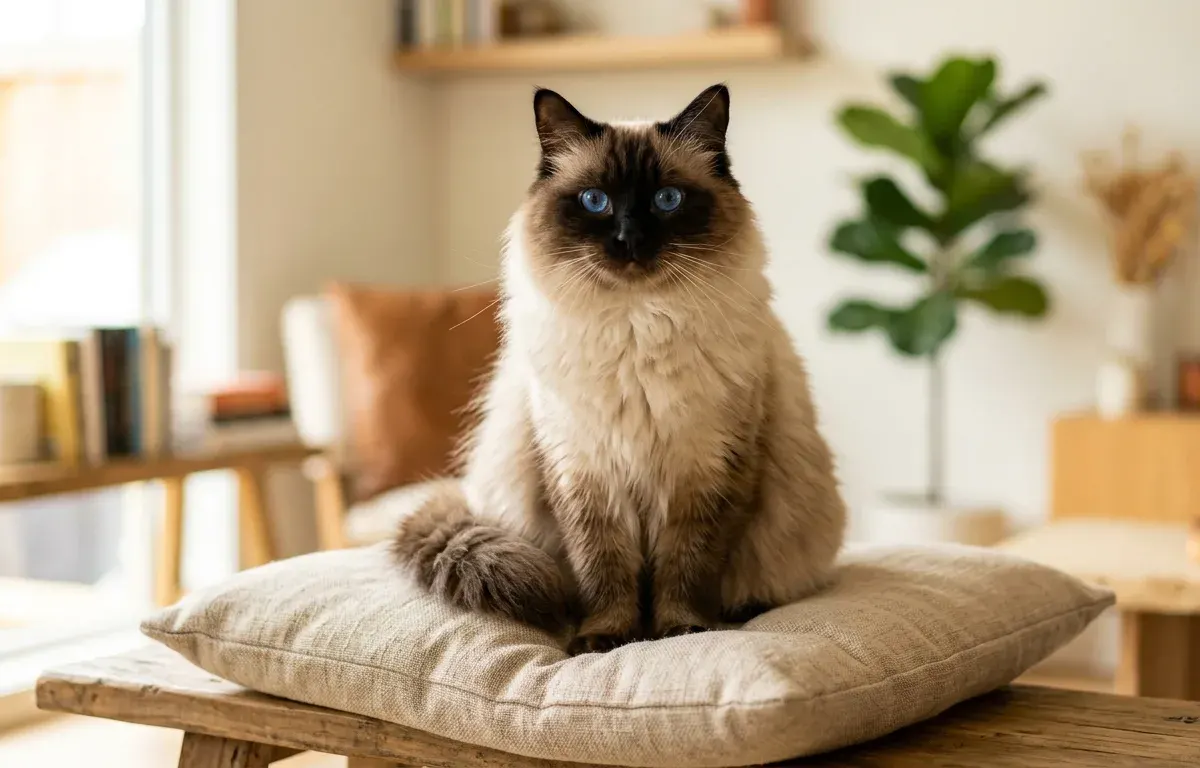
When pet owners ask do all ragdoll cats have blue eyes, the direct answer is no, not all Ragdoll cats have blue eyes in adulthood. While traditional pointed Ragdolls are guaranteed to retain striking blue eyes due to the temperature-sensitive Siamese colorpoint gene (cs), non-traditional Ragdoll varieties such as Mink, Sepia, and Solid Ragdolls can display aqua, green, gold, hazel, or copper eyes depending on their C-locus genetics.
- Traditional pointed Ragdolls are the only variety guaranteed to retain permanent blue eyes throughout adulthood.
- All Ragdoll kittens are born with blue eyes, but non-traditional variants transition to their permanent adult eye color between 8 and 16 weeks of age.
- Blue eye color in pointed Ragdolls is driven by the recessive colorpoint allele (cs), which restricts melanin production in the iris.
- Major feline registries like the Cat Fanciers' Association (CFA) require blue eyes for championship competition, whereas The International Cat Association (TICA) recognizes non-blue-eyed varieties under separate breed divisions.
Which Ragdoll Cats Are Guaranteed to Have Blue Eyes?
Traditional pointed Ragdolls represent the classic image of the breed and are the only variety guaranteed to maintain vivid blue eyes for life. When prospective owners research a comprehensive what is a Ragdoll cat overview, the defining physical hallmark is a light body paired with darker extremities and striking blue eyes.
Traditional Pointed Ragdolls and the Colorpoint Gene
Traditional pointed Ragdolls inherit two copies of the temperature-sensitive colorpoint allele (cs/cs). This recessive genetic trait restricts pigment production across warmer areas of the body, including the irises. Because melanin deposition remains inhibited within the iris tissue, incoming light refracts through the transparent structural layers of the eye, producing a distinct blue appearance.
The intensity of blue eyes in traditional Ragdolls varies among individual cats:
- Soft Sky Blue: A delicate, light blue shade often seen in lighter point patterns.
- Medium Sapphire: The most common bright, clear blue hue in show-quality cats.
- Deep Indigo Blue: A rich, intensely saturated blue prized in competition rings.
Regardless of the specific shade, traditional pointed Ragdolls never develop green, gold, or brown eyes as adults.
Ragdoll Varieties That May Not Have Blue Eyes
Although pointed cats dominate traditional breed standards, selective breeding has established non-traditional Ragdoll varieties. These cats carry alternative gene combinations at the C locus that allow active melanin synthesis in the iris. Anyone learning how to identify a Ragdoll cat across all recognized bloodlines must understand how these non-traditional variants differ from pointed cats.
Mink Ragdolls
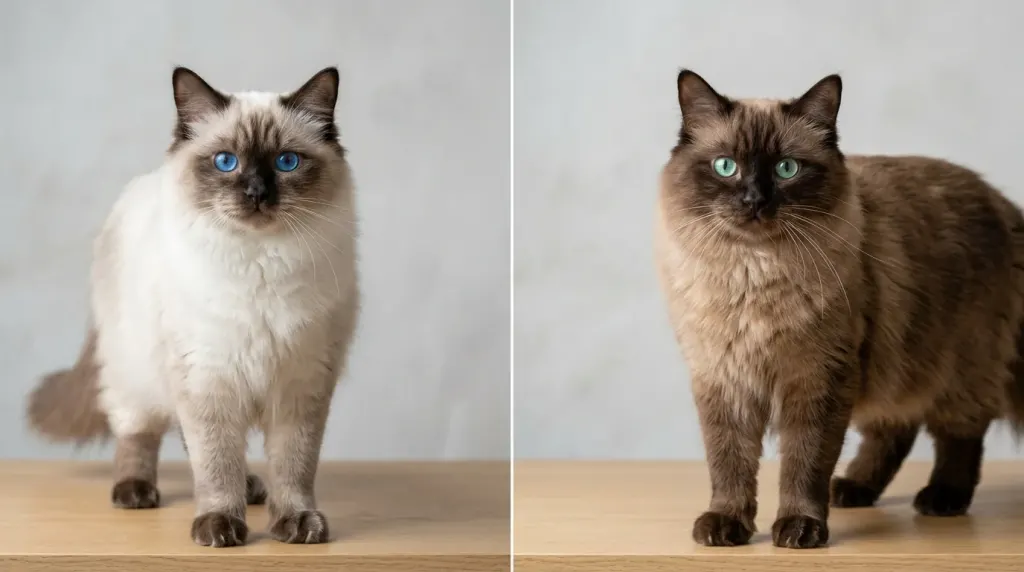
A what is a mink Ragdoll cat query often arises from their distinctive plush coat and richer body coloration. Mink Ragdolls possess a mink genotype (cb/cs), inheriting one Burmese sepia allele and one Siamese colorpoint allele. This combination creates moderate melanin restriction, resulting in sea-green or aqua eyes rather than pure blue.
Sepia Ragdolls
Sepia Ragdolls carry two copies of the sepia gene (cb/cb). Because melanin restriction is minimal in sepia cats, their coat displays deep, warm tones with subtle contrast between body and points. As adults, Sepia Ragdolls feature green, hazel, or golden-yellow eyes, rarely retaining any blue pigmentation.
Solid Ragdolls (Cherubim Division)
Solid Ragdolls (genotypes C/C or C/cs) exhibit full body pigmentation without colorpoint restriction. Because melanin synthesis occurs normally throughout the iris, Solid Ragdolls display striking green, gold, amber, or copper eyes.
| Ragdoll Variety | C-Locus Genotype | Adult Eye Color Range | Point Color Restriction |
|---|---|---|---|
| Traditional Pointed | cs / cs | Sky blue to deep sapphire | Strong (dark extremities, light body) |
| Mink | cb / cs | Aqua, sea-green, or blue-green | Moderate (rich body shading) |
| Sepia | cb / cb | Green, gold, or hazel | Minimal (deep, warm coat contrast) |
| Solid (Cherubim) | C / C or C / cs | Green, gold, amber, or copper | None (full body pigmentation) |
Why Do Ragdoll Cats Have Blue Eyes? The Genetics Explained
The primary mechanism controlling Ragdoll eye color resides at the C locus, which regulates the production of tyrosinase, an enzyme required for melanin synthesis. In traditional pointed Ragdolls, the recessive Siamese allele (cs) produces a heat-sensitive form of tyrosinase that functions only at cooler extremity temperatures.
Because the interior environment of the eye remains warm, melanocytes in the iris produce minimal melanin. Without dark pigment to absorb light, light rays undergo Rayleigh scattering off microscopic collagen fibers within the iris stroma, rendering the eyes blue to human observation.
According to the official Cat Fanciers’ Association (CFA) Ragdoll breed standard, purebred pointed Ragdolls must possess large, vivid blue oval eyes, with any eye color other than blue resulting in disqualification from championship class competition. Historical documentation regarding where do Ragdoll cats originate from shows that the founding bloodlines bred by Ann Baker in the 1960s established this colorpoint trait as the cornerstone of the breed’s identity. Structural eye color in pointed Ragdolls means the blue appearance relies entirely on light scattering rather than blue chemical pigment. If melanin production increases due to non-traditional allele pairings, the structural blue effect is masked by green or yellow tones.
Note: Eye color intensity in pointed Ragdolls stabilizes during young adulthood. While shade depth can fluctuate slightly based on lighting, a pointed Ragdoll will never lose its blue hue entirely.
How Ragdoll Kitten Eye Color Changes With Age
All domestic cat breeds, including every Ragdoll kitten, are born with blue eyes. At birth, iris melanocytes remain inactive, so light scattering creates an initial pale blue hue across every newborn kitten.
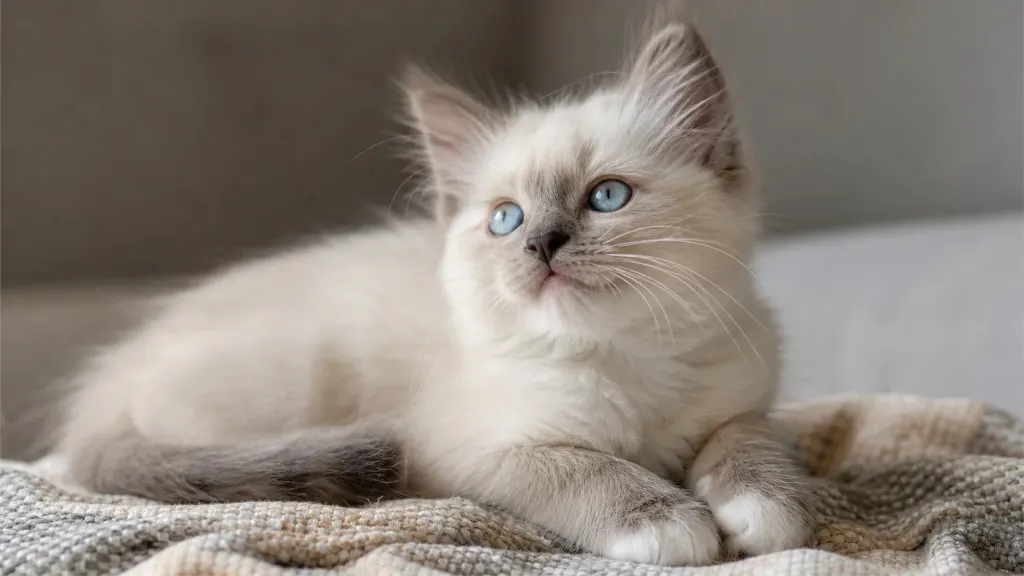
Understanding the developmental timeline helps owners track permanent eye color changes:
- Birth to 3 Weeks: All Ragdoll kittens open their eyes showing a milky blue shade regardless of coat genotype.
- 4 to 7 Weeks: Melanocytes begin producing pigment in kittens with non-traditional genotypes, while pointed kittens retain clear blue.
- 8 to 16 Weeks (3 to 4 Months): Permanent adult eye color settles. Mink kittens transition toward aqua, Sepia kittens shift to green or hazel, and Solid kittens establish gold or copper tones.
By monitoring these developmental stages along with overall Ragdoll cat breed milestones, breeders and owners can accurately identify a kitten’s coat division before finalizing registry papers.
CFA and TICA Registry Standards for Eye Color
Major feline registries maintain specific rules governing Ragdoll eye color for championship competition and registry studbooks:
Cat Fanciers’ Association (CFA)
The CFA maintains a strict traditional breed standard for Ragdolls. Only pointed cats with blue eyes are eligible for championship show titles. Non-traditional coat patterns such as Mink, Sepia, or Solid are not recognized for championship competition in CFA rings.
The International Cat Association (TICA)
TICA recognizes traditional pointed Ragdolls with blue eyes in its Championship Division. However, TICA also permits non-traditional Mink, Sepia, and Solid Ragdolls under its Cherubim Division, allowing these cats to be registered and exhibited in specialized show categories while preserving pointed show standards.
When evaluating overall feline health alongside show qualifications, asking whether do Ragdoll cats have health problems helps owners distinguish between cosmetic show standards and actual physical well-being.
Frequently Asked Questions
Is Blue Eye Color the Only Way to Identify a Purebred Ragdoll?
No, blue eye color alone does not prove that a cat is a purebred Ragdoll, nor does a non-blue eye color automatically mean a cat lacks Ragdoll ancestry. Other pointed breeds like the Siamese and Birman also possess blue eyes, while non-traditional Ragdolls display green or gold eyes. Certified pedigree documentation from a recognized registry like CFA or TICA is the only official proof of purebred status.
Do Blue-Eyed Ragdoll Cats Have Health Problems Like Deafness?
Blue-eyed pointed Ragdolls do not have an increased risk of congenital deafness. Congenital deafness in cats is primarily linked to the dominant white gene (W) or piebald spotting gene (S), which affects inner ear hair cell development in solid white cats. The blue eyes of pointed Ragdolls result from the temperature-sensitive cs colorpoint gene, which does not impair auditory nerve function or inner ear structures.
Leave a Reply