
Table of Contents
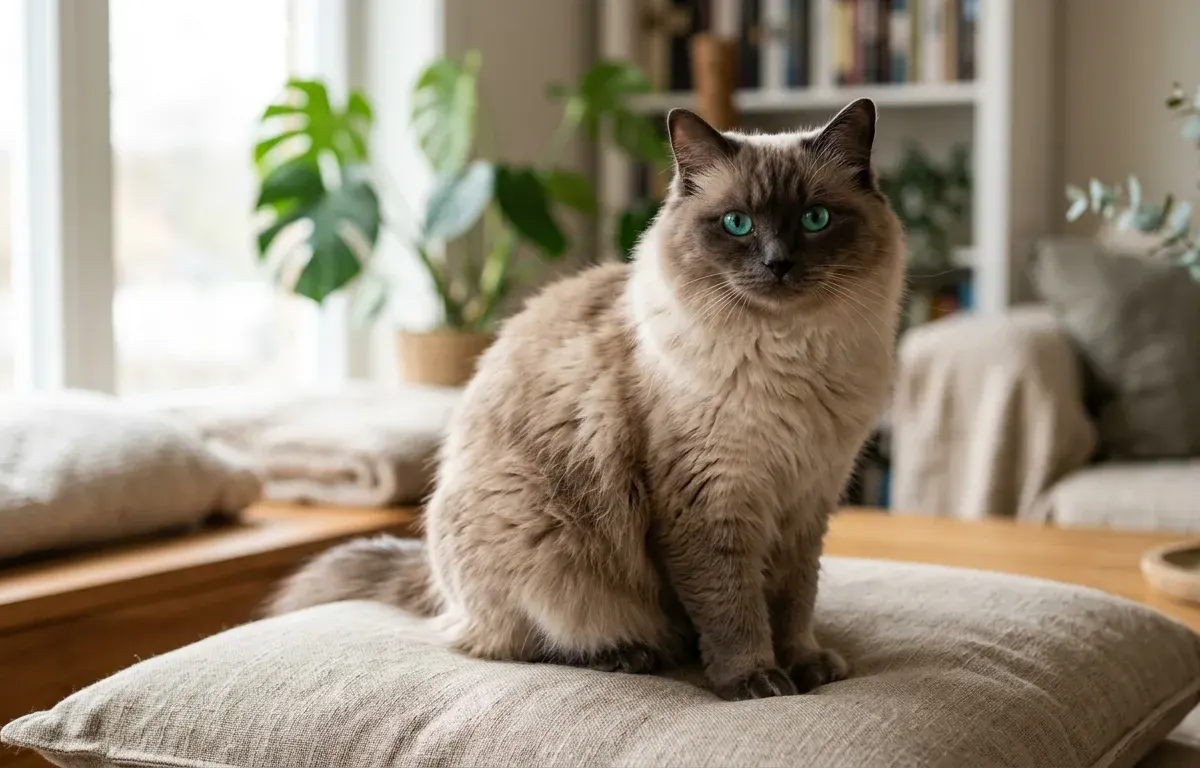
A mink Ragdoll is a distinct genetic variation within the breed defined by the cs/cb genotype at the C-locus. Inheriting one Siamese colorpoint allele (cs) and one Burmese sepia allele (cb), these felines develop warmer body pigmentation, plush coat texture, and signature aqua (blue-green) eyes. Unlike traditional pointed kittens born pure white, cs/cb newborns carry visible body color from day one. Effective May 1, 2025, The International Cat Association (TICA) classifies these lines under the Cherubim (CB) designation.
- The mink variation carries the cs/cb genotype, combining Siamese colorpoint and Burmese sepia genetics.
- Kittens are born with visible body shading rather than plain white coats.
- Adult felines feature striking aqua (blue-green) eyes rather than traditional blue eyes.
- TICA recognizes these bloodlines under the Cherubim (CB) breed category effective May 1, 2025.
- These cats share the identical size, sweet temperament, and 12 to 15+ year lifespan of traditional pointed lines.
What Is the Mink Gene (cs/cb) and How Does It Work?
The mink distinction in feline coat genetics is controlled by the C-locus (color locus), which governs tyrosinase production and thermal melanin distribution. In cat genetics, the C-locus includes multiple alleles: full color expression (C), Siamese colorpoint (cs), and Burmese sepia (cb).
While traditional pointed cats inherit two copies of the recessive Siamese colorpoint allele (cs/cs), a cs/cb feline inherits one Siamese colorpoint allele (cs) and one Burmese sepia allele (cb). Because the cs and cb alleles express incomplete dominance (co-dominance) with each other, the resulting cs/cb genotype produces an intermediate phenotype. According to feline genetics documentation from TICA and veterinary genetics research, this co-dominant pairing reduces the extreme temperature-sensitivity of the colorpoint gene. As a result, pigment develops more evenly across the body while retaining darker contrast on the points (face, ears, paws, and tail). This genetic heritage connects directly to broader Ragdoll history dating back to the 1960s, when foundation stock carried diverse colorpoint and sepia traits.
How Mink Ragdolls Differ from Traditional (cs/cs), Sepia (cb/cb), and Solid Ragdolls
To understand this variation, it is helpful to compare the four primary genetic categories found in bloodlines across the C-locus spectrum:
| Variant | Genotype | Birth Coat Color | Adult Eye Color | Point Contrast & Pattern |
|---|---|---|---|---|
| Traditional Pointed | cs/cs | Pure White | Blue | High contrast pointed extremities |
| Mink Variation | cs/cb | Warm Tinted | Aqua (Blue-Green) | Rich body color with distinct points |
| Sepia Variation | cb/cb | Dark Tinted | Green, Gold, or Yellow-Green | Low contrast, deep rich body color |
| Solid Variant | C/C or C/cs | Full Color | Copper, Gold, or Green | Non-pointed, uniform solid pattern |
When two heterozygous carriers (cs/cb) are bred together, Mendelian inheritance dictates the statistical distribution of the litter: 50% mink offspring (cs/cb), 25% sepia kittens (cb/cb), and 25% traditional pointed kittens (cs/cs). Breeders looking to maintain traditional lines focus on traditional blue-eyed cs/cs Ragdolls, whereas specialized programs selectively pair carrying bloodlines. Furthermore, non-pointed variants such as non-pointed black solid Ragdoll cats inherit the dominant C allele, placing them outside the colorpoint spectrum.
Key Identifying Traits of Mink Ragdolls: Eyes, Birth Coat, and Plush Texture
What Color Are a Mink Ragdoll’s Eyes?
The most reliable physical hallmark of this phenotype is its eye color. Traditional pointed lines (cs/cs) must possess blue eyes. In contrast, cs/cb coat variants consistently display aqua eyes, which range from sea-foam blue-green to deep aquamarine.
This aqua coloration is a direct physiological outcome of the co-dominant cs/cb genotype. The reduced pigment restriction allows light to refract through the iris differently than in traditional pointed felines. During kittenhood, their eyes transition from initial newborn blue to their permanent aqua shade between 10 and 16 weeks of age.
Why Are Mink Kittens Born with Visible Coat Color?
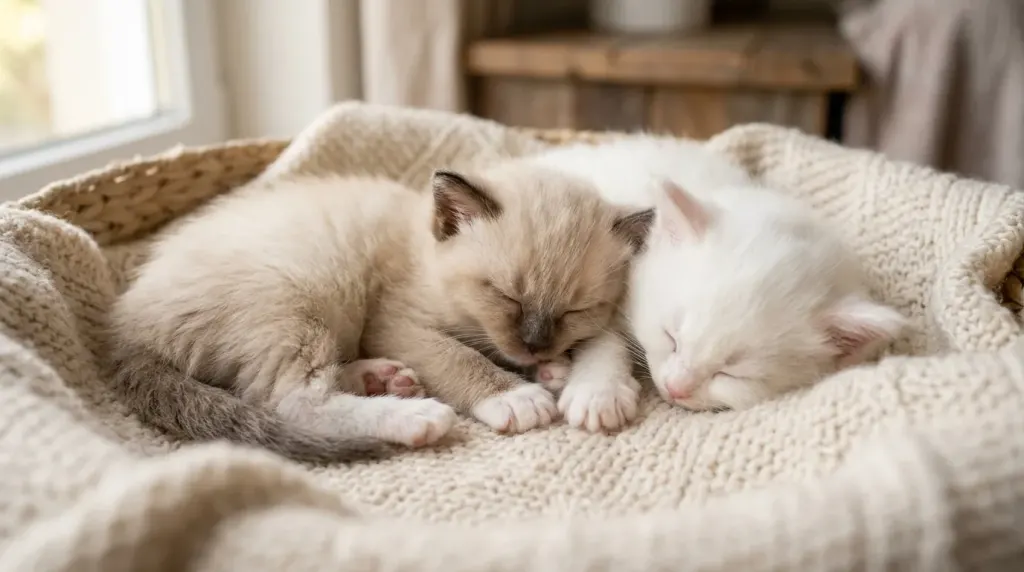
Traditional pointed kittens are born snow-white because the Siamese colorpoint gene (cs/cs) is strictly temperature-sensitive. In the warm environment of the mother’s womb, pigment synthesis is suppressed entirely. Only after birth, as extremities cool down, do dark points begin to emerge.
In these kittens, the presence of the Burmese sepia allele (cb) lessens this thermal dependence. Pigment production begins in utero. Consequently, newborns arrive with warm, visible body color and recognizable point shading on their ears, nose, and tail tips. Owners learning about identifying Ragdoll kittens by birth coat color can easily distinguish tinted newborns from their white traditional littermates on day one.
What Does a Mink Ragdoll’s Coat Feel Like?
While traditional pointed cats feature a silky, rabbit-like semi-longhair coat, these felines possess fur that is noticeably denser and smoother. Their coat feels exceptionally plush and velvet-soft to the touch. This luxury texture is caused by a slightly thicker guard hair structure combined with dense hair follicle distribution, creating a warm, thick coat that resists matting when groomed regularly. Owners focusing on grooming will find that understanding managing Ragdoll coat shedding helps keep this plush fur in top condition without extra effort.
Official Breed Recognition: TICA Cherubim (CB) Classification and CFA Position
How Does TICA Classify Mink Ragdolls Under the Cherubim (CB) Designation?
Registration rules for co-dominant variants have evolved significantly in feline registries. The International Cat Association (TICA) historically allowed these bloodlines to be registered for breeding and tracking purposes.
Effective May 1, 2025, TICA enacted a major structural update by establishing the Cherubim (CB) breed designation within the Ragdoll Breed Group. Under this framework:
- Traditional pointed cats with blue eyes remain under the Ragdoll (RD) category.
- Mink (cs/cb), sepia (cb/cb), and solid cats are registered under the Cherubim (CB) category.
- Cherubim cats are eligible for full championship competition in TICA show classes, judged against the official Cherubim standard that recognizes aqua eyes and rich plush coats as correct traits.
Does CFA Recognize Mink Ragdolls?
The Cat Fanciers’ Association (CFA) maintains a stricter standard regarding this breed. According to the official CFA Ragdoll breed standard, only pointed cats possessing blue eyes (cs/cs) are eligible for registration and championship competition.
CFA considers non-blue eyes or non-traditional pointed coats as disqualifying faults in the show ring. Therefore, breeders who register primarily with CFA focus exclusively on traditional pointed lines, aligning with the general Ragdoll cat breed requirements established for traditional competition.
Popular Mink Ragdoll Colors and Patterns
These cats occur in all classic breed color variations and coat patterns. The warmer background tone of the coat gives each color extra depth:
- Seal: Rich dark brown to warm seal points over a warm cream body with aqua eyes.
- Blue: Slate blue-grey points over a soft warm silver-grey body.
- Chocolate: Warm milk-chocolate points against an ivory body.
- Lilac: Frosty pinkish-grey points contrasting softly against a pale magnolia body.
- Flame & Cream: Warm reddish-gold or soft apricot points over a warm cream coat.
- Tortie & Lynx: Tortoiseshell mottling or tabby striping (lynx) combined with soft point shading.
These colors appear across the three standard breed patterns: Colorpoint (no white markings), Mitted (white paws, chin, and belly stripe), and Bi-Color (inverted white V on the face with white legs). While some owners wonder if coat density affects dander levels, research on hypoallergenic coat claims in Ragdolls indicates that these felines produce normal feline allergens regardless of pattern.
Temperament, Size, and Lifespan of Mink Ragdolls
Aside from coat genetics, eye color, and coat density, cs/cb variants are identical to traditional pointed cats in personality, body size, and overall health.
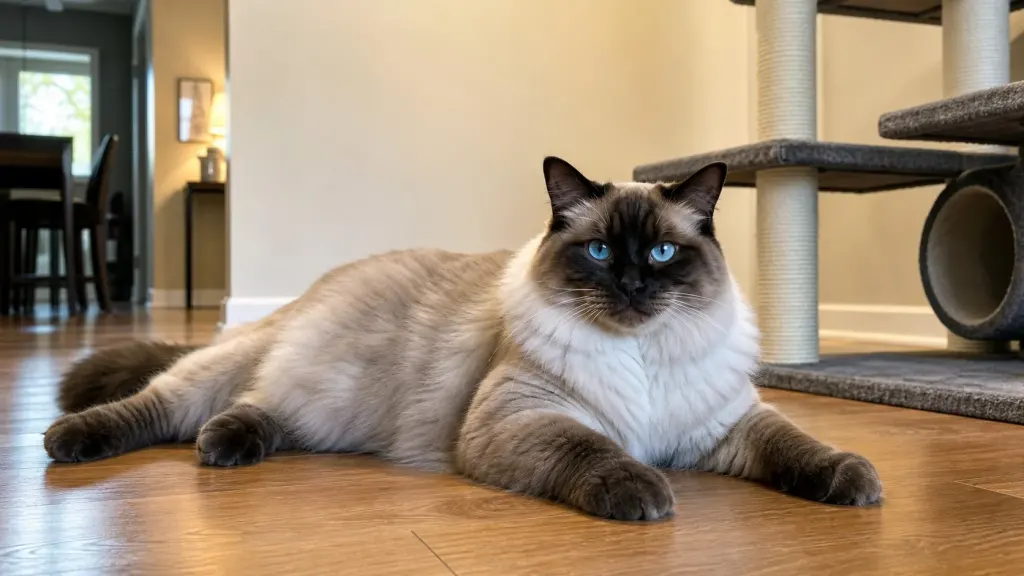
- Temperament: These cats exhibit the famous affectionate, lap-loving nature characteristic of the breed. They are gentle, puppy-like companions that enjoy following family members from room to room, relaxing in cozy spots, and greeting visitors at the door.
- Size & Growth: Bloodlines in this category produce large, heavy-boned felines. Adult males typically reach an adult Ragdoll weight of 15 to 20 pounds (6.8 to 9.1 kg), while females weigh between 10 and 15 pounds (4.5 to 6.8 kg). Like all members of this breed family, they mature slowly, taking 3 to 4 years to reach full skeletal size and coat density.
- Lifespan: With proper indoor care, balanced nutrition, and annual veterinary checkups, these felines enjoy an average Ragdoll lifespan of 12 to 15 years, with many healthy cats living up to 18 years.
Are Mink Ragdolls Purebred Ragdolls or a Marketing Variant?
Prospective owners frequently ask whether these cats are authentic pedigree animals or simply a marketing tactic. The answer depends on whether one evaluates genetic lineage or cat show registration rules.
From a pedigree standpoint, mink lines trace their ancestry back to authentic foundation stock that maintained the Burmese sepia (cb) allele alongside Siamese colorpoint (cs) genes. They are not crossbred with domestic shorthairs. However, because early breed standards defined the breed strictly as a blue-eyed pointed cat, traditionalists view them as a distinct variant. TICA’s creation of the Cherubim (CB) designation resolves this debate by giving these felines formal registry recognition without altering traditional pointed standards. Families preparing to bring home a kitten should review average Ragdoll cat price ranges alongside essential daily care guidelines for Ragdoll cats to ensure a smooth transition. Pedigree mink variants carry authentic foundation bloodlines, while TICA Cherubim (CB) rules provide official registry recognition alongside traditional pointed lines.
Note: When purchasing a kitten from this line, ask the breeder for official TICA registration papers confirming pedigree bloodlines and health guarantees.
Are mink Ragdoll cats rare?
These lines are less common than traditional pointed variants because producing a cs/cb kitten requires at least one parent carrying the Burmese sepia (cb) allele. In pairings between carriers, statistically only 50% of the offspring inherit the cs/cb combination.
Do mink Ragdoll eyes always stay aqua?
Yes. While newborn kittens have blue eyes like all felines, their irises settle into a permanent aqua (blue-green to green-blue) hue by 10 to 16 weeks of age. Unlike traditional pointed cats, these variants do not retain deep sapphire blue eyes in adulthood.
Can a mink Ragdoll be shown in TICA cat shows?
Yes. Following TICA’s registration update effective May 1, 2025, Cherubim-registered cats are eligible for full championship competition in TICA cat shows under the Cherubim (CB) breed classification.
Do mink Ragdoll cats shed more than traditional Ragdolls?
These variants shed approximately the same amount as traditional pointed cats. Although their coat feels plush and dense, they lack a heavy insulating undercoat, making hair management straightforward with regular weekly combing.
Leave a Reply