
Table of Contents
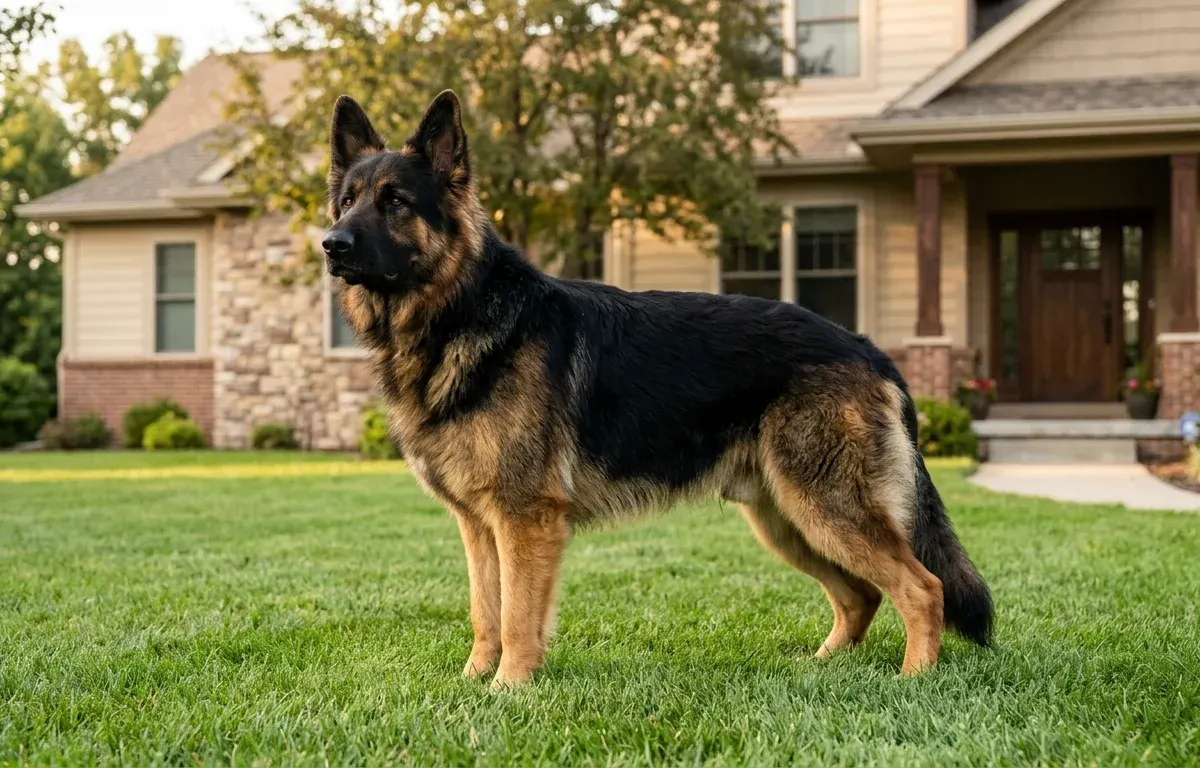
A "King German Shepherd", properly known as the King Shepherd, is a giant hybrid dog breed developed in the United States during the 1990s by crossing German Shepherds with Alaskan Malamutes, Great Pyrenees, and Shiloh Shepherds. Standing 27 to 32 inches tall and weighing up to 150 pounds, the King Shepherd is significantly larger, heavier-boned, and calmer than a standard purebred German Shepherd, though it is not recognized as a separate breed by the American Kennel Club.
- The King Shepherd is an intentional hybrid breed, not an oversized purebred German Shepherd.
- Developed in the 1990s by American breeders seeking a massive, healthy guardian with a calm disposition.
- Males stand 27 to 32 inches and weigh 100 to 150 pounds; females stand 25 to 30 inches and weigh 80 to 120 pounds.
- Possesses a broad, straight topline rather than the angled, sloping hindquarters seen in show-line German Shepherds.
- Recognized by the American King Shepherd Club (AKSC) and Continental Kennel Club (CKC), but not by the AKC.
What Is a King German Shepherd? (Origins & Genetics)
The term “King German Shepherd” is a popular colloquial name for the King Shepherd, a distinct domestic hybrid dog developed in the United States during the early 1990s. American breeders David Turkheimer and Shelley Watts-Cross established the breed with a specific vision: creating a majestic, large-scale companion that possessed the protective instinct and trainability of traditional shepherds, while softening the intense working drive and reducing the orthopedic vulnerabilities often seen in modern lines.
To achieve this unique combination of size, bone density, and stability, the foundation stock incorporated four distinct canine lineages:
- German Shepherd Dog: Contributed high trainability, keen problem-solving ability, loyalty, and the iconic shepherd silhouette.
- Alaskan Malamute: Introduced heavy bone structure, exceptional endurance, a broader skull, and a dense, weather-resistant double coat.
- Great Pyrenees: Added substantial height, massive body mass, and the patient, watchful temperament characteristic of livestock guardian dogs.
- Shiloh Shepherd: Provided additional size and genetic diversity from early companion-oriented shepherd crosses.
It is essential to distinguish an authentic King Shepherd from an oversized German Shepherd. Unregulated breeders sometimes produce oversized purebred dogs simply by mating the largest individuals in a litter, which can concentrate joint problems and structural weaknesses. In contrast, the King Shepherd represents a structured multi-breed program with pedigree records maintained through specialized registries. Just as historical kennel development blended distinct ancestors to form the ancestral foundation that makes a Pug, modern designer breeders combined working and flock-guarding lines to establish a brand-new hybrid standard. Similarly, exploring the historic crosses that make a French Bulldog demonstrates how blending distinct canine backgrounds produces specific physical and behavioral adaptations.
King Shepherd vs. German Shepherd: Key Differences
While both dogs share erect ears, noble expressions, and classic sable or black-and-tan coloration, substantial differences exist in their physical conformation, working intensity, and official registry status.
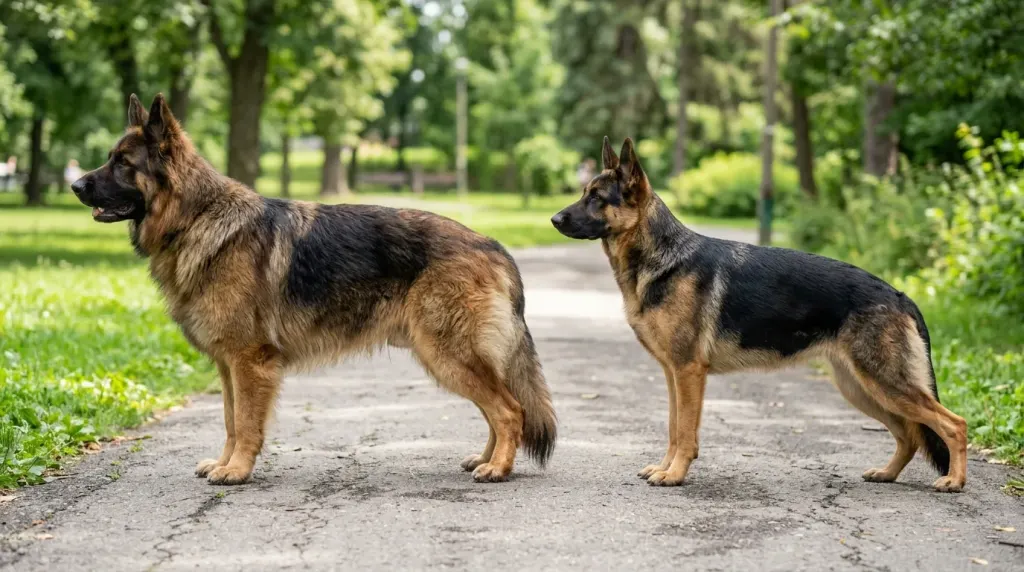
According to the official AKC German Shepherd Dog breed standard, purebred German Shepherds are medium-large utility dogs engineered for agile herding and police work. In contrast, King Shepherds are true giant-breed dogs engineered primarily for calm family companionship and estate guardianship.
The following comparison table highlights the core distinctions across standard German Shepherds, King Shepherds, and working-line DDR German Shepherds:
| Characteristic | Standard German Shepherd | King Shepherd | DDR German Shepherd |
|---|---|---|---|
| Origin and Type | Purebred herding breed (Germany) | Intentional hybrid (United States, 1990s) | Purebred working bloodline (East Germany) |
| Male Weight | 65 to 90 pounds (29 to 41 kg) | 100 to 150 pounds (45 to 68 kg) | 70 to 90 pounds (32 to 41 kg) |
| Female Weight | 50 to 70 pounds (23 to 32 kg) | 80 to 120 pounds (36 to 54 kg) | 55 to 75 pounds (25 to 34 kg) |
| Height at Withers | 22 to 26 inches (56 to 66 cm) | 25 to 32 inches (64 to 81 cm) | 22 to 26 inches (56 to 66 cm) |
| Topline and Build | Sloping (Show) or Straight (Working) | Broad, level straight back, heavy bone | Straight back, compact, deep chest |
| Kennel Club Status | Recognized by AKC (Herding Group) | Not AKC recognized (AKSC, CKC, ARBA) | Recognized by AKC as GSD |
| Temperament and Drive | High working drive, high energy | Calm, protective, lower prey drive | Intense working drive, high stamina |
Beyond raw measurements, the most visible difference lies in the backline. Many American show-line German Shepherds exhibit extreme angulation in the rear quarters with a noticeably sloping topline. King Shepherds feature a straight, level back supported by a broad ribcage and heavy hindquarters inherited from their northern and mountain ancestors.
Breed function heavily dictates these structural requirements. Working dogs need intense focus and endurance, whereas companion breeds evolved around household living. Examining what French Bulldogs were bred for as urban lap companions or understanding what Pug dogs were bred for in imperial courts illustrates how artificial selection modifies canine drive and energy levels to match specific human environments.
Size, Weight, and Physical Appearance
The King Shepherd presents an imposing, muscular silhouette that commands respect while maintaining a balanced, noble demeanor.
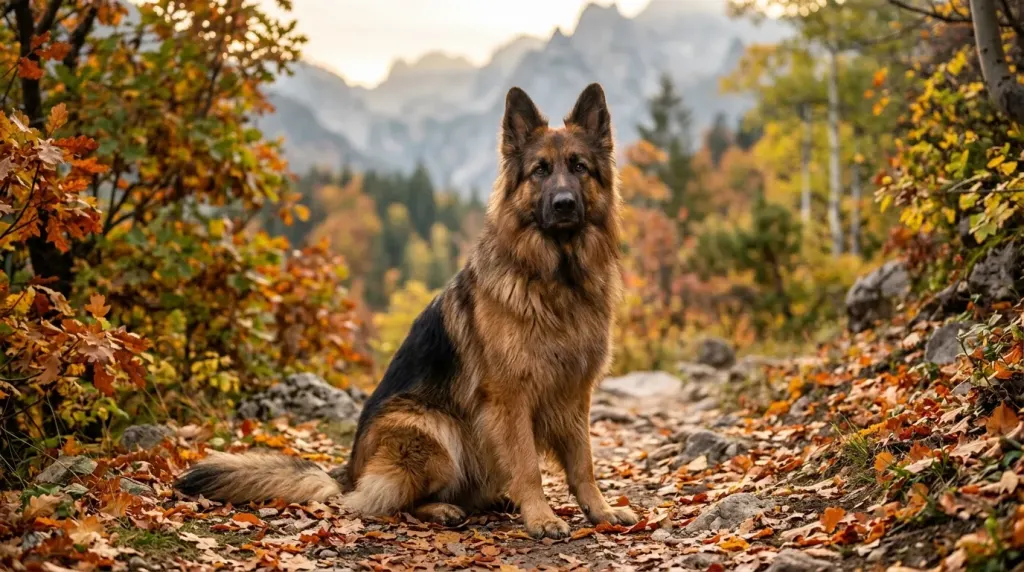
According to guidelines maintained by the Continental Kennel Club (CKC), physical parameters for mature King Shepherds are structured as follows:
- Males: Stand 27 to 32 inches (69 to 81 cm) at the shoulder, with an average mature weight between 100 and 150 pounds (45 to 68 kg). Exceptional males may occasionally exceed 150 pounds.
- Females: Stand 25 to 30 inches (64 to 76 cm) at the shoulder, with an average mature weight between 80 and 120 pounds (36 to 54 kg).
The head is large and cleanly chiseled, featuring a broad skull and a powerful muzzle that avoids the sharp taper seen in some modern show shepherds. The chest is deep and broad, providing generous lung capacity, while the legs are heavy-boned and straight.
Coat variations occur in two recognized types:
- Plush-Coated (Smooth Double Coat): Features a dense, medium-length outer coat lying close to the body, underlaid by a thick, insulating undercoat.
- Long-Haired Coat: Displays longer guard hairs with pronounced feathering on the ears, back of the legs, chest, and underside of the tail, creating a lion-like mane around the neck.
Color patterns include traditional black and tan, rich sable ranging from gold to dark reddish-brown, bi-color, silver-gray sable, and solid black. White markings are generally discouraged under registry standards except for small chest patches.
This giant, athletic shepherd silhouette stands in sharp contrast to smaller companion breeds. Comparing these robust proportions with the short, cobby frame and bat ears that illustrate what a French Bulldog looks like or the facial wrinkles that define what a Pug dog looks like helps prospective owners visualize canine conformational extremes across domestic breeds.
Temperament and Personality: Are They Gentle Giants?
Despite their intimidating stature, King Shepherds are renowned for their steady, affectionate, and even-tempered nature. The deliberate introduction of Great Pyrenees and Alaskan Malamute genetics helped dilute the intense, high-strung reactivity sometimes encountered in performance herding lines, resulting in what many owners describe as a gentle giant.
Key behavioral characteristics include:
- Family Loyalty: King Shepherds form deep attachments to their human household. They are remarkably patient and tolerant with children, often positioning themselves as gentle guardians during family activities.
- Measured Protection: Unlike hyper-vigilant personal protection dogs that react instantly to slight stimuli, King Shepherds tend to evaluate situations calmly. They announce strangers with a deep, resonant bark and deter intruders through their sheer physical presence rather than unprovoked aggression.
- Animal Compatibility: When socialized from puppyhood, King Shepherds coexist peacefully with other domestic dogs, cats, and smaller pets, displaying lower predatory chase drive than standard working herding breeds.
- Exercise Requirements: A King Shepherd requires approximately 60 minutes of daily moderate exercise, such as brisk neighborhood walks, outdoor play sessions, or light hiking. They lack the frantic, relentless energy of working German Shepherds and are generally content to relax indoors once their daily exercise is complete.
King Shepherds inherit the watchdog vigilance of the German Shepherd combined with the steady, measured temperament of flock guardian breeds. While they naturally defend their territory, they rarely display the high-strung reactivity common in working-line herding dogs when properly socialized.
Observing domestic canine behavior provides valuable insights into emotional states. For example, recognizing subtle communicative signals such as why dogs pug their ears back helps handlers differentiate between submissive affection, relaxation, and defensive discomfort. In calm domestic households, this low prey drive allows a giant shepherd to live safely alongside other pets, even sharing a quiet living room with a large gentle Maine Coon cat without disruptive tension.
Health Concerns, Care, and Lifespan
King Shepherds have an average life expectancy of 10 to 13 years, which is favorable for a giant breed. While hybrid vigor provides some genetic resilience, their substantial mass and deep-chested anatomy predispose them to specific orthopedic and systemic health issues.
Common health conditions to monitor include:
- Hip and Elbow Dysplasia: Joint malformations can cause discomfort and arthritis. While the straight backline reduces abnormal lumbar strain, their heavy body weight places constant pressure on weight-bearing joints.
- Gastric Dilatation-Volvulus (GDV or Bloat): Deep-chested breeds face a serious risk of stomach distension and torsion. Preventative measures include feeding two or three smaller meals daily, using slow-feeder bowls, avoiding vigorous exercise for at least 60 minutes after eating, and discussing a prophylactic gastropexy procedure with your veterinarian.
- Degenerative Myelopathy (DM): A progressive spinal cord disease seen in shepherd breeds. Ethical breeders test parent stock for the SOD1 gene mutation to prevent producing affected puppies.
- Allergies and Skin Irritations: Dense double coats require routine care to prevent hot spots, flea dermatitis, and fungal moisture traps.
Grooming demands are significant. A King Shepherd sheds year-round, with heavy seasonal shedding periods in spring and autumn when the undercoat blows out. Weekly brushing two to three times using an undercoat rake and slicker brush keeps the coat free of mats and manages loose fur. During peak shedding periods, daily brushing becomes necessary.
Note: Because giant breeds grow rapidly, feed large-breed puppy formulas during the first 18 to 24 months to prevent excessive growth spurts that stress developing joints. Consult your veterinarian for tailored orthopedic screening and preventive care schedules.
Structural spinal health requires vigilance in all purebred and hybrid dogs. While large shepherds face joint dysplasia, chondrodystrophic breeds suffer from disk herniation like IVDD in French Bulldogs. Recognizing subtle indicators of spinal stiffness or musculoskeletal pain, such as what causes a Pug dog to keep moving and not lay down during acute discomfort, allows pet owners to seek timely veterinary diagnosis before chronic mobility issues develop.
Analysis: Is a King Shepherd Right for You?
Owning a King Shepherd is a rewarding commitment, but the breed is not suited to every home or lifestyle. Assessing your physical space, daily schedule, and financial resources will determine whether this giant guardian fits your household.
A King Shepherd is an excellent match for:
- Families with spacious suburban or rural homes and securely fenced yards.
- Owners seeking a loyal, imposing guardian who prefer a relaxed indoor companion over a hyperactive working dog.
- Homes where someone is present for much of the day to provide companionship and prevent separation anxiety.
- Handlers willing to commit to early socialization and routine grooming maintenance.
You should consider another breed if:
- You reside in a compact apartment with limited space and strict weight restrictions.
- You cannot accommodate substantial food bills, giant-breed equipment, and higher veterinary medication costs scaled by body weight.
- Family members are sensitive to heavy dog hair or prefer low-shedding breeds.
- You want a lightweight agility competitor or a specialized high-drive working dog for competitive sport.
Space and equipment preparation are vital before bringing home a giant puppy. While selecting an appropriate crate size for a French Bulldog involves compact 24-to-30-inch models, an adult King Shepherd requires an extra-large 48-to-54-inch heavy-duty crate, heavy food bowls, and a vehicle capable of transporting a 150-pound dog comfortably.
Frequently Asked Questions About King German Shepherds
Is a King Shepherd a purebred German Shepherd?
No, the King Shepherd is not a purebred German Shepherd. It is an intentional hybrid breed developed by crossing German Shepherds with Alaskan Malamutes, Great Pyrenees, and Shiloh Shepherds to achieve greater physical size, heavier bone density, and a calmer household disposition.
Are King Shepherds recognized by the AKC?
No, the King Shepherd is not recognized as an official purebred dog breed by the American Kennel Club (AKC). However, the breed is formally recognized and registered by specialized canine registries, including the American King Shepherd Club (AKSC), the American Rare Breed Association (ARBA), and the Continental Kennel Club (CKC).
How much do King Shepherd puppies cost?
King Shepherd puppies from reputable breeders typically cost between $1,500 and $3,000. Prices vary based on parental health clearances (such as OFA hip and elbow certifications), pedigree lineage, and whether the puppy is purchased as a family companion or with breeding rights.
How big does a King German Shepherd get?
Mature male King Shepherds typically reach a shoulder height of 27 to 32 inches and weigh between 100 and 150 pounds. Mature females stand 25 to 30 inches tall and weigh between 80 and 120 pounds.
What is the difference between a King Shepherd and a Shiloh Shepherd?
While both breeds were created to produce larger, calmer alternatives to standard German Shepherds with straight backs, they originated from different breeding programs. The Shiloh Shepherd was developed during the 1970s and 1980s by Tina Barber using German Shepherds and Sarplaninac crosses, whereas the King Shepherd was established in the 1990s and specifically integrated Alaskan Malamute and Great Pyrenees bloodlines.


Leave a Reply