
Table of Contents
Knowing what causes pug dog to keep moving not lay down begins with identifying physical discomfort, respiratory tightness, anxiety, or acute digestive distress. Because Pugs are a brachycephalic (flat-faced) breed, lying flat on their chest or side compresses their already narrow airway, making standing or pacing easier for breathing. Other common triggers include joint pain, overheating, environmental stress, or early signs of a veterinary emergency such as gastric dilatation-volvulus (bloat). Observing accompanying symptoms like heavy panting, a swollen abdomen, or nocturnal wandering helps pinpoint the cause.
- Pugs often pace because lying flat increases chest pressure and restricts their brachycephalic airway.
- Overheating, spinal stiffness, and joint inflammation make resting positions painful or suffocating.
- Non-productive retching, a tight abdomen, and severe agitation indicate a life-threatening bloat emergency.
- Nighttime wandering in senior Pugs is frequently linked to canine cognitive dysfunction.
Why a Pug’s Flat Face Makes Lying Down Uncomfortable
Pugs possess a distinctive brachycephalic skull structure characterized by a shortened snout, stenotic (narrowed) nares, and an elongated soft palate. According to the Cambridge Veterinary School BOAS Research Group, these anatomical features significantly increase upper airway resistance. When a Pug lies flat, gravity pushes soft tissue against the windpipe, making airflow more difficult. Standing or moving upright opens up the throat passage, allowing the dog to draw in oxygen more comfortably.
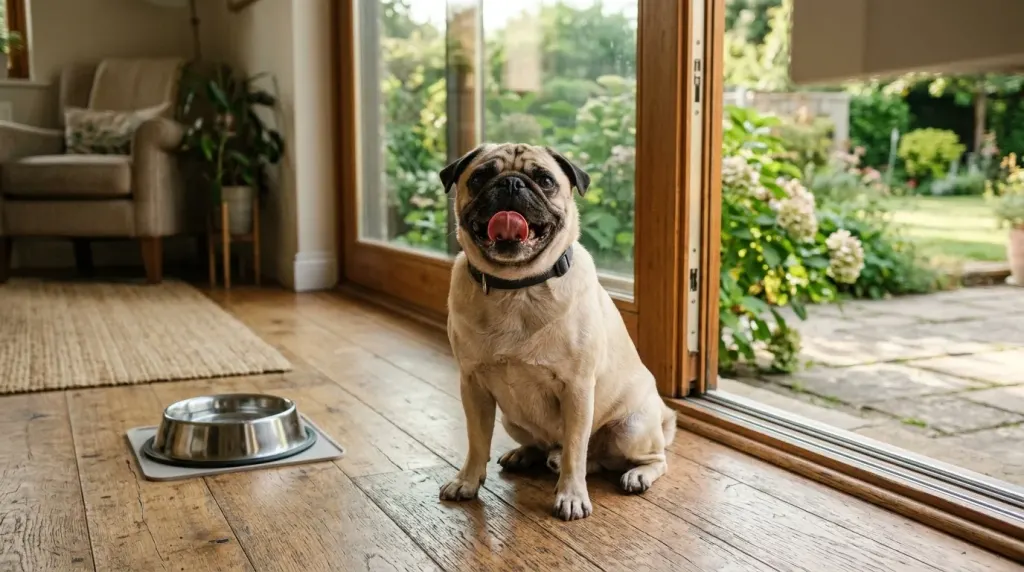
Heat plays a major role in triggering respiratory restlessness. As noted in the PetMD BOAS Guide, because dogs cool themselves primarily through panting, a Pug with a restricted airway struggles to dissipate body heat efficiently. When internal temperatures rise, resting flat traps heat under the belly and compresses the lungs. Your Pug may pace continuously from room to room, searching for cool tile floors or air vents before attempting to settle. Pacing driven by respiratory effort is a physiological compensation mechanism. Interrupting the dog or forcing them to lie down can increase panic, which further accelerates heart rate and worsens oxygen deprivation.
Note: Respiratory tightness that persists after resting in a cool environment requires prompt evaluation by a veterinarian.
Signs Your Pug Is Overheating or Struggling to Breathe
- Persistent, noisy panting accompanied by snorting or raspy gasping.
- Searching for cold hard surfaces like bathroom tiles or hardwood floor edges.
- Gums changing color from healthy pink to dark red, pale, or bluish purple.
- Thick, excessive saliva trailing from the sides of the mouth.
- Reluctance to curl up, opting instead to stand with elbow joints turned outward.
If your Pug exhibits these breathing warning signs, guide them to an air-conditioned space immediately, offer small sips of cool water, and let them remain standing or sitting in whatever posture keeps their airway clear. You can also learn more about how a narrow airway influences breathing and snorting patterns in flat-faced dogs.
Joint Pain and Spinal Issues Causing Restlessness
As Pugs grow older, orthopedic discomfort becomes a leading reason for inability to settle. Conditions such as osteoarthritis, hip dysplasia, and hemivertebrae (a congenital spinal anomaly common in curly-tailed breeds) cause constant aching in the hips, lower back, and knees. Lying down requires bending inflamed joints, while rising from a resting position puts intense pressure on sore muscle groups. A Pug in pain will pace back and forth because standing feels less agonizing than the transition to lie down.
Visceral pain from gastrointestinal irritation or urinary tract inflammation produces similar restlessness, as documented by VCA Hospitals. When a dog experiences abdominal cramping, resting flat puts pressure on tender internal organs. The dog may walk in tight circles, sit down for two seconds, and instantly pop back up to continue pacing. Pain-induced restlessness often follows a predictable cycle: physical exhaustion creates an urge to sleep, but the discomfort experienced upon touching the bed forces the dog back onto its feet.
Note: Never administer human pain medications like ibuprofen or acetaminophen to a dog, as these are highly toxic and cause severe organ failure.
When to See a Vet for Pain-Related Restlessness
- Symptom duration: The dog has been pacing or shifting positions for more than 12 hours without achieving deep sleep.
- Mobility changes: Noticeable stiffness when waking up, limping, or hesitancy to climb small steps.
- Vocalizations: Whimpering, grunting, or snapping when touched along the lower back or abdominal region.
- Appetite shifts: Refusal to eat meals or drink water alongside persistent physical agitation.
Managing mobility challenges in senior pugs requires a combination of veterinary guidance, supportive orthopedic bedding, and a consistent daily care routine designed to protect aging joints.
| Cause Category | Primary Behavioral Cue | Accompanying Physical Signs | Urgency Level |
|---|---|---|---|
| Brachycephalic Airway (BOAS) | Pacing while holding head high | Heavy panting, noisy rasping, blue/pale gums | Moderate to High |
| Orthopedic Pain / Arthritis | Frequent posture shifts, standing stiffly | Limping, slow movement, muscle tremors | Moderate |
| Acute Bloat (GDV) | Violent pacing, inability to sit still | Swollen hard belly, unproductive retching | Immediate Emergency |
| Environmental Anxiety | Following owner closely, lip licking | Trembling, hypervigilance, excessive panting | Low to Moderate |
| Senior Cognitive Dysfunction | Nighttime wandering, staring at walls | Disorientation, altered sleep cycle | Low to Moderate |
Anxiety and Environmental Triggers Behind Pacing
Pugs are deeply companion-oriented dogs known for forming intense emotional bonds with their human families. Changes in house structure, loud unexpected noises (such as thunderstorms or fireworks), or the arrival of unfamiliar visitors can spark acute anxiety. When anxious, a Pug’s sympathetic nervous system floods their body with adrenaline, creating excess energy that manifests as restless pacing, panting, and tail tucking.
Separation anxiety or disruptions to established daily habits can also leave a Pug feeling insecure. If a primary caregiver leaves the house or alters their work schedule, the dog may walk near entryways and windows, unable to settle down until their routine is restored. Anxiety-driven movement serves as a displacement behavior, helping the dog release nervous tension when feeling overwhelmed by environmental stimuli.
Note: Punishment for anxious pacing escalates stress levels and worsens the unwanted behavior.
Creating a predictable environment through a structured puppy training schedule helps foster emotional security early on. Furthermore, recognizing natural lap dog tendencies explains why Pugs often pace near your feet when seeking reassurance.
Emergency Red Flags That Require Immediate Vet Care
While many causes of restlessness can be managed over time, certain symptoms indicate a life-threatening emergency. According to the PetMD GDV Emergency Guide, gastric dilatation-volvulus (GDV), commonly known as bloat, occurs when the stomach fills with gas and twists on its axis. Although GDV is more frequent in deep-chested large breeds, Pugs can suffer from acute gastric dilation and bloat when they ingest food rapidly or swallow air during heavy panting.
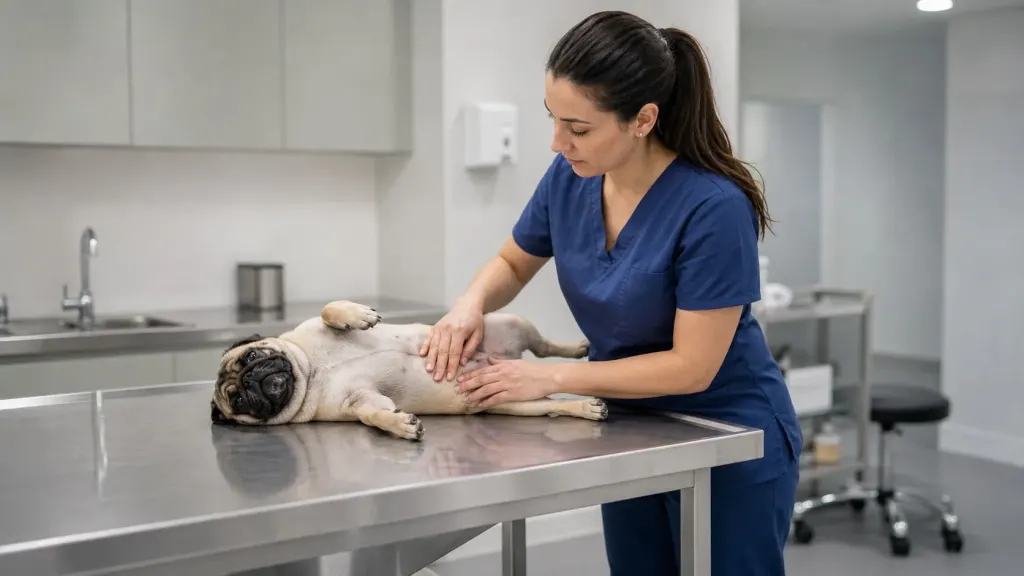
A Pug experiencing bloat feels sudden, severe abdominal pressure. The intense pain makes lying down impossible, driving the dog to pace frantically, stretch its front legs out while keeping its rear end up (the “play bow” pain stance), and look back at its abdomen in distress. Bloat compresses major blood vessels, restricting blood flow to the heart and stomach tissue, leading to rapid systemic shock if untreated.
Note: Unproductive retching (trying to vomit but only coughing up foam or phlegm) combined with pacing is an absolute emergency.
If your Pug shows a distended abdomen, dry-heaving, sudden weakness, or rapid thready breathing, transport them to an emergency veterinary clinic immediately. Minutes count when addressing acute gastric torsion.
Nighttime Pacing in Senior Pugs: Canine Cognitive Dysfunction
When an older Pug begins wandering aimlessly at night, pacing back and forth across rooms, or getting stuck behind furniture, they may be experiencing Canine Cognitive Dysfunction (CCD). Similar to Alzheimer’s disease in humans, CCD causes neurodegenerative changes in the brain that disrupt natural sleep-wake cycles, a phenomenon known as “sundowning.”
Senior Pugs with cognitive decline may sleep soundly throughout the day, only to become confused and agitated as dusk approaches. They may pace in circles, stare blankly at corners, or forget where their dog bed is located. Sundowning restlessness stems from neurological disorientation rather than physical pain, though the two conditions frequently coexist in geriatric pets.
Note: Environmental accommodations like nightlights, non-slip rugs, and routine evening strolls help soothe disoriented senior dogs.
Understanding when your Pug reaches their senior age milestone enables you to introduce veterinary cognitive supplements and nighttime calming routines early in the progression of the disease.
How to Observe and Track Your Pug’s Restlessness for the Vet
Because dogs often mask symptoms or act differently in a clinical setting due to adrenaline, gathering home observations provides invaluable diagnostic data for your veterinarian. Documenting specific triggers, time patterns, and physical cues narrows down whether the root cause is respiratory, orthopedic, neurological, or digestive.
- Record short video clips: Capture 30 to 60 seconds of your Pug’s pacing, focusing on posture, leg movement, and head position.
- Note timing patterns: Track whether the restlessness occurs immediately after meals, post-exercise, during warm weather, or exclusively at night.
- Monitor resting respiratory rate: Count how many breaths your Pug takes per minute while resting quietly; a normal rate is typically between 15 and 30 breaths per minute.
- Check urinary habits: Ensure your dog is not straining to eliminate or suffering from incontinence, which can be managed with an appropriate dog diaper size for night comfort.
Sharing these observations with your veterinary team ensures a faster, more accurate diagnosis and a tailored treatment plan for your Pug.
Frequently Asked Questions About Pug Restlessness
Is it normal for a pug to pace at night?
Occasional short movement before settling is normal, but continuous nighttime pacing is not. In younger Pugs, night restlessness usually indicates environmental stress, lack of daytime exercise, or needing a bathroom break. In senior Pugs, persistent night wandering is a classic indicator of pain or canine cognitive dysfunction.
Can heat make a pug restless and refuse to lay down?
Yes. Pugs overheat quickly due to their flat facial structure. When overheated, lying flat traps body heat beneath them and makes panting more strained. A hot Pug will walk around searching for cool surfaces and will refuse to lie down until their core body temperature drops.
How do I know if my pug’s pacing is an emergency?
Pacing becomes an immediate veterinary emergency if it is accompanied by a hard or swollen abdomen, unproductive vomiting or dry-heaving, pale or bluish gums, severe respiratory distress, sudden collapse, or obvious signs of severe pain such as screaming or groaning.
Leave a Reply