
Table of Contents
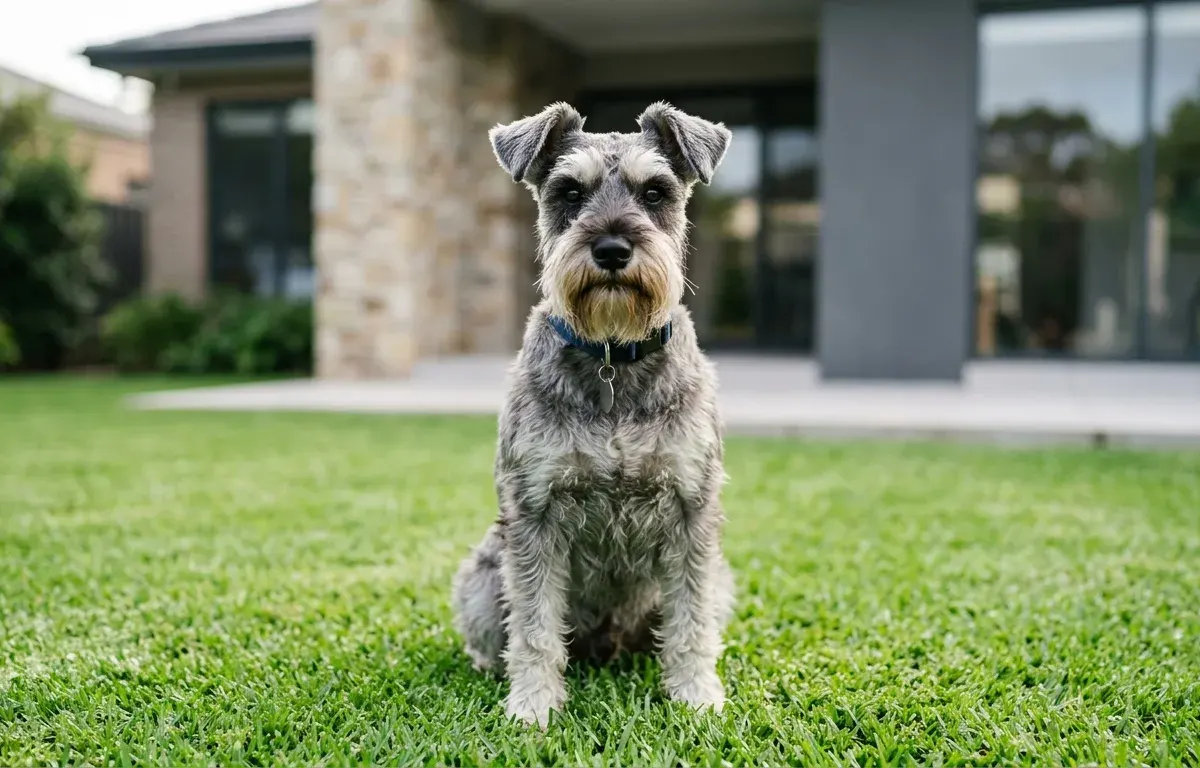
The Miniature Schnauzer is a small, squarely built German dog breed developed during the late nineteenth century. Standing 12 to 14 inches (30 to 35 cm) tall at the withers and weighing 11 to 20 pounds (5 to 9 kg), the breed features a harsh, wiry double coat and iconic facial furnishings. Classified in the Terrier Group by the American Kennel Club and the Utility Group in the United Kingdom, it is an alert, highly trainable companion that produces minimal shedding but requires routine professional grooming as the coat grows, daily mental enrichment, and proactive screening for metabolic and ocular health conditions.
- Distinct German heritage: developed as an agile farm ratter by crossing the Standard Schnauzer with smaller wire-haired breeds.
- Standard dimensions: mature height ranges strictly from 12 to 14 inches (30 to 35 cm) at the withers, with a sturdy, balanced frame.
- Low shedding with high maintenance: the wiry double coat requires regular combing, professional clipping, or traditional hand-stripping.
- Alert and vocal: high working intelligence and sentinel instincts make early socialization and reward-based training essential.
- Health vigilance: breed care requires monitoring for hyperlipidemia, pancreatitis, urinary stones, and regular veterinary eye examinations.
The Miniature Schnauzer dog breed is a compact, sturdy German companion celebrated for its distinctive walrus mustache, bushy arched eyebrows, and spirited personality. Combining the fearless work ethic of a historic farm ratter with the devoted loyalty of a household watchdog, this small purebred offers an engaging blend of sharp intelligence and affectionate companionship. Prospective owners exploring a miniature schnauzer must look beyond its charming facial furnishings to understand the daily coat maintenance, structured positive training, and proactive health stewardship this energetic breed requires.
Overview and origin of the Miniature Schnauzer
History as a German farm dog and ratter
The Miniature Schnauzer is the smallest of the three recognized Schnauzer varieties, which also include the Standard Schnauzer and the Giant Schnauzer. Rather than being a modern designer hybrid or an artificially miniaturized novelty, the Miniature Schnauzer dog breed is an established, distinct purebred developed during the late nineteenth century in agrarian regions of southwestern Germany. German farmers originally bred these dogs as all-around agricultural helpers capable of clearing barns of rats and other agricultural vermin, guarding family farmsteads, and traveling comfortably alongside horse-drawn carts.
Breed records document that agricultural breeders developed the variety by crossing the medium-sized wire-haired Pinscher (the Standard Schnauzer) with the Affenpinscher and selective crosses from the ancestral Poodle dog breed foundation stock. This deliberate breeding program preserved the formidable ratting drive, weather-resistant wire jacket, and hardy constitution of the original working Schnauzer while producing a more compact, portable dog. The breed gained formal recognition in Germany in 1888 under the name Zwergschnauzer and quickly established itself across Europe and North America as a dependable worker and loyal family guardian.
Comparison: Miniature vs. Standard vs. Giant Schnauzer
While all three Schnauzer varieties share a similar rectangular head profile, heavy facial furnishings, and alert expression, they represent three separate breeds with distinct functional backgrounds and size classifications:
- Miniature Schnauzer: Standing 12 to 14 inches (30 to 35 cm) tall and weighing 11 to 20 pounds (5 to 9 kg), this variety was refined specifically for barnyard vermin control, small homestead watch duties, and indoor companionship.
- Standard Schnauzer: The original ancestral prototype, standing 17.5 to 19.5 inches (44 to 50 cm) tall and weighing 30 to 50 pounds (14 to 23 kg), developed as a general farm dog, drover, and vermin hunter.
- Giant Schnauzer: The largest variety, standing 23.5 to 27.5 inches (60 to 70 cm) tall and weighing 55 to 85 pounds (25 to 39 kg), developed in the Bavarian Alps for driving cattle and providing heavy-duty estate security.
Breed group and international classification
Registry classification for the Miniature Schnauzer reflects differing views among international canine governing bodies regarding its working origins and functional traits. In the United States and Canada, the American Kennel Club (AKC) and Canadian Kennel Club (CKC) classify the Miniature Schnauzer within the Terrier Group. It is unique as the only member of the AKC Terrier Group that traces its genetic lineage entirely to continental European farm dogs rather than the classic terrier breeds of the British Isles.
In contrast, the Fédération Cynologique Internationale (FCI), which oversees national kennel clubs across continental Europe, Latin America, and Asia, groups all three Schnauzer varieties together in Group 2 alongside Pinschers, Molosser breeds, and Swiss Mountain Dogs. In the United Kingdom, The Kennel Club Utility breed standard places the breed into the Utility Group, a division dedicated to dogs bred for specific functional utility that do not fit neatly into traditional sporting or hound categories. These differing classifications do not alter the dog’s intrinsic biology, but they reflect a versatile history that combines earthdog vermin drive with the steadfast territorial guarding instincts seen in the German Shepherd dog breed.
Is a mini schnauzer the same breed as a Miniature Schnauzer?
The term a mini schnauzer is simply an informal colloquial shorthand for the official Miniature Schnauzer dog breed. Pet owners, veterinary staff, and professional grooming salons frequently use “mini schnauzer” in daily conversation, but it does not represent a separate bloodline, a smaller size tier, or a distinct sub-variety.
Prospective owners must exercise caution when encountering commercial advertisements for so-called “teacup,” “micro,” or “toy” schnauzers. These unofficial labels describe dogs bred intentionally below the standard 12-inch height limit. Such extreme downsizing often involves crossing with toy breeds or repeatedly breeding undersized runts, which significantly elevates the risk of severe health complications including portosystemic liver shunts, fragile bone structures, dental crowding, open fontanelles, and chronic hypoglycemia. Ethical preservation breeders adhere strictly to the 12 to 14-inch conformation standard to safeguard the structural health and longevity of their dogs.
Physical characteristics and official breed standards
Official size, height, weight, and sturdy build
Conformation standards establish the Miniature Schnauzer as a compact, muscular, and squarely proportioned dog. This square profile means that the dog’s height at the highest point of the shoulder blades roughly equals its total body length from the breastbone to the point of the rump. According to the official American Kennel Club breed standard, mature males and females must measure between 12 and 14 inches (30 to 35 cm) at the withers. Conformation show rules disqualify individuals measuring under 12 inches or over 14 inches, preserving the functional, agile size intended for vermin eradication.
While official standards emphasize structural proportions over rigid weight figures, healthy adult Miniature Schnauzers typically weigh between 11 and 20 pounds (5 to 9 kg). The head is strong and rectangular, tapering slightly from the ears to the dark, oval eyes. The chest is moderately broad and reaches down to the elbows, supporting strong, straight forelegs and well-angulated hindquarters that provide powerful forward propulsion.
Unlike the short-legged, elongated Dachshund dog breed body type, the Schnauzer possesses a short, level back with well-sprung ribs that give it athletic endurance. Ears may be cropped into sharp, upright positions where legally permitted, or left uncropped in their natural V-shape folding forward close to the head.
| Metric / Attribute | Official Conformation Standard | Practical Home Range |
|---|---|---|
| Height at withers | 12 to 14 inches (30 to 35 cm) | 12 to 14 inches (30 to 35 cm) |
| Adult body weight | Proportionate to frame | 11 to 20 pounds (5 to 9 kg) |
| Body proportion | Square outline (height equals length) | Compact, sturdy, deep-chested |
| Coat texture | Harsh, wiry outer coat with dense undercoat | Low shedding; requires clipping or stripping |
| Average lifespan | 12 to 15 years | 12 to 15 years |
| AKC classification | Terrier Group | Companion / Active family watchdog |
Recognised coat colours and the white-coat question
Coat colour standards remain a point of discussion among international canine registries. The American Kennel Club explicitly recognizes three official show coat colours:
- Salt and pepper: The classic and most widespread Schnauzer pattern, produced by individual banded hairs that shade from black to light gray and white, accented by a solid gray or silvery undercoat and lighter facial furnishings.
- Black and silver: A striking pattern featuring a solid black body jacket with clean, silvery-white markings on the eyebrows, whiskers, muzzle, throat, chest, and lower legs.
- Solid black: A rich, uniform black coat throughout both the harsh outer jacket and soft undercoat, free from fading or brown tinges.
The official status of the solid white Miniature Schnauzer varies by international registry. Under FCI standards and The Kennel Club in the United Kingdom, pure white is fully recognized as an acceptable fourth show colour with dedicated championship classes. In contrast, the AKC breed standard in the United States considers white a disqualification in conformation show rings. White dogs can still receive purebred AKC registration papers and compete in performance events such as agility, obedience, and scent work.
When assessing the facial structure and head characteristics of small purebreds, prospective owners will note that the Schnauzer features a well-developed, elongated muzzle that avoids the brachycephalic airway constraints characteristic of the flat-faced Pug dog breed. Reputable breeders price all recognized colours ethically without demanding artificial financial premiums for white or non-standard experimental patterns.
Temperament, intelligence, and household compatibility
Typical temperament and working heritage
The Miniature Schnauzer possesses an alert, affectionate, and spirited disposition. Because their ancestors were expected to operate independently as barnyard ratters while living closely with rural families, these dogs display a curious blend of bold problem-solving intelligence and people-oriented loyalty. They are significantly more eager to please their handlers than many traditional British terriers, yet they retain an alert self-assurance that makes them watchful guardians of their home territory.
A well-bred miniature schnauzer thrives on human companionship and does not like being relegated to an isolated backyard or ignored for long periods. When properly socialized, they greet familiar friends with enthusiasm while remaining observant of strangers until properly introduced. Their innate working drive means they enjoy having tasks to accomplish, whether learning complex obedience routines, participating in interactive puzzle games, or accompanying their owners on daily neighborhood walks.
Children, other pets, and visitors
Miniature Schnauzers make lively, entertaining family companions when integrated into households that practice sensible supervision and respectful handling. Their sturdy, medium-boned build allows them to tolerate active family play, sharing the playful household enthusiasm often associated with the Golden Retriever dog breed, though interactions with young children should always be monitored to avoid rough handling. Teaching children how to approach and touch a dog gently ensures mutual trust and prevents defensive reactions.
When assessing compatibility with other household animals, owners must remember the breed’s historical role as a small working predator:
- Other dogs: Miniature Schnauzers generally coexist harmoniously with other dogs, especially when socialized from puppyhood. They rarely initiate unprovoked aggression, though their confident nature means they will stand their ground if challenged.
- Domestic cats: Many Miniature Schnauzers live peacefully alongside household cats if raised with them from an early age. However, sudden running by a high-energy feline, such as an athletic Bengal cat breed housemate, may trigger an instinctive chase response that requires structured boundaries and consistent recall training.
- Small pocket pets: Rodents such as hamsters, guinea pigs, rats, and gerbils should never be kept in accessible reach of a Miniature Schnauzer. The breed’s ratting instincts are hardwired, making direct contact unsafe for small caged animals.
Training, vocalisation, and daily activity
The Miniature Schnauzer is among the most trainable small breeds in the canine world, ranking high in working intelligence and task comprehension. They respond best to positive reinforcement techniques utilizing high-value food rewards, interactive toy play, and enthusiastic praise. Harsh physical corrections or repetitive drill-style sessions can cause this intelligent dog to lose interest or display stubborn resistance. Short, engaging training sessions spanning 10 to 15 minutes keep their minds focused and motivated.
Prospective owners must actively plan for the breed’s vocal tendencies. As natural farm sentinels, Miniature Schnauzers are quick to announce arriving visitors, postal deliveries, or unusual noises outside the window. While this alertness makes them effective watchdogs, uncontrolled barking can become problematic in multi-family housing or apartment buildings. Training an early “quiet” cue and rewarding calm behavior when greeting guests helps keep alarm barking within reasonable boundaries.
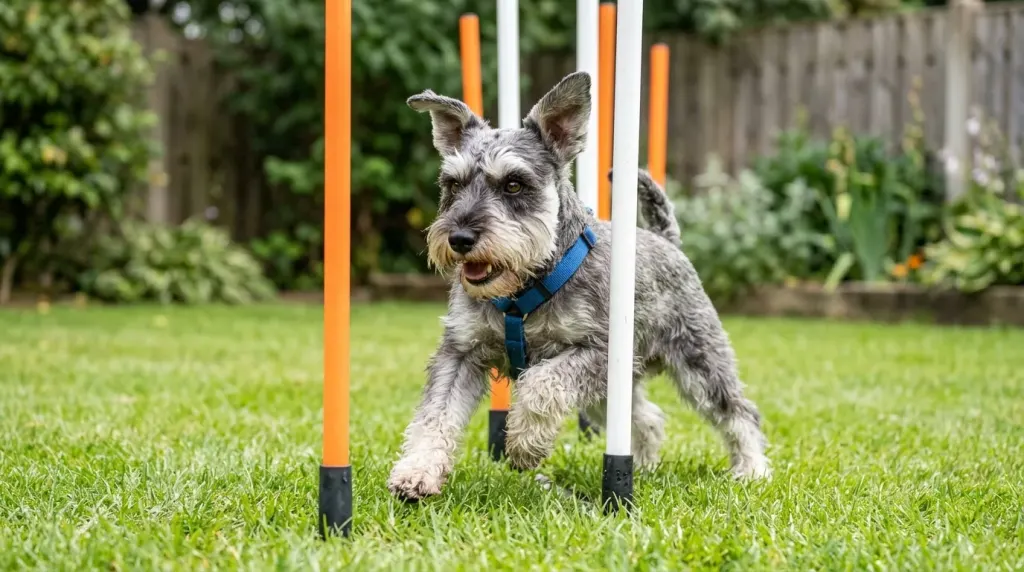
Daily exercise requirements range from 45 to 60 minutes of moderate activity, divided between structured leash walks and interactive play sessions in a secure area. Because of their agile bodies and sharp minds, Miniature Schnauzers excel in dog sports such as agility, rally obedience, and barn hunt competitions. Providing mental stimulation through scent games and food-dispensing puzzle toys is just as vital as physical exertion for preventing boredom-driven destructive behaviors. Miniature Schnauzers combine small-dog portability with the focus and athletic capability often seen in larger working breeds. Channeling their natural sentinel instincts into structured canine sports prevents the development of excessive alert barking or territorial reactivity.
Grooming and coat maintenance for a Miniature Schnauzer
Caring for facial furnishings (beard and eyebrows)
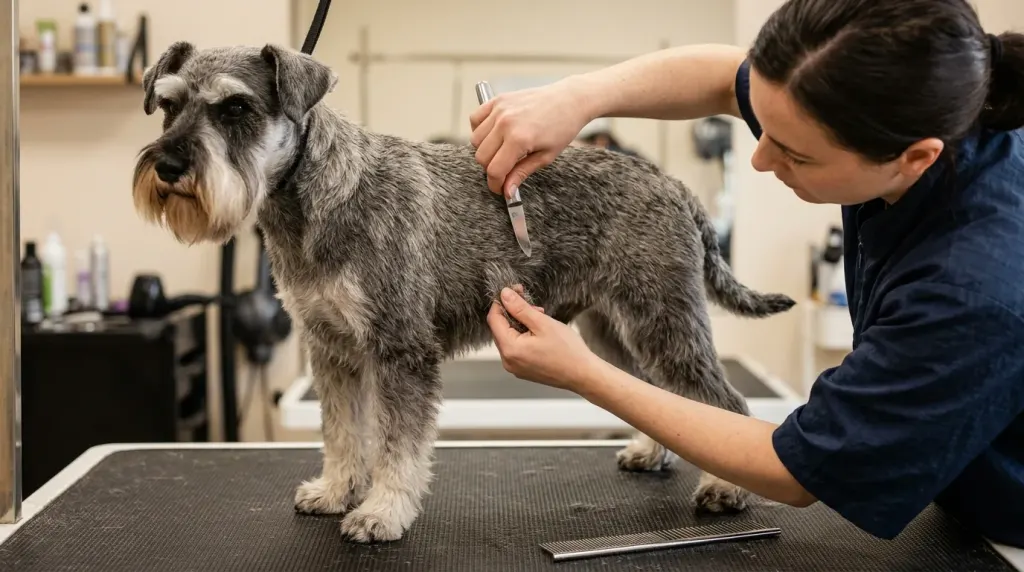
The defining visual hallmark of the Miniature Schnauzer is its facial furnishings, which include prominent, arched eyebrows and a profuse, rectangular beard. Historically, these thick wire furnishings protected the dog’s eyes and muzzle from defensive scratches and bites when pursuing vermin underground or inside barn crevices. In modern companion life, maintaining these furnishings requires dedicated daily hygiene and combing.
Owners must inspect and wipe the beard after meals to remove trapped food particles and moisture, which can otherwise harbor bacteria and create unpleasant odors. A fine-toothed metal greyhound comb should be used daily to gently detangle the beard and mustache, preventing food debris from hardening into stubborn mats. Regular facial hygiene preserves the clean, regal appearance of the dog and prevents skin irritation around the lips and chin.
Hand-stripping vs. machine clipping techniques
Maintaining the wiry double coat of the Miniature Schnauzer involves a choice between two distinct grooming methods, depending on whether the dog is destined for the show ring or family companionship:
- Machine clipping: The standard choice for pet households. A professional groomer uses electric clippers every 5 to 8 weeks to trim the jacket close to the skin while styling the legs, eyebrows, and beard with scissors. Clipping is convenient and comfortable for the dog, though over time it softens the coat texture and lightens the depth of dark coat colours.
- Hand-stripping: The traditional method required for conformation show dogs. Dead outer wire hairs are manually pulled out by the root using specialized stripping knives or fingers, allowing a fresh, harsh, water-resistant jacket to regenerate. Hand-stripping preserves rich coat pigmentation and original wire texture but requires significant time, skill, or specialized professional grooming expense.
| Grooming Attribute | Machine Clipping (Pet Trim) | Hand-Stripping (Show Trim) |
|---|---|---|
| Primary tool | Electric clippers and blending shears | Stripping knives, chalk, and fingers |
| Coat texture outcome | Soft, plush, single-layer feel | Harsh, wiry, dirt-resistant jacket |
| Colour retention | Black and salt tones may fade over time | Preserves deep, vibrant pigmentation |
| Grooming frequency | Every 5 to 8 weeks | Every 4 to 6 weeks (rolling coat) |
| Maintenance effort | Moderate home brushing required | High skill level and time commitment |
| Ideal candidate | Companion family pets | Conformation show competitors |
Shedding patterns and allergy considerations
According to The Spruce Pets Miniature Schnauzer care guide, the breed produces minimal loose shedding because the harsh wire jacket traps dead hairs within the coat until they are brushed out. This low-shedding quality makes the breed popular among households that prefer clean furniture and clothing.
However, prospective owners should understand that no dog is completely hypoallergenic. Allergic reactions in humans are triggered by Can f 1 proteins present in canine dander, saliva, and urine rather than hair volume alone. While low-shedding breeds release fewer airborne hair particles carrying dried saliva, individuals with sensitive allergies can still react to dander.
In households managing pet sensitivities, comparing allergen dynamics across different domestic animals reveals that even hairless companion animals like the Sphynx cat breed produce dander and salivary proteins that require routine skin care. Regular coat brushing with a slicker brush, frequent laundering of pet bedding, and maintaining a consistent grooming schedule are the most effective ways to manage dander levels, whether caring for a wire-haired dog or a plush-coated British Shorthair cat breed pet.
Health, lifespan, and veterinary insights
Common health conditions (hyperlipidemia, pancreatitis, eye disorders)
The Miniature Schnauzer is a generally hardy breed with a typical lifespan of 12 to 15 years. However, like all purebred dogs, it possesses inherited vulnerabilities to specific metabolic, urinary, and ocular disorders that owners and veterinarians must manage proactively.
In an epidemiological study of primary-care veterinary records published in PubMed Central (UK primary veterinary care epidemiological study published in PMC), researchers documented the demographic profile and disorder prevalence of Miniature Schnauzers under primary veterinary care in the United Kingdom. The study identified dental disease and obesity as frequent primary-care diagnoses, while emphasizing the breed’s distinct susceptibility to lipid metabolism disorders and ocular conditions.
- Idiopathic hyperlipidemia and pancreatitis: Miniature Schnauzers exhibit an inherited genetic defect in lipid metabolism that causes elevated levels of triglycerides and cholesterol in the blood. This condition significantly increases the risk of acute pancreatitis, a painful and potentially life-threatening inflammation of the pancreas. Management requires a strictly monitored, low-fat diet, complete avoidance of fatty table scraps, and periodic fasting blood lipid screenings.
- Urolithiasis (Urinary stones): The breed is predisposed to forming bladder stones, particularly calcium oxalate and struvite uroliths. Symptoms include straining to urinate, blood in the urine, and frequent urination. Maintaining constant hydration and feeding balanced diets formulated to support urinary health are essential preventive steps.
- Ocular disorders: Progressive Retinal Atrophy (PRA), juvenile cataracts, and persistent pupillary membranes (PPM) can affect vision if breeding stock is not screened. Responsible breeders perform annual examinations through board-certified veterinary ophthalmologists registered with the Orthopedic Foundation for Animals (OFA) Companion Animal Eye Registry (CAER).
- Mycobacterium avium Complex (MAC): An inherited immune vulnerability that makes affected dogs susceptible to severe systemic bacterial infections from common environmental mycobacteria. Reliable DNA marker testing is now available to identify clear, carrier, and affected dogs before breeding.
Note: Health information provided in this guide serves an educational purpose and cannot replace individualized veterinary diagnosis. If your dog exhibits signs of acute abdominal pain, persistent vomiting, severe lethargy, or urinary distress, consult a licensed veterinarian or emergency veterinary clinic promptly.
| Condition | Biological Mechanism | Common Clinical Signs | Preventive Management |
|---|---|---|---|
| Idiopathic Hyperlipidemia | Defective blood lipid clearance leading to elevated triglycerides | Elevated blood fat levels; secondary lethargy or digestive upset | Annual fasting lipid panels; strict low-fat commercial diet |
| Acute Pancreatitis | Premature activation of digestive enzymes causing inflammation | Vomiting, severe abdominal pain, hunched posture, fever | Avoid high-fat treats; seek prompt veterinary intervention |
| Calcium Oxalate Uroliths | Mineral precipitation and crystal aggregation in the bladder | Hematuria (blood in urine), painful straining, frequent urination | Routine urinalysis, ultrasound screening, encourage high water intake |
| Progressive Retinal Atrophy | Genetic degeneration of photoreceptor cells in the retina | Night blindness progressing to complete vision loss | DNA marker testing of parents; annual OFA CAER eye examinations |
Nutrition, daily exercise needs, and lifespan
Nutritional management for the Miniature Schnauzer centers on strict dietary fat control to mitigate the risk of hyperlipidemia and pancreatitis. High-quality commercial diets formulated with moderate-to-low fat content (typically 10% to 12% fat on a dry matter basis) and high digestibility are recommended. Table scraps, bacon grease, cheese, and fatty meats must be completely excluded from the dog’s diet.
Portion control is equally critical. Just as structured dietary vigilance prevents obesity in deep-chested sporting dogs such as the Labrador Retriever dog breed, monitoring caloric intake in small Schnauzers prevents excess weight from placing strain on joints and exacerbating metabolic vulnerabilities. Daily exercise of 45 to 60 minutes combined with mental stimulation keeps adult dogs lean, agile, and physically fulfilled throughout their 12 to 15-year lifespan.
Looking for a puppy or adult dog responsibly
Finding a healthy Miniature Schnauzer requires diligence and research to ensure you support ethical preservation breeding rather than commercial puppy mills or irresponsible backyard breeders. A responsible breeder prioritizes health testing, structural soundness, and stable temperament over commercial profit.
When evaluating a potential breeder, prospective owners should insist on seeing verifiable proof of parent health testing, including OFA eye clearance certificates issued within the past 12 months and DNA test results for PRA and MAC. Ethical breeders maintain clean home environments, socialize puppies with varied sights and sounds, provide a written sales contract with lifetime health guarantees, and commit to taking back the dog at any point in its life if the owner can no longer care for it.
Adopting an adult Miniature Schnauzer through a dedicated breed rescue organization or local shelter is an excellent alternative. Adult rescue dogs often have established temperaments, basic house training, and clear medical histories, making them wonderful companions for individuals or seniors looking to bypass the intensive demands of puppyhood.
Breeding restrictions and ethics
Canine registry regulations and animal welfare guidelines govern the ethical breeding of purebred dogs. Responsible national parent clubs establish strict codes of ethics that prohibit breeding dogs before they reach full physical maturity (typically two years of age) and before completing mandatory health testing.
Just as specialized breeders study the necessary medical clearances and reproductive care protocols outlined in comprehensive veterinary resources for how to breed French Bulldogs, Miniature Schnauzer breeders must focus on eliminating hereditary eye conditions and metabolic vulnerabilities from their bloodlines. Purebred registration papers from the AKC, UKC, or The Kennel Club certify a dog’s pedigree lineage but do not guarantee physical soundness on their own. Reputable breeders frequently place non-show companion puppies on limited registration with mandatory spay/neuter agreements to protect animal welfare.
Is the Miniature Schnauzer the right dog for you?
Strong fit indicators
A Miniature Schnauzer is likely an outstanding addition to your home if your lifestyle aligns with the following criteria:
- You want an intelligent, interactive companion that thrives on being involved in daily family activities.
- You can commit to 45 to 60 minutes of daily exercise, mental enrichment, and consistent positive obedience training.
- You are prepared to budget time and finances for regular professional clipping or hand-stripping as the coat grows, along with routine home brushing.
- You appreciate an alert, vocal watchdog that will promptly announce arriving visitors at the front door.
- You desire a small, travel-friendly dog with a sturdy constitution capable of keeping up on outdoor adventures.
Potential mismatch indicators
You may want to reconsider the Miniature Schnauzer if your household matches these circumstances:
- You are seeking a quiet, sedentary lapdog that rarely barks or requires minimal daily interaction.
- You cannot accommodate regular grooming costs or the time commitment needed to comb beards and prevent coat matting.
- Your home contains free-roaming small rodent pets that could trigger strong predatory ratting drives.
- The dog will be left alone for extended periods without human interaction, which can lead to nuisance barking or separation distress.
- You expect an entirely maintenance-free coat based on casual claims of the breed being hypoallergenic.
How this breed compares with other dogs
Prospective owners frequently evaluate the Miniature Schnauzer against other popular small and medium companion breeds. While quieter brachycephalic companion dogs such as the French Bulldog dog breed offer a more relaxed, low-energy indoor presence, they shed more consistently and face anatomical airway limitations that restrict vigorous exercise in warm weather. In contrast, the Miniature Schnauzer retains high athletic endurance, an intact respiratory system, and keen watchdog alertness.
When considering multi-pet dynamics and household noise levels, owners of calm, placid indoor companions like the Ragdoll cat breed will find that the Miniature Schnauzer integrates smoothly when provided with early socialization and structured outlets for its natural exuberance. Its low-shedding double coat leaves furniture free of floating hair, trading shedding cleanup for dedicated scheduled grooming appointments.
| Consideration Factor | Miniature Schnauzer | French Bulldog | Poodle (Miniature) |
|---|---|---|---|
| Shedding level | Minimal (low-shedding wire coat) | Moderate (smooth shedding coat) | Minimal (curly single coat) |
| Daily grooming needs | High (brushing + clipping/stripping) | Low (wrinkle cleaning only) | Very High (daily brushing + clipping) |
| Exercise & energy level | Moderate to High (45-60 mins/day) | Low to Moderate (20-30 mins/day) | Moderate to High (45-60 mins/day) |
| Watchdog & barking drive | High (alert sentinel barker) | Low (rarely barks) | Moderate (alert watchdog) |
| General trainability | High (eager to please, intelligent) | Moderate (independent thinker) | Very High (exceptionally trainable) |
Frequently asked questions
How large does a Miniature Schnauzer become?
According to the official AKC breed standard, mature Miniature Schnauzers stand between 12 and 14 inches (30 to 35 cm) tall at the withers for both males and females. Healthy adult weights generally range from 11 to 20 pounds (5 to 9 kg), depending on overall bone structure, muscle mass, and gender.
Is the Miniature Schnauzer a terrier?
In North America, the American Kennel Club and Canadian Kennel Club classify the Miniature Schnauzer in the Terrier Group due to its historic ratting role, keen earthdog instincts, and fearless temperament. However, in the United Kingdom, The Kennel Club classifies the breed in the Utility Group, while the European FCI places it in Group 2 alongside Pinschers and Schnauzers.
Does a Miniature Schnauzer shed?
The Miniature Schnauzer is considered a very low-shedding breed. Its wiry double coat traps loose dead hairs rather than dropping them onto furniture and clothing. However, these trapped hairs must be removed regularly through brushing and professional clipping or hand-stripping to prevent painful matting.
How much grooming does the breed need?
A Miniature Schnauzer requires thorough brushing and combing several times a week, with special attention given to the longer beard and leg furnishings. Pet owners typically schedule periodic professional machine clipping as the coat grows, while show dogs require routine hand-stripping to maintain proper wire texture.
Are white Miniature Schnauzers recognised?
White Miniature Schnauzers are fully recognized for championship show competition under The Kennel Club (UK) and FCI international standards. However, the AKC conformation standard in the United States considers pure white coat coloration a disqualification in the conformation show ring, although white dogs can still be registered and participate in performance sports.
Are Miniature Schnauzers good family dogs?
Miniature Schnauzers make exceptional family dogs for households that provide regular exercise, structured positive training, and daily companionship. Their sturdy build and playful nature allow them to interact well with children, provided children are taught respectful handling and interactions are properly supervised.
Leave a Reply