
Table of Contents
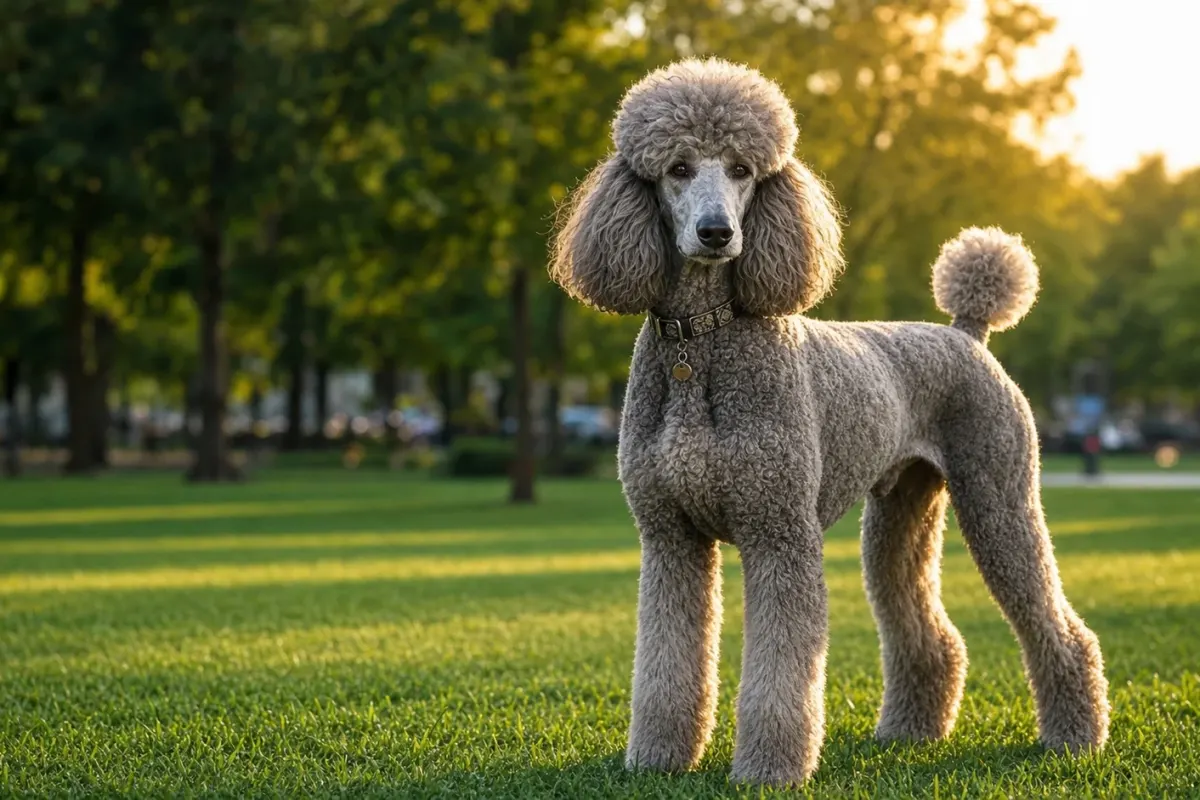
Poodles are intelligent, active retrievers bred originally as water dogs, and they come in three sizes: Standard (over 15 inches), Miniature (10-15 inches), and Toy (10 inches and under). All three share one temperament profile: highly trainable, people-oriented, and in need of daily mental work as much as physical exercise. Their single, continuously growing coat sheds very little but requires professional grooming every 4-6 weeks and brushing several times a week to prevent painful matting. No dog is truly hypoallergenic.
- Three size varieties (Standard, Miniature, Toy) share the same breed standard and temperament, differing mainly in height and exercise needs.
- The Poodle was developed as a working water retriever, so it needs daily mental enrichment, not just walks.
- The coat sheds minimally but is high-maintenance: professional grooming every 4-6 weeks plus regular brushing to prevent matting.
- Low shedding reduces loose dander in the home but does not make the breed hypoallergenic.
- Buy from breeders who health-test for hip dysplasia, progressive retinal atrophy and, in Standards, sebaceous adenitis and bloat risk.
What kind of dog is a Poodle?
Despite its modern association with elaborate grooming and dog shows, the Poodle developed as a working water retriever. The American Kennel Club’s history notes the breed’s “passion for a good swim,” tracing its origins to Germany where the word “pudel” meant splashing in water, before the breed became widely associated with France. The distinctive show clip originally served a functional purpose: hunters shaved the hindquarters to reduce weight in water while leaving heavy coat around the chest, joints, and vital organs to protect the dog in freezing temperatures.
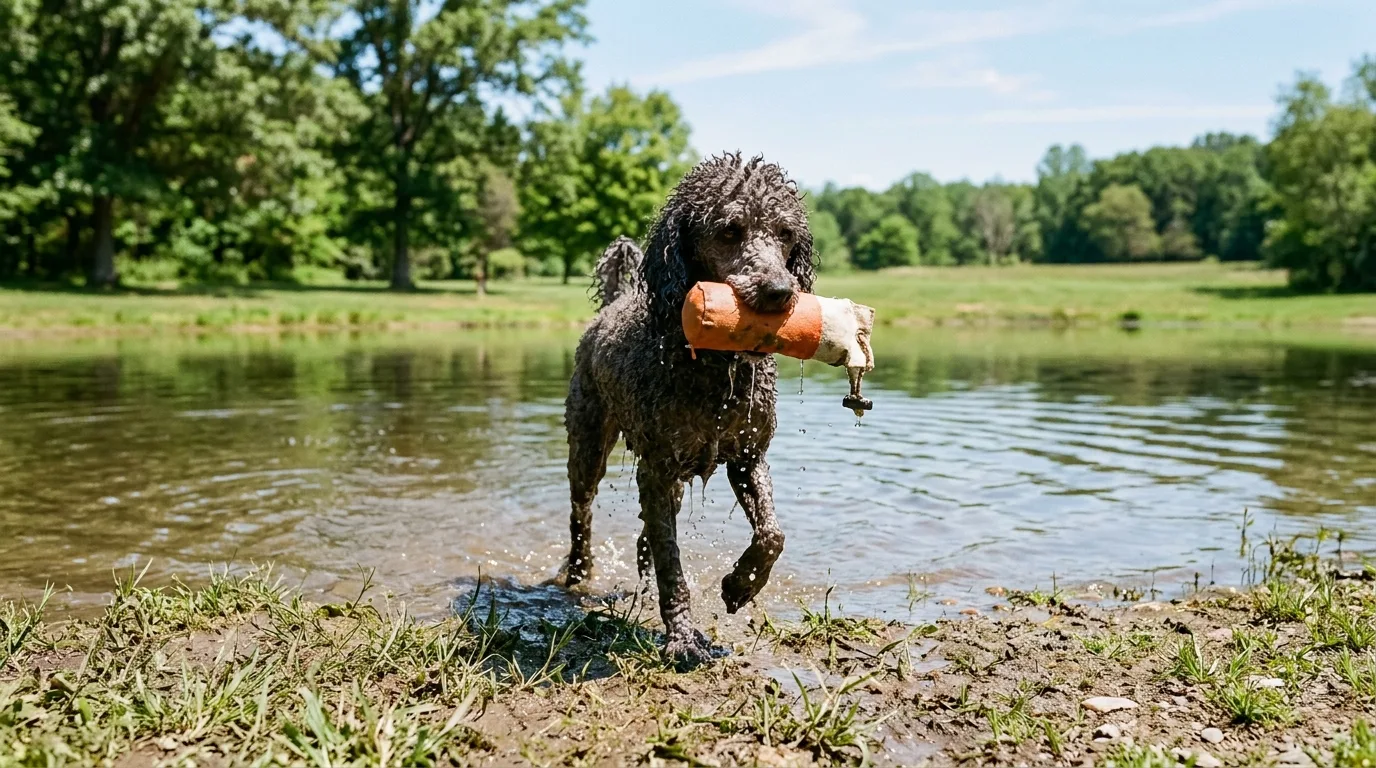
As their roles shifted from retrieving waterfowl to companions, circus performers, and dog sports, the AKC placed them in the Non-Sporting Group. This working heritage still shapes their behavior today, setting them apart from purely companion breeds and aligning their need for mental engagement closer to a German Shepherd dog breed profile or a Golden Retriever dog breed profile.
What does the Poodle’s working history explain about behavior?
A Poodle’s retriever history does not fix any individual dog’s personality, but it supports expecting an alert, highly active companion that benefits from consistent training and purposeful activity. Water play, retrieving, scent games, obedience, and agility are excellent outlets. Without adequate mental and physical stimulation, their intelligence can quickly turn into destructive behavior.
Poodle varieties, size, and appearance
The AKC breed standard recognizes three varieties defined strictly by height at the highest point of the shoulders (withers). Standard Poodles stand over 15 inches, Miniatures over 10 inches up to 15 inches, and Toys are 10 inches or under. All three share the same fundamental standard for a squarely built, well-proportioned dog with a proud carriage and dark, oval eyes. Adult weight varies by the individual dog, but Standards typically weigh between 40 and 70 pounds, while Miniatures range from 10 to 15 pounds, and Toys usually weigh 4 to 6 pounds.
Size directly affects handling, living space requirements, and orthopedic injury risks. Small Toys have delicate bones requiring careful handling to prevent fractures from jumps or drops, similar to the precautions noted in a Dachshund dog breed profile or a Pug dog breed profile. Terms like “teacup,” “royal,” and “tiny toy” are marketing labels used by breeders to sell undersized or oversized dogs, not official AKC varieties, and extreme sizes often carry severe health risks. Britannica estimates a general lifespan of 10 to 18 years, varying heavily by variety and individual health, with Toys and Miniatures generally outliving Standards.
How big do Poodles get, and which variety is officially recognized?
Under AKC rules, Standards stand over 15 inches, Miniatures over 10 through 15 inches, and Toys 10 inches or under. Size affects handling, space, and injury risk but does not reduce the choice to a simple apartment-versus-house rule. Meet adult dogs and discuss the individual puppy’s temperament with a responsible source.
Coat, colors, and show standard vs pet care
The AKC standard recognizes naturally harsh, dense, curly coats as well as corded coats. The breed comes in multiple solid colors, including apricot, black, blue, brown, cafe-au-lait, cream, gray, red, silver, silver beige, and white. The standard specifies precise show clips (such as the Puppy, English Saddle, or Continental clip) for the conformation ring. A pet owner needs no show clip, but they must maintain a daily grooming routine that keeps the skin accessible and prevents painful matting.
Temperament, socialization, and training
The AKC standard describes the Poodle as active, intelligent, and carrying itself proudly, noting that shyness or sharpness is a fault. Britannica often ranks them among the most intelligent breeds. However, these are breed tendencies, not guarantees for every dog. Socialization, humane training, and the individual dog’s temperament decide the actual outcome. High intelligence means a dog learns bad habits just as fast as good ones. A Poodle needs boundaries and consistent guidance, not just a label of being smart.
Are Poodles good with children and other pets?
Many Poodles thrive in family homes. The PDSA notes they generally get on well with children and other pets, but safe compatibility depends on the individual dog, gentle handling by children, prior experience, training, and supervision. Recommend gradual introductions rather than assuming any breed is automatically child- or cat-safe, just as you would when introducing a Ragdoll cat breed profile.
How should a Poodle be trained?
Start with reward-based foundational skills, early socialization, calm handling for grooming, recall, and household routines. Because Poodles excel at obedience, tracking, and agility, rotating appropriate tasks adds mental variety without requiring competition. This engagement is similar to the structured learning beneficial in a Labrador Retriever dog breed profile.
Exercise, enrichment, and daily routine
Poodles need regular physical activity and mental engagement. Larger Standards generally require more exercise than Toys, but a single daily-minute target is not reliable for every dog. Adjust the routine for age, health, conditioning, and weather. Their athletic heritage contrasts sharply with flatter-faced companion dogs, as detailed in a French Bulldog dog breed profile.
Include walks, safe play, and supervised, gradual swimming. Retrieval and scent games, along with training sessions, serve as excellent mental enrichment. Control impact during puppy growth to protect developing joints.
How do you know whether the routine is appropriate?
A sustainable routine leaves the dog able to settle afterward without pain, limping, prolonged exhaustion, or distress. Restlessness alone is not a diagnosis. Changes in mobility, appetite, behavior, or exercise tolerance warrant a veterinary discussion.
Grooming and allergy expectations
Poodles are often described as low-shedding, but the coat still needs frequent brushing, bathing, drying, nail care, and professional clipping every four to six weeks. The PDSA notes that daily grooming and regular professional clipping are necessary. Owners must brush the coat before bathing, using a slicker brush and a metal comb to work from the skin to the hair tip. Surface brushing leaves mats intact near the skin, which can cause sores and infections. Introduce puppies to grooming early so they tolerate the intense handling.
This intensive coat routine is very different from managing a short coat, a distinction explained further in this French Bulldog ancestry and coat-label explainer.
Is a Poodle hypoallergenic?
No Poodle is guaranteed hypoallergenic. The American College of Allergy, Asthma & Immunology (ACAAI) states that allergens come from proteins in dander, saliva, and urine, not just loose hair. A low-shedding coat may reduce the spread of hair and dander around the house, but allergy symptoms vary heavily by person and exposure. A medical professional can help an affected person assess their own risk. Do not treat adopting a dog as an allergy test without advance planning.
Health considerations and responsible sourcing
Recommended health evaluations differ by variety. The Poodle Club of America’s (PCA) health statement lists PRA-prcd DNA testing, an annual ACVO eye exam, and patellar-luxation evaluation for Toys and Miniatures. Miniatures and Standards add a hip evaluation, while Standards additionally require thyroid, NEwS DNA, and von Willebrand disease I DNA testing. Other concerns in the breed include idiopathic epilepsy and sebaceous adenitis (a skin disease). A buyer should review verifiable results and plan individual care with a veterinarian. This level of breed-specific evaluation is a hallmark of responsible sourcing, completely separate from how to breed French Bulldogs or other breeds.
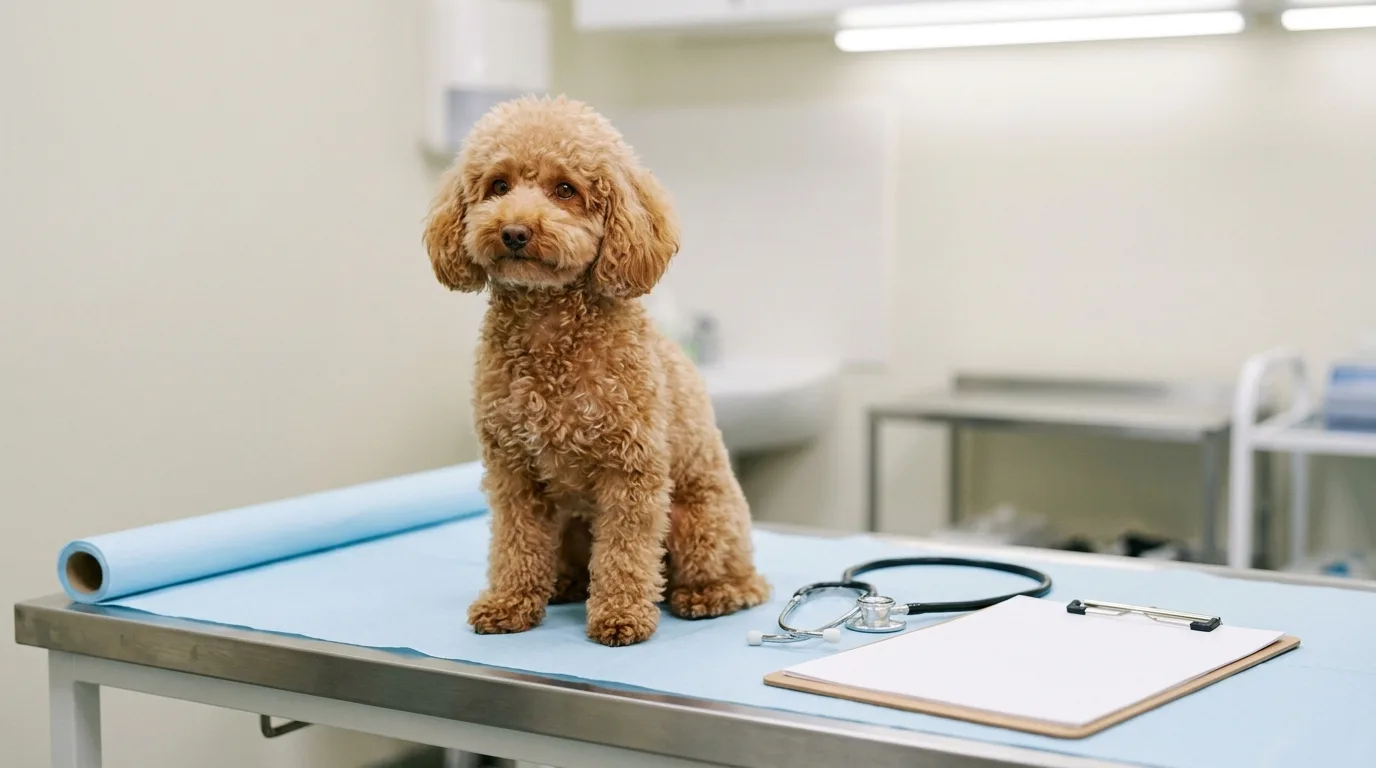
Note: Health screening reduces uncertainty but cannot guarantee an individual dog never develops disease; consult a veterinarian about a specific dog.
Which health tests should a responsible Poodle breeder provide?
Ask for documentation matching the variety, not a generic “health checked” claim. Per the PCA:
- Toy: PRA-prcd DNA, annual ACVO eye exam, patellar-luxation evaluation.
- Miniature: The three Toy tests plus a hip evaluation.
- Standard: Hip evaluation, ACVO eye exam, autoimmune thyroiditis, NEwS DNA test, and von Willebrand disease I DNA test.
Emergency Care, Poisoning, and When to Seek Veterinary Help
If you suspect your Poodle has ingested a toxic substance, human medication, or a dangerous object, contact your veterinarian or an animal poison control center IMMEDIATELY. Do not wait to see if symptoms develop, and do not attempt to induce vomiting at home unless explicitly instructed to do so by a veterinary professional, as doing so with certain substances can cause severe chemical burns or fatal choking.
Seek urgent veterinary care for any signs of Gastric Dilatation-Volvulus (GDV/bloat), a life-threatening emergency primarily affecting Standard Poodles. Cornell University’s College of Veterinary Medicine flags a hard, swollen, or distended abdomen, restlessness, and unproductive retching as critical bloat symptoms. Time is of the essence; direct these concerns to an emergency veterinary clinic immediately rather than attempting home treatment.
Additionally, seek prompt care for collapse, severe lethargy, or repeated vomiting and diarrhea, which can indicate an Addisonian crisis (a sudden worsening of Addison’s disease, noted by the PCA as a breed concern, especially in Standards).
Is the Poodle dog breed right for you?
A Poodle suits someone wanting an engaged, trainable companion who can consistently provide grooming, interaction, and veterinary care. It may be a poor fit for someone wanting a low-maintenance dog, unable to budget coat-care time, or expecting a guaranteed allergy-safe pet.
Before contacting a breeder or rescue, verify health records and meet adult dogs to understand the reality of the breed. Choose the individual dog, not a label, just as you would evaluate what breeds make a French Bulldog rather than relying on a name alone.
Common Questions
How big do Poodles get?
Under AKC rules, Standard Poodles stand over 15 inches at the withers, Miniatures over 10 up to 15 inches, and Toys 10 inches or under.
Do Poodles shed a lot?
Poodle coats are often low-shedding in the home, but loose hair stays in the coat and can mat without frequent brushing, so grooming demands remain high.
Are Poodles easy to train?
The AKC standard describes an intelligent, active dog, and the breed excels at obedience, tracking, and agility. However, success still depends on consistent, humane training and the individual dog.
How long do Poodles live?
Britannica cites a lifespan of roughly 10 to 18 years, and this varies by variety, care, and individual health.
Are Poodles good for people with allergies?
No breed can promise an allergy-free home. Spend time with adult dogs and seek medical guidance if a household member has dog allergies.



Leave a Reply