

Table of Contents
When determining how long are Golden Retrievers puppies, physical growth and mental maturity follow two different schedules. A Golden Retriever remains a puppy physically until roughly two years of age, while mental and emotional puppyhood lasts until around three years of age. Full skeletal height arrives by 12 months, but muscular fill-out and emotional settling take longer.
- Skeletal adult height locks in around 12 months, but chest broadening and muscle density continue developing through the second year.
- Mental and emotional puppyhood lasts longer, with excitable energy settling into steady focus typically around age three.
- Growth plates complete fusion gradually across the first 18 months, requiring low-impact exercise routines.
- Development spans four main stages: Early Socialization (first 16 weeks), Juvenile Growth (months 4 through 6), Adolescence (months 6 through 18), and Full Maturity (from 18 months onward).
Bringing a Golden Retriever into the family means guiding a dog through distinct physical and behavioral changes. Understanding growth milestones requires looking beyond early height gains to track bone density, muscle fill, and neurological maturity. Because physical development and cognitive stability advance on separate schedules, knowing what to expect helps owners calibrate daily feeding, exercise, and training.
Golden Retriever Puppyhood Duration: Physical vs Mental Maturity
A Golden Retriever is considered a puppy physically until 18 to 24 months, but emotionally until 2 to 3 years. Physical maturity involves skeletal elongation, bone ossification, and muscle filling, whereas mental maturity governs attention span, impulse control, and emotional stability.
Many first-time owners are surprised when their one-year-old dog, standing at full adult height, continues to chew furniture, jump enthusiastically on guests, and display bursts of frantic energy. While smaller companion breeds reach adult proportions and behavioral milestones relatively early, as observed when assessing how big Pug dogs get as adults, large sporting retrievers follow an extended developmental trajectory. This prolonged juvenile window directly influences the overall lifespan and care requirements seen across different breeds, including baseline benchmarks for how long Pug dogs live.
According to developmental benchmarks established by the American Kennel Club, Golden Retrievers reach their adult skeletal height between 10 and 12 months of age. However, their physical journey is only half complete at this point. Over the subsequent 6 to 12 months, their ribcage broadens, shoulder musculature thickens, and their adult double coat completes its characteristic dense feathering along the legs, chest, and tail.
| Developmental Dimension | 6 Months | 12 Months | 18 Months | 24 to 36 Months |
|---|---|---|---|---|
| Skeletal Height | 70% to 80% of adult height | 95% to 100% of adult height | Fully locked adult frame | Fully locked adult frame |
| Muscular Mass | Lean, lanky frame | Slender adolescent build | Broadening chest and shoulders | Full adult muscle density |
| Coat Development | Soft puppy coat shedding | Intermediate coarse coat | Developing adult feathering | Dense, full double coat with rich feathering |
| Emotional State | High curiosity, short focus | Boundary testing, excitable | Emerging impulse control | Consistent focus, calm adult demeanor |
Mental maturity involves the gradual development of the canine prefrontal cortex, which regulates self-control, focus, and emotional regulation. During early adolescence (6 to 18 months), hormonal surges often lead to temporary regressions in obedience training. Golden Retrievers retain their joyful, puppy-like enthusiasm for life well into adulthood, but erratic hyperactive behavior begins subsiding reliably between 24 and 36 months when solid behavioral consistency emerges.
Golden Retriever Growth Timeline: Key Milestones from Birth to 24 Months
Golden Retriever development progresses through four main phases: early neonatal and socialization (0 to 16 weeks), rapid juvenile growth (4 to 6 months), turbulent adolescence (6 to 18 months), and physical finalization (18 to 24 months). Tracking these milestones helps owners anticipate physiological shifts and behavioral changes.

Neonatal and Primary Socialization Phase (0 to 16 Weeks)
From birth to 8 weeks, puppies depend entirely on their mother for warmth, nourishment, and early bite inhibition. When evaluating early litter dynamics across canine breeds, such as comparing how many puppies French Bulldogs have, Golden Retriever litters are substantially larger, typically averaging 6 to 10 puppies, which provides extensive peer socialization before weaning.
Between 8 and 16 weeks, puppies enter the critical socialization window. During this phase, their brain is exceptionally receptive to new sounds, surfaces, people, and other vaccinated dogs. Rapid physical growth demands substantial rest, and tracking how much sleep puppies need ensures young dogs receive the 16 to 20 hours of daily sleep required for proper neurological recovery and cellular repair. Teething also begins around 12 to 14 weeks as deciduous teeth fall out to make room for permanent adult teeth.
Juvenile Growth Stage (4 to 6 Months)
During the juvenile phase, puppies experience a dramatic growth spurt, gaining between 1.5 to 2 pounds per week. By 6 months of age, a Golden Retriever weighs approximately 40 to 50 pounds, which represents roughly two-thirds of their adult body weight. Leg bones grow faster than the torso, giving the puppy a gangly appearance.
| Age Bracket | Typical Weight (Male) | Typical Weight (Female) | Key Developmental Markers |
|---|---|---|---|
| 2 Months (8 Weeks) | 9 to 11 lbs | 8 to 10 lbs | First vaccinations, home transition, initial housebreaking |
| 4 Months | 28 to 34 lbs | 24 to 30 lbs | Teething peaks, adult coat begins growing on the spine |
| 6 Months | 44 to 52 lbs | 38 to 44 lbs | Roughly 65% of adult weight, high energy, juvenile independence |
| 9 Months | 56 to 66 lbs | 48 to 56 lbs | Adolescent defiance, near full adult height, open growth plates |
| 12 Months | 64 to 72 lbs | 54 to 62 lbs | Adult skeletal height reached, reproductive maturity |
| 18 to 24 Months | 65 to 75 lbs | 55 to 65 lbs | Growth plates fused, chest broadened, muscle mass finalized |
Adolescent and Physical Finalization Stages (6 to 24 Months)
Adolescence (6 to 18 months) is marked by sexual maturity and fluctuating hormone levels. Guidance from the People’s Dispensary for Sick Animals emphasizes that large sporting breeds continue building muscle density and structural broadness well into their second year. Between 18 and 24 months, the lanky adolescent silhouette transforms into a powerful, athletic adult frame with a deep chest, well-sprung ribs, and rich, flowing feathering.
Health and Skeletal Considerations During Golden Retriever Puppyhood
Proper puppyhood care for Golden Retrievers centers on supporting musculoskeletal integrity, managing exercise loads, and avoiding environmental overheating while physical systems mature.
Protecting Vulnerable Growth Plates
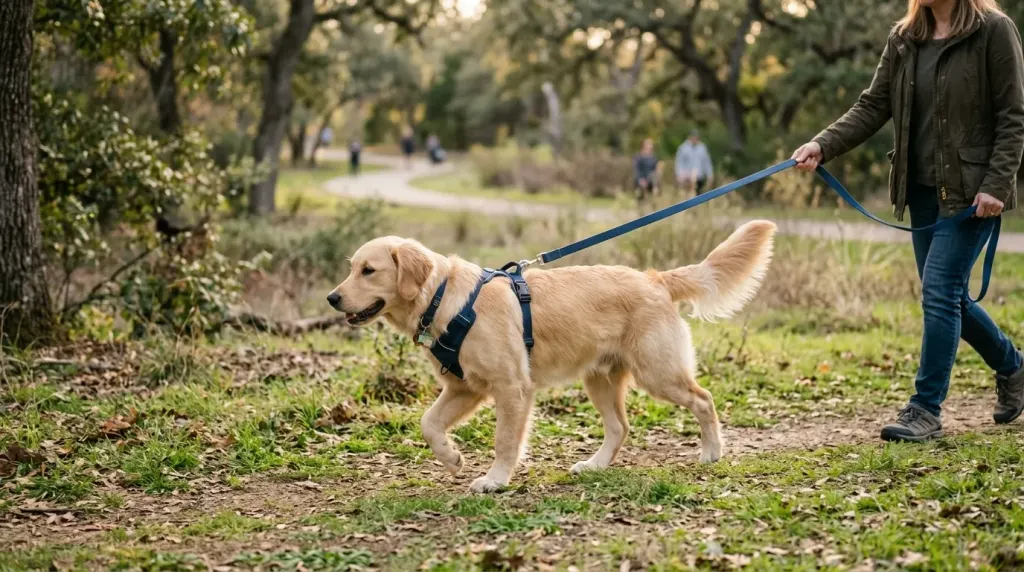
Growth plates are areas of soft, cartilaginous tissue located at the ends of long bones in developing dogs. These plates allow bones to lengthen as the puppy grows. In Golden Retrievers, growth plates close progressively between 12 and 18 months of age, with the distal radial and ulnar plates completing fusion last.
Veterinary research documented by the National Center for Biotechnology Information demonstrates that excessive high-impact stress on open growth plates significantly elevates the risk of developmental orthopedic disorders, including hip dysplasia, elbow dysplasia, and osteochondritis dissecans. To protect these vulnerable joints:
- Avoid repetitive, high-impact activities such as agility jumping, forced distance running on concrete, and jumping out of high vehicles before 18 months.
- Implement the five-minute exercise rule: allow five minutes of structured leash walking per month of age, up to twice daily (for example, a 4-month-old puppy should walk for no more than 20 minutes per session).
- Provide non-slip rugs over slick hardwood or tile floors to prevent splay-legged slipping injuries.
- Encourage free, self-directed play on soft grass, which allows the puppy to rest whenever fatigued.
Thermal Regulation and Exercise Tolerance
Active retriever puppies frequently push past fatigue during play, increasing the danger of thermal stress on hot days. Implementing cooling protocols similar to knowing how to cool down a French Bulldog prevents dangerous heat exhaustion during warm weather sessions. Recognizing how body proportions affect stamina, as seen when comparing adult growth milestones in French Bulldogs, underscores why large sporting puppies need moderate, climate-conscious physical conditioning. Golden Retrievers experience an extended adolescence compared to smaller companion breeds. Treating a physically large 10-month-old dog as a fully matured adult often leads to training frustration; recognizing that cognitive development lags behind physical size helps maintain consistent, patient expectations.
Nutrition, Weight Management, and Daily Routine Guidelines
Feeding a growing Golden Retriever requires specialized large-breed nutrition formulated to promote steady, controlled growth rather than rapid weight accumulation. A common pitfall is feeding standard puppy kibble, which is often overly calorie-dense and contains excess calcium.
Large-breed puppy food maintains a calibrated calcium-to-phosphorus ratio (typically between 1.1:1 and 1.3:1) with controlled fat levels (12% to 15%). This nutritional balance prevents bone elongation from outrunning muscular and ligament support. Puppies should remain on large-breed puppy food through their first year or until approximately 15 months of age, depending on individual frame development, before gradually transitioning to an adult maintenance diet.
| Puppy Age | Daily Feeding Frequency | Recommended Nutritional Focus | Primary Developmental Objective |
|---|---|---|---|
| 2 to 4 Months | 4 meals daily | High-protein large breed puppy kibble with DHA | Neurological growth and steady bone formation |
| 4 to 6 Months | 3 meals daily | Calibrated calcium-phosphorus ratio (1.2:1) | Preventing rapid uneven bone elongation |
| 6 to 12 Months | 2 meals daily | Moderate fat (12-15%) with joint-supporting nutrients | Sustaining lean muscle gain without joint stress |
| 12 to 24 Months | 2 meals daily | Transition to adult large breed formula | Maintaining optimal body condition score |
Managing calorie consumption prevents excess strain on soft joint cartilage. Establishing strict portion schedules mirrors the feeding discipline required when determining how much dog food a puppy should eat to avoid juvenile obesity. If a young dog starts carrying surplus weight, applying structured portion control similar to methods on how to help a dog lose weight keeps physical stress off developing hips and elbows.
Developmental Training and Behavior Management for Growing Puppies
Behavioral training must adapt to each developmental stage, addressing teething, housebreaking, bite inhibition, and adolescent boundary testing with structured consistency.
During early puppyhood, establishing predictable outdoor routines eliminates housebreaking confusion. Using proven schedules, such as established potty training methods for young dogs, speeds up clean habits through immediate positive reinforcement. Frequent outdoor visits following meals, naps, and play sessions establish reliable elimination habits within weeks.
Managing energetic mouthing and jumping requires structured mental engagement. Short, engaging training drills using early puppy obedience training strategies teach impulse control without overwhelming a young dog’s limited attention span. When adolescent boundary testing surfaces during the second half of the first year, maintaining calm, consistent routines keeps training progress intact.
Original Value: The 3-Phase Golden Retriever Maturity Matrix
Evaluating Golden Retriever development requires assessing three independent benchmarks: Skeletal Maturity, Muscular and Coat Maturity, and Cognitive Stability. Understanding where your dog sits across these three dimensions provides clarity on training readiness, exercise limits, and dietary transitions.
| Maturity Phase | Primary Timeline | Anatomical & Behavioral Changes | Actionable Owner Strategy |
|---|---|---|---|
| Phase 1: Skeletal Framework | 0 to 12 Months | Long bones elongate, adult height locks in (21.5 to 24 inches), growth plates remain active | Enforce low-impact exercise limits, feed large-breed puppy diet, avoid stair racing |
| Phase 2: Muscular & Coat Fill | 12 to 24 Months | Chest broadens, ribcage expands, adult coat and feathering reach full density, adult weight stabilizes (55 to 75 lbs) | Transition to adult food around 12-15 months, increase moderate conditioning, daily brushing |
| Phase 3: Cognitive & Emotional Stability | 24 to 36 Months | Prefrontal cortex solidifies, impulse control strengthens, adolescent reactivity declines, calm focus emerges | Advance to complex obedience or agility work, maintain calm leadership, reinforce settled behavior |
Navigating Phase 1 (0 to 12 Months: Skeletal Foundation)
During the first year, your puppy builds the structural bone foundation of their body. Even though a 10-month-old Golden Retriever may look like an adult from across the yard, their joint sockets and bone ends are still soft. Focus this period on foundational socialization, leash manners, and controlled physical play.
Navigating Phase 2 (12 to 24 Months: Muscular Fill-Out)
Once skeletal height is established, the dog enters the filling-out phase. Male Golden Retrievers develop broader heads and wider chest spans, while females develop sleek, athletic contours. Applying focused behavioral drills, such as structured training methods for French Bulldogs and other energetic breeds, channels adolescent exuberance into reliable working focus.
Navigating Phase 3 (24 to 36 Months: Cognitive Stability)
The final stage of puppyhood is purely mental. Between the second and third year, Golden Retrievers settle into the dependable, gentle, and eager-to-please temperament that makes them world-class family companions, service animals, and therapy dogs. Emotional volatility fades, and their ability to sustain focus during complex training tasks peaks. Integrating comprehensive wellness habits, reflecting standard routine care requirements for companion dogs, ensures a smooth transition into happy, healthy adult life.
Note:
Individual growth rates vary depending on genetics, sex, diet, and overall health. Male Golden Retrievers typically take longer to fill out their broader frames than females.
Frequently Asked Questions
At what age is a Golden Retriever fully grown?
A Golden Retriever reaches full skeletal height around 12 months of age, while chest breadth, muscle density, and adult coat feathering continue developing through their second year, typically stabilizing by age two.
How long is a golden retriever a puppy?
A Golden Retriever is physically considered a puppy until roughly two years of age and behaviorally until around three years old, when youthful puppy exuberance matures into steady adult calm.
When do Golden Retrievers calm down?
Most Golden Retrievers begin noticeably calming down around two to three years of age as their emotional self-control catches up with their adult physical build.
How big should a 6-month-old Golden Retriever be?
At 6 months old, a Golden Retriever typically stands around 18 to 21 inches tall and weighs between 40 and 50 pounds, representing roughly two-thirds of expected adult body weight.


Leave a Reply