
Table of Contents
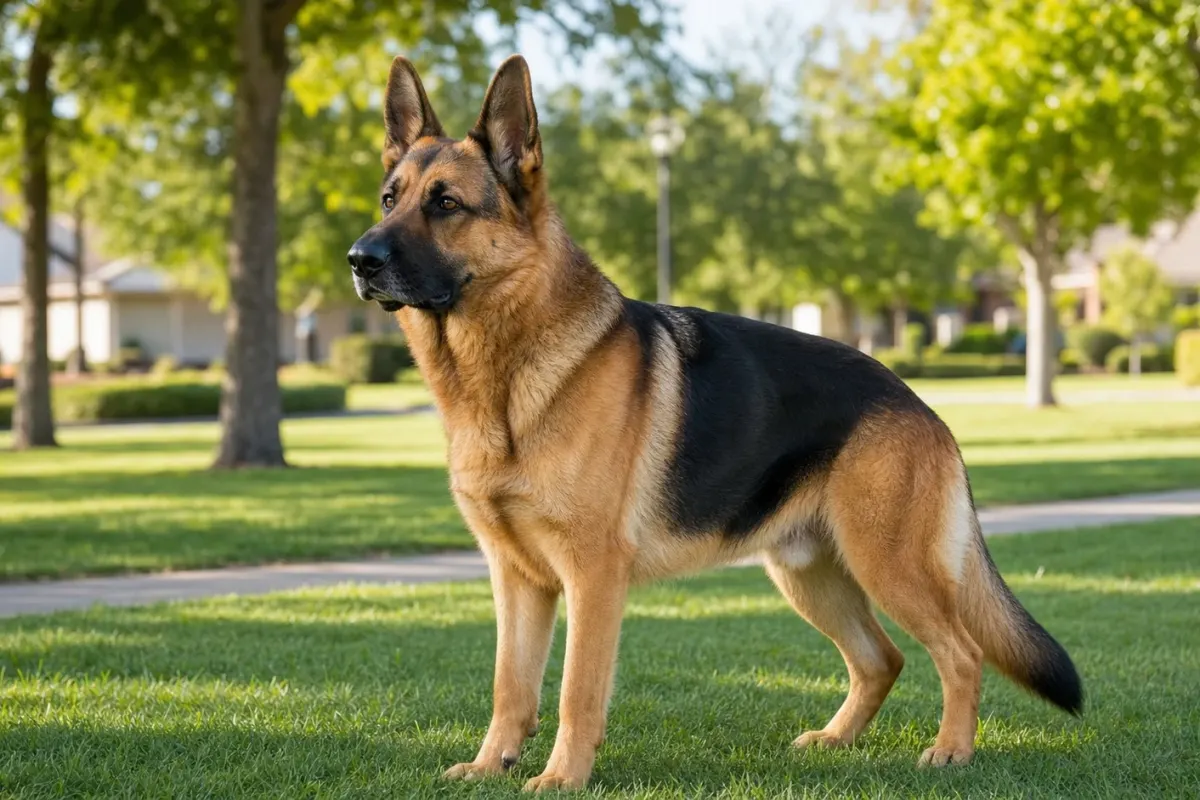
The German Shepherd dog breed is a versatile working and herding canine established in Germany in 1899 by Captain Max von Stephanitz. Recognized in the AKC Herding Group, adult males stand 24 to 26 inches tall weighing 65 to 90 pounds, while females reach 22 to 24 inches weighing 50 to 70 pounds. Known for high intelligence, steadfast loyalty, and protective instincts, the breed has an expected lifespan of 8 to 12 years, with individual longevity depending on genetics and healthcare. They require extensive daily physical exercise and active mental stimulation to thrive.
- Developed in Germany in 1899 from traditional rural herding dogs for all-around utility.
- Classified in the AKC Herding Group with a dense double coat that sheds year-round and experiences heavy seasonal molts.
- Characterized by outstanding trainability and loyalty, requiring early socialization and structured activity.
- Needs significant daily physical exercise paired with task-oriented mental work.
- Prone to hip and elbow dysplasia, degenerative myelopathy, bloat (GDV), and exocrine pancreatic insufficiency (EPI).
- Responsible breeders screen parents through recommended health evaluations including hip and elbow clearances, cardiac checks, and genetic testing.
Origin and History of the German Shepherd Dog Breed
The German Shepherd Dog originated in Germany during the late 19th century through the deliberate breeding vision of Captain Max von Stephanitz. In 1899, Stephanitz registered Horand von Grafrath as the first official German Shepherd Dog. He established the Verein fur Deutsche Schaferhunde (GSD Club of Germany) to standardize rural working sheepdogs across the country. Although early breed folklore often speculated about German Shepherd wolf ancestry, genetic records show Stephanitz developed the dogs strictly from local continental herding stock. Stephanitz prioritized intelligence, working utility, and structural soundness over pure cosmetic traits.
During the early 20th century, industrialization reduced the demand for livestock herding. The breed quickly transitioned into military, police, and search-and-rescue service. European working canine traditions developed along parallel paths during this era, much like the working lineages seen in the Golden Retriever breed profile. The breed gained rapid global recognition following World War I, where its courage and endurance in field courier and sentry duties impressed international service personnel. The American Kennel Club (AKC) officially recognized the breed in 1908. Stephanitz summarized his breeding philosophy clearly by stating that utility is the true criterion of beauty. Modern breed conservation continues to balance physical soundness with mental stability to preserve true working capability.
Breed Standard: Size, Coat, and Color
The official AKC breed standard describes the German Shepherd Dog as a well-proportioned, strong, and agile working dog with a longer-than-tall body outline. The physical structure delivers a balanced trotting gait with maximum ground coverage and minimal effort.
| Trait | Adult Males | Adult Females |
|---|---|---|
| Height at Withers | 24 to 26 inches (61 to 66 cm) | 22 to 24 inches (56 to 61 cm) |
| Weight Range | 65 to 90 pounds (29 to 41 kg) | 50 to 70 pounds (23 to 32 kg) |
| Coat Type | Medium double coat | Medium double coat |
| Average Lifespan | 8 to 12 years | 8 to 12 years |
| AKC Group | Herding Group | Herding Group |
The breed possesses a dense double coat designed to protect against weather extremes. The outer coat consists of straight, harsh guard hairs lying close to the body, supported by a thick, insulating undercoat. Compared to smaller breeds with distinct physical dimensions such as the Dachshund breed profile, the German Shepherd maintains a robust, athletic frame engineered for heavy physical endurance.
What Colors Are Recognized for German Shepherds?
Standard coat patterns accepted by the AKC include black and tan, sable, solid black, bi-color, black and red, black and silver, and grey. Patterns featuring deep rich pigments are preferred in show evaluations. While blue and liver coats exist due to recessive genes, they are considered faults under the official conformation standard. Solid white coats cause disqualification from AKC conformation showing, though white dogs remain eligible for performance sports and AKC registration.
Temperament and Personality Traits
The AKC officially considers this breed dogkind’s finest all-purpose worker. The German Shepherd Dog possesses a distinct personality marked by self-confidence, composure, and an aloof demeanor. The German Shepherd Dog Club of America (GSDCA) breed standard notes that the dog has a distinct personality marked by direct and fearless, but not hostile, expression, self-confidence and a certain aloofness that does not lend itself to immediate and indiscriminate friendships.
The breed forms deep emotional bonds with immediate family members and exhibits strong natural protective instincts.
Key Personality Characteristics:
- High Intelligence: Highly responsive to advanced obedience and task training.
- Steadfast Loyalty: Forms intense devotion toward primary handlers.
- Protective Instinct: Natural guardian instinct without unnecessary aggression.
- Adaptable Working Mind: Excels in obedience, tracking, and protection sports.
While some companion breeds exhibit universal friendliness toward strangers, such as the social traits documented in the Labrador Retriever breed profile, German Shepherds reserve affection for their household. Early, controlled socialization is mandatory during puppyhood. Exposing young dogs to diverse environments, animals, and neutral strangers prevents territorial over-reactivity.
Exercise, Training, and Mental Stimulation Needs
German Shepherds inherit an athletic drive that requires rigorous daily physical exercise and mental engagement. A simple walk around the neighborhood does not satisfy this breed’s energy demands. They require significant daily physical exercise and mental work, often exceeding 90 minutes for active dogs.
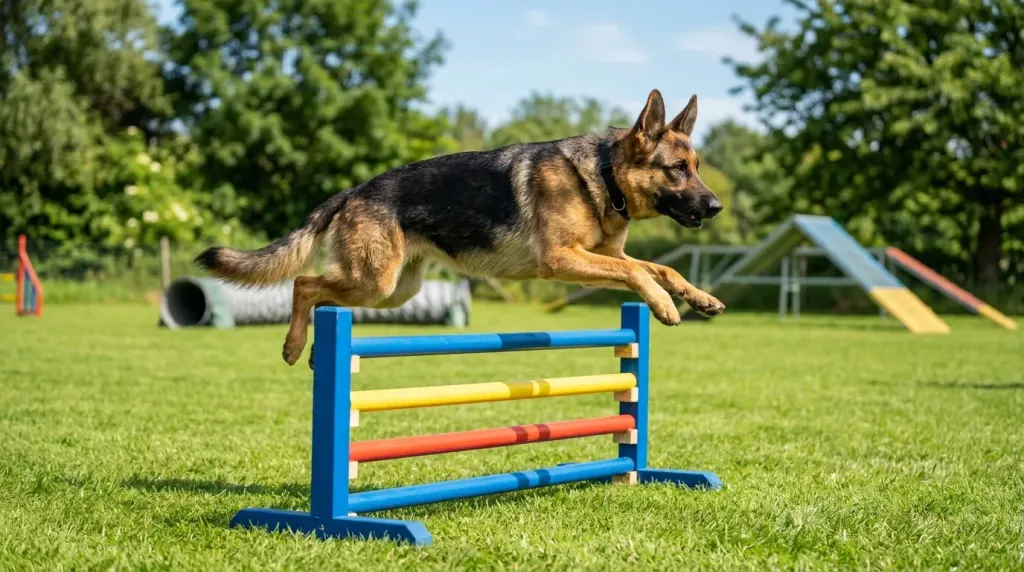
Appropriate physical activities include structured jogging, ball fetching, swimming, and hiking. Mental stimulation is equally vital. Interactive puzzle toys, scent work games, advanced obedience training, and agility drills prevent boredom. Without purposeful activity, they can develop destructive chewing, excessive barking, or fence pacing.
Much like the mental focus required for working canine sports in the Poodle breed profile, German Shepherds thrive when assigned daily tasks. Positive reinforcement training methods incorporating play rewards and clear boundary setting yield the best training outcomes.
How Much Daily Exercise Does a German Shepherd Need?
An adult German Shepherd needs extensive daily activity. The GSDCA emphasizes their strong need for purposeful activity rather than just physical exhaustion. Owners should plan for at least 90 minutes of daily exercise, divided into morning and evening sessions. Physical exertion must be paired with task-based mental challenges. Puppies should follow controlled exercise limits until growth plates close around 18 months of age to prevent joint damage.
Grooming and Shedding Care
German Shepherds are frequently nicknamed German Shedders due to their heavy, continuous shedding cycle. The dense double coat sheds steadily throughout the year and experiences severe undercoat blowouts twice annually during seasonal transitions in spring and autumn.
- Brushing: Brush 3 to 4 times weekly using a metal rake and slicker brush. Increase to daily brushing during seasonal shedding periods.
- Bathing: Bathe every 4 to 6 weeks using a mild dog shampoo. Over-bathing strips essential skin oils.
- Nail and Ear Care: Trim nails every 2 to 3 weeks and check ears weekly for dirt or wax buildup.
- Dental Care: Brush teeth 3 times weekly with dog-safe enzymatic toothpaste.
While short-coated companion dogs like the French Bulldog breed profile require minimal hair brushing, managing a German Shepherd double coat demands consistent grooming equipment. This also differs greatly from the fine, long hair maintenance discussed in the Ragdoll cat breed guide.
Lifespan and Common Health Issues
The average lifespan of a German Shepherd Dog is 8 to 12 years, with recent veterinary studies by Dogs Trust and VetCompass indicating a median life expectancy between 10.3 and 11.3 years. Like many large herding breeds, genetic predispositions exist for specific orthopedic, neurological, and digestive conditions. Small toy breeds such as those reviewed in the Pug breed profile face completely different structural health considerations.
Orthopedic and Genetic Conditions:
- Exocrine Pancreatic Insufficiency (EPI): An inability to produce digestive enzymes, resulting in rapid weight loss despite a ravenous appetite. A peer-reviewed study on canine EPI reported that German Shepherds represented the breed with the maximum prevalence at 5.29 percent. Historical veterinary surveys indicate that between 38 and 67 percent of all dogs with EPI are German Shepherds.
- Gastric Dilatation-Volvulus (GDV or Bloat): A life-threatening medical emergency where the stomach fills with gas and twists. In a single veterinary hospital cohort analysis, German Shepherd Dogs were the most represented purebred, accounting for 25.38 percent of cases.
- Hip and Elbow Dysplasia: Malformation of the hip or elbow joints leading to painful arthritis and lameness.
- Degenerative Myelopathy (DM): A progressive neurological disorder affecting the spinal cord, causing gradual loss of hind-leg coordination in older dogs.
Maintaining an optimal lean body weight significantly reduces mechanical stress on hip and elbow joints, extending mobility into senior years. If a dog shows any signs of bloat, such as an enlarged abdomen or unproductive retching, contact a veterinarian immediately.
What Health Screenings Do Responsible Breeders Perform?
The German Shepherd Dog Club of America (GSDCA) Health and Genetics Committee recommends primary health evaluations to achieve Canine Health Information Center (CHIC) certification for breeding stock. These include:
- Hip Evaluation (OFA rating or PennHIP certification).
- Elbow Evaluation (OFA certification).
- Temperament Test (Passing the official GSDCA Temperament Evaluation).
- Cardiac Examination (OFA congenital heart evaluation).
- Degenerative Myelopathy (OFA DNA test for the DM gene mutation).
- Eye Examination (Annual CAER eye exam).
What Is Hip Dysplasia and Why Is It Common in German Shepherds?
Hip dysplasia is an inherited skeletal condition where the ball and socket of the hip joint do not fit together smoothly, causing joint friction and progressive deterioration. It is prevalent in large breeds due to rapid growth rates, heavy bone structure, and polygenic inheritance. Proper weight management, controlled puppy exercise, and selective breeding reduce incidence rates significantly.
German Shepherd Dog Breed FAQ
How Long Do German Shepherds Live?
The AKC reports an average lifespan of 8 to 12 years for large breeds like the German Shepherd, while recent VetCompass and Dogs Trust studies show a median lifespan of 10.3 to 11.3 years. Providing high-quality nutrition, regular preventive veterinary care, daily exercise, and keeping the dog at a healthy body weight maximize their lifespan potential.
Are German Shepherds Good Family Dogs?
Yes, German Shepherds make excellent family companions when properly trained and socialized. They are naturally gentle and protective with household children. Owners must supervise interactions with young children and teach children how to interact respectfully with dogs.
Do German Shepherds Shed a Lot?
Yes, German Shepherds shed heavily year-round and drop their undercoat heavily twice per year. Regular brushing 3 to 4 times weekly helps manage loose hair and keeps the skin healthy.
What Health Problems Do German Shepherds Have?
Common health conditions include hip and elbow dysplasia, degenerative myelopathy, bloat (GDV), allergies, and exocrine pancreatic insufficiency (EPI). Purchasing puppies from health-tested parents minimizes genetic risk.


Leave a Reply