

Table of Contents
Learning how to breed French Bulldogs requires rigorous health testing, genetic planning, precise ovulation timing, artificial insemination, and a planned C-section supervised by a reproductive veterinarian. Due to their brachycephalic build, narrow hips, and large heads, French Bulldogs face high reproductive risks that require substantial financial, medical, and ethical commitment.
- Complete mandatory CHIC health testing (hips, patellar luxation, cardiac echo, eye CAER, and BOAS grading) plus DNA screening before breeding.
- Maintain a Coefficient of Inbreeding (COI) below 6.25% to protect litter vitality and prevent compounding hereditary defects.
- Use progesterone blood testing to determine optimal breeding days, and rely on artificial insemination to reduce trauma and stress.
- Schedule a planned C-section around day 63 post-ovulation, as over 80% of French Bulldogs cannot whelp naturally without life-threatening complications.
- Provide constant post-operative care for the dam and 24/7 incubator and nursing supervision for newborn puppies during their first four weeks.
Should You Breed French Bulldogs at All?
Breeding French Bulldogs is one of the most medicalized and demanding endeavors in canine husbandry. Before pairing two dogs, prospective breeders must evaluate whether they have the expertise, financial reserves, and emotional readiness to manage high-risk pregnancies and potential veterinary emergencies.
Why French Bulldog Breeding Is Uniquely Demanding
Unlike most working or sporting breeds that mate and whelp naturally, the French Bulldog dog breed possesses extreme physical traits that complicate every stage of reproduction. Learning how to breed French bulldog puppies requires accepting that nature rarely handles the process unassisted. Their compact bodies, broad shoulders, and brachycephalic skulls make natural copulation physically difficult and natural birth hazardous. In addition, understanding why French Bulldogs are so clingy explains their emotional reliance on owners, requiring breeders to provide constant reassurance during breeding and recovery. Furthermore, breeding should only be undertaken to improve the health, structural soundness, and temperament of future generations rather than for commercial gain.
The Honest Prerequisites Before You Begin
Before planning your first litter, ensure you meet the essential prerequisites of ethical breeding:
- Financial reserves of $3,000 to $5,000 per litter specifically set aside for diagnostic testing, progesterone monitoring, artificial insemination, and emergency or scheduled C-sections.
- An established relationship with a licensed reproductive veterinarian who has extensive experience with brachycephalic breeds.
- Completed CHIC (Canine Health Information Center) clearances for both the dam and sire, proving they are free of severe spinal, cardiac, joint, eye, and airway abnormalities.
- The physical time and flexibility to provide round-the-clock care for the mother and puppies during the initial four weeks post-whelping.
According to the French Bull Dog Club of America (FBDCA) Health and Genetics Committee, ethical breeders select breeding pairs based on functional health and structural moderation rather than extreme physical exaggerations.
Note: Breeding without adequate financial reserves or health testing frequently leads to severe welfare issues, high puppy mortality, and unexpected veterinary debt.
Understanding the Breed Before You Plan a Litter
To breed French Bulldogs successfully, you must understand how their distinct anatomy and evolutionary history impact their reproductive capabilities and overall health. French Bulldogs are classified as a brachycephalic companion dog breed, which dictates how they handle physical exertion, stress, and anesthesia.
Physical Structure and Temperament That Shape Breeding
The AKC breed standard specifies a compact, muscular dog weighing no more than 28 pounds, featuring a heavy bone structure, a short snout, broad chest, and narrow pelvis. While their affectionate and stable temperament makes them outstanding companions, their physical build creates mechanical obstacles during mating and whelping. Their sensitive nature also means dams require gentle human reassurance throughout pregnancy and recovery.
Common Health Problems and How They Affect Reproduction
Hereditary health issues represent the primary hurdle in French Bulldog reproduction. Prospective parent stock must be screened to ensure they do not pass on debilitating conditions:
- Brachycephalic Obstructive Airway Syndrome (BOAS): Affected dogs suffer from stenotic nares, elongated soft palates, and everted laryngeal saccules, creating severe respiratory distress that makes pregnancy and anesthesia dangerous. Address French Bulldog breathing problems and BOAS before considering any dog for a breeding program.
- Orthopedic Defects: Patellar luxation (slipping kneecaps) affects approximately 25% of the breed, while hip dysplasia and hemivertebrae (butterfly vertebrae) can compromise structural stability.
- Allergies and Skin Conditions: Atopic dermatitis and food sensitivities affect over 40% of French Bulldogs and have a strong genetic component.
- Cardiac Anomalies: Pulmonic stenosis and dilated cardiomyopathy require pre-breeding echocardiogram screening.
Why Most French Bulldogs Cannot Whelp Naturally
Data from veterinary reproductive registries indicates that approximately 81% of French Bulldog litters are delivered via C-section. The combination of oversized puppy skulls, wide shoulders, and the dam’s narrow pelvis leads to high rates of dystocia (obstructed labor). Expecting a dam to deliver naturally often results in fetal death, uterine rupture, or maternal mortality. Anyone investigating whether French Bulldogs can give birth naturally must understand that planned surgical delivery remains the safest standard of care.
Becoming an Ethical French Bulldog Breeder
Ethical breeding is defined by a commitment to preserving the breed’s health, temperament, and functional integrity. Responsible breeders prioritize puppy welfare over profit and accept lifelong responsibility for every dog they bring into the world.
When You Should NOT Breed Your French Bulldog
Do not breed your French Bulldog if any of the following conditions exist:
- The dog has received a BOAS Grade 2 or 3 respiratory rating, or has required airway corrective surgery.
- Either parent dog exhibits severe allergies, IVDD (intervertebral disc disease), cardiac murmurs, or patellar luxation.
- The dog possesses unverified coat colors or patterns (such as merle, blue, or lilac) that are associated with alopecia or genetic defects and fall outside approved breed standards.
- The dog displays unstable, anxious, or aggressive behavior, as temperamental soundness is vital when assessing if French Bulldogs are good pets.
- You lack the financial resources to pay for emergency veterinary intervention or cannot commit to taking back puppies if their owners can no longer care for them.
How Do You Breed a French Bulldog the Right Way: Choosing Sound Parents
Determining how do you breed a French bulldog ethically starts with evaluating parent stock against established health benchmarks. Both dam and sire must complement each other’s structural strengths while avoiding shared genetic weaknesses.
| Evaluation Category | Breeding Benchmark / Standard | Purpose in Breeding Program |
|---|---|---|
| Respiratory Function | BOAS Grade 0 or 1 (open nostrils, silent breathing) | Prevents passing severe airway obstruction to offspring |
| Weight & Frame | 22-28 lbs (Dam), 24-28 lbs (Sire); compact, muscular | Prevents extreme dwarfism or oversized structural strain |
| Orthopedic Soundness | OFA Clear Hips & Patellas (Normal rating) | Minimizes risks of early joint degeneration and lameness |
| Genetic COI | Inbreeding coefficient below 6.25% | Preserves immune health and genetic diversity |
Following the Breed Standard and Parent-Club Ethics
Ethical breeders adhere to the Code of Ethics established by parent clubs like the FBDCA. This includes refusing to produce non-standard coat colors for marketing hype, conducting mandatory health screenings, registering litters with recognized kennel clubs, and providing lifetime health guarantees for all puppies.
Health and Genetic Testing Before Breeding
Comprehensive diagnostic testing must be completed before any female enters her heat cycle or any male is collected for insemination.
The Required Health Tests for Breeding Stock
Official health certification requires completing the CHIC protocol:
- OFA Patellar Luxation Examination: Evaluates knee joint stability (annual or permanent after age 2).
- OFA Hip Dysplasia Evaluation: Radiographic assessment of hip joint conformation after 24 months of age.
- OFA Cardiac Echocardiogram: Examines heart valves and chambers for congenital heart defects.
- Ocular CAER Exam: Annual examination by a board-certified veterinary ophthalmologist for juvenile cataracts and corneal disorders.
- BOAS Functional Respiratory Grading: Respiratory evaluation performed by an accredited veterinarian before and after exercise testing.
Genetic Testing, COI, and Avoiding Inbreeding
In addition to physical screenings, DNA testing is mandatory to screen for autosomal recessive disorders:
- Hereditary Cataracts (JHC): Testing ensures no offspring inherit early-onset blindness.
- Canine Multifocal Retinopathy 1 (CMR1): Identifies retinal lesions that impair vision.
- Hyperuricosuria (HUU): Prevents the formation of painful bladder and kidney stones.
- Degenerative Myelopathy (DM): Screens for late-onset spinal cord degeneration.
The average Coefficient of Inbreeding (COI) in French Bulldogs is high (~30%) due to historical population bottlenecks. Breeders should use pedigree databases to calculate line-breeding percentages, aiming for a target COI below 6.25% to avoid compounding health issues such as French Bulldog skin and allergy tendencies.
Working with a Reproductive Veterinarian
Managing French Bulldog reproduction requires specialized veterinary expertise. Your reproductive veterinarian will oversee hormone testing, perform transcervical insemination (TCI) or surgical insemination, run ultrasound diagnostics, and perform the C-section.
Timing and Methods: How Do You Breed French Bulldogs
Accurate timing is essential when learning how do you breed French bulldogs successfully. Because natural mating is often unsuccessful or physically exhausting for the dogs, precise hormonal tracking dictates the breeding schedule.
Reading the Heat Cycle and Using Progesterone Testing
A female French Bulldog typically experiences her first estrus between 6 and 12 months of age, but she should not be bred until her second or third heat cycle (at least 18 to 24 months old).
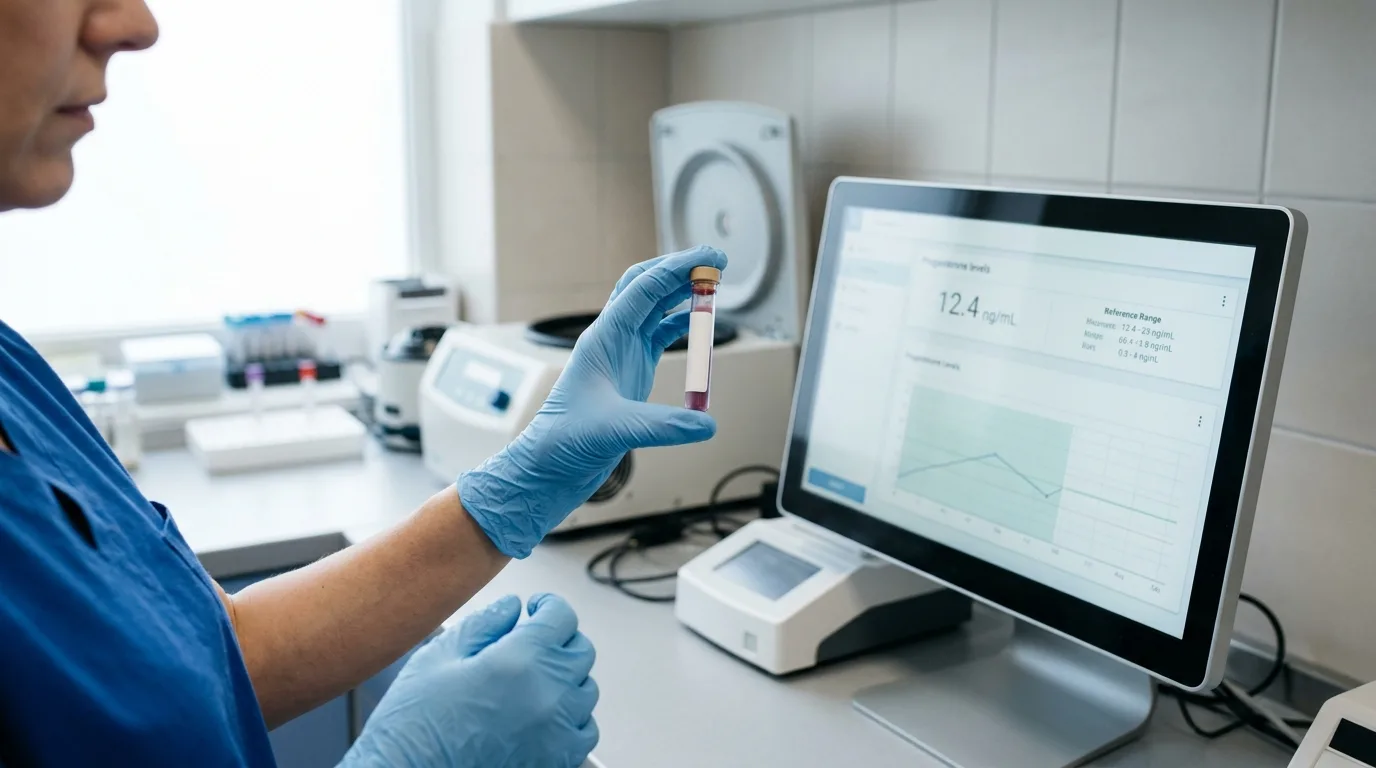
Progesterone testing determines the exact day of ovulation:
- Baseline Phase (< 1.0 ng/mL): Early proestrus; vaginal cytology shows cornified epithelial cells.
- LH Surge (2.0 – 3.0 ng/mL): Triggers the release of eggs from the ovaries.
- Ovulation (4.0 – 10.0 ng/mL): Eggs are shed; however, they require 48 hours to mature before fertilization can occur.
- Peak Fertile Window (15.0 – 25.0 ng/mL): Optimal timing for artificial insemination, usually occurring 48 to 72 hours after ovulation.
Natural Mating vs Artificial Insemination
Artificial Insemination (AI) is the industry standard for breeding French Bulldogs. Natural mating carries high risks of heat exhaustion, respiratory distress, and physical injury due to the sire’s weight and the dam’s compact frame.
- Side-by-Side Vaginal AI: Fresh semen collected from the sire is immediately deposited into the dam’s vagina using a sterile catheter.
- Transcervical Insemination (TCI): Specialized endoscopes guide semen directly through the cervix into the uterus, ideal for chilled or frozen semen.
- Surgical Insemination: Semen is deposited directly into the uterine horns under general anesthesia; used primarily when cervical access is restricted.
Safe Breeding Age and Frequency
To safeguard the dam’s health, follow strict age and frequency guidelines:
- Minimum Breeding Age: 18 to 24 months (after passing all CHIC health clearances).
- Maximum Breeding Age: Retire females by 6 to 7 years of age.
- Litter Frequency: Limit a female to a maximum of 3 to 4 litters during her lifetime, allowing at least one full heat cycle of rest between pregnancies to allow uterine tissue recovery after surgical procedures.
Monitoring a French Bulldog Pregnancy
Gestation in dogs lasts approximately 63 days from the date of ovulation. Due to the physical demands of brachycephalic pregnancy, careful monitoring ensures both maternal and fetal survival.
Pregnancy Signs and the Checkup Timeline
Diagnostic milestones during pregnancy include:
- Day 28-30 (Ultrasonography): Confirms pregnancy, verifies fetal heartbeats, and estimates litter size.
- Day 45 (Abdominal Palpation & Bloodwork): Monitors dam’s red blood cell count and nutrition levels.
- Day 55-58 (Radiography / X-ray): Fetal skeletons calcify, allowing an exact count of puppy skulls and spine alignment to plan surgical needs.
Nutrition and Exercise for a Pregnant Frenchie
During the first 4 weeks, maintain the dam’s normal high-quality diet. From week 5 onward, gradually increase caloric intake using puppy food rich in digestible protein and essential fatty acids. Avoid overfeeding, as excessive weight gain aggravates respiratory difficulties. You can supplement protein with safe items such as cooked chicken as a dietary protein source for French Bulldogs, while carefully managing portion sizes to avoid excessive maternal weight gain. Keep exercise limited to brief, low-impact walks in temperature-controlled environments.
Preparing the Whelping Area and Planning the C-Section
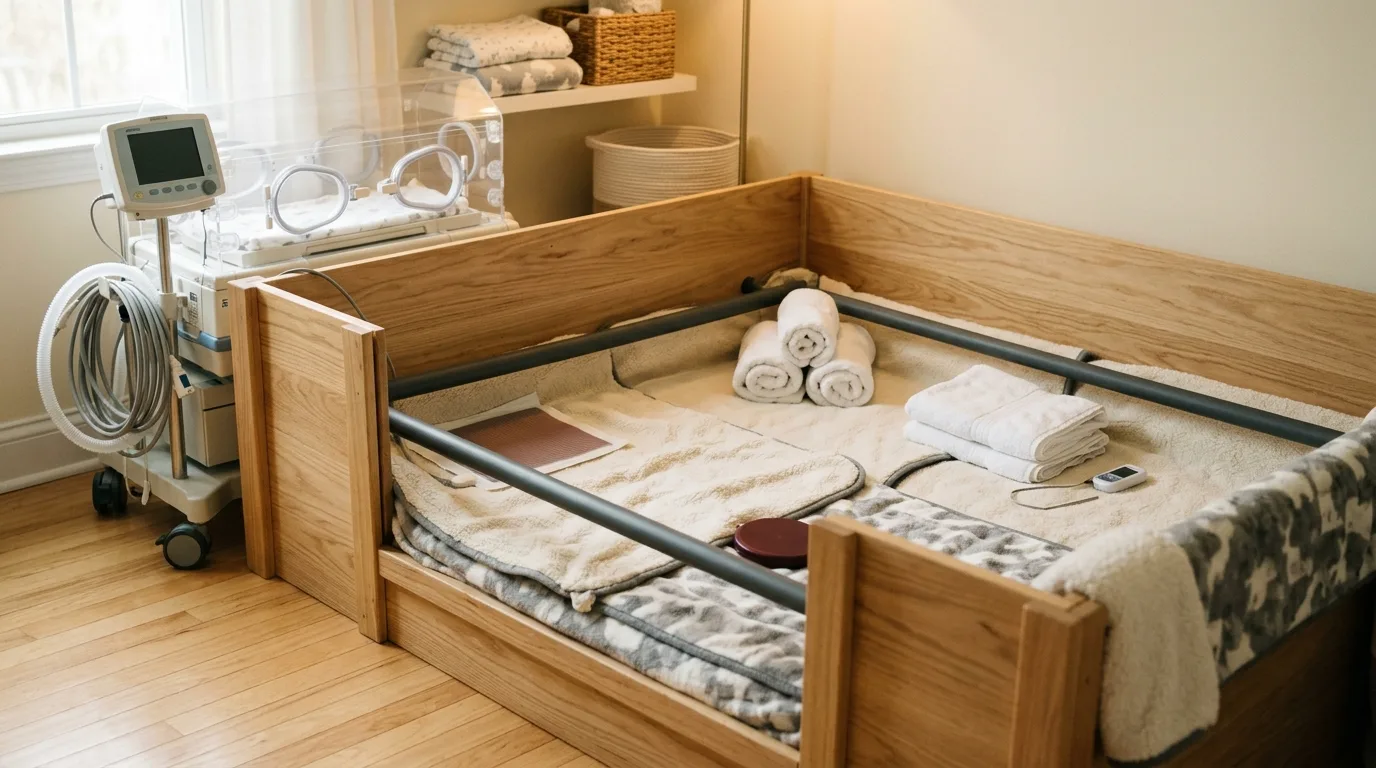
Set up a clean, quiet whelping box equipped with a heating pad, temperature control (85-90°F for newborns), medical supplies, and suction bulbs. Coordinate with your veterinarian to schedule the C-section for day 63 post-ovulation based on your progesterone records. Clinical studies in veterinary reproduction indicate that scheduled C-sections performed at peak progesterone drop yield significantly higher puppy survival rates than emergency procedures conducted after prolonged labor.
Note: Never allow a French Bulldog dam to undergo prolonged unassisted labor; fetal distress occurs rapidly once uterine contractions begin without progress.
Whelping and Newborn Puppy Care
The whelping phase demands constant vigilance from the breeder and veterinary team.
Signs of Labor and When an Emergency C-Section Is Needed
Monitor the dam’s rectal temperature every 12 hours starting on day 58. A sudden drop below 99°F indicates that progesterone levels have plummeted and labor will begin within 12 to 24 hours.
Contact your emergency veterinarian immediately if:
- The dam experiences strong abdominal contractions for more than 30 minutes without producing a puppy.
- Greenish or blackish vaginal discharge appears before any puppy is delivered.
- More than 2 hours elapse between puppies with known fetuses remaining in the uterus.
- The dam displays extreme lethargy, muscle tremors, or severe respiratory distress.
Caring for the Dam After a C-Section
Following surgery, monitor the dam closely as she recovers from anesthesia:
- Keep her in a sternal (upright chest) position to maintain clear airways.
- Inspect surgical incisions daily for signs of inflammation, swelling, or discharge.
- Assist nursing during the first 48 hours to prevent the dam from accidentally rolling onto or crushing puppies while groggy from medication.
Caring for Newborn Puppies in the First Weeks
Newborn French Bulldog puppies cannot regulate their own body temperature or eliminate waste independently.
- Warmth: Maintain the incubator or whelping box environment at 88-90°F during week 1, reducing to 80°F by week 3.
- Colostrum: Ensure every puppy nurses within 2 hours of birth to absorb protective maternal antibodies.
- Weight Monitoring: Weigh puppies twice daily on a gram scale; steady daily gain of 1 to 2 ounces indicates adequate nutrition as puppies progress toward expected French Bulldog adult size and weight standards.
- Sanitation: Stimulate puppies to urinate and defecate using a warm, damp cotton ball after feedings if the dam is unable to clean them.
Responsibilities After Breeding
The breeder’s job does not end when puppies are born; ensuring they go to suitable homes is an ethical imperative.
Screening Buyers and Using a Health Contract
Screen prospective buyers thoroughly to confirm they understand the breed’s financial and health needs. Require buyers to sign a written contract that includes:
- A mandatory spay/neuter clause for pet-quality puppies.
- A written health guarantee covering hereditary disorders.
- A mandatory return clause requiring the owner to return the dog to the breeder if they can no longer keep it, preventing dogs from entering shelters. Evaluating owner readiness involves reviewing data regarding French Bulldog temperament and aggression to ensure realistic expectations.
Staying in Touch and Standing Behind Your Puppies
Maintain open communication with puppy buyers throughout the dog’s life. Tracking health outcomes across your litters provides useful data to refine your future breeding decisions.
When to Retire a French Bulldog from Breeding
Retire female French Bulldogs after 3 to 4 litters or upon reaching 6 years of age. Once retired, spay or neuter the dog and keep her as a cherished family pet or place her in a vetted forever home.
Frequently Asked Questions About Breeding French Bulldogs
At What Age Is It Safe to Breed a French Bulldog?
It is safe to breed a female French Bulldog after she reaches 18 to 24 months of age and has completed all required CHIC health screenings. Breeding during the first heat cycle is unsafe because the female has not reached full skeletal and physical maturity.
How Many Litters Can a Female French Bulldog Safely Have?
A female French Bulldog should have a maximum of 3 to 4 litters in her lifetime, provided she recovers fully between pregnancies and shows no surgical complications from past C-sections.
Should You Breed a Frenchie Just to Have a Litter?
No, you should never breed a French Bulldog simply to produce puppies or offset pet ownership costs. Due to high reproductive risks, potential maternal mortality, and inherited health issues, breeding should only be performed by knowledgeable individuals dedicated to breed preservation and health improvement.


Leave a Reply