
Table of Contents
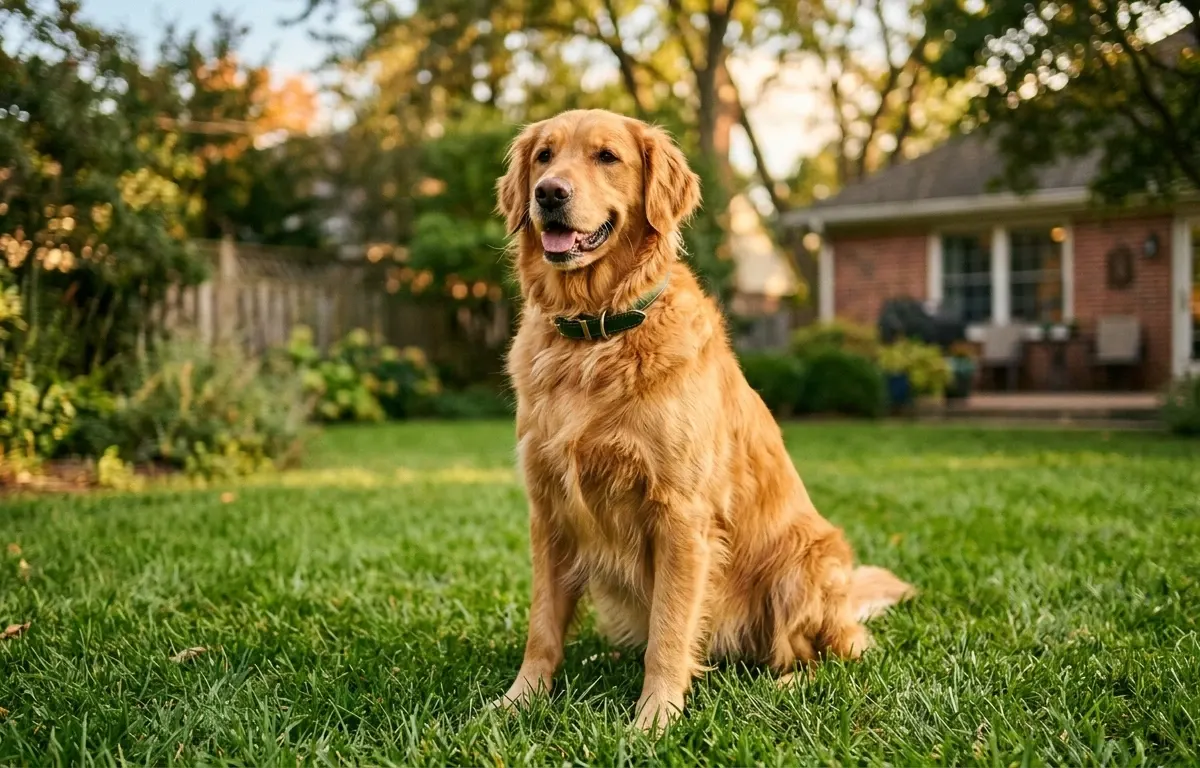
The golden retriever dog breed is an intelligent, athletic sporting dog developed in 19th-century Scotland for upland and wetland game retrieval. Recognized for a gentle disposition, high trainability, and a dense water-repellent double coat, adult Golden Retrievers measure 21.5 to 24 inches in height, weigh between 55 and 75 pounds, and need 60 to 90 minutes of daily exercise. Their average lifespan spans 10 to 12 years when supported by proper nutrition, weight control, and preventive health screenings.
- Developed in Scotland in 1868 by Lord Tweedmouth at Guisachan Estate through a cross of a yellow retriever and a Tweed Water Spaniel.
- AKC standards establish male height at 23-24 inches (65-75 lbs) and female height at 21.5-22.5 inches (55-65 lbs).
- Highly biddable and trustworthy temperament makes them exceptional family companions, service guides, and search dogs.
- Dense double coat sheds continuously year-round with heavy seasonal sheds in spring and autumn.
- Recommended health screenings include OFA evaluations for hips, elbows, heart, and annual ACVO eye clearances.
History and origins
The development of the Golden Retriever began in the Scottish Highlands during the Victorian era. Nineteenth-century sportsmen required a specialized hunting dog with superior scenting capability, physical endurance to navigate rugged terrain, and the swimming strength to retrieve waterfowl from cold lochs and rivers.
Ancestry and development
Dudley Marjoribanks, later titled the first Lord Tweedmouth, established the breed foundation at his Guisachan estate in Glen Affric, Scotland. In 1868, Lord Tweedmouth mated an unregistered yellow Wavy-Coated Retriever named Nous with Belle, a liver-colored Tweed Water Spaniel known for curly water-resistant fur and calm biddability.
This initial pairing produced four yellow female puppies: Ada, Cowslip, Crocus, and Primrose. Over the following two decades, Marjoribanks carefully linebred their descendants, introducing selective outcrosses to two black retrievers, an Irish Setter, and a sandy-colored Bloodhound. The Bloodhound outcross refined scenting prowess, while the setter line enhanced tracking speed and coat luster. Evaluating the deliberate construction of Scottish gundogs alongside historical crosses in companion lineages illustrates how Victorian breeders systematically isolated and fixed working performance traits over generations.
Notable breed standards
The Kennel Club in the United Kingdom officially recognized the breed under the classification “Retriever – Yellow or Golden” in 1911, updating the official title to “Golden Retriever” in 1920. In the United States, the American Kennel Club breed registry registered its first Golden Retriever in 1925. The standard emphasizes a specialized “soft mouth,” an instinctual trait that allows the dog to carry downed game without bruising the meat or damaging plumage.
Physical characteristics and appearance
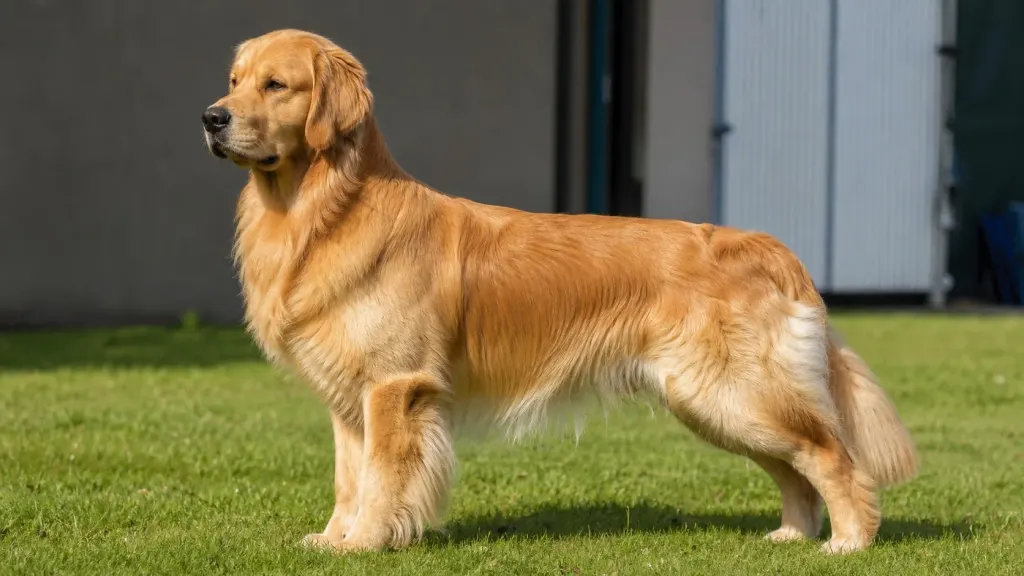
The Golden Retriever is a symmetrical, balanced, and athletic sporting dog built for endurance and power. Movement is free, coordinated, and efficient, displaying strong drive from the hindquarters and good reach in the front legs.

Size and proportions
Official conformation parameters define distinct height and weight brackets for adult males and females according to the Golden Retriever Club of America breed standard.
| Parameter | Adult Male Standard | Adult Female Standard | Evaluation Metric |
|---|---|---|---|
| Height at Withers | 23 to 24 inches (58 to 61 cm) | 21.5 to 22.5 inches (55 to 57 cm) | Deviation over 1 inch disqualifies in conformation |
| Reference Weight | 65 to 75 pounds (29 to 34 kg) | 55 to 65 pounds (25 to 29 kg) | In proportion to bone structure and body frame |
| Body Length Ratio | 12:11 (length to height) | 12:11 (length to height) | Measured from breastbone to point of buttocks |
| Head and Skull | Broad skull, arched crown | Moderate stop, clean muzzle | Kindly, intelligent expression with dark eye rims |
Coat and grooming needs
The Golden Retriever coat features a resilient, water-repellent outer jacket resting over a dense insulating undercoat. Moderate feathering covers the back of the forelegs, chest, thighs, and the underside of the tail. Coat colors range from light golden to rich dark golden shades, though extremely pale cream or dark red coats fall outside ideal AKC bench parameters.
Maintaining coat health requires dedicated line-brushing three to four times each week using an undercoat rake and slicker brush. Similar to the management required for German Shepherd double coat care, consistent brushing removes dead hair before it mats against the skin and controls household fur distribution.
Care Note: Golden Retrievers shed moderate amounts of hair daily throughout the year and experience heavy undercoat blowouts twice annually during seasonal transitions. Shaving a double coat is strongly discouraged because it damages insulation and increases the risk of sunburn and heatstroke.
Temperament and behavior
The defining hallmark of the Golden Retriever is a friendly, reliable, and eager-to-please temperament. Hostility toward humans or other animals, as well as extreme timidity, represents a fundamental departure from correct breed character.
Their high sociability and cognitive adaptability consistently place them near the top of working dog intelligence rankings. Golden Retrievers thrive in roles demanding cooperation, including guide assistance for visually impaired handlers, mobility assistance, therapy visits, and search-and-rescue deployments. When comparing working focus across gundogs, owners evaluating hunting drive often review the Labrador Retriever sporting profile to evaluate differences in energy expenditure and trainability.
Training and exercise
Golden Retrievers require 60 to 90 minutes of daily physical exercise paired with structured mental enrichment. Because of their retrieving heritage, fetch sessions, swimming, and scent tracking provide ideal physical outlets that satisfy natural instincts.
- Morning session: 30 to 45 minutes of brisk leash walking, light jogging, or structured obedience drills.
- Afternoon session: 30 minutes of off-leash retrieving, agility course navigation, or swimming in safe water.
- Mental engagement: 15 minutes of puzzle feeding, scent detection games, or advanced command practice.
Unlike companion breeds with lower activity thresholds, active retrievers need rigorous mental challenges similar to Poodle agility and exercise needs to prevent boredom-induced behaviors such as nuisance chewing and yard digging.
Health and care
The average lifespan of a Golden Retriever is 10 to 12 years. Prospective owners must understand the hereditary vulnerabilities associated with large sporting breeds and ensure that breeding stock undergoes rigorous diagnostic evaluation.
Nutrition and diet
Adult Golden Retrievers require high-quality dog food formulated for large active breeds, providing balanced protein and fat ratios to sustain joint health and muscle mass. A reference adult male weighing 70 pounds typically consumes 1,350 to 1,750 calories daily, split across two measured meals to prevent gastric dilation-volvulus (bloat).
Common ailments to watch
Responsible breeding programs follow health testing protocols established in the GRCA pre-breeding health screening guidelines to reduce hereditary disease transmission:
- Hip and Elbow Dysplasia: Radiographic evaluations completed at or after 24 months of age certify joint conformation through OFA.
- Cardiac Conditions: Subaortic stenosis (SAS) screening conducted by a board-certified veterinary cardiologist (ACVIM).
- Ophthalmic Conditions: Annual examinations by a veterinary ophthalmologist (ACVO) clear dogs for progressive retinal atrophy (PRA), pigmentary uveitis, and juvenile cataracts.
- Neuronal Ceroid Lipofuscinosis (NCL): DNA testing confirms parentage clearance for this degenerative neurological disorder.
While large sporting dogs encounter orthopedic and cardiac conditions, they do not face the upper airway obstructions described in the Pug respiratory health profile.
Oncological conditions remain an active focus of veterinary study. According to data collected by the Morris Animal Foundation Golden Retriever Lifetime Study, which follows a cohort of over 3,000 dogs, cancer represents a leading cause of mortality in the breed, with hemangiosarcoma, lymphoma, osteosarcoma, and mast cell tumors occurring most frequently.
Dr. David Haworth, DVM, PhD, former President and CEO of the Morris Animal Foundation, highlighted the objective of longitudinal research: “Wouldn’t it be great if we could tell an owner whether her dog has a high predisposition to a certain cancer so we can catch it really early? Or if we know what a cancer’s pathway is, our drug partners can find a way to intervene.”
Health Note: Routine veterinary visits every 6 to 12 months, combined with baseline bloodwork and abdominal imaging for dogs aged seven and older, improve early detection of internal health changes.
Care for puppies and seniors
Care protocols must adjust as a Golden Retriever advances through distinct life stages.
Puppy developmental care
Young puppies undergo rapid skeletal growth in their first year of life. Avoid repetitive high-impact jumping, extended jogging on asphalt, or steep stair climbing until long-bone growth plates close around 14 to 18 months of age. Feed age-appropriate large-breed puppy formulas with controlled calcium-to-phosphorus ratios to promote steady bone development.
Senior wellness adjustments
Dogs aged eight and older benefit from orthopedic bedding, joint support supplements containing glucosamine and chondroitin, and non-slip rugs on hard flooring. Adjust caloric intake downward by 10 to 20 percent if daily exercise decreases, maintaining lean body mass to reduce joint strain.
Selecting, socializing, and training your Golden Retriever
Selecting a puppy requires verifying documented health clearances for both parent dogs on public registries such as the OFA database.
| Screening Parameter | Recommended Diagnostic Standard | Minimum Age / Frequency |
|---|---|---|
| OFA Hip Clearance | Radiographic evaluation (Fair, Good, or Excellent) | At or after 24 months |
| OFA Elbow Clearance | Radiographic evaluation (Normal joint conformation) | At or after 24 months |
| OFA Cardiac Clearance | Advanced cardiac exam by a veterinary cardiologist (ACVIM) | At or after 12 months |
| ACVO Eye Clearance | CAER examination by a veterinary ophthalmologist (ACVO) | Annually (within past 12 months) |
| DNA Clearances | Genetic testing panel (PRA1, PRA2, PRCD, NCL, Ichthyosis) | Documented prior to breeding |
Prospective buyers should review ethical breeding protocols and compare health practices against established canine breeding and whelping standards. Long-term veterinary planning also differs markedly from the specialized surgical needs common to French Bulldog veterinary expenses.
Training milestones by age
- 8 to 16 weeks: Crate training, housebreaking, bite inhibition, and positive exposure to diverse sights, sounds, and surfaces.
- 4 to 6 months: Basic leash manners, reliable recall foundations, and impulse control around food and toys.
- 6 to 12 months: Distraction training, advanced obedience, retrieve mechanics, and canine good citizen preparation.
Grooming routine by season
Spring and autumn require daily brush-outs to remove loose undercoat under hair blow conditions. Check floppy ears weekly and clean them thoroughly after swimming using a veterinarian-recommended drying solution to prevent moisture-induced ear infections.
Living with a Golden Retriever
Golden Retrievers thrive in active households where they participate in daily family routines. While a house with a securely fenced yard offers ideal space for exercise, they adapt successfully to apartments if owners maintain structured outdoor exercise schedules.
Unlike compact breeds like the Dachshund that manage well with shorter strolls, a Golden Retriever requires dedicated open-space running. In multi-pet homes, well-socialized retrievers integrate smoothly with other dogs and show gentle tolerance toward docile cats like the Ragdoll breed.
Travel and safety tips
- Emergency safety protocol: If you suspect accidental ingestion of toxic substances (such as chocolate, raisins, xylitol, or rodenticides), foreign object obstruction, or acute signs of bloat (unproductive retching, distended abdomen, sudden restlessness), contact an emergency veterinarian or pet poison control helpline immediately before attempting any at-home measures. Never induce vomiting unless explicitly instructed by a licensed veterinarian, and do not wait for symptoms to worsen before seeking emergency care.
- Secure restraint: Use a crash-tested vehicle harness or a secured travel crate during car transportation.
- Heat management: Never leave a dog unattended in a warm vehicle; provide fresh water during summer excursions.
- Identification: Maintain an updated microchip registration alongside an identification collar displaying current contact information.
Frequently Asked Questions about Golden Retrievers
What is the temperament of a Golden Retriever?
The Golden Retriever possesses a gentle, friendly, and trustworthy temperament. They are eager to please, highly trainable, and show high social tolerance toward children and other household animals when properly raised.
How to care for a Golden Retriever?
Caring for a Golden Retriever involves providing 60 to 90 minutes of daily exercise, brushing the double coat three to four times weekly, feeding a balanced large-breed diet, and performing weekly ear cleanings after water activities.
What health issues are common in Golden Retrievers?
Common health conditions include hip and elbow dysplasia, hereditary eye diseases (cataracts and pigmentary uveitis), subaortic cardiac stenosis, and certain cancers including hemangiosarcoma and lymphoma. Purchasing from health-tested parents verified by OFA clearances significantly lowers hereditary risk.



Leave a Reply