
Table of Contents
A Bengal is a domestic cat breed developed by crossing domestic felines with the wild Asian leopard cat (Prionailurus bengalensis). Today's companion Bengals are fully domesticated cats known for their muscular build, leopard-like rosetted or marble coats, high energy, and sharp intelligence that require regular interactive play and environmental enrichment.
- Fully domestic companion cats when bred at the Stud Book Tradition (F4 and later) generation level.
- Athletic, muscular felines sporting distinct two-toned rosettes or flowing marble patterns on a short, pelt-like coat.
- Highly active and curious, requiring climbing structures, puzzle toys, and daily human engagement.
- Reputable breeders screen breeding cats for hypertrophic cardiomyopathy (HCM) via echocardiograms and use DNA testing for PRA-b and PK-deficiency.
The Bengal cat breed combines the striking, wild-patterned coat of a small forest feline with the affectionate, companionable nature of a domestic cat. Prospective owners often admire their sleek rosettes and glittering coats, but welcoming a Bengal into your home means preparing for an athletic, inquisitive feline that thrives on routine mental and physical challenges.
What Is a Bengal Cat?
When people ask what is a Bengal or search for what is a bengals cat, they are exploring a unique domestic breed with wild origins. The breed was established in the United States during the late twentieth century by crossing domestic shorthair cats with the Asian leopard cat (Prionailurus bengalensis), a small wildcat native to Asian forests. The goal was to create a cat displaying the vivid pelt patterns of a wild feline while maintaining a stable, affectionate domestic temperament.
Today, what’s a Bengal in practical terms is a thoroughly domesticated companion animal. Modern pedigreed Bengals are bred exclusively from Bengal-to-Bengal pairings rather than continuing wild crosses. According to the TICA Bengal breed profile, modern Bengals possess the gentle demeanor of domestic felines paired with distinctive, wild-type markings.
In addition to traditional warm brown tones, modern breeding programs developed snow varieties (seal lynx point, seal mink, and seal sepia). These lighter coats trace back to historical foundation crosses with the Siamese cat breed, introducing temperature-sensitive colorpoint genetics that produce pale cream coats with dark rosettes and striking blue eyes.
Prospective pet parents are often surprised by the sheer cognitive intensity of the breed. While most domestic felines are relatively self-contained, a Bengal seeks active problem-solving challenges, mental stimulation, and rapid learning games comparable to the intellectual drive seen in the Poodle dog breed.
Domestic Bengal Cats and Early-Generation Hybrids
Understanding the breed requires distinguishing between early foundation crosses and standard domestic pets. In registry terminology, the initial generations resulting from an Asian leopard cat cross are designated as foundation animals:
- F1 generation: One wild Asian leopard cat parent and one domestic cat parent (50% wild ancestry).
- F2 generation: One F1 parent bred to a domestic Bengal (approximately 25% wild ancestry).
- F3 generation: One F2 parent bred to a domestic Bengal (approximately 12.5% wild ancestry).
- F4 and later (SBT – Stud Book Tradition): Cats at least four generations removed from wild ancestry, bred exclusively Bengal-to-Bengal.
Major cat registries, including The International Cat Association (TICA) and the Cat Fanciers’ Association (CFA), only register and show Bengals as domestic pets from the F4 generation onward. These SBT Bengals have predictable domestic temperaments and are the companion cats available to pet owners. Foundation cats (F1-F3) have specialized behavioral needs, are typically kept only by experienced foundation breeders, and face strict legal ownership restrictions in many regions.
Bengal Appearance: Rosettes, Marble Patterns, and Coat Types
The physical standard of the Bengal cat highlights strength, balance, and athletic agility. As detailed by The Cat Fanciers’ Association (CFA), Bengals are medium-to-large cats with muscular torsos, sturdy boning, and hind legs slightly longer than their front legs, giving them an effortless, stalking stride. Their heads are broad modified wedges with high cheekbones, large oval eyes, and distinct facial mascara markings.
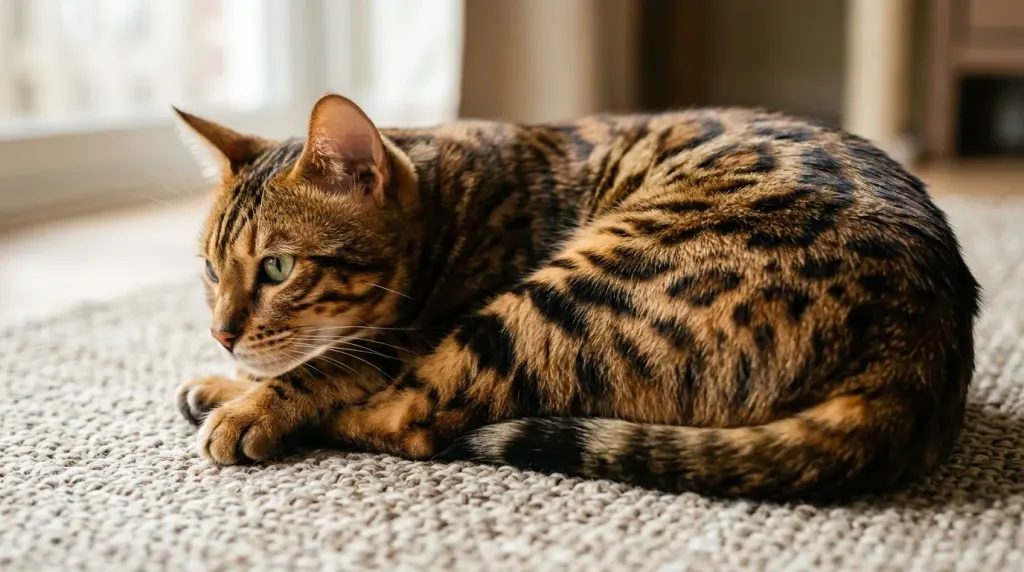
The coat is the defining hallmark of the breed. It is short, dense, remarkably soft, and feels more like a plush pelt than typical feline fur. Many Bengals carry a unique structural feature known as “glitter,” where the tips of the hair shafts are translucent, reflecting light to create an iridescent shimmer across the entire body.
The breed exhibits two primary pattern families:
- Spotted and Rosetted Pattern: Markings range from solid spots to complex, two-toned rosettes that resemble the markings of leopards and jaguars. Rosettes feature a dark outer outline encircling a warm, distinctly colored center. Common variations include “arrowhead” rosettes, circular “doughnut” rosettes, and clustered “pawprint” markings.
- Marble Pattern: Derived from the classic domestic tabby gene combined with wild ancestry, marble coats feature swirling, flowing horizontal bands of color rather than circular bullseye patterns.
Longhair Bengals and Developmental Coat Changes
While shorthaired cats represent the primary breed standard in exhibition rings, a recessive longhair gene occasionally produces semi-longhaired felines known as Longhair Bengals or Cashmeres. These cats display vivid rosettes beneath a silky, plumed coat. A Cashmere Bengal possesses a sleek, single-layer coat that resists matting and requires only weekly brushing, avoiding the heavy undercoat maintenance required for a British Longhair cat breed.
An adult Bengal presents a long, lean, muscular silhouette with substantial bone structure. A Bengal kitten develops rapid agility, coordination, and powerful jumping ability within its first year, reaching physical athletic maturity sooner than large, slow-growing felines such as the Maine Coon cat breed.
Why a Bengal Kitten May Not Show Its Final Coat Clearly
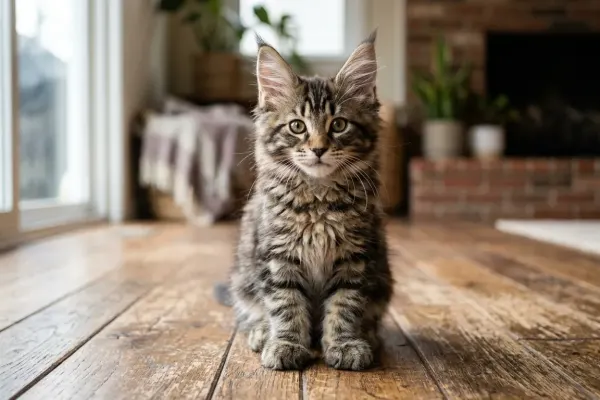
Prospective owners choosing a Bengal kitten often notice that young kittens look surprisingly muted or fuzzy compared to their sleek parents. During early development, commonly observed between 4 and 12 weeks of age though timing varies by individual kitten, young Bengals enter a temporary developmental phase known as “fuzzing” (or the “fuzzies”).
According to breed development records from TICA, this phase is an evolutionary trait inherited from Asian leopard cat ancestry. In the wild, longer, grayish guard hairs camouflage young cubs against predators in dense forest underbrush. Domestic Bengal kittens retain this harmless developmental stage. Over the following months, typically between 16 and 24 weeks of age depending on individual coat maturation, these fuzzy guard hairs shed out, gradually revealing the rich contrast, crisp rosettes, and radiant glitter of their mature adult coat.
What Are Bengal Cats Like at Home?
When considering what are Bengals like in everyday household life, the short answer is dynamic and engaged. According to feline behavior resources on PetMD, Bengals are confident, intensely curious felines that maintain a playful, kitten-like energy well into their adult years.
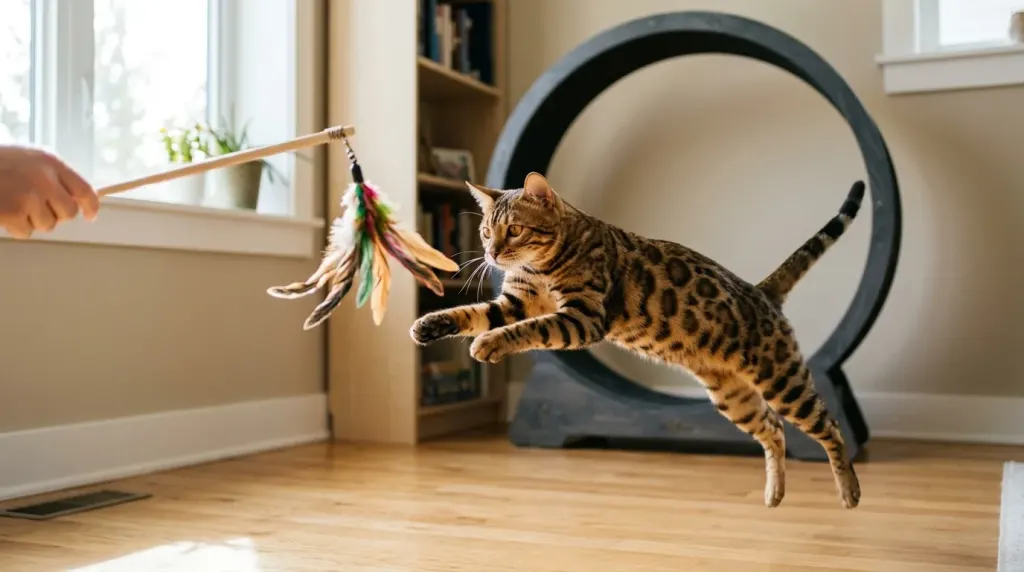
Key behavioral traits include:
- High Intelligence and Trainability: Bengals learn routines rapidly. Many easily master clicker training, fetch games, and walking outdoors on a secure harness and leash.
- Vertical Exploration: Bengals love high vantage points. Expect them to scale tall scratching posts, walk along door tops, and perch on high bookshelves.
- Affinity for Water: Many Bengals show a strong fascination with water, enjoying watching running taps, playing with water bowls, or even stepping into shallow showers.
- Vocalization and Expression: Some Bengals are quite communicative, using chirps, trills, and distinctive rasping meows to converse with their owners, while others remain relatively quiet.
Bengals thrive on active companionship and movement rather than long hours of quiet lounging, differing from more sedentary lap cats such as the Ragdoll cat breed. They form deep emotional attachments to their families and actively participate in household activities.
Many Bengals exhibit play behaviors that seem remarkably canine. They readily learn to fetch thrown toys, carry household objects in their mouths, and greet family members at the front door with enthusiastic energy akin to a friendly Golden Retriever dog breed. A Bengal is best understood as an interactive companion rather than an ornamental house pet. Owners who provide vertical territory, structured play sessions, and puzzle toys find them deeply rewarding, while households expecting a quiet lap cat may feel overwhelmed by their athleticism.
Who Is a Bengal a Good Fit for?
A Bengal flourishes in environments where owners can provide:
- Dedicated daily playtime using feather wands, laser toys, or agility games.
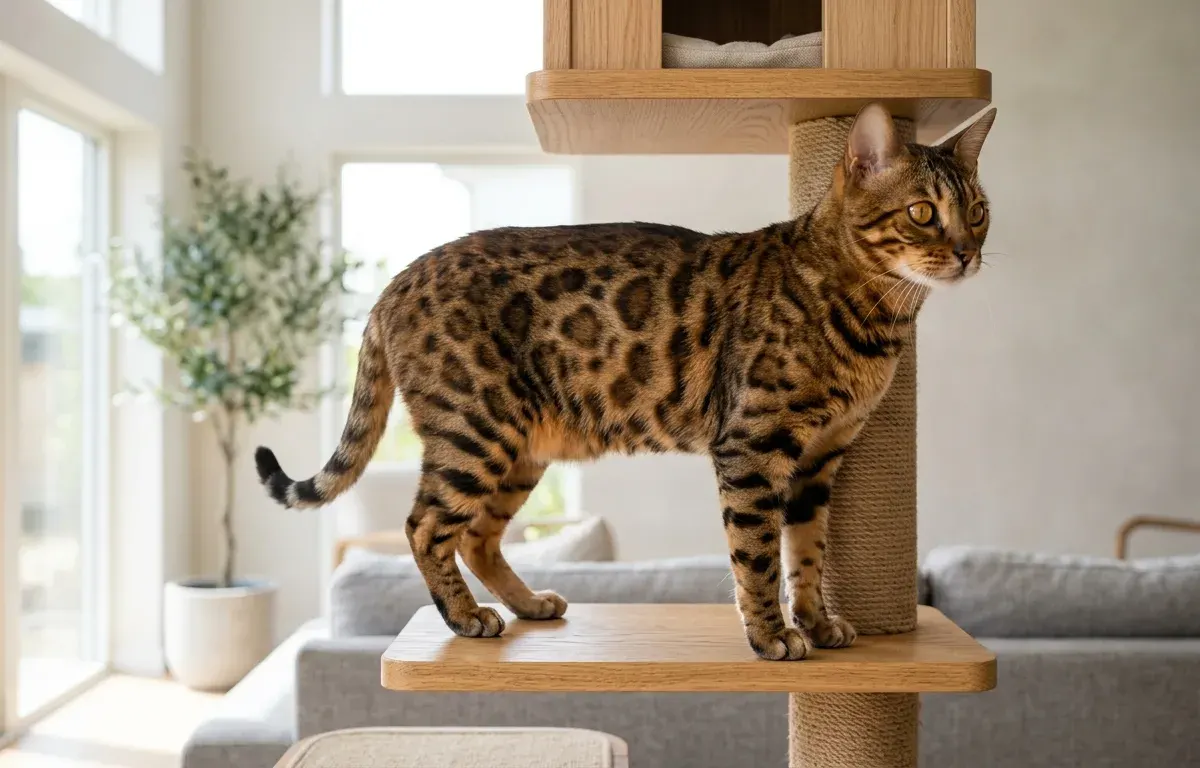
- Vertical territory including floor-to-ceiling cat trees, wall shelves, and window perches.
- Mental stimulation through food puzzle feeders and rotation of interactive toys.
- Cat exercise wheels (such as large 48-inch running wheels) to burn excess sprinting energy indoors safely.
When a Bengal May Be a Poor Fit
A Bengal may struggle in homes where:
- The cat is left entirely alone for extended working days without companionship or environmental enrichment.
- Family members have low tolerance for climbing, vocalization, or nighttime activity.
- The home cannot provide secure vertical space or outlets for active exploration.
What to Know Before Bringing Home a Bengal Kitten
Bringing home a kitten is an exciting milestone that requires thoughtful preparation. A Bengal kitten needs consistent early socialization, age-appropriate veterinary vaccinations, microchipping, and high-protein nutrition to support rapid muscular development.
Early socialization plays a critical role in shaping a confident, well-adjusted adult cat. Introducing a young Bengal kitten to other household pets requires patience and gradual scent swapping. In multi-pet homes, confident Bengal kittens often thrive alongside gentle, outgoing family dogs such as the Labrador Retriever dog breed, provided initial interactions are supervised.
Young Bengals possess boundless curiosity and need consistent daily routines to prevent unwanted mischievous behaviors. Establishing clear household boundaries, designated climbing zones, and structured interactive training sessions early on mirrors the disciplined engagement needed for active, high-drive working animals like the German Shepherd dog breed.
Questions to Ask a Breeder or Rescue
When contacting a breeder, request documentation that proves responsible breeding practices:
- Registry Documentation: Ask for proof that the kitten is registered as a Stud Book Tradition (SBT / F4+) Bengal with an official cat registry such as TICA or CFA.
- Health Screening Records: Request written evidence of annual echocardiogram screening for hypertrophic cardiomyopathy (HCM) in the kitten’s parents, along with clear genetic test results for PRA-b and PK-deficiency.
- Socialization and Care: Inquire about how the kittens were raised in the home, their litter box conditioning, and veterinary vaccination records.
- Written Contract: Ensure the breeder provides a written purchase agreement outlining health guarantees, spay/neuter requirements, and return policies if personal circumstances ever change.
Bengal Health: Screening Questions to Ask
Bengals are generally robust, athletic cats, but like all purebred and domestic felines, they have predispositions to specific inherited health conditions. Responsible pedigree breeding focuses heavily on pre-breeding health testing to minimize these genetic risks.
Note: Genetic screening tests and cardiac evaluations significantly help breeders select healthy breeding lines, but they do not replace routine veterinary wellness exams, dental cleanings, and preventive veterinary care throughout your cat’s life.
HCM, PRA-b, and PK-Deficiency in Plain Language
Prospective owners should understand three key health terms when reviewing breeder records:
- Hypertrophic Cardiomyopathy (HCM): HCM is the most common cardiac condition affecting domestic cats, characterized by an abnormal thickening of the heart muscle. Because HCM is an adult-onset disease with complex genetic roots in felines, there is currently no universal single-gene DNA test for Bengals. Instead, responsible breeders have their breeding adult cats evaluated annually via an echocardiogram performed by a board-certified veterinary cardiologist.
- Progressive Retinal Atrophy (PRA-b): PRA-b is an inherited recessive genetic disorder that causes progressive degeneration of photoreceptor cells in the retina, potentially leading to blindness. Reliable DNA tests allow breeders to identify carrier cats and prevent carrier-to-carrier pairings, eliminating the risk of affected kittens.
- Erythrocyte Pyruvate Kinase Deficiency (PK-def): PK-def is an inherited recessive hemolytic anemia caused by a deficiency in an essential red blood cell enzyme. Simple genetic cheek-swab DNA testing enables breeders to ensure that breeding pairs will not produce affected offspring.
| Health Condition | Primary Screening Method | Frequency for Breeding Stock |
|---|---|---|
| Hypertrophic Cardiomyopathy (HCM) | Cardiac ultrasound (Echocardiogram) by cardiologist | Annually or biennially throughout breeding life |
| Progressive Retinal Atrophy (PRA-b) | DNA genetic test (cheek swab or blood sample) | Once (permanent genetic status) |
| Pyruvate Kinase Deficiency (PK-def) | DNA genetic test (cheek swab or blood sample) | Once (permanent genetic status) |
Registration, Breed Standards, and Household Fit
Understanding official registry standards helps owners appreciate how the breed has matured over decades of careful pedigree development. Organizations like TICA, CFA, and the Federation Internationale Feline (FIFe) maintain strict breed standards that define proper conformation, allowable colors, and ethical breeding protocols.
Prospective owners seeking a quiet, independent companion that enjoys calm downtime might prefer the easygoing temperament of a British Shorthair cat breed. In contrast, a Bengal demands ongoing environmental stimulation and active inclusion in daily household life.
In multi-pet households, physical territory matters alongside temperament. An agile Bengal actively explores vertical routes like high cabinets and wall shelves. At the same time, grounded companion pets like the French Bulldog dog breed occupy floor-level space, allowing both animals to share the home comfortably without competing for the same physical zones.
Legal Ownership and Generation Regulations
Because Bengals possess ancestral ties to wild felines, ownership regulations can vary significantly depending on geography and ancestral generation:
- SBT / F4+ Domestic Bengals: In the vast majority of countries, states, and municipalities, standard SBT Bengals (F4 and later) are legally classified as domestic cats and can be owned without special permits.
- Early-Generation Hybrids (F1-F3): Early foundation generations are subject to wild-animal restrictions or outright bans in certain jurisdictions (including specific states, provinces, or cities).
- Local Verification: Always verify local municipal codes, landlord guidelines, and regional wildlife regulations regarding hybrid cat breeds before acquiring a cat.
Is a Bengal the Right Cat for Your Home?
Deciding to welcome a Bengal should be based on your lifestyle, home environment, and willingness to engage with an active feline companion.
Households accustomed to the relaxed, sedentary pace of companion pets like the Pug dog breed must adapt to a feline that actively seeks vertical climbs, fast sprints, and cognitive stimulation throughout the day.
Prospective owners must also consider existing household pets and predatory dynamics. Because Bengals retain keen hunting instincts and quick reflexes, care should be taken when managing households with small caged animals or bold scent hounds such as the Dachshund dog breed, ensuring all animal interactions remain safe, controlled, and stress-free.
A Bengal is likely a great match if you:
- Want an interactive, vocal, and affectionate cat that actively participates in your daily routine.
- Have time each day for structured play sessions, training, and mental enrichment.
- Can provide cat trees, high perches, and safe scratching surfaces.
- Appreciate an intelligent animal that enjoys learning tricks, exploring new toys, and solving puzzle games.
A Bengal may not be the right choice if you want a quiet, low-energy lap cat that sleeps undisturbed for most of the day, or if you spend prolonged hours away from home without providing environmental stimulation.
Frequently Asked Questions About Bengal Cats
Is a Bengal cat a domestic cat?
Yes. Standard companion Bengals sold by registered breeders are Stud Book Tradition (SBT) cats at least four generations removed from wild ancestry. Major registries recognize them as fully domestic felines with stable companion temperaments.
Are Bengal cats high-energy?
Yes. Bengals are an active, athletic breed that retains a playful, kitten-like curiosity into adulthood. They require regular interactive play, vertical climbing spaces, and mental enrichment to stay healthy and satisfied indoors.
What is the difference between a spotted or rosetted Bengal and a marble Bengal?
Spotted and rosetted Bengals feature individual two-toned markings resembling leopard spots, with dark outer rings surrounding warmer centers. Marble Bengals display flowing, horizontal, asymmetrical swirls of contrasting color across their coat.
What should I ask before choosing a Bengal kitten?
Ask the breeder for official registry registration papers (confirming SBT status), written proof of parental HCM echocardiogram screenings by a cardiologist, and clear genetic test results for PRA-b and PK-deficiency.
Are Bengal cats legal everywhere?
Standard SBT domestic Bengals (F4 and later) are legal in most jurisdictions worldwide. However, some local municipalities and states have specific ordinances regarding hybrid ancestry, especially for early foundation generations (F1-F3). Always check local pet regulations before bringing a kitten home.
Choosing a Bengal means gaining an intelligent, athletic, and deeply affectionate companion. By understanding their enrichment needs and sourcing from responsible breeders who perform comprehensive health screenings, you can ensure a rewarding and joyful life together with this remarkable breed.
Leave a Reply