
Table of Contents
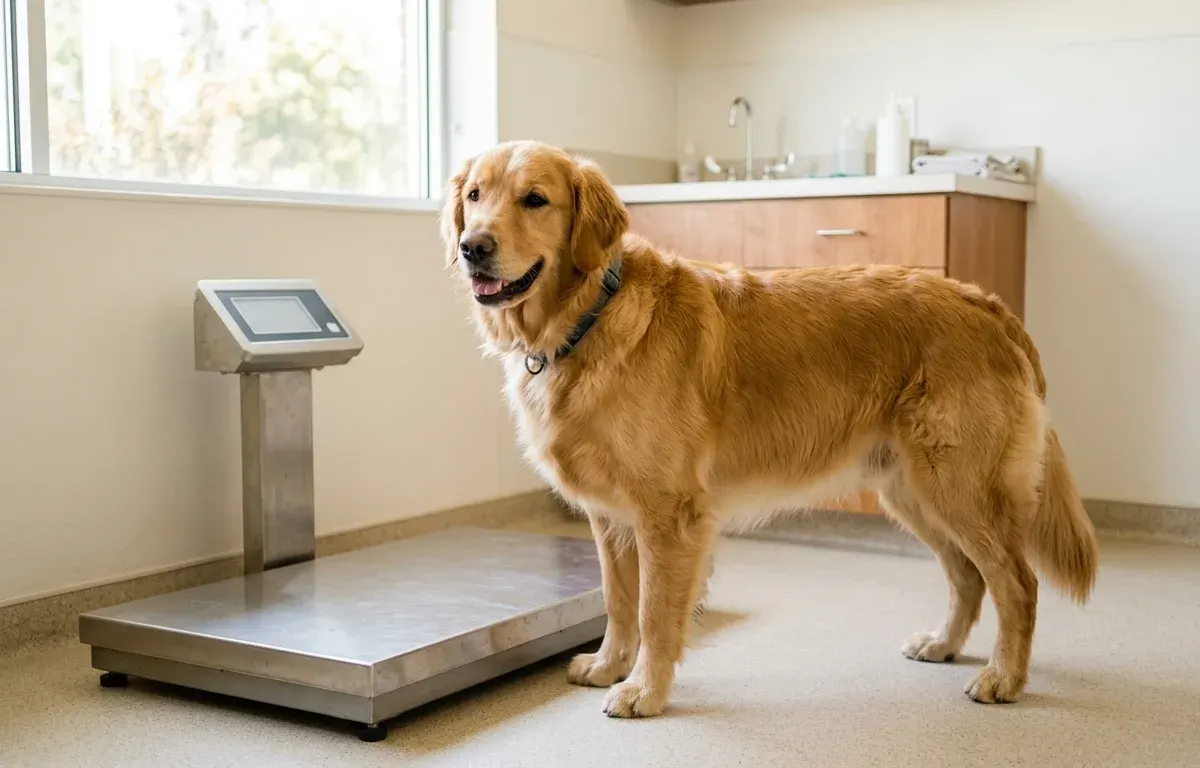
When asking is a golden retriever considered a large breed, veterinary standards and official canine registries give a clear yes. According to veterinary standards and major canine registries, any dog with an adult weight exceeding 55 pounds (25 kg) falls into the large breed category. Mature male Golden Retrievers weigh between 65 and 75 pounds with a shoulder height of 23 to 24 inches, while females weigh 55 to 65 pounds with a height of 21.5 to 22.5 inches.
- Golden Retrievers comfortably exceed the 55-pound veterinary threshold for large breeds.
- Males reach 65 to 75 lbs; females reach 55 to 65 lbs at full physical maturity.
- Skeletal height stabilizes around 12 months, while muscle development continues up to 24 months.
- The thick water-repellent double coat can conceal weight fluctuations, making hands-on rib checks essential.
- Large breed puppy nutrition requires controlled calcium and moderate calories to support steady skeletal growth.
A Golden Retriever is widely recognized as one of the most beloved family companions in the world, yet new and prospective owners often wonder about its physical classification. Understanding where this sporting dog sits on the size spectrum influences everything from daily exercise requirements and crate sizing to dietary formulas and lifelong orthopedic management.
The Short Answer: Is a Golden Retriever Considered a Large Breed?
Canine registries and veterinary associations around the globe categorize the Golden Retriever as a classic large breed sporting dog. Originating in the Scottish Highlands as an athletic waterfowl hunting retriever, the breed was selectively developed for stamina, powerful swimming ability, and substantial bone structure. When reviewing a comprehensive Golden Retriever breed profile, their physical proportions clearly place them above medium-sized canines in terms of skeletal frame, muscle mass, and daily exercise requirements. Alongside other respected working canines like the German Shepherd dog breed, Golden Retrievers maintain a substantial build that requires dedicated joint support and tailored management from early puppyhood.
AKC and GRCA Breed Weight Standards
Official standards published by the American Kennel Club (AKC) and the Golden Retriever Club of America (GRCA) establish clear parameters for adult body weight. A mature male Golden Retriever in prime working condition weighs between 65 and 75 pounds (29.5 to 34 kg). Mature females are slightly more refined, weighing between 55 and 65 pounds (24.9 to 29.5 kg).
Because the baseline medical definition of a large canine breed begins at 55 pounds, even female Golden Retrievers at the lower end of the standard meet the minimum threshold, while males sit firmly within the middle of the large breed category.
Height Standards at the Withers
Skeletal height is measured from the ground up to the withers (the highest point of the shoulder blades). The conformation standard maintained by The Royal Kennel Club specifies the following standing measurements:
- Male Golden Retrievers: 23 to 24 inches (58.4 to 61 cm) at the withers.
- Female Golden Retrievers: 21.5 to 22.5 inches (54.6 to 57.2 cm) at the withers.
A variation of more than one inch above or below these ranges is considered a serious fault in formal conformation judging. These height standards ensure that the dog retains the balanced physical power, stride length, and athletic gait necessary for active retrieving across rugged terrain.
Why Golden Retrievers Stand as the Large Breed Benchmark
To understand why Golden Retrievers are considered large dogs rather than medium dogs, it helps to examine how the veterinary profession categorizes domestic canines across different size brackets.
The 55-Pound Weight Threshold Explained
Veterinary medical literature divides canines into four primary weight classes based on mature adult mass:
| Breed Size Category | Adult Weight Range | Typical Developmental Period | Representative Breeds |
|---|---|---|---|
| Small Breed | Under 22 lbs (under 10 kg) | 8 to 10 months | French Bulldog, Pug, Dachshund |
| Medium Breed | 22 to 55 lbs (10 to 25 kg) | 10 to 12 months | Cocker Spaniel, Beagle, Whippet |
| Large Breed | 55 to 90 lbs (25 to 41 kg) | 12 to 24 months | Golden Retriever, Labrador Retriever, German Shepherd |
| Giant Breed | Over 90 lbs (over 41 kg) | 18 to 36 months | Great Dane, Mastiff, Saint Bernard |
Because healthy adult Golden Retrievers weigh between 55 and 75 pounds, they fall entirely within the large breed classification according to clinical guidelines provided by animal welfare organizations like the PDSA. This category is defined by scale weight as well as an extended growth window, slower joint mineralization, and specific metabolic rates per kilogram of body mass.
Comparison with Other Large Breeds (German Shepherd and Labrador)
Golden Retrievers share their physical category with other world-renowned working dogs. Comparing standard dimensions reveals how close these sporting and herding lines are in practical stature:
- Labrador Retriever: Closely related in sporting history, our detailed Labrador Retriever dog breed guide shows that male Labs weigh 65 to 80 pounds and females weigh 55 to 70 pounds, displaying a slightly heavier, stockier bone structure than Goldens.
- German Shepherd: German Shepherds reach 65 to 90 pounds and standing heights of 24 to 26 inches, representing a longer, more angular large working breed.
- Small and Medium Contrast: In contrast to large sporting dogs, smaller companions like the French Bulldog dog breed weigh under 28 pounds and complete their structural development much faster, often finishing around one year of age depending on the individual dog.
Golden Retriever Growth Curve: Month-by-Month Benchmarks
Raising a large breed puppy requires monitoring weight gain against standard growth curves. Because large sporting dogs undergo massive physical expansion during their first year, understanding month-by-month milestones helps owners verify that development is progressing steadily without harmful growth spikes.
Puppy Growth Phases (8 Weeks to 6 Months)
At 8 weeks of age, a typical Golden Retriever puppy leaves the breeder weighing between 10 and 12 pounds. During the initial four months, growth is exceptionally rapid:
| Puppy Age | Typical Male Weight Range | Typical Female Weight Range | Developmental Milestones |
|---|---|---|---|
| 8 Weeks | 10 to 12 lbs (4.5 to 5.4 kg) | 9 to 11 lbs (4.1 to 5.0 kg) | Weaning complete, initial rapid skeletal growth |
| 12 Weeks (3 Months) | 22 to 30 lbs (10.0 to 13.6 kg) | 20 to 25 lbs (9.1 to 11.3 kg) | High energy needs, deciduous teeth shedding |
| 16 Weeks (4 Months) | 30 to 40 lbs (13.6 to 18.1 kg) | 26 to 35 lbs (11.8 to 15.9 kg) | Rapid limb lengthening, coordination developing |
| 24 Weeks (6 Months) | 45 to 55 lbs (20.4 to 24.9 kg) | 38 to 48 lbs (17.2 to 21.8 kg) | Reaches roughly two-thirds of adult skeletal size |
| 36 Weeks (9 Months) | 55 to 68 lbs (24.9 to 30.8 kg) | 48 to 58 lbs (21.8 to 26.3 kg) | Approaching mature shoulder height |
| 52 Weeks (12 Months) | 62 to 72 lbs (28.1 to 32.7 kg) | 53 to 63 lbs (24.0 to 28.6 kg) | Skeletal growth plates begin closing |
| 18 to 24 Months | 65 to 75 lbs (29.5 to 34.0 kg) | 55 to 65 lbs (24.9 to 29.5 kg) | Full muscle mass, chest depth, and adult coat |
By 6 months of age, a Golden Retriever has attained approximately 60% to 70% of its adult body weight. In contrast to toy breeds like the Pug dog breed that attain full adult weight in early puppyhood, large dogs multiply their birth weight across a two-year developmental window.
Reaching Adult Height vs. Filling Out (12 to 24 Months)
A critical distinction in large breed canine physiology is the gap between vertical skeletal growth and lateral muscular maturity.
A Golden Retriever typically reaches its full adult height around one year of age, as the long bone growth plates (epiphyseal plates) calcify and close. However, the young dog still appears lean and adolescent. Over the following year, the dog enters the filling out phase, during which the ribcage expands in spring and depth, the head broadens, shoulder musculature strengthens, and the adult water-repellent coat achieves its full density.
Male vs. Female Size Differences
Sexual dimorphism is pronounced in Golden Retrievers. On average, adult males stand 1.5 to 2 inches taller at the shoulder and carry 10 to 12 pounds more weight than females.
Males feature broader skulls, heavier bone through the forelegs, and a more prominent ruff of fur around the neck and chest. Females display a slightly longer loin, a more feminine muzzle, and a more refined skeletal structure, while retaining the sturdy substance expected of a working retriever. Structural maturity and pelvic development are also fundamental considerations in responsible canine reproduction, whether navigating the specialized breeding protocols in how to breed French Bulldogs or waiting for complete growth plate closure before evaluating breeding stock in large sporting retrievers.
The “Double-Coat Illusion”: Why the Scale Doesn’t Tell the Whole Story
One unique challenge when evaluating the physical build of a Golden Retriever is their dense, water-repellent double coat. Unlike a single-coated canine such as the Poodle dog breed, a Golden Retriever possesses a dense, insulating undercoat covered by a resilient outer coat with heavy feathering on the legs, chest, and tail. This visual masking is similar to large, semi-longhaired domestic pets like the Ragdoll cat breed, whose plush coats often disguise whether an animal is underweight or carrying surplus body fat.

This coat volume can create a visual illusion, easily masking both unhealthy weight loss and gradual obesity.
How to Perform a Hands-On “Rib Check” and Waist Check
Because visual inspection alone is unreliable through inches of dense fur, veterinarians recommend conducting a bi-weekly hands-on body condition assessment using the following steps:
- The Palpation (Rib Check): Place both flat palms over the dog’s ribcage with thumbs resting near the spine. Apply gentle pressure. You should easily feel the individual ribs beneath a thin cushion of skin and fat, similar to running your fingers over the knuckles of a flat hand. If you must press firmly into a layer of padding to locate the ribs, the dog is carrying excess weight. If the ribs protrude sharply like a clenched fist, the dog is underweight.
- The Overhead Silhouette (Waist Check): Stand directly above your dog and look down at its back while smoothing the fur along the sides. You should observe a clear, inward hourglass taper behind the ribcage and before the hips. A straight cylindrical torso or bulging oval outline indicates overweight status.
- The Side Profile (Abdominal Tuck): Kneel beside your dog at eye level. A healthy Golden Retriever displays a distinct upward tuck of the abdomen directly behind the bottom of the ribcage. A flat underline or sagging belly indicates excess abdominal fat.
Visual assessments alone frequently mislead owners of dense double-coated breeds. A dog appearing sturdy may actually be underweight under thick furnishings, while an overweight dog might have its excess fat masked by coat volume until hands-on palpation reveals the truth.
Assessing Body Condition Score (BCS) Under Thick Fur
Veterinary clinics use the standardized 9-point Body Condition Score (BCS) system rather than relying exclusively on scale weight:
- Scores 1 to 3 (Underweight): Ribs, spine, and pelvic bones visible or prominently palpable with no discernible body fat; severe abdominal tuck.
- Scores 4 to 5 (Ideal Condition): Ribs easily palpable with minimal fat cover; clear hourglass waist when viewed from above; distinct abdominal tuck from the side. This is the optimal target for working and family Golden Retrievers.
- Scores 6 to 7 (Overweight): Ribs palpable only with significant pressure; waistline barely visible; noticeable fat deposits along the lumbar spine and tail base.
- Scores 8 to 9 (Obese): Heavy fat layer preventing rib palpation; rounded cylindrical abdomen with no waistline; distended belly with no abdominal tuck.
Large Breed Nutrition: Why Proper Food Matters for Golden Retrievers
Because Golden Retrievers are large breed dogs with prolonged skeletal growth windows, their nutritional requirements differ substantially from small or medium canines. Feeding a diet designed for smaller dogs or a generic all-life-stages formula can cause accelerated bone elongation that outpaces muscle and joint capsule development.

Controlled Calcium & Energy Intake for Healthy Skeletal Growth
The primary nutritional objective during large breed puppyhood is regulating the rate of growth rather than maximizing weight gain. While chondrodystrophic breeds like the Dachshund dog breed require specialized nutrition to manage spinal load, large retriever puppies need recipes that strictly control skeletal growth velocity and mineral absorption.
Large breed puppy kibble addresses this vulnerability through two essential formulation adjustments:
- Strict Calcium and Phosphorus Control: Puppies cannot regulate intestinal absorption of calcium efficiently before 6 months of age. Excess dietary calcium (above 1.5% dry matter) combined with elevated phosphorus can cause skeletal abnormalities, including osteochondritis dissecans (OCD) and hypertrophic osteodystrophy (HOD). Large breed puppy diets maintain calcium levels strictly between 0.8% and 1.2% on a dry matter basis.
- Moderate Caloric Density: High-fat diets cause excessive daily weight gain, putting premature biomechanical load on soft, unmineralized growth plates. Large breed puppy formulas restrict fat to roughly 12% to 16% and energy density to approximately 3.5 to 4.0 kcal/gram.
Note: Rapid weight gain during the juvenile phase places excessive mechanical strain on developing joint cartilage. Veterinary nutritionists recommend aiming for steady, controlled growth rather than maximum growth rate.
The Role of Glucosamine, L-Carnitine, and Flaxseed
High-quality large breed diets incorporate functional nutrients to protect developing joints and promote lean body mass:
- Glucosamine and Chondroitin Sulfate: Sourced naturally from hydrolyzed poultry cartilage and marine ingredients, these compounds serve as the foundational building blocks for articular cartilage repair and synovial fluid lubrication in heavy-bearing joints.
- L-Carnitine: This amino acid derivative helps transport fatty acids into cellular mitochondria for energy production. It prevents excess adipose tissue accumulation while supporting lean muscle mass synthesis and bone matrix density during growth spurts.
- Flaxseed (Alpha-Linolenic Acid / Omega-3): Ground flaxseed delivers potent plant-based omega-3 fatty acids that modulate systemic inflammation throughout the musculoskeletal system and support the skin barrier beneath a heavy double coat.
Transitioning Safely from Large Breed Puppy Food to Adult Diet
Golden Retrievers should generally remain on a specialized large breed puppy formula until their skeletal growth plates have closed, typically around their first to second year depending on veterinarian advice and individual growth rate. Switching to adult maintenance food too early can deprive the dog of structural amino acids, while staying on puppy food too long increases the risk of unwanted weight gain.
To prevent gastrointestinal upset, implement a gradual 10-day transition schedule:
| Transition Phase | Timeline | Percentage of Large Breed Puppy Kibble | Percentage of Adult Maintenance Kibble |
|---|---|---|---|
| Phase 1 | Days 1 to 3 | 75% | 25% |
| Phase 2 | Days 4 to 6 | 50% | 50% |
| Phase 3 | Days 7 to 9 | 25% | 75% |
| Phase 4 | Day 10 onward | 0% | 100% |
Common Health Risks in Large Breed Goldens
As a large, deep-chested sporting breed, the Golden Retriever faces specific health predispositions tied directly to its physical size, skeletal growth velocity, and genetic background. Understanding these conditions allows owners to implement proactive preventative care.
Orthopedic Issues: Hip & Elbow Dysplasia
Orthopedic vulnerability is the most prevalent health consideration in large dogs. Two conditions occur with notable frequency:
- Canine Hip Dysplasia (CHD): An inherited malformation of the coxofemoral joint where the femoral head does not fit snugly into the acetabular socket. Over time, joint laxity causes cartilage erosion, abnormal bone remodeling, and painful osteoarthritis. According to PDSA guidance on canine hip dysplasia, maintaining a lean body condition score and avoiding high-impact concussive exercise on hard surfaces during puppyhood significantly lowers phenotypic severity.
- Elbow Dysplasia: A complex developmental disorder involving fragmented coronoid processes, ununited anconeal processes, or osteochondrosis of the elbow joint. In developing puppies, it often first presents as front-leg lameness during rapid growth stages.
Unlike airway concerns found in smaller companion breeds, large sporting dogs require rigorous screening through organizations like the Orthopedic Foundation for Animals (OFA) or PennHIP before breeding.
Cancer Risk Profiles and Lifespan Reality
Large canine breeds generally experience shorter average lifespans than small companion breeds. The average life expectancy of a healthy Golden Retriever is typically around 10 or 12 years depending on genetics, healthcare, and lifestyle.
A major health reality for the breed is an elevated incidence of neoplastic disease. Extensive longitudinal research, including data tracked through the Morris Animal Foundation Golden Retriever Lifetime Study, indicates that approximately 60% of Golden Retrievers are affected by cancer during their lifetimes. The most common forms include hemangiosarcoma (vascular endothelial cancer), lymphoma, and high-grade mast cell tumors. Similar to other large domestic animals susceptible to joint stress and hypertrophic conditions, such as the Maine Coon cat breed, large sporting dogs require attentive orthopedic management and proactive veterinary screening throughout their adult lives.
Early detection through biannual veterinary wellness exams, routine abdominal ultrasound screening in senior dogs, and maintaining ideal body weight remain the most effective strategies for maximizing healthspan in large breed Goldens.
Frequently Asked Questions About Golden Retriever Size
Is an 80-pound Golden Retriever considered overweight?
An 80-pound Golden Retriever is above the standard breed weight range (65 to 75 pounds for males, 55 to 65 pounds for females). Whether the dog is clinically overweight depends on its skeletal frame size. A tall male standing 25 inches at the withers may carry 80 pounds with an ideal Body Condition Score of 5 out of 9. However, for an average-sized Golden, 80 pounds often indicates excess body fat that should be evaluated through a hands-on rib and waist check with a veterinarian.
When do Golden Retrievers stop growing structurally?
Golden Retrievers typically achieve their full skeletal height around one year of age when their growth plates close. However, they continue to fill out structurally by adding muscle mass, deepening their chest cavity, and developing their full adult double coat over their second year.



Leave a Reply