
Table of Contents
When figuring out how to help a dog lose weight, a pug requires a tailored approach that pairs a controlled caloric deficit with gentle, low-impact exercise scheduled during cool hours. Because pugs are a brachycephalic breed with shortened airways, safe weight reduction must progress at 0.5% to 1.5% of total body weight per week. Calculate daily food portions based on your dog's ideal target weight using veterinary Resting Energy Requirement formulas, limit treats to under 10% of total daily calories, and switch to a supportive chest harness to protect airway function. Always consult a veterinarian before initiating caloric restriction to rule out metabolic conditions such as hypothyroidism.
- Use Body Condition Scoring (BCS 4 to 5 target) rather than scale weight alone to assess subcutaneous fat over the ribs and waist.
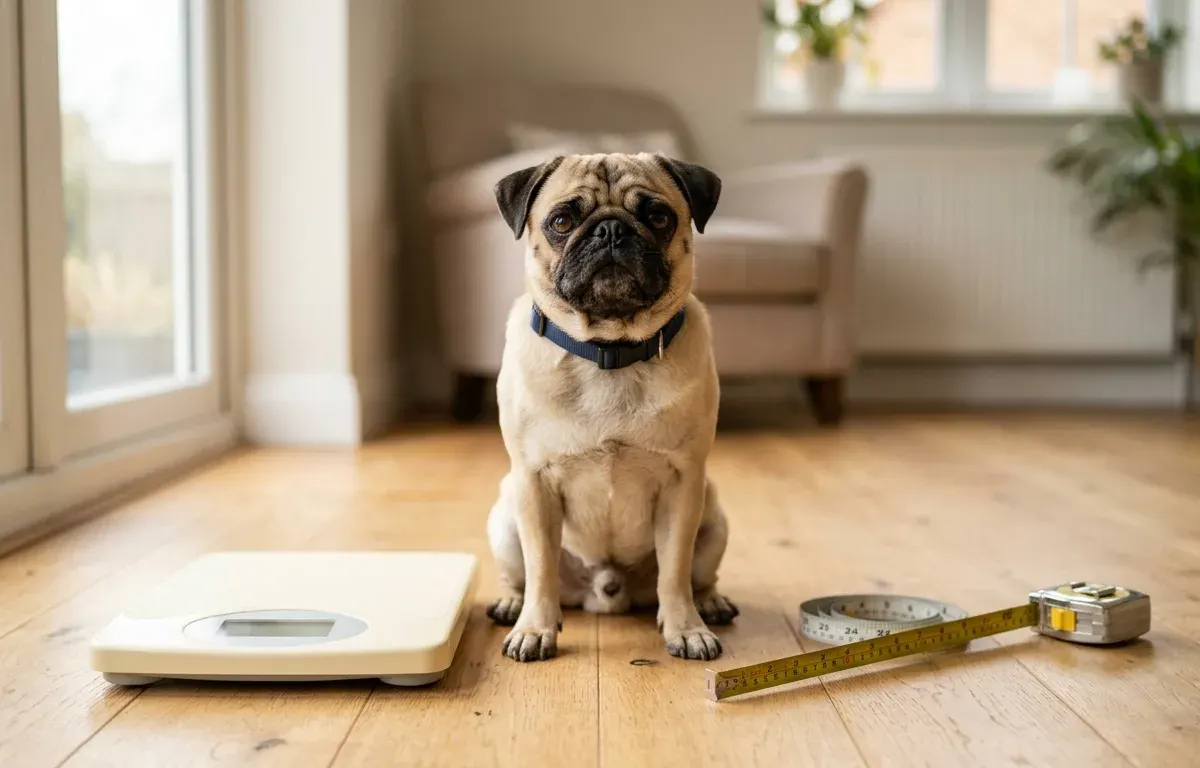
- Calculate daily caloric intake using 80% of Resting Energy Requirement based on ideal target weight, measuring food in grams on a digital scale.
- Cap treats at 10% of total daily calories and replace high-fat biscuits with fresh green beans, cucumbers, or carrots.
- Keep outdoor walks short (10 to 15 minutes) and schedule them during cool morning or evening hours below 20°C (68°F).
- Aim for a steady weight loss velocity of 0.5% to 1.5% of total body weight per week to preserve lean muscle tissue.
Why pug weight management is unique
Weight management in pugs presents distinct physiological challenges that set them apart from standard working and sporting breeds. Pugs possess a compact, cobby build paired with a naturally lower baseline metabolic rate. When combined with a hearty appetite and persuasive begging behavior, even minor overfeeding quickly leads to fat accumulation.
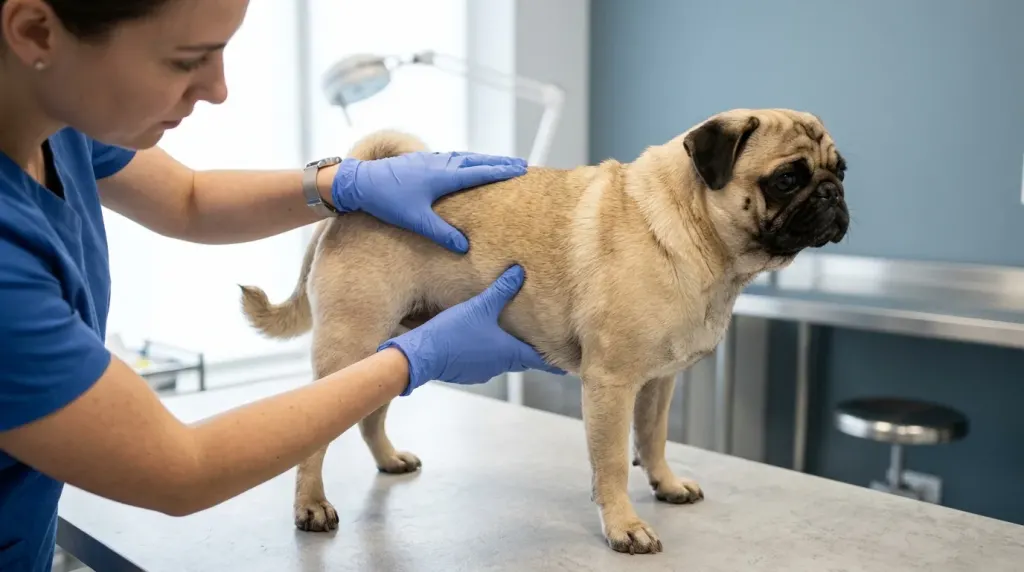
Understanding what a pug dog looks like in terms of breed-standard proportions helps owners recognize where healthy muscle ends and excess fat begins. Because pugs have a naturally square silhouette, fat deposits often settle heavily around the neck folds, shoulders, and tail base. This extra weight places mechanical stress on their compact joints and compresses their respiratory tract.
Brachycephalic anatomy makes obesity particularly hazardous for this breed. Flat-faced dogs have elongated soft palates and narrowed nostrils, which restrict airflow during exertion. Excess adipose tissue around the neck further narrows the pharyngeal airway, increasing the work of breathing and raising the risk of heat stress. A structured, gradual weight reduction plan is therefore essential for their long-term health and mobility.
Assessing your pug’s current weight and goal
Evaluating your pug’s body condition starts with physical palpation rather than stepping on the scale alone. Skeletal frame sizes vary across individual dogs, so a single number cannot determine health. According to the American Kennel Club breed standard, ideal adult pug weight ranges between 14 and 18 pounds (6.3 to 8.1 kg), though larger-framed individuals may carry slightly more weight without excess body fat.
Checking how big pug dogs get provides a helpful reference frame for evaluating your dog’s build. Veterinarians utilize the 9-point Body Condition Score (BCS) system to determine fat coverage:
- Ideal condition (BCS 4 to 5): Ribs are easily felt under a slight fat cover without pressing hard. When viewed from above, a clear waist tuck is visible behind the ribcage. From the side, an abdominal tuck slopes gently upward toward the hind legs.
- Overweight condition (BCS 6 to 7): Ribs are difficult to palpate due to a moderate layer of fat. The waistline is barely visible from above, and the abdominal tuck is flat or rounded.
- Obese condition (BCS 8 to 9): Thick fat deposits cover the ribs, chest, spine, and tail base. The waistline and abdominal tuck are absent, and the neck shows prominent fat rolls.
Life stage also plays a key role in setting weight targets. Determining when pugs are considered senior dogs is crucial because dogs aged 7 years and older experience natural muscle loss and reduced activity. For seniors, diets must preserve lean protein while curbing unnecessary carbohydrates and fats.
| Life Stage and Frame | Typical Target Weight | Target Body Condition | Primary Management Focus |
|---|---|---|---|
| Adult Female | 14 to 16 lbs (6.3 to 7.2 kg) | BCS 4 to 5 | Precise portioning and consistent daily routine |
| Adult Male | 15 to 18 lbs (6.8 to 8.1 kg) | BCS 4 to 5 | Controlled treats and structured daily activity |
| Large-Framed Adult | 18 to 20 lbs (8.1 to 9.0 kg) | BCS 4 to 5 | Joint protection and frame-proportional calories |
| Senior Pug (7+ Years) | 14 to 18 lbs (6.3 to 8.1 kg) | BCS 4 to 5 | High-quality protein and gentle joint mobility |
Designing a pug-specific diet plan
Dietary adjustment forms the cornerstone of effective canine weight loss. To create a sustainable caloric deficit, owners must calculate energy needs based on the dog’s ideal target weight rather than their current heavy weight.
According to clinical nutrition guidelines published by the World Small Animal Veterinary Association, canine baseline energy is calculated using the Resting Energy Requirement (RER) formula:
RER in kcal per day = 70 * (Ideal body weight in kilograms)^0.75
For a pug with an ideal target weight of 16 pounds (7.26 kg), the calculation proceeds as follows:
- Ideal weight in kg: 16 lbs / 2.205 = 7.26 kg.
- Exponential calculation: 7.26^0.75 = 4.41.
- Baseline RER: 70 * 4.41 = 309 kcal per day.
- Safe weight loss intake (80% of RER): 309 * 0.80 = 247 kcal per day.
Measuring kibble with volume cups introduces variances up to 20% due to settling and scooping angles. Using an inexpensive digital kitchen scale to measure food portions in grams ensures exact daily caloric control. Dividing the daily ration into two or three smaller meals prevents blood sugar dips and curbs begging throughout the day.
Reviewing a comprehensive guide on what pug dogs eat helps owners identify nutrient-dense commercial formulas with moderate fiber and adequate protein. If you prefer preparing fresh meals at home, following verified instructions on how to make dog food for a pug ensures the diet meets complete vitamin and mineral requirements while maintaining low caloric density. Weight loss diets must maintain high protein quality (minimum 25% to 30% on a dry matter basis) and elevated soluble and insoluble dietary fiber. This combination promotes satiety and preserves skeletal muscle mass while fat stores are metabolized.
Managing treats and low-calorie swaps
Treats, table scraps, and training rewards often derail weight loss progress. As noted by Dr. Ernie Ward, veterinarian and founder of the Association for Pet Obesity Prevention: “The first thing the vet should tell you is that food does not equal love.” Dr. Ward also emphasizes that “exercise is important, but remember, treats are calories too.” Even an extra 10 to 15 pieces of standard kibble per day can add a pound of body fat to a small dog over a year.
Treat calories must not exceed 10% of total daily intake. For a pug on a 250 kcal daily weight reduction plan, the maximum treat budget is 25 kcal. A single standard commercial biscuit can contain 40 to 80 kcal, immediately exceeding the daily limit.
Replace high-fat commercial snacks with fresh, dog-safe vegetables:
- Fresh or steamed green beans: 3 kcal per 10 grams. High in dietary fiber and moisture to create stomach fullness.
- Cucumber slices: 1 kcal per slice. Provides a crisp, hydrating crunch without added sugar.
- Baby carrots (sliced): 4 kcal per small piece. Rich in beta-carotene and satisfying for chewing.
- Plain canned pumpkin (no spices, no sugar): 5 kcal per tablespoon. Excellent for digestive regularity.
Note: If you suspect your pug has consumed toxic foods such as onions, garlic, grapes, raisins, macadamia nuts, or anything containing xylitol, contact your veterinarian or an animal poison control center immediately (such as the ASPCA Animal Poison Control Center at 888-426-4435). Do not wait for symptoms to appear before calling, and never induce vomiting unless explicitly directed by a veterinary professional. When introducing safe fresh vegetables, add small amounts gradually to prevent minor gastrointestinal changes.
Safe exercise and activity for a pug
Physical exercise burns calories, enhances joint mobility, and maintains muscle tone, but it must be tailored carefully to the pug’s brachycephalic build. Shortened nasal passages and compressed upper airways make pugs inefficient at cooling themselves through panting. Strenuous running or exercise in warm weather creates severe overheating risks.
Understanding why pug dogs snort allows owners to distinguish normal soft palate vibration from airway distress. Heavy wheezing, blue-tinged gums, or excessive foaming at the mouth indicate immediate exertion limits.
Follow these exercise safety rules:
- Temperature threshold: Exercise outdoors only when ambient temperatures are below 20°C (68°F). If humidity is high or temperatures exceed 22°C (72°F), move exercise sessions indoors onto air-conditioned, carpeted floors.
- Session duration: Conduct two short walks of 10 to 15 minutes each day rather than a single long 40-minute hike. Short outings build cardiovascular endurance without straining respiratory capacity.
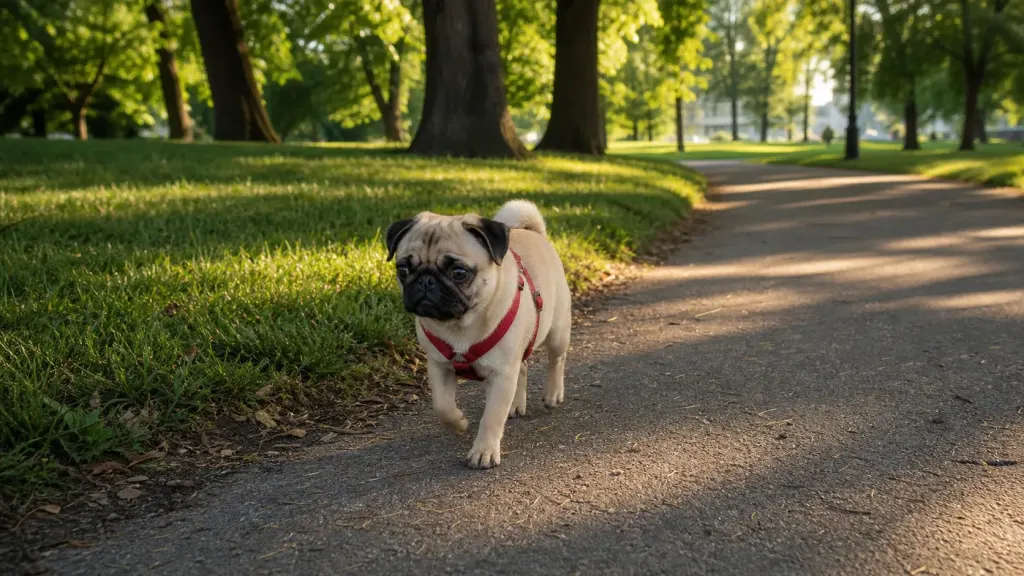
- Use a chest harness: Always walk your pug using a supportive chest harness rather than a neck collar. A neck collar concentrates force directly against the trachea, restricting airflow and aggravating airway collapse.
- Indoor enrichment: Stimulate mental and physical activity indoors using snuffle mats, interactive puzzle feeders, and gentle rolling ball games.
Observing post-exercise recovery helps spot signs of fatigue. Learning what causes a pug to keep moving and not lay down helps owners recognize when a dog is pacing due to joint stiffness, heat discomfort, or breathing difficulty rather than restlessness.
Monitoring progress and avoiding pitfalls
Tracking weight loss requires consistent observation under standardized conditions rather than reacting to day-to-day scale fluctuations. Periodic weigh-ins on the same scale, conducted before the morning meal, provide a clearer picture of fat reduction over time. Home tracking can be done by weighing yourself on a digital bathroom scale while holding the dog, then subtracting your own weight to calculate the dog’s mass.
Because healthy canine fat loss progresses gradually, visible changes in body shape appear over several weeks. A sustainable weight management journey typically follows three practical phases:
- Initial adaptation: The pug adjusts to smaller, measured meals and low-calorie vegetable snacks. Mild early changes often reflect water balance adjustments before steady fat metabolism begins.
- Steady fat reduction: As caloric restriction continues, the waist tuck becomes recognizable from above and ribs become easier to palpate under light pressure. Activity stamina and breathing comfort during walks improve.
- Goal maintenance: Once the dog reaches a target Body Condition Score of 4 to 5, daily food portions are slightly increased to a maintenance level that stabilizes weight without triggering rebound gain.
If your pug experiences minor digestive changes during the diet transition, reviewing solutions for how to reduce pug gas helps manage flatulence while dietary fiber levels adjust.
When to involve a veterinarian
A professional veterinary evaluation must precede any calorie-restricted feeding plan. Medical conditions can cause rapid weight gain or prevent fat loss even under strict dieting.
Schedule a veterinary appointment for the following priorities:
- Pre-diet diagnostic screening: Blood chemistry panels and thyroid hormone tests rule out endocrine disorders such as hypothyroidism or hyperadrenocorticism (Cushing’s disease).
- Custom calorie targets: Your veterinarian will calculate precise energy requirements based on your dog’s exact age, neuter status, and medical history.
- Plateau reassessment: If your pug fails to lose weight after 4 consecutive weeks of measured feeding, your vet will evaluate metabolic rates and recalibrate food amounts.
- Medical red flags and emergencies: Contact your veterinarian or an emergency clinic immediately if your pug shows persistent lethargy, vomiting, refusal to eat, or signs of respiratory distress. For suspected poisoning or toxic food ingestion, contact your vet or the ASPCA Animal Poison Control Center immediately without waiting for symptoms.
Integrating nutritional management into a complete pug care routine protects joint cartilage, supports healthy skin folds, and promotes a long, active life.
Common mistakes and how to fix them
Avoiding common feeding and exercise mistakes prevents weight loss plateaus and protects your pug’s health:
- Eyeballing portion sizes: Measuring kibble with generic cups leads to accidental overfeeding. Always weigh dry food on a digital gram scale.
- Over-exercising to compensate for food: Attempting to burn off excess calories with prolonged running puts severe stress on brachycephalic airways and joints. Focus primarily on caloric intake, keeping physical activity moderate.
- Unmonitored family feeding: Multiple household members offering treats can double daily calories. Designate a single person for feeding or measure daily treats into a single container each morning.
- Rapid crash dieting: Slashing food portions by more than 30% triggers intense begging, muscle wasting, and hepatic complications. Keep caloric reductions gradual.
Sample 2-week meal plan and activity calendar
The following schedule illustrates a practical daily weight management routine for an adult pug targeting 16 pounds (247 kcal/day target):
| Time of Day | Nutritional Plan and Portions | Physical Activity and Care |
|---|---|---|
| 07:00 Morning | Morning meal: 32 grams small-breed weight kibble (~110 kcal) served in a slow feeder | 10 to 15 minute gentle walk in cool morning air (< 20°C / 68°F) on chest harness |
| 12:30 Midday | Midday snack: 30 grams steamed green beans (9 kcal) and fresh water check | 5 minutes indoor scent work or treat-dispensing puzzle game |
| 17:30 Evening | Evening meal: 32 grams small-breed weight kibble (~110 kcal) | 10 to 15 minute evening stroll after pavement has cooled |
| 20:00 Night | Bedtime reward: 2 cucumber slices (2 kcal) | Gentle brushing and facial wrinkle hygiene check |
Frequently asked questions about pug weight loss
How much weight should a pug lose?
Most overweight pugs need to lose between 10% and 20% of their starting body weight to return to an ideal Body Condition Score of 4 to 5. For a 20-pound pug, this represents a target weight reduction of 2 to 4 pounds, bringing the dog into the healthy breed range of 16 to 18 pounds.
How fast can a pug safely lose weight?
A safe rate of weight loss for a pug is 0.5% to 1.5% of their total body weight per week. Losing weight faster than 2% per week increases the risk of lean muscle loss and nutritional deficiencies, whereas steady progress of 0.1 to 0.3 pounds per week ensures sustainable fat loss.
What foods are best for a pug diet?
The best foods for a pug weight loss plan are high-protein, moderate-fiber, small-breed weight management formulas that provide 25% to 30% crude protein on a dry matter basis. High-fiber fresh vegetables such as steamed green beans, sliced cucumbers, and carrots serve as safe, low-calorie additions to promote fullness.
How to exercise a lazy pug?
To encourage activity in a low-energy pug, use short 10-minute sniffing walks in cool weather, interactive puzzle toys, and gentle indoor scent-tracking games where they search for pieces of steamed green beans. Avoid high-impact running or warm-weather walks that could stress their respiratory system.


Leave a Reply