
Table of Contents
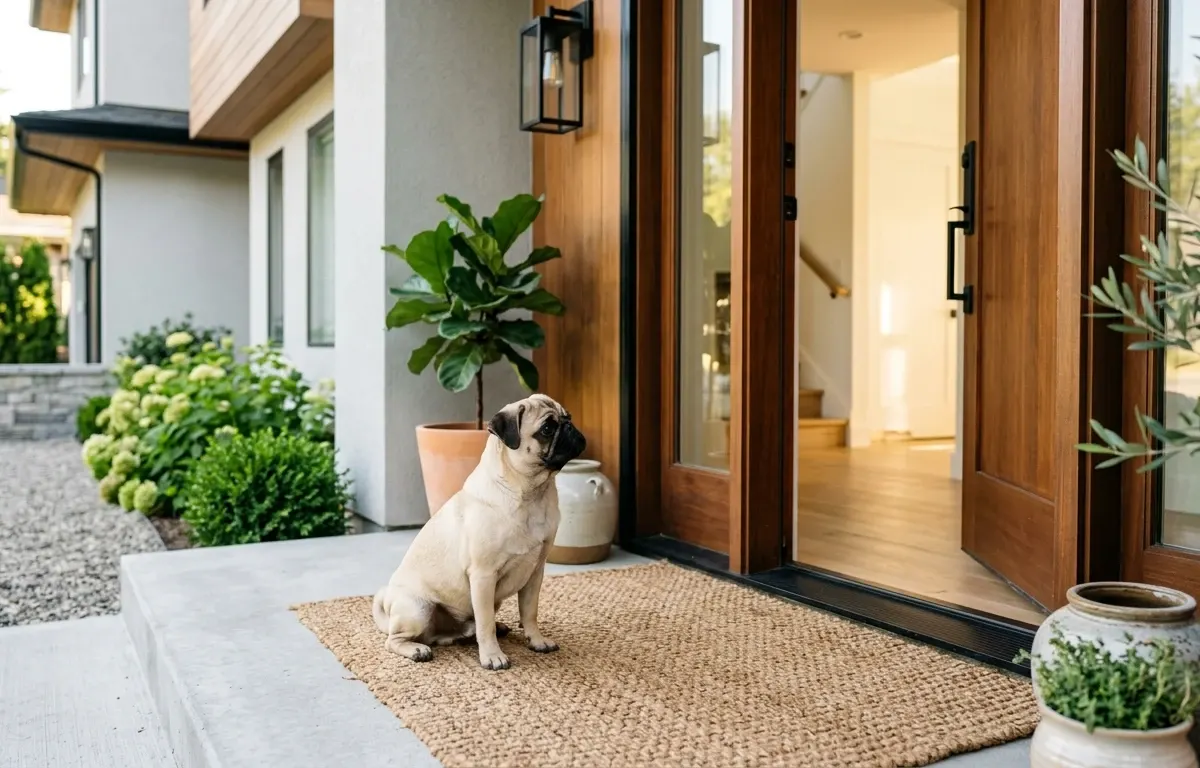
Rarely are pugs good guard dogs for physical home protection. Weighing only 14 to 18 pounds, they lack the physical mass, jaw power, and territorial aggression required to deter or stop human trespassers. However, pugs function exceptionally well as vocal watchdogs. Their keen hearing and resonant alert bark allow them to notify owners whenever someone approaches the front door or makes unusual noises nearby.
- Pugs are small companion dogs with an ideal weight of 14 to 18 pounds, which prevents physical protection or deterrence.
- Natural temperament in pugs favors sociability and charm over territorial aggression, making them welcoming toward strangers.
- Brachycephalic airway anatomy limits stamina and heat tolerance, making intense physical guard drills dangerous.
- Pugs excel as home watchdogs by providing immediate vocal alerts when unfamiliar visitors arrive at the entryway.
- Dedicated protection work requires large working breeds such as German Shepherds, Rottweilers, or Doberman Pinschers.
Pug temperament and guard-dog myths
A common question among prospective pet owners is whether pugs have the instincts to defend a home. To understand why pugs cannot serve as guard dogs, one must look at their selective breeding history and core personality traits. According to the American Kennel Club Pug breed standard, pugs are recognized for an even-tempered, charming, and mischievous disposition, summarized by the Latin motto multum in parvo (a lot in a little). Their official breed standard places them squarely in the Toy Group, an AKC classification dedicated exclusively to companionship rather than property defense or utility labor.

Historically, pugs were developed in ancient China during the Han dynasty as luxury lap companions for emperors and royal courtiers. Chinese royalty valued them for their compact size, decorative facial wrinkles, and peaceful demeanor. Royal breeders selected dogs for affection, gentleness, and comfort rather than working traits like herding, hunting, or property defense. This historical lineage created a companion that thrives on human closeness and seeks harmony with family members. While prospective owners occasionally wonder if pugs are friendly dogs by nature, their natural impulse upon meeting a newcomer is curiosity and social engagement rather than territorial defense.
When evaluating whether pugs can be guard dogs, canine behavioral specialists emphasize that true guard work requires innate suspicion of strangers and defensive territorial drives. Pugs typically lack both. When an unfamiliar delivery driver or guest enters the home, a pug might initially investigate with a curious head tilt or a brief greeting bark, but this behavior quickly dissolves into tail wagging and solicitations for attention. Because of their companion heritage, the risk of pug aggression remains remarkably low across the breed. When a stranger steps onto the property, a pug may bark to announce the arrival, but once the visitor crosses the threshold, most pugs quickly switch to seeking petting, offering toys, or curling up nearby.
| Feature | Guard Dog | Watchdog | Pug Characteristic |
|---|---|---|---|
| Primary function | Physical deterrence and intervention | Early detection and alarm barking | Vocal alerting only |
| Typical body weight | 50 to 100+ pounds | Any size | 14 to 18 pounds |
| Territorial drive | High | Variable | Low |
| Jaw and bite strength | High stopping power | Not required | Minimal bite force |
| Response to intruders | Stand ground, challenge, or detain | Bark loudly and retreat to handler | Bark, then greet or seek safety |
Barking, alerting, and deterrence reality
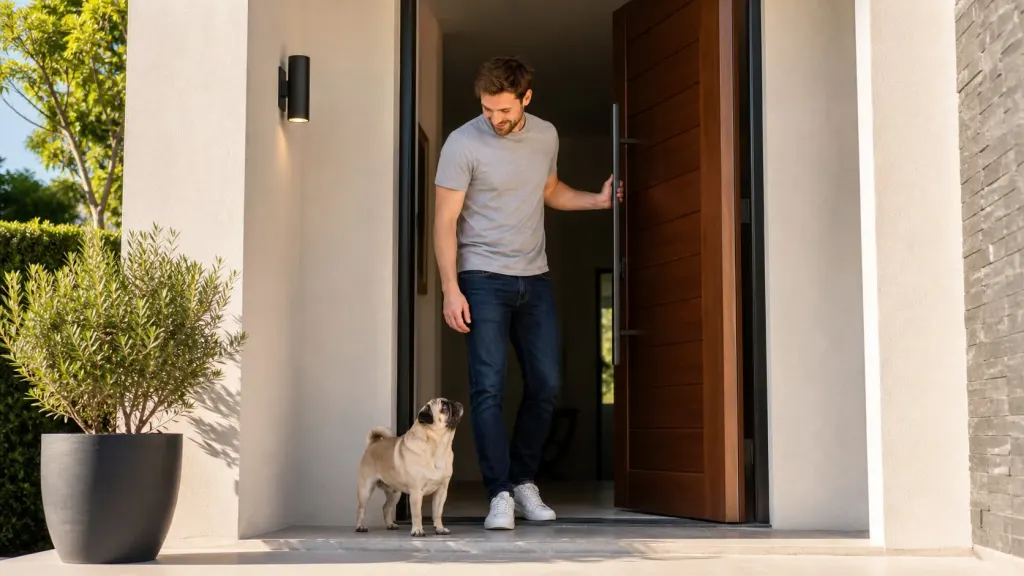
While pugs lack guarding capability, they frequently surprise owners with their vocal alertness. A pug possesses acute auditory senses that easily detect subtle environmental shifts, such as footsteps on the porch, a car door slamming in the driveway, or a delivery package dropped near the front door. This sensory awareness makes them vigilant home sentinels.
When alerted, a pug produces a surprisingly deep, sharp bark for a toy breed. This sudden alarm can startle an unexpected visitor or deter an opportunistic prowler who assumes a larger dog is inside behind the closed door. However, this vocal response represents watchdog notification rather than defensive aggression. The dog is sounding an alarm for its family, not preparing to engage in physical combat.
Pet owners sometimes ask whether pugs are aggressive watch dogs when they sound the alarm so enthusiastically. In reality, pugs are non-aggressive watchdogs whose barking serves purely as an early warning system rather than a display of hostility. Unlike aggressive watch breeds that growl, bare teeth, or lunge defensively at the door, a barking pug is usually motivated by excitement, curiosity, or mild environmental surprise. The dog sounds the alarm to alert its human companions, but it does not intend to attack or corner the visitor.
Young or highly stimulated dogs may also experience excitement urination in pugs when visitors knock, demonstrating that their vocalizations stem from high emotional arousal rather than calculated protection. Once the owner acknowledges the sound, checks the door, and greets the guest in a calm manner, the alert barking typically subsides within moments.
Training implications: can you train a pug for guarding tasks?
Some owners wonder whether structured obedience or protection drills can turn a pug into a capable personal protection dog. Professional dog trainers and veterinary behaviorists strongly advise against attempting protection or bite work with toy companion breeds.
Protection training relies on specific underlying canine drives, including high prey drive, defensive confidence, physical durability, and strong bite inhibition control. Pugs do not possess the genetic foundation for these demanding tasks. Attempting to force a companion dog through agitation drills, bite sleeve training, or simulated intruder confrontations can cause severe psychological stress, chronic anxiety, and fear-based behavioral instability. A dog pushed beyond its emotional threshold may develop generalized fear of strangers, sound phobias, or defensive snapping out of sheer terror.
Instead of protection training, owners should focus on positive reinforcement for basic manners, leaning into the natural intelligence of pugs to master household routines. Rewarding a dog for barking once or twice when the doorbell rings, followed by a reliable “quiet” cue, establishes an effective watchdog routine without fostering stress. Teaching a dog to move to an assigned mat or bed after sounding the alert gives the pet a clear, rewarding job. Incorporating consistent reward sessions into daily pug care routines keeps the dog mentally stimulated without placing unrealistic or harmful expectations on its temperament. Guard dog training requires genetic predisposition toward defensive confidence and physical stopping power. Forcing a companion breed into protective bite work contradicts centuries of selective breeding and risks creating fear-based behavioral instability.
Note: Due to brachycephalic airway anatomy, pugs must never undergo strenuous physical agitation drills or endurance guard training, which can trigger severe respiratory distress or heat exhaustion.
Pugs in apartment living and urban environments
In urban settings, condominiums, and multi-family residential buildings, the watchdog qualities of a pug offer distinct practical advantages. Their compact size makes them manageable in tight spaces, and the suitability of pugs for apartment living makes them popular among city residents seeking an early warning companion that does not overwhelm a modest floor plan.
A pug will readily alert its owner to hallway foot traffic, elevator movement, or unfamiliar sounds outside the apartment door. Because of the moderate activity needs of pugs, they do not require extensive yard patrolling or rigorous perimeter checks to remain content. A couple of short daily walks combined with indoor play satisfy their exercise requirements, while their vigilant hearing provides reliable home awareness.
Living in close quarters also means owners must manage alert barking so it does not become a nuisance to neighboring apartments. Because pugs are social animals, they respond well to environmental management techniques, such as keeping white noise machines near hallway doors, closing window blinds during high-traffic hours, and rewarding quiet settle behaviors. This balanced approach allows apartment dwellers to enjoy the early warning benefits of an alert watchdog while maintaining a peaceful home environment.
Comparisons: pugs vs. true guard dogs
Evaluating whether pugs make effective guardians requires comparing their physical and physiological traits with established working guard breeds. Traditional guard breeds like German Shepherds, Belgian Malinois, and Rottweilers possess substantial body mass, powerful jaw mechanics producing bite forces exceeding 200 to 300 pounds per square inch (PSI), and athletic stamina developed over generations. A standard pug, by contrast, weighs only 14 to 18 pounds and has a compact, cobby frame with a short muzzle that cannot physically deter or subdue a human intruder.
Furthermore, physiological constraints prevent pugs from engaging in sustained security work or perimeter patrol. As documented by the American College of Veterinary Surgeons, pugs are brachycephalic dogs characterized by shortened facial bones, stenotic nares (narrowed nostrils), an elongated soft palate, and compressed upper airways. These anatomical features substantially increase airway resistance, making high-intensity physical exertion, oxygen intake, and thermoregulation difficult. While athletic working breeds patrol perimeters in varied weather conditions, a pug can quickly overheat in temperatures exceeding 80 degrees Fahrenheit (27 degrees Celsius) or suffer acute respiratory distress during vigorous physical activity.
Physical differences extend to specialized security and law enforcement roles as well. Prospective owners occasionally ask if pugs can be police dogs or scent detection animals. A comprehensive 2025 study on canine cranial morphology led by researchers at Chapman University and published in Science Advances demonstrated that selective breeding has created dramatic skull shape diversity across breeds without producing specialized structural adaptations for functional performance. While skull shape alone does not eliminate basic olfactory capability, police and tactical roles demand exceptional cardiovascular endurance, high sprinting speed, bite work capability, and environmental resilience that toy companion breeds cannot provide. Consequently, pugs are unsuited for tactical patrol work, and they remain celebrated for their history of pugs as lap companions rather than service as police or security animals.
| Breed | Primary Role | Average Weight | Protective Instinct | Physical Deterrence |
|---|---|---|---|---|
| Pug | Companion and Watchdog | 14 to 18 lbs | Very Low | Low (Vocal alert only) |
| German Shepherd | Working and Protection | 50 to 90 lbs | Very High | Very High |
| Rottweiler | Guarding and Utility | 80 to 135 lbs | Very High | Very High |
| Doberman Pinscher | Personal Defense | 60 to 100 lbs | Very High | Very High |
| Boxer | Working and Companion | 55 to 70 lbs | Moderate to High | High |
Safety considerations and owner expectations
Setting realistic expectations is essential for household safety and animal welfare. When homeowners ask whether pugs are good security dogs, professional security experts and canine specialists emphasize that relying on a toy companion dog for personal security or perimeter defense creates a false sense of security and places the dog in serious danger. An intruder can easily bypass, injure, or remove a 15-pound dog without effort.
For genuine home protection, homeowners should install reliable physical and electronic security measures rather than expecting a companion pet to guard property. Effective home defense strategies combine layered security solutions:
- High-grade deadbolts and reinforced strike plates on all exterior entry doors.
- Window security film, auxiliary locks, and motion-sensor perimeter lighting around entry pathways.
- Smart video doorbells and integrated alarm systems connected to professional monitoring services.
Within this layered setup, a pug serves as an alert household companion and early warning alarm. When the dog barks at an unusual sound on the porch, the owner receives an immediate prompt to check security camera feeds or verify door locks, while the electronic and structural safeguards provide actual deterrence.
In a family household, these gentle traits make pugs outstanding companions. Their reputation of pugs as gentle family pets stems from their patience, predictable temperament, and affectionate playfulness around children of all ages. Their stable, affectionate nature even enables pugs serving as certified therapy dogs, bringing emotional comfort to hospital patients, nursing home residents, and school reading programs rather than defending property lines.
Frequently Asked Questions About Pugs and Guarding
Do pugs bark at strangers approaching the house?
Yes, most pugs bark when strangers approach the front door, walk up the driveway, or ring the doorbell. Their sharp hearing alerts them to nearby footsteps or unexpected noises, making them reliable vocal watchdogs for everyday household awareness.
Are pugs protective of their owners?
Pugs form deep emotional attachments to their human families, but this bond manifests as seeking physical closeness, shadowing owners from room to room, and craving companionship. They do not possess the territorial aggression, suspicion, or physical drive required to attack or defend against an intruder.
Can a pug intimidate or deter intruders?
A pug’s loud, resonant bark can momentarily startle someone outside and signal that a home is occupied, which may discourage casual trespassers. However, its small physical frame of 14 to 18 pounds and friendly appearance offer no real physical deterrence against a determined intruder.
What should you do if your pug barks excessively at the window?
If a pug barks continuously at outdoor movement, manage its environment by closing window blinds and using positive redirection. Acknowledge the alert with a calm verbal cue, then redirect the dog to a chew toy or bed with a treat to reward quiet, calm behavior.

Leave a Reply