
Table of Contents
To understand why are Golden Retrievers so clingy, look to their working history: they were selectively bred for generations as close-working gundogs with an innate genetic drive to cooperate with humans and maintain pack contact. Their "Velcro dog" behavior stems from high social intelligence, positive reinforcement, and strong bonding instincts. While shadowing you from room to room is usually harmless affection, sudden clinginess can also signal boredom, female heat cycles, sensory decline, or underlying separation anxiety.
- Golden Retrievers possess a genetic predisposition for companionship rooted in their history as sporting and retrieving dogs.
- "Velcro" behavior differs from separation anxiety: clingy dogs enjoy proximity, whereas anxious dogs experience acute panic when left alone.
- Environmental triggers like lack of mental stimulation, household routine changes, or unspayed heat cycles can intensify clingy habits.
- Sudden clinginess in adult or senior Goldens warrants a veterinary evaluation to rule out pain, vision loss, or canine cognitive dysfunction.
- Structured daily exercise, independent enrichment puzzles, and calm boundary setting effectively balance closeness with confidence.
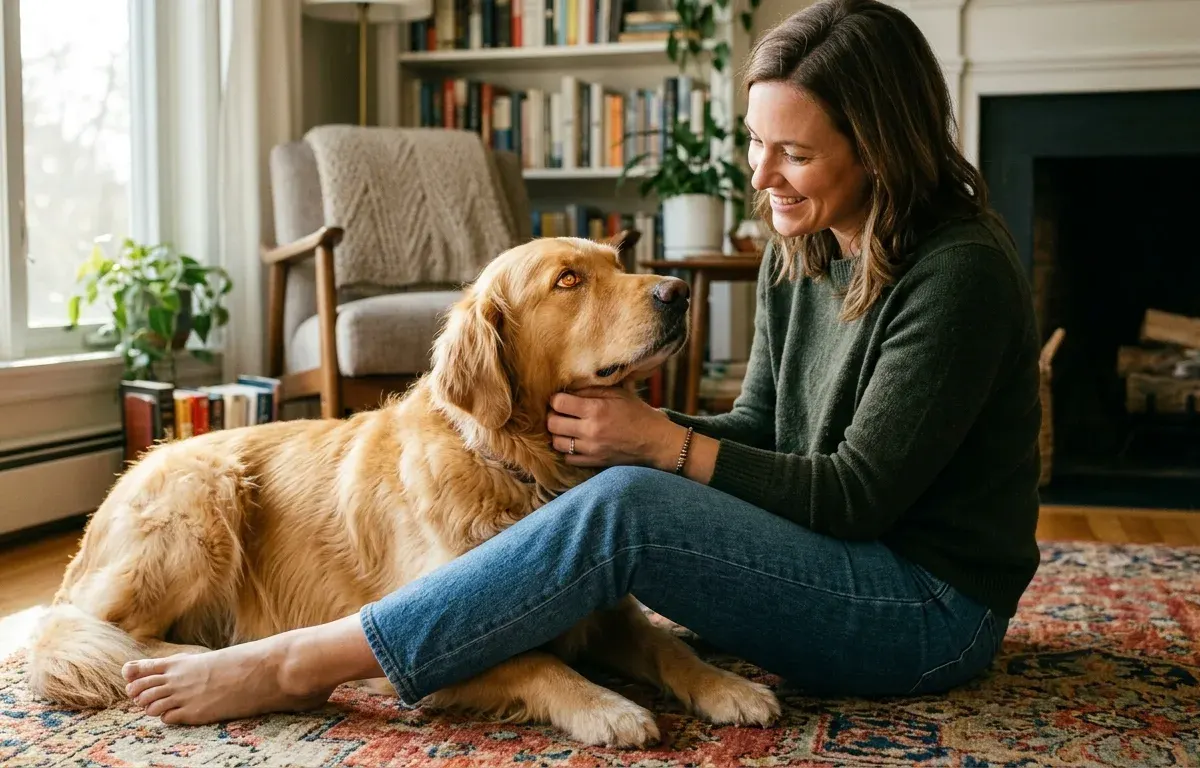
Golden Retrievers are celebrated worldwide for their radiant personalities, intelligence, and unwavering loyalty. Yet, many new and experienced dog owners find themselves surprised by just how intensely attached their Golden can become. Whether your dog rests their chin on your knee while you work, follows you into the bathroom, or leans against your legs whenever you stand still, this shadowing behavior is a hallmark trait of the breed. Understanding why your Golden Retriever stays glued to your side helps you meet their emotional needs while cultivating healthy independence.
The Biological and Historical Roots of Golden Retriever Clinginess
Golden Retrievers are widely recognized as “Velcro dogs” due to their 19th-century origins in Scotland, where they were selectively bred as gundogs to work in constant coordination with human handlers, hardwiring high biddability and proximity-seeking into their DNA.

The breed was first developed at the Guisachan estate in the Scottish Highlands by Dudley Marjoribanks, known as Lord Tweedmouth. During the mid-to-late 1800s, waterfowl hunters required a specialized dog capable of retrieving game over rugged terrain and icy waters without damaging the quarry. To achieve this, Lord Tweedmouth crossed a yellow retriever named Nous with Belle, a Tweed Water Spaniel, later incorporating Bloodhound and Irish Setter ancestry. The resulting dogs combined dense waterproof coats and soft mouths with an extraordinary desire to watch, follow, and please their human partners.
This working heritage forged an exceptionally high level of biddability, the innate willingness to take direction and maintain continuous eye contact with a handler. In the field, a retriever that wandered off independently was useless; survival and success depended on staying within sight and earshot of the hunter. Today, that selective pressure translates into a family pet that naturally tracks your movements around the house.
According to the American Kennel Club breed standard, Golden Retrievers rank among the most cooperative sporting dogs due to their gentle temperament and profound eagerness to please. While companion breeds like clingy French Bulldogs were selected primarily for indoor lap companionship, a Golden Retriever’s closeness originates from active working partnership in the field. Understanding why French Bulldogs are so popular shows how human-centered affection drives high companion appeal across both sporting and toy groups.
Beyond genetics, biological bonding plays a major biochemical role. When a Golden Retriever makes soft eye contact with their owner or receives gentle physical touch, both human and dog experience a measurable surge in oxytocin, commonly referred to as the bonding hormone. This hormonal feedback loop reinforces closeness, making physical proximity genuinely rewarding on a neurological level.
Why Your Golden Retriever Follows You Everywhere: Pack Instincts and Shadowing
Your Golden Retriever shadows your every move because they view you as their primary pack leader and secure base, combined with learned positive reinforcement where proximity yields attention, eye contact, and treats.
Canine psychology revolves around social attachment. In the wild and in domestic settings, dogs are group-oriented animals that thrive on social cohesion. When a Golden Retriever bonds with a household, they treat the family as their pack. Developmental science describes this dynamic through the “secure base effect”, a psychological phenomenon where an animal feels most confident and secure when in the immediate physical presence of their primary caregiver.
During puppyhood, this instinct is especially intense. During early development, young puppies undergo critical socialization, learning to rely on their mother and human caretakers for safety and food. As they transition into adolescence and adulthood, many Golden Retrievers retain this puppy-like dependency, viewing their human family as the center of their universe.
A common manifestation of this behavior is following owners into private spaces, including bathrooms. While humorous to owners, this habit is driven by three distinct factors:
- Pack Protection: In canine logic, stationary moments represent potential vulnerability. Your dog instinctively feels a duty to stand guard.
- Curiosity and Inquisitiveness: Goldens are intelligent, inquisitive sporting dogs. A closed door represents a barrier to the pack, piquing their interest.
- Learned Association: Bathrooms and hallways are high-traffic areas where owners routinely pause, offering opportunities for head pats and verbal interaction.
Unintentional positive reinforcement frequently strengthens this shadowing behavior. Whenever your Golden follows you to the kitchen or sits by your desk, simple human reactions, such as offering a warm smile, speaking in a high-pitched voice, or providing a quick scratch behind the ears, confirm to the dog that following produces immediate emotional rewards. Unlike small companion breeds like lap-focused Pugs that physically curl up on laps, larger retrievers express attachment through leaning against legs, resting their head on feet, and trailing footsteps room to room. When intense attachment meets high greeting arousal, canines can experience involuntary reactions, much like excitement urination in Pugs during high-energy owner arrivals.
Behavioral and Environmental Triggers: From Boredom to Female Heat Cycles
Beyond genetics, clinginess in Golden Retrievers is heavily amplified by lifestyle factors such as insufficient mental stimulation, routine disruptions, and hormonal shifts during a female dog’s estrus (heat) cycle.
As natural sporting dogs, Golden Retrievers were engineered to run, swim, and search for hours at a time. When an active retriever does not receive adequate daily physical and mental outlets, unused energy accumulates. Boredom and under-stimulation often translate directly into hyper-attachment. An under-exercised dog will follow their owner relentlessly, nudge elbows, rest heavy chins on laptops, or pace restlessly, using physical contact as a substitute for cognitive work.
Hormonal changes represent another major driver of acute clingy behavior in intact dogs. A female Golden Retriever experiencing her seasonal estrus cycle once mature undergoes significant fluctuations in estrogen and progesterone. During proestrus and estrus, female dogs often feel vulnerable, physically sensitive, and emotionally needy. Hormonal shifts across reproductive milestones alter attachment intensity; for instance, physiological shifts during gestation timelines in Pug dogs or distinct pregnancy stages in French Bulldogs trigger temporary maternal nesting and heightened sensitivity.
Environmental stressors can also trigger sudden surges in proximity-seeking behavior. Dogs are creatures of habit that thrive on predictable daily schedules. Common external disruptions that heighten clinginess include:
- Moving into a new home or altering the physical layout of living areas.
- Changes in owner work hours, such as transitioning from remote work to an office schedule.
- Welcoming a new baby, roommate, or another household pet.
- Experiencing grief or distress following the loss of a companion animal or family member.
- Loud environmental disturbances, including seasonal thunderstorms, construction noise, or holiday fireworks.
Note: Hormonal fluctuations during a female dog’s heat cycle frequently increase clingy behavior. If excessive clinging is accompanied by lethargy, appetite loss, or abnormal discharge, consult your veterinarian to rule out reproductive health concerns such as pyometra.
Clingy “Velcro” Dog vs. Separation Anxiety: How to Tell the Difference
A clingy Golden Retriever desires physical proximity when you are home but remains relaxed when left alone, whereas a dog suffering from clinical separation anxiety experiences genuine panic, distress, and destructive behaviors in your absence.
Distinguishing between healthy breed attachment and a genuine anxiety disorder is critical for every Golden Retriever owner. Many owners mistake their dog’s shadow-like presence for separation anxiety, while others overlook dangerous distress signals believing their dog is simply affectionate.
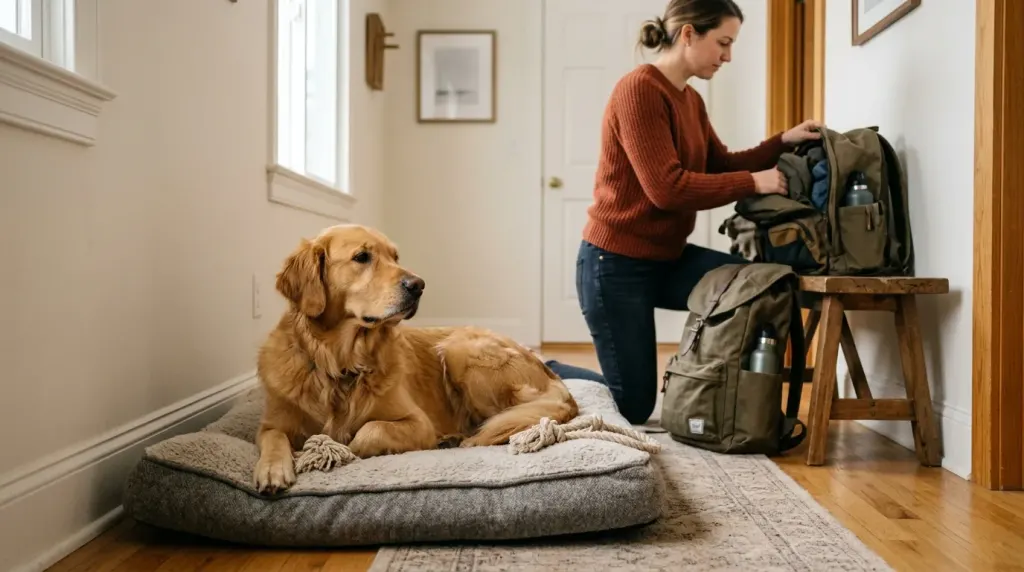
The essential difference lies in the dog’s emotional state when alone. A typical “Velcro” Golden enjoys lying on your feet while you work, but when you leave the house, they will happily curl up on their dog bed, chew a toy, or sleep until you return. In contrast, a dog with separation anxiety undergoes a severe panic attack the moment isolation occurs, losing the ability to self-soothe.
| Behavioral Indicator | Clingy “Velcro” Behavior | Clinical Separation Anxiety |
|---|---|---|
| Response When Owner Is Home | Follows room-to-room, leans on legs, rests near feet | Follows frantically, pants excessively, unable to settle |
| Reaction to Departure Cues | Calmly observes owner picking up keys or shoes | Trembling, pacing, whining, dilated pupils, frantic clinging |
| Behavior While Solitary | Sleeps comfortably, chews safe toys, looks out windows | Non-stop barking, howling, door scratching, escape attempts |
| Appetite When Left Alone | Consumes meals, treats, and water normally | Completely refuses even high-value treats and fresh food |
| Physiological Stress Signs | None; relaxed heart rate, soft facial expression | Heavy drooling, excessive shedding, self-inflicted lick granulomas |
| Elimination Habits | Maintains consistent house-training | Stress-induced indoor urination or defecation near exits |
Just as well-socialized French Bulldogs make great household pets by remaining peaceful when left alone, affectionate Goldens show their devotion through quiet companionship rather than destructive panic. Similarly, knowing that Pugs are gentle companion dogs helps clarify that natural breed loyalty does not automatically equal clinical separation distress.
When a Golden Retriever displays true separation anxiety, the condition is an involuntary phobic response rather than a training failure or a spiteful reaction. If your dog exhibits multiple indicators from the right column of the comparison table, intervention from a licensed veterinarian or a certified professional dog trainer is essential to develop a desensitization plan.
Sudden Clinginess in Golden Retrievers: When It Signals a Medical Issue
When a previously independent Golden Retriever becomes intensely clingy overnight, it frequently indicates an underlying medical issue, pain, sensory decline (vision or hearing loss), or early Canine Cognitive Dysfunction (CCD) in senior dogs.
A sudden, uncharacteristic shift in behavior is one of the most reliable indicators of physical distress in dogs. Because canines cannot verbalize discomfort, they often express vulnerability by seeking out their trusted human protector for reassurance and physical defense.
Sensory decline is a primary cause of acute clinginess in middle-aged and older Golden Retrievers. As dogs age, conditions such as progressive retinal atrophy, cataracts, nuclear sclerosis, or age-related hearing loss can diminish their ability to interpret their environment. A dog that is losing vision or hearing will stick close to their owner’s legs, using human movement as an acoustic and physical guide dog in reverse. Similar to the care adjustments required during senior stages in Pug dogs, aging Golden Retrievers rely heavily on human proximity to compensate for diminished sensory sharpness. Sudden physical discomfort, such as painful red eye issues in French Bulldogs or acute ocular irritation, can make any dog feel vulnerable and stick close to their handler.
Physical pain and systemic illness also trigger protective clinginess. Common underlying medical causes include:
- Osteoarthritis and Joint Pain: Golden Retrievers are prone to hip and elbow dysplasia. When rising or walking becomes painful, dogs seek comfort and security near their handlers.
- Dental Disease and Oral Infections: Severe tooth pain or abscesses cause generalized stress and insecurity.
- Gastrointestinal Distress or Nausea: Pancreatitis, dietary indiscretion, or bloat can make a dog anxious and clingy before vomiting or obvious distress begins.
- Endocrine Disorders: Conditions like hypothyroidism or Cushing’s disease alter energy levels, metabolism, and emotional stability.
In senior dogs aged 8 years and older, sudden clinginess, especially when paired with confusion, pacing at night, or staring blankly into corners, can signal early Canine Cognitive Dysfunction (CCD), the canine equivalent of Alzheimer’s disease. Dogs with CCD become disoriented in familiar rooms and latch onto their owners as their sole remaining anchor of certainty. Sudden onset clinginess in an adult or senior Golden Retriever should never be dismissed as a simple personality quirk. When a previously independent dog abruptly begins shadowing or trembling, an immediate physical exam, orthopedic check, and blood panel help identify treatable underlying conditions.
Practical Solutions: How to Manage Clinginess and Foster Healthy Independence
Managing excessive clinginess requires a proactive combination of physical exercise, structured mental enrichment, calm departure routines, and positive reinforcement training that teaches your Golden Retriever to feel confident in their own space.
Fostering canine independence does not mean rejecting your dog’s natural affection. Instead, it creates healthy emotional boundaries so your Golden feels relaxed whether they are lying by your feet or resting in another room.
Implement the “Place” Command and Mat Training
Teaching your Golden Retriever a reliable “Place” cue is one of the most effective ways to establish physical space while keeping your dog calm:
- Select a comfortable dog bed, mat, or raised cot positioned 6 to 10 feet away from your primary workstation or sofa.
- Lure your dog to the mat, ask for a “Down”, and reward with small, high-value treats while they remain on the bed.
- Introduce the verbal cue “Place” and gradually increase the duration before rewarding.
- Slowly increase your physical distance, walking across the room while your dog remains settled on their designated mat.
- Provide a long-lasting chew, such as a stuffed KONG or yak cheese chew, exclusively on their place mat to build positive associations with independent rest.
Provide Daily Physical and Mental Fulfillment
A tired Golden Retriever is a peaceful, independent dog. Adult Goldens need between 60 and 90 minutes of combined daily exercise to satisfy their sporting heritage. While smaller companion breeds like Pugs adapt well to apartment living with moderate indoor activity, a sporting retriever needs dedicated outdoor work to avoid turning excess energy into relentless shadowing.
- Incorporate interactive retrieval games, swimming sessions, and brisk hill walks.
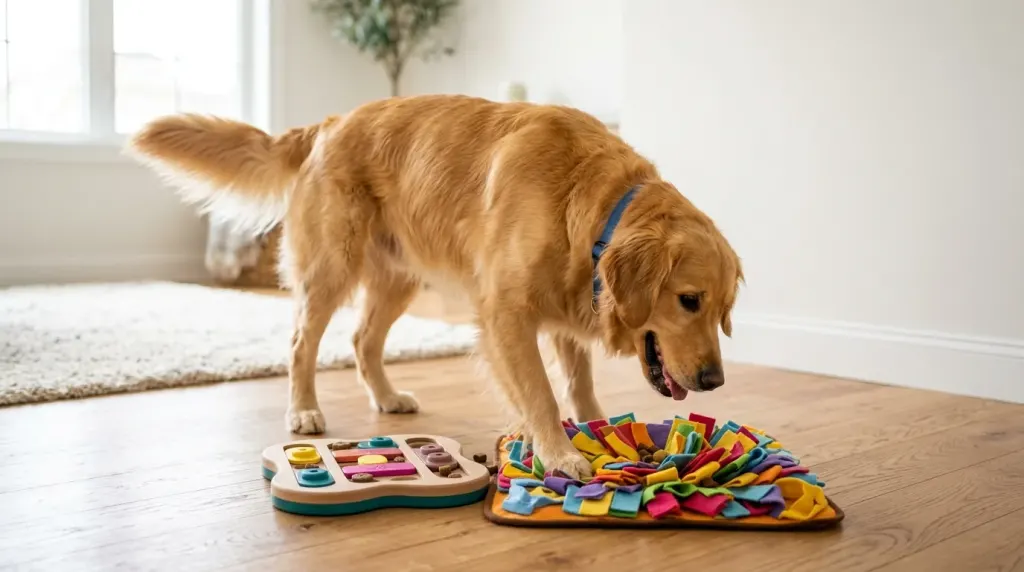
- Replace standard food bowls with snuffle mats, puzzle feeders, or scatter feeding across the lawn to stimulate their natural foraging instincts.
- Practice short 5-minute obedience and trick training sessions daily to drain mental stamina.
Desensitize Departure Cues
If your Golden becomes anxious or excessively attentive whenever you prepare to leave, desensitize your departure triggers:
- Pick up your car keys, put on your coat, or touch the front doorknob, and then sit back down on the sofa without leaving.
- Repeat this exercise several times daily until your dog stops jumping up or tracking your departure rituals.
Practice Low-Key Greetings and Departures
High-energy hellos and goodbyes amplify emotional highs and lows, reinforcing clingy dependency:
- When leaving the house, depart calmly without elaborate apologies or prolonged petting.
- When returning home, ignore demanding jumps and frantic whining for the first 2 to 3 minutes until all four paws are on the floor and your dog is calm, then offer gentle, relaxed affection.
Analysis: The Double-Edged Sword of High Biddability in Golden Retrievers
The Golden Retriever’s reputation as an adaptable, highly trainable family dog is directly linked to its Velcro nature. Managing clinginess focuses on channeling this innate loyalty into confident companionship while preserving natural affection.
The very psychological traits that make Golden Retrievers the premier choice for guide work, medical alert service, search-and-rescue, and therapy assistance are the exact qualities that produce clinginess in a domestic home. Their profound sensitivity to human body language, emotional tone, and physical movement makes them intuitive companions. When guided with gentle consistency, this biddability creates an extraordinary family bond. However, when left unstructured, that same sensitivity can morph into over-dependence, demand-barking, or persistent shadowing.
Examining therapy dog temperaments in Pugs highlights how different breeds channel social empathy into human service, with Golden Retrievers applying their retriever biddability to complex tasks.
Ultimately, living with a Golden Retriever means embracing a dog that genuinely loves your company. By establishing predictable daily routines, providing ample physical and cognitive outlets, and rewarding calm, independent behavior, you can enjoy the deep warmth of a loyal retriever while ensuring they possess the confidence to thrive both by your side and on their own.
Frequently Asked Questions About Clingy Golden Retrievers
Are Golden Retrievers velcro dogs?
Yes, Golden Retrievers are widely considered one of the classic “Velcro dog” breeds. Because they were selectively developed to work side-by-side with humans as retrieving gundogs, they possess a strong genetic desire to remain in close physical proximity to their human family members at all times.
Why does my Golden Retriever follow me to the bathroom?
Your Golden Retriever follows you into the bathroom due to a blend of curiosity, pack instinct, and learned behavior. In canine psychology, pack members naturally accompany one another into enclosed spaces, and dogs often feel an instinctual duty to keep watch over you during routine daily movements.
Do Golden Retrievers get attached to only one person?
While Golden Retrievers are famously affectionate with the entire household, many individual Goldens form a primary attachment to the person who provides the majority of their feeding, training, daily exercise, and positive reinforcement. However, they rarely show exclusive or aloof behavior toward other family members.
Do male or female Golden Retrievers tend to be more clingy?
Both sexes are exceptionally affectionate, but many owners and breeders observe that male Golden Retrievers tend to be more consistently eager-to-please and outwardly needy for physical affection, while intact females often exhibit acute spikes in clinginess specifically around their seasonal heat cycles.
Can a clingy Golden Retriever live comfortably in an apartment?
Yes, a clingy Golden Retriever can thrive in an apartment provided their daily physical exercise (at least 60 to 90 minutes) and mental enrichment needs are rigorously met. Ensuring adequate stimulation prevents clingy tendencies from escalating into vocalization or restlessness in smaller living spaces.
Leave a Reply