
Table of Contents
Yes. When dog owners ask do Pug dogs shed, the direct answer is that Pugs shed hair continuously throughout the year. Despite their short coat length, most Pugs have a dense double coat composed of a soft insulating undercoat beneath smooth guard hairs. This structural density causes Pugs to release hair daily, with shedding volume peaking during seasonal transitions in spring and autumn.
- Pugs shed heavily year-round because their dense double coat constantly sheds dead hair fibers.
- Seasonal shedding increases during spring and autumn when double-coated Pugs blow their undercoat.
- Black Pugs with a single coat shed moderately, whereas double-coated fawn Pugs shed heavily.
- Weekly grooming with a rubber curry brush removes loose undercoat before it settles on furniture.
- Patchy hair loss, redness, or constant itching indicates a medical issue requiring veterinary care.
Do Pug Dogs Shed Hair? The Short Answer
Prospective dog owners often ask whether Pug dogs shed hair before bringing a puppy home. Yes, Pugs shed hair consistently. While their smooth, short coat suggests low maintenance, a Pug is definitely a shedding dog that releases hair every day. First-time owners are often surprised by how much loose fur gathers on sofas, car seats, and clothing.
The shedding terminology can vary by region. Owners in different countries ask whether Pug dogs malt, molt, or moult during warmer months. These terms describe the exact same biological process of natural coat turnover. Whether you spell the cycle as molt or moult, the follicle mechanism is identical: mature hairs detach from the follicle once their growth cycle finishes, making way for new hair growth.
Why Do Pugs Shed So Much?
Pugs drop substantial amounts of fur because of their remarkable hair follicle density. A Pug’s skin holds approximately 600 individual hair follicles per square inch. Many of these follicles support compound hair clusters, producing both primary guard hairs and secondary undercoat fibers.
According to the American Kennel Club (AKC) Pug breed standards, the Pug coat is fine, smooth, and short. However, short hair length does not mean low shedding. Because hair growth phases cycle rapidly in Pugs, thousands of dead fibers detach daily across the body. When indoor lighting and regulated home temperatures alter natural light cycles, this hair turnover continues without a prolonged winter rest phase.
Single vs Double Coat: Does Color Matter?
Coat genetics explain why shedding volume differs noticeably between individual dogs. Most Pugs possess a double coat: a dense, woolly undercoat that traps heat close to the skin, shielded by a smooth outer coat. This dual layer protects against temperature fluctuations but creates constant loose undercoat fur.
A minority of Pugs have a single coat that lacks the insulating underlayer. Single-coated Pugs shed far less fur because they only shed their outer guard hairs. Single coats appear most frequently in solid black Pugs, though black Pugs can also inherit a double coat. Fawn, apricot, and silver-fawn Pugs almost universally possess dense double coats. Beyond coat thickness, evaluating the overall facial wrinkles and coat appearance provides helpful context for managing facial skin folds alongside daily coat maintenance.
| Coat Type | Undercoat Presence | Daily Shedding Volume | Seasonal Peak Intensity | Common Color Associations |
|---|---|---|---|---|
| Single Coat | Absent | Low to moderate | Minimal seasonal change | Frequently seen in black Pugs |
| Double Coat | Present and dense | High | Heavy biannual blow coat | Standard in fawn, apricot, and silver-fawn |
How Much Do Pug Dogs Shed Normally?
Normal Pug shedding produces a steady daily scatter of fine, short hairs rather than large tufts. Because Pug hair is short and straight, shed strands easily weave into woven upholstery, carpets, and cotton clothing. Double-coated Pugs lose significantly more hair volume by weight than most single-coated toy breeds.
Pug Shedding vs Other Small Breeds
When compared to other popular small companion dogs, Pugs rank among the heaviest shedders in their size group. Poodles and Bichon Frises carry continuously growing hair that traps dead strands within curls until brushed out. In contrast, Pugs release straight, detached hairs directly into the surrounding environment.
Even among short-haired breeds like Chihuahuas or French Bulldogs, double-coated Pugs produce more loose undercoat due to their higher follicle density per square inch.
| Breed | Coat Type | Shedding Level | Fur Texture and Behavior |
|---|---|---|---|
| Pug (Double-Coated) | Short double coat | High | Fine, straight hairs that drop continuously |
| French Bulldog | Short single coat | Low to moderate | Coarse short hairs with lower daily volume |
| Chihuahua (Smooth) | Short single/double coat | Moderate | Fine hairs with moderate seasonal increase |
| Poodle (Toy/Miniature) | Curly single coat | Very low | Low dander, curls trap dead hair until brushed |
Seasonal Shedding: When Do Pugs “Blow Their Coat”?
Many double-coated Pugs experience heavier shedding periods during seasonal shifts, a process often described as blowing their coat. As daylight and temperatures change in spring, the body naturally releases parts of the dense winter undercoat. In autumn, another shift occurs as the summer coat thins out to allow thicker insulating undercoat growth for cooler weather.
The duration and volume of this seasonal shed vary by individual dog, climate, and living environment. For Pugs living primarily indoors, artificial lighting and climate control frequently moderate these seasonal triggers into a steady year-round shedding pattern rather than distinct peak windows. Monitoring your pet’s physical changes, including coat changes in senior pugs, helps distinguish normal age-related thinning from seasonal coat loss.
When Is Pug Shedding Abnormal?
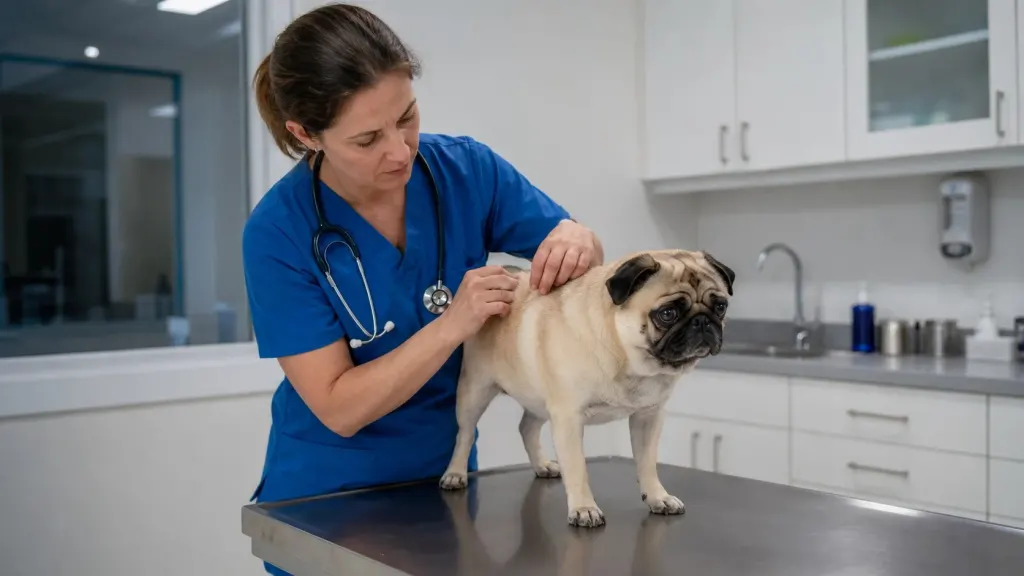
Healthy Pug shedding is distributed evenly across the torso, neck, and thighs without creating bare skin, redness, or scabs. When shedding produces distinct bald patches, crusty sores, or severe behavioral irritation, the hair loss is pathological rather than routine.
Medical Causes of Excessive Hair Loss
According to the VCA Animal Hospitals guide on canine alopecia, sudden or patchy hair loss in dogs typically stems from identifiable medical conditions rather than normal coat cycling:
- Allergic Dermatitis: Hypersensitivity to flea bites, food proteins, or environmental allergens triggers intense scratching, licking, and secondary hair loss.
- Skin Fold Infections: Trapped moisture in facial or tail folds allows bacterial or Malassezia yeast overgrowth, causing localized inflammation and fur loss.
- Mite Infestations: Demodex or Sarcoptes mites damage hair roots, leading to focal bald spots around the eyes, muzzle, and paws.
- Endocrine Imbalances: Hypothyroidism or Cushing’s disease disrupts hormone production, causing symmetrical hair thinning along the flanks without active itching.
- Nutritional Imbalances: Diets deficient in essential fatty acids or zinc result in brittle hair shafts and dry, flaky skin.
Note: If sudden hair loss is accompanied by excessive licking behavior in pugs or signs of ear inflammation that require routine care for a pug’s ears, schedule a prompt veterinary wellness checkup.
How to Reduce Shedding in Pug Dogs
While no method can stop a healthy Pug from shedding, owners can significantly reduce loose fur around the home using a structured coat care routine. Effective management combines mechanical grooming, appropriate bathing intervals, balanced nutrition, and home hygiene.
Proper Brushing Techniques for Pugs
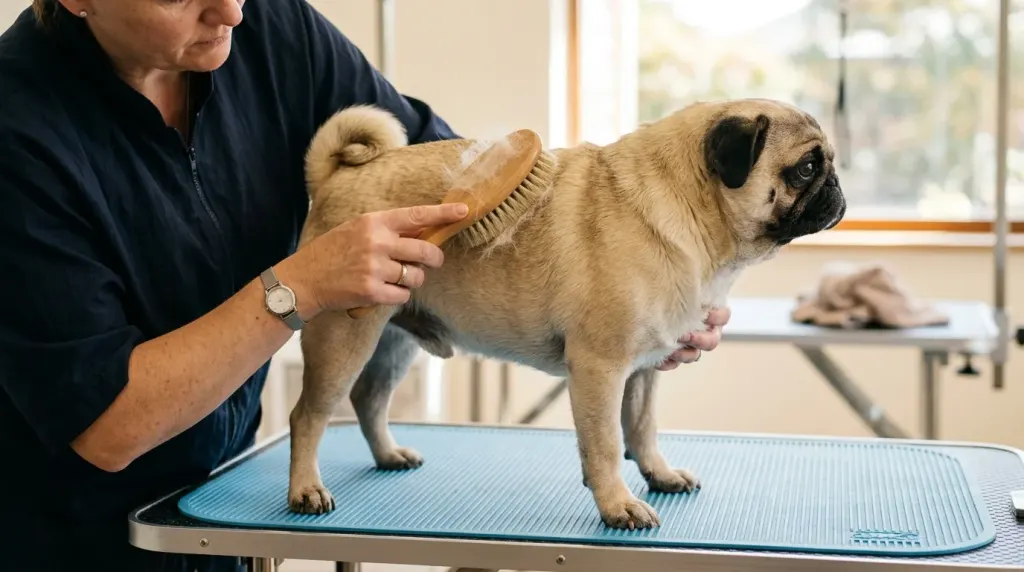
Brushing is the most effective way to manage Pug shedding. Regular sessions catch dead undercoat hairs before they fall onto furniture and carpets.
- Select the Proper Tool: Use a rubber curry brush or grooming mitt for regular maintenance. Rubber nubs grip loose undercoat hairs and stimulate skin circulation without scratching delicate skin. A medium-tooth undercoat de-shedding tool can be used gently during heavier shedding periods.
- Follow Hair Growth Direction: Stroke gently along the natural lay of the coat from neck to tail, covering the back, sides, and chest.
- Establish a Consistent Schedule: Regular brushing a few times each week keeps loose fur manageable for most double-coated Pugs, while daily short sessions may be helpful during peak seasonal coat transitions depending on the individual dog’s coat density.
- Protect Sensitive Wrinkles: Never drag metal de-shedding blades over facial folds, eyes, or leg joints. Clean facial wrinkles separately using a soft damp cloth.
Integrating regular grooming into a wider daily care routine for a pug keeps the coat shiny and supports skin comfort.
Bathing and Nutrition for Shedding Control
Bathing helps release trapped dead undercoat, but excessive washing strips the skin’s protective lipid barrier and worsens shedding.
- Bathing Schedule: Bathe your Pug every 4 to 6 weeks using a gentle, soap-free oatmeal or hypoallergenic dog shampoo. Warm water loosens dead undercoat fibers during rinsing. Dry the coat thoroughly with a towel, paying close attention to moisture inside skin folds.
- Dietary Fatty Acids: Feeding a balanced nutritional diet for a pug with omega-3 and omega-6 fatty acids supports healthy hair follicles. Adding vet-approved salmon oil or flaxseed oil reduces skin dryness and minimizes brittle hair breakage.
- Hydration: Ensure constant access to fresh water, as mild dehydration dries out the epidermis and increases hair detachment.
Managing Shed Fur in Your Home
Living comfortably with a double-coated Pug requires practical household strategies:
- HEPA Filtration: Use a vacuum cleaner fitted with a certified HEPA filter to capture fine hair and pet dander from carpets and fabric furniture.
- Washable Furniture Throws: Place washable blankets on your Pug’s favorite sleeping spots to catch loose fur before it penetrates couch cushions.
- Rubber Squeegees for Rugs: A simple rubber window squeegee pulled across rugs easily lifts embedded Pug hairs that standard vacuum brushes miss.
Managing Pug shedding is entirely about regular maintenance rather than extreme interventions. Shaving a double-coated Pug does not prevent shedding; it merely produces short, prickly stubble while removing thermal insulation and exposing delicate skin to sunburn.
Frequently Asked Questions About Pug Shedding
Is a Pug Considered a High-Shedding Dog?
Yes, Pugs are considered high-shedding companion dogs. Despite their short hair length, their dense double coat and high follicle count produce a continuous supply of loose fur that requires regular weekly brushing.
Do Pugs Shed All Year Long or Only in Specific Seasons?
Pugs shed all year long with a steady daily baseline of hair loss. However, double-coated Pugs experience heavier seasonal shedding during spring and autumn when they blow their undercoat to adjust to seasonal temperature changes.
Can You Completely Stop a Pug from Shedding?
No, you cannot stop a healthy Pug from shedding. Shedding is a necessary biological cycle that replaces old, worn hair with fresh growth. You can substantially reduce stray fur in your home through regular brushing, appropriate bathing, and omega-3 nutrition.
Does Shaving a Pug Stop Them from Shedding Hair?
No, shaving does not stop shedding and can harm your Pug. Shaved hairs still shed at the root as short, prickly stubble. Furthermore, shaving removes the insulating undercoat, increasing the risk of overheating, sunburn, and permanent coat texture damage.
Do Black Pugs Shed Less Than Fawn Pugs?
Black Pugs often shed less than fawn Pugs because a higher percentage of black Pugs carry a single coat without a dense undercoat. However, some black Pugs inherit a double coat, in which case they shed just as heavily as fawn varieties.
How Often Should I Brush My Pug to Control Shedding?
A double-coated Pug generally benefits from brushing a few times each week to remove loose undercoat fibers. During peak seasonal shedding phases, short daily brushing sessions with a rubber curry brush help collect detached hair before it spreads onto household surfaces.
Leave a Reply