

Table of Contents
Are French Bulldogs hypoallergenic? No, French Bulldogs are not hypoallergenic. No dog breed is completely allergen-free or 100% hypoallergenic. French Bulldogs produce Can f 1 allergen proteins in their dander, saliva, and urine. Because they have a short single coat that sheds continuously and deep facial wrinkles where moisture and oils accumulate, they actively disperse dander into the household environment.
- French Bulldogs are not hypoallergenic; they produce the same allergy-triggering proteins (Can f 1 to Can f 7) as all other dog breeds.
- Unlike curly-coated breeds that trap loose hairs, French Bulldogs shed stiff hairs and dander freely onto furniture and flooring.
- Deep facial skin folds create localized warm areas where saliva, tears, and dander build up.
- Strict environmental management including H13 HEPA air purifiers, pet-free bedrooms, and regular bathing can help mild allergy sufferers live with a Frenchie.
What “Hypoallergenic” Actually Means for Dogs
For anyone asking, “are French Bulldogs hypoallergenic?”, the short answer is no. The term “hypoallergenic” simply implies a lower likelihood of causing an allergic reaction, not that a dog is completely allergy-free. When exploring what is a French Bulldog and whether the breed fits your home, it is important to know that according to the American Kennel Club, no dog breed is 100% hypoallergenic. Every single dog produces allergens, regardless of hair length or coat type.
Margee Louisias, MD, MPH, an allergist at Brigham and Women’s Faulkner Hospital, puts it plainly: “There is no such thing as a hypoallergenic cat or dog.” Allergic reactions occur when a person’s immune system overreacts to harmless proteins, triggering the production of IgE antibodies and the subsequent release of histamine. Those pet allergens are secreted from a dog’s skin, hair, dander and saliva, so no coat type keeps them out of your home.
Medical literature on PubMed identifies the primary culprit for human allergic reactions as the Can f 1 protein, which accounts for approximately 50% to 75% of dog allergy sensitivities. This protein is a lipocalin allergen produced in the dog’s tongue (von Ebner’s glands) and distributed onto the skin through licking and natural physiological processes. Because Can f 1 proteins attach to fine, microscopic dander particles, these allergen flakes become easily airborne. They remain suspended in household air for hours after the dog has left the room and can easily penetrate deep into human airways. Scientists have identified at least six other major dog allergens (Can f 2 through Can f 7), meaning allergy profiles are complex and multifaceted.
Why French Bulldogs Are Not Considered Hypoallergenic
French Bulldogs possess a short single coat consisting mostly of primary hairs. They undergo a continuous growth and shedding cycle (anagen and telogen phases). Because they lack a dense, woolly undercoat to catch and hold onto the shedding material, stiff hairs and dead skin cells fall continuously into the environment. These short hairs carry dander and dry saliva directly into your living space, settling on carpets, embedding deeply into upholstery fibers, and floating in the air.
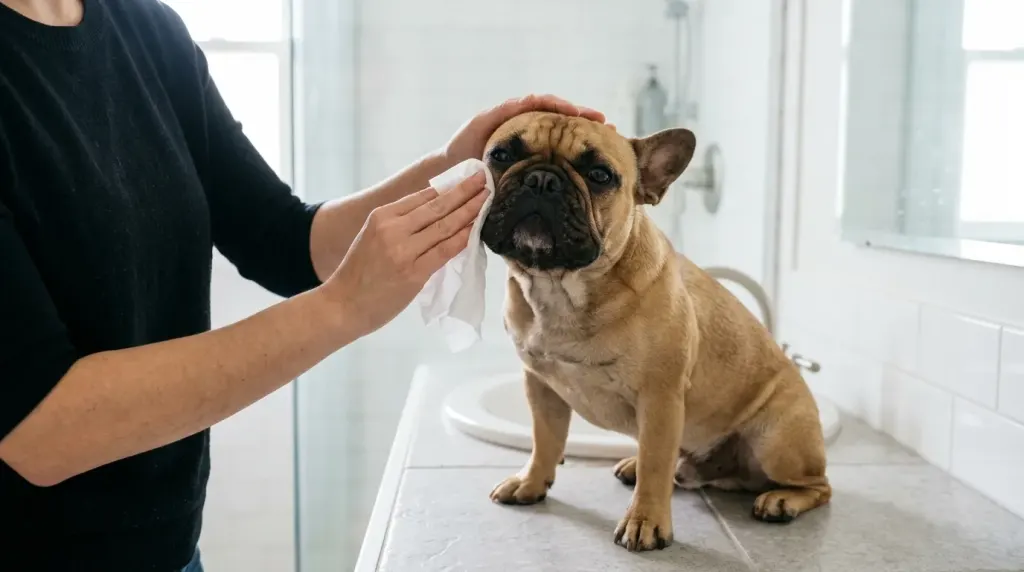
Furthermore, they are a brachycephalic (flat-faced) breed characterized by deep facial skin folds. The anatomy of these wrinkles creates a dark, warm, and moist environment where natural skin oils from sebaceous glands, tears, and saliva accumulate. This biological buildup creates a highly concentrated localized source of the Can f 1 allergen right on the dog’s face. If you already follow a facial-fold routine to prevent yeast or bacterial pyoderma (skin infections), you can extend the same diligent care to how to clean French Bulldog ears for full head-area hygiene and allergen reduction.
Additionally, French Bulldogs are highly prone to canine atopic dermatitis and food allergies, which affect up to 20% of the breed. When a Frenchie experiences an allergic flare-up, their skin barrier weakens, leading to intense scratching, licking, and an exponentially higher rate of skin sloughing. A French Bulldog suffering from skin disease will shed significantly more allergen-loaded dander than a dog with healthy skin. Their frequent licking of paws and preference for physical closeness further increase human exposure to saliva proteins.
How French Bulldog Shedding Compares to Low-Allergen Breeds
Breeds like Poodles and Bichon Frises are often recommended for allergy sufferers, but they still produce the exact same Can f 1 allergen. The critical difference is entirely mechanical. Curly-coated breeds have hair that grows continuously and sheds minimally, trapping whatever loose dander does detach tightly within their curls until they are actively brushed or bathed.
French Bulldogs completely lack this trapping mechanism. Their straight, shedding hair drops dander straight onto the floor. If your dog seems uncomfortable or sheds excessively, understanding why is my French Bulldog shaking helps rule out skin conditions like atopic dermatitis or parasitic infections, which drastically accelerate skin sloughing and worsen dander spread.
| Breed | Coat Type | Shedding Level | Dander Retention | Allergen Dispersal |
|---|---|---|---|---|
| French Bulldog | Short single coat | Moderate (continuous) | Low (sheds freely) | High direct environmental release |
| Poodle | Curly single hair coat | Very Low | High (traps dander in curls) | Low (requires grooming removal) |
| Bichon Frise | Dense double coat | Minimal | High (traps dander in coat) | Low (requires grooming removal) |
| Schnauzer | Wirehaired | Low | Moderate | Moderate (plucked via hand-stripping) |
Managing Allergies If You Still Want a French Bulldog
You can reduce airborne Can f 1 levels in your home with a strict, multi-layered environmental routine. Clinical studies show that using HEPA (High-Efficiency Particulate Air) cleaners can cut airborne dog allergens by up to 90% when the dog is excluded from the room. A medical-grade H13 or H14 HEPA filter traps 99.97% of particles down to 0.3 microns, which is essential because dog allergens easily fall within the 2.5 to 10 micron range.
- Install HEPA air purifiers: Place appropriately sized units in main living areas and bedrooms. Ensure the CADR (Clean Air Delivery Rate) matches the room volume, aiming for at least 4 to 5 air changes per hour (ACH).
- Establish pet-free zones: Keep the French Bulldog entirely out of the bedroom to maintain an allergen-free sleeping zone, giving your immune system eight continuous hours of relief. Keep doors completely closed, not just cracked.
- Upgrade home filtration: Change your HVAC filters to MERV 13 or higher to trap circulating dander. Monitor indoor humidity levels; maintaining humidity below 50% helps prevent suspended allergen particles from clinging to mold spores or dust mites.
- Modify furniture and flooring: Replace wall-to-wall carpeting with hard surface flooring (wood, tile, or vinyl) wherever possible. Carpets hold up to 100 times more allergens than bare floors. Choose leather or synthetic leather furniture over woven fabrics that trap dander.
- Frequent vacuuming and laundry: Vacuum floors and upholstery twice a week using a sealed-system machine with a true HEPA filter. Wash dog bedding and human throw blankets weekly in hot water (at least 130°F / 54°C) to effectively denature Can f 1 proteins.
- Targeted canine hygiene: Clean facial wrinkles daily with specialized pet wipes containing chlorhexidine or ketoconazole if recommended by a vet. Owners who want a full protocol can also learn how to express French Bulldog glands as part of a broader hygiene routine. Bathe your dog every two to three weeks. Use a moisturizing hypoallergenic shampoo containing oatmeal, ceramides, or phytosphingosine to avoid stripping natural skin oils; overwashing causes dry skin to flake off faster and actually increases airborne dander.
Are Some French Bulldogs Less Allergenic Than Others?
Can f 1 production remains biologically consistent across different coat colors and variations. However, intact male dogs secrete a specific androgen-regulated protein called the Can f 5 allergen from their prostate. This prostatic kallikrein adds a massive additional allergen source through their urine. Up to 30% of dog-allergic individuals are sensitized exclusively to Can f 5.
Spaying a female or neutering a male dog removes this specific allergen completely, substantially narrowing the overall allergen load the dog produces. Readers weighing when to neuter a French Bulldog can definitively factor allergen management into that timing decision, as early neutering eliminates Can f 5 production.
French Bulldog Temperament and Household Fit Beyond Allergies
French Bulldogs are notoriously companion-driven and are often described as “velcro dogs.” They vastly prefer constant physical closeness with their owners, whether resting on laps, leaning against legs, or sleeping on feet. Their strong companionship drive is a core part of why are French Bulldogs so popular, but it also means allergy-prone owners experience exponentially more direct contact than they would with independent working breeds.

This frequent touching transfers saliva and dander directly onto human skin and clothes, which can trigger contact urticaria (localized hives) and immediate respiratory symptoms even in a thoroughly vacuumed house. Furthermore, because French Bulldogs are short in stature and close to the ground, their coats act like dust mops, easily picking up environmental allergens like grass pollen, weed pollen, and outdoor mold spores. When they sit on your lap, they introduce these secondary allergens directly into your breathing zone.
Is a French Bulldog Right for a Family With Allergy-Prone Members?
Spend at least two to four hours in direct contact with a French Bulldog in an enclosed, indoor space before committing to adoption. Hold the dog, pet its coat vigorously against the grain of the hair, and allow it to lick your hand to gauge your immediate immune response. Pay attention to delayed reactions as well, since nasal congestion and eye irritation can sometimes take up to 24 hours to peak after exposure.
Families running a trial visit should also confirm the puppy’s background and consider consulting a board-certified allergist for formal testing. Component-resolved diagnostics (a specialized blood test) can pinpoint exactly which proteins (like Can f 1 vs Can f 5) trigger your symptoms. Understanding that up to 30% of dog-allergic individuals are sensitized exclusively to the Can f 5 protein found only in intact males can completely change your adoption strategy. Reviewing how much are French Bulldogs helps budget for allergist visits, specialized air purifiers (which can cost $200 to $800 per unit), and premium grooming supplies alongside the initial acquisition cost.
FAQ
Can someone with mild allergies live with a French Bulldog?
Yes, individuals with mild dog allergies can live comfortably with a French Bulldog by maintaining strict, relentless environmental hygiene. Using H13 HEPA air purifiers, washing dog bedding weekly in hot water, wiping facial folds daily to remove concentrated saliva, and establishing a strict pet-free bedroom zone drastically reduce daily symptom triggers.
Are Frenchie hypoallergenic mixes a safer bet?
Mixing a French Bulldog with a low-shedding breed like a Poodle to create a “French Boodle” does not guarantee a hypoallergenic puppy. First-generation (F1) crosses inherit completely unpredictable coat genetics. A mixed puppy may easily retain the continuous shedding coat and free-falling dander traits of the French Bulldog parent, offering zero allergy relief compared to a purebred Frenchie.
Do female French Bulldogs produce fewer allergens than males?
Yes, female French Bulldogs and neutered males inherently produce fewer allergens than intact males. The Can f 5 allergen is a prostatic protein produced only by intact male dogs and spread via urine. Eliminating this specific protein by choosing a female or neutering a male removes one major trigger, though regular bathing and home cleanliness still have a far greater impact on overall household allergen levels.
How often should you bathe a French Bulldog to reduce dander?
Bathe your French Bulldog every two to three weeks using a moisturizing, soap-free, or oatmeal-based hypoallergenic shampoo. Washing the dog more frequently than once every two weeks strips essential natural skin oils. When the skin barrier is compromised, dry skin flakes off much faster, which paradoxically increases the amount of airborne dander in your home.


Leave a Reply