
Table of Contents
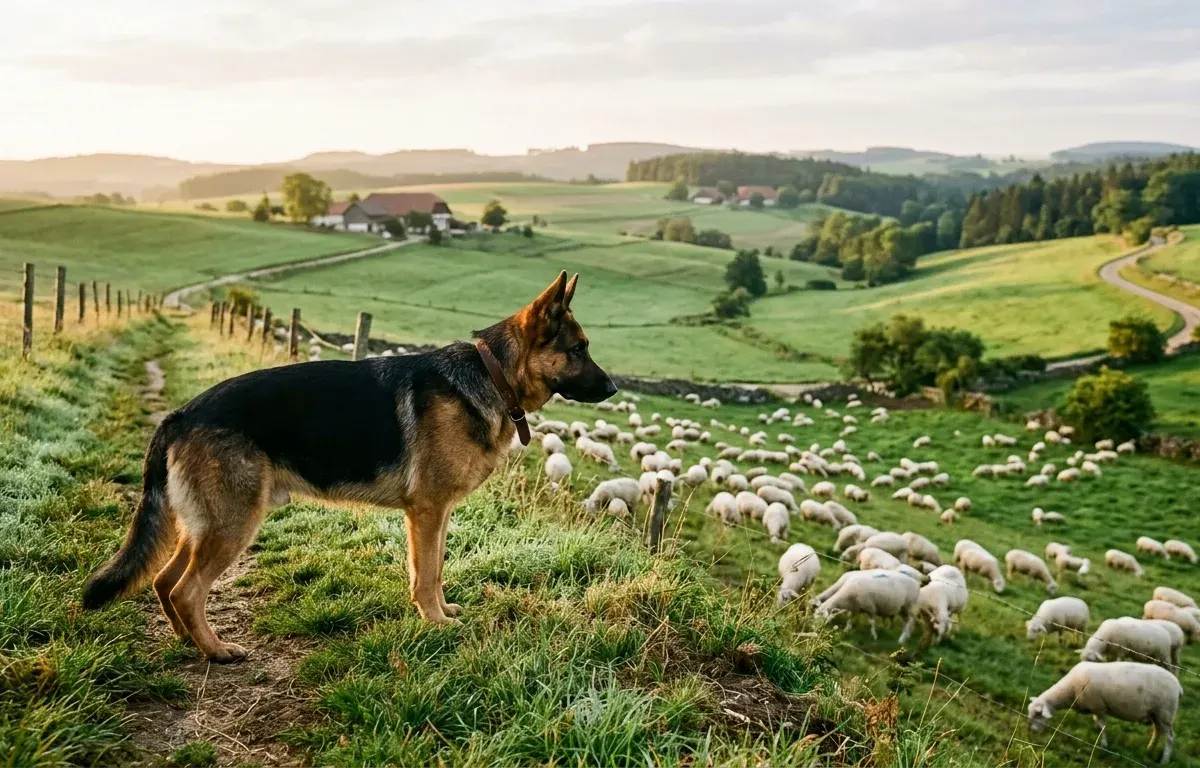
What were German Shepherds bred for? The breed was originally developed in Germany in 1899 as versatile pastoral tending dogs. Their primary job was boundary herding: patrolling unfenced grazing strips to keep sheep within designated pastures and protecting flocks from predators. Because industrialization reduced grazing land in the early twentieth century, breeders adapted the dog's intelligence, athletic endurance, and biddability toward military communication, police patrol, search and rescue, guide dog assistance, and structured family protection.
- Developed in 1899 by Captain Max von Stephanitz from regional German herding landraces.
- Functioned as living fences through boundary tending rather than fetching or driving stock.
- Transitioned into military messenger, sentry, and ambulance roles during World War I and World War II.
- Standardized through the Verein für Deutsche Schäferhunde (SV) with utility prioritized over cosmetic traits.
- Modern roles include police K9 work, scent detection, service dog assistance, and active family companionship.
What Were German Shepherds Bred For?
German Shepherds were bred primarily to serve as all-around pastoral tending dogs, working long hours alongside shepherds across rural Germany. Unlike gathering breeds such as the Border Collie that collect and drive scattered livestock across open hills, the German Shepherd operated as a tending shepherd dog, known in German as a Hütehund.
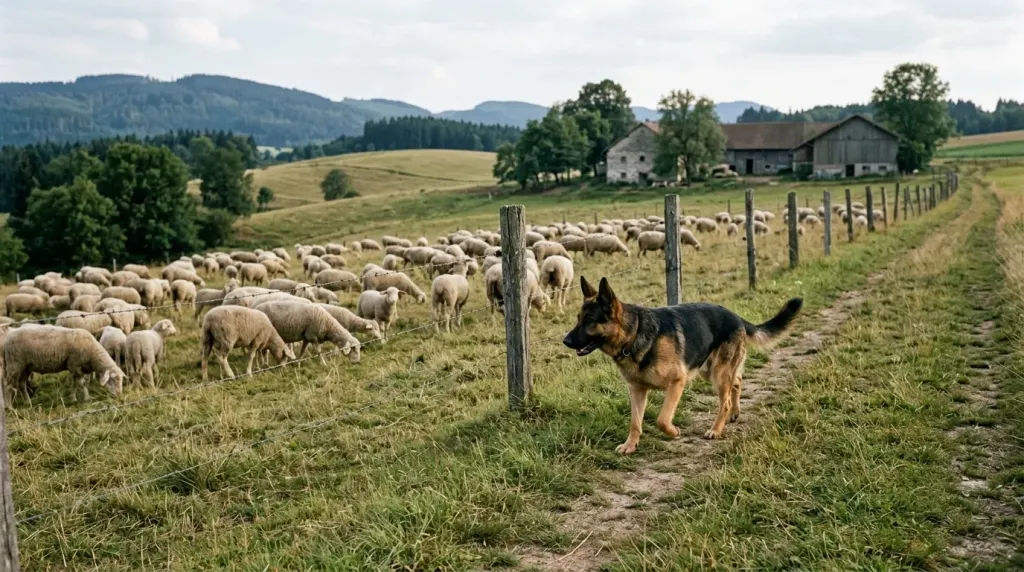
In nineteenth-century Germany, farmland was commonly divided into narrow grazing strips bordered by planted agricultural crops, with no physical fences separating them. Shepherds required a dog capable of acting as a living boundary. The dog trotted steadily along the perimeter lines, preventing sheep from straying into adjacent wheat or vegetable fields while defending the flock against roaming predators and stray canines.
This demanding field work required a distinct combination of physical and mental attributes:
- Endurance and effortless gait: A specialized flying trot allowed the dog to cover dozens of miles daily across rough terrain with minimal energy expenditure.
- Keen territorial awareness: The dog learned field boundaries quickly and reacted instantly when livestock drifted across the boundary line.
- Controlled temperament: The dog needed sufficient assertiveness to turn stubborn rams without biting or causing panic within the flock.
Understanding this pastoral origin clarifies the breed’s fundamental nature. While companion toy breeds were developed specifically for indoor companionship, as documented in historical accounts of what pug dogs were bred for, the German Shepherd was engineered for physical labor, mental focus, and field utility. While compact companion morphology defines what a Pug dog looks like, the German Shepherd’s deep chest, strong pasterns, and balanced frame were built for sustained outdoor work.
Why Were German Shepherds Bred?
German Shepherds were bred to create a standardized national working dog that combined the finest qualities of regional herding landraces into one versatile breed. Before the late nineteenth century, various regions across Germany maintained distinct sheepdogs. In northern and central regions like Thuringia, herding dogs were typically smaller, agile, and gray-coated with upright prick ears. In southern regions like Württemberg, the dogs were larger, heavier-boned, possessed longer coats, and exhibited superior stamina.
Captain Max von Stephanitz, a former German cavalry officer who studied at the Veterinary College in Berlin, recognized that rapid industrialization and modern fencing would soon reduce traditional sheep grazing. He believed that unless these pastoral dogs were standardized and repurposed for civic and military work, their intelligence and work ethic would disappear.
Unlike breeds shaped primarily for domestic companionship, such as what French Bulldogs were bred for, von Stephanitz established a strict philosophy where physical appearance was entirely subordinate to working utility. In developing his breeding program, much like breeders examining what breeds make a French Bulldog for specific physical attributes, von Stephanitz crossed agile Thuringian stock with sturdy Württemberg lines to balance size, courage, and trainability.
Von Stephanitz summarized his breeding philosophy in a foundational motto: “Utility and intelligence are the true measure of a working dog.” He maintained that utility was the only true criterion of beauty, demanding that every German Shepherd possess sound nerve, physical soundness, and an eagerness to follow human direction.
When Were German Shepherds Bred?
The German Shepherd Dog was officially established in April 1899. While regional sheepdogs had worked German fields for centuries, the formal creation of the standardized breed occurred at a dog show in Karlsruhe, Germany.
During the 1899 Karlsruhe exhibition, Max von Stephanitz and his colleague Arthur Meyer observed a four-year-old working dog named Hektor Linksrhein. Bred by Friedrich Sparwasser of Frankfurt, the dog stood approximately 24 inches tall, possessed a wolf-gray coat, and exhibited exceptional intelligence, stability, and athleticism. Von Stephanitz purchased the dog immediately, renaming him Horand von Grafrath.
Following the purchase, von Stephanitz took several immediate steps to establish the breed:
- Founding the Breed Club: On April 22, 1899, von Stephanitz and Arthur Meyer founded the Verein für Deutsche Schäferhunde (Society for the German Shepherd Dog, or SV).
- First Studbook Entry: Horand von Grafrath was officially registered as SZ 1 (Schäferhund Zuchtbuch number 1), making him the foundational sire of the entire breed.
- Drafting the Breed Standard: The SV formulated the first official breed standard, defining structural proportions, movement, and mental stability requirements.
While ancestral crossbreeding research explores what dogs make a Pug, the German Shepherd represents a deliberate, scientifically documented nineteenth-century development. Unlike companion toy classifications detailing what type of dog is a Pug, the German Shepherd was categorized as a dedicated working pastoral breed designed for rigorous tasks.
What Was a German Shepherd Bred For Historically?
Historically, the German Shepherd transitioned rapidly from rural pastures into military and police service as twentieth-century conflicts demanded intelligent, trainable canines. As German farmland modernized, the SV actively promoted the breed to municipal police departments and the military, conducting formal trials to demonstrate the dog’s adaptability.
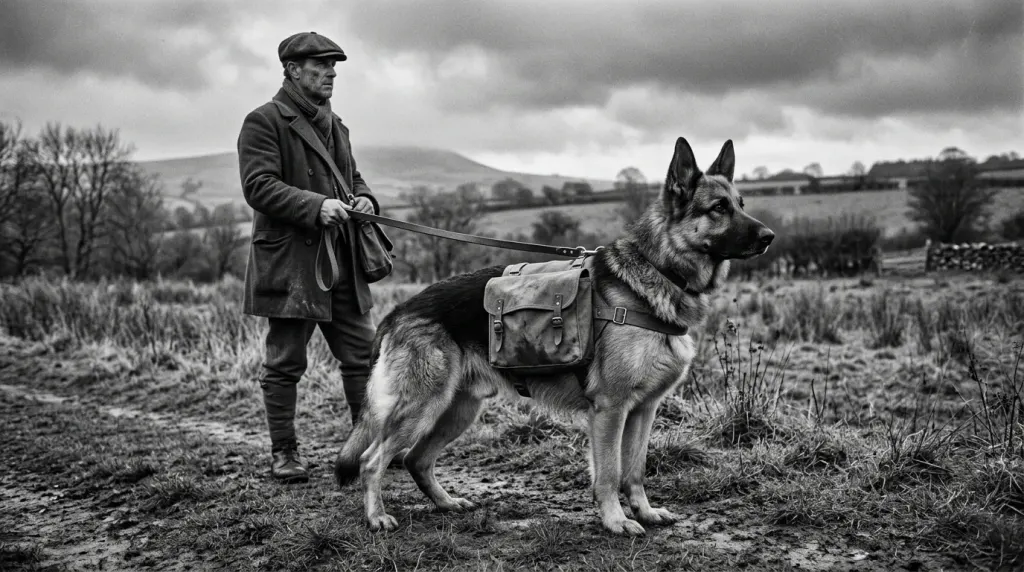
During World War I (1914 to 1918), thousands of German Shepherds served on the front lines. Their acute sensory capabilities and steady nerves made them invaluable for several high-risk wartime roles:
- Messenger delivery: Dogs navigated gunfire and artillery barrages to carry vital dispatches between front-line trenches and command posts.
- Sentry and patrol work: Dogs accompanied sentries along dark trench perimeters, alerting soldiers to approaching enemy raiding parties long before humans could detect them.
- Red Cross ambulance search: Known as Sanitätshunde, these dogs carried medical supplies into no-man’s-land and located wounded soldiers lying in shell craters.
- Ammunition and supply haulage: Dogs pulled light supply carts and transported packs across muddy ground impassable to motor vehicles.
Housing and transporting these large working dogs required substantial space and heavy equipment. While small companion dogs fit in compact transport gear, as seen when sizing what size crate for a French Bulldog, military working shepherds required heavy-duty 42-inch field crates and specialized harness equipment.
According to the AKC German Shepherd history archives, the breed’s bravery and versatility during both world wars solidified its global reputation as the premier working dog.
| Historical Era | Primary Utility | Key Traits Selected |
|---|---|---|
| Agricultural (Late 1800s) | Boundary tending and pasture flock protection | Endurance, boundary awareness, weather resistance |
| World War I (1914-1918) | Trench messenger, sentry, and casualty location | Steadfast courage, scent discrimination, handler loyalty |
| Interwar Period (1920s-1930s) | Police patrol, early guide dog work, border security | High biddability, calm environmental stability |
| World War II (1939-1945) | Mine detection, guard duty, tactical communication | Scent acuity, bite stability, obedience under fire |
| Modern Era (Post-1950s) | Search and rescue, narcotics detection, family protection | High trainability, athletic versatility, balanced drive |
What Were German Shepherds Bred to Do?
German Shepherds were bred to perform an extensive range of specialized working tasks that require problem-solving intelligence, physical agility, and handler focus. Their genetic background as tending dogs produced a canine capable of operating independently while remaining strictly responsive to voice and whistle commands.
In specialized twentieth and twenty-first-century working sectors, German Shepherds have been selectively trained for distinct disciplines:
- Law enforcement and tactical apprehension: Police K9 units rely on the breed for tracking suspects, locating hidden evidence, and apprehending dangerous individuals on command.
- Scent detection: With approximately 225 million olfactory receptors, German Shepherds excel at detecting narcotics, explosives, contraband agricultural items, and human remains.
- Search and rescue (SAR): Canine search teams deploy German Shepherds in wilderness tracking, urban disaster rubble searches, and avalanche rescue operations.
- Assistance and guide dog work: In the 1920s, German Shepherds served as the world’s first formal guide dogs for blinded war veterans, pioneering modern assistance dog programs.
Sustaining this intense physical labor requires substantial nutrition. Working dogs burning thousands of calories in the field require high-protein diets, contrasting with the calorie-restricted portions outlined in what Pug dogs eat to prevent companion weight gain.
As documented in canine utility research from California State University, the utilitarian versatility of the German Shepherd established modern standards for specialized canine employment across civil and government agencies. The shift from open-pasture tending to modern scent detection and tactical apprehension required no fundamental change in the dog’s genetic blueprint. The same core instincts that enabled a shepherd dog to maintain vigilance along a crop boundary for twelve hours translate directly to tracking human scent trails and executing structured handler commands under high stress.
What Are German Shepherds Bred for Today?
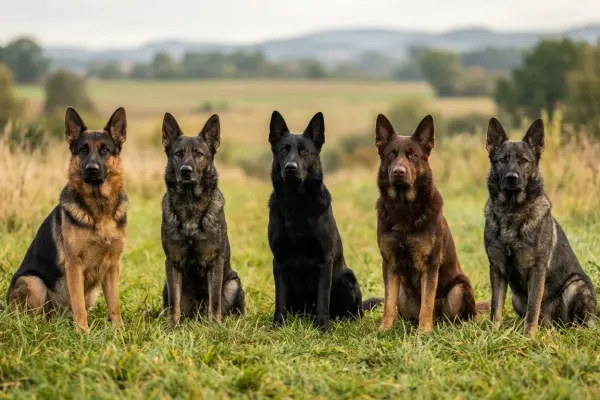
Today, German Shepherds are bred for a dual purpose: high-level working and sporting performance on one side, and active family companionship and personal protection on the other. Modern breeding has largely diverged into two distinct streams:
- Working lines (West German working, DDR, Czech): Bred strictly for drive, nerve stability, physical toughness, and performance in canine sports like IGP (Schutzhund), tracking, and real-world police or military deployment.
- Show lines (American and West German show): Bred primarily for conformation dog shows, uniform rich pigmentation, flowing side gait, and moderate household temperaments suitable for family environments.
While many German Shepherds live successfully as family pets, their historical working heritage remains prominent in their daily behavior. They possess natural guarding instincts, a strong desire to stay close to their human pack, and high exercise and mental stimulation requirements. Unlike compact companion dogs that thrive on modest daily activity, as described in guides to what is a French Bulldog, an under-stimulated German Shepherd may develop destructive chewing, excessive barking, or boundary pacing.
When a German Shepherd is under-exercised, relentless pacing often reflects unspent working drive, differing from the physical pain or respiratory distress examined in what causes a Pug dog to keep moving and not lay down. Providing structured obedience training, scent games, and regular vigorous exercise channels their genetic working drive productively.
Note: Prospective owners should distinguish between working-line and show-line German Shepherds before purchasing. Working lines possess intense prey drive and energy levels suited for active sports, advanced training, or rural acreage, whereas show lines are bred with a focus on conformation standards and moderate household drive.
Frequently Asked Questions about What German Shepherds Were Bred For
Were German Shepherds bred from wolves?
No, German Shepherds were not bred from wolves. While Captain Max von Stephanitz admired the wolf-like physical structure of certain landrace herding dogs, the breed was created exclusively by crossing native German pastoral sheepdogs from Thuringia, Württemberg, and surrounding rural provinces.
What were German Shepherds bred to herd?
German Shepherds were bred specifically to herd sheep. In nineteenth-century Germany, large flocks of sheep grazed on unfenced grassy pastures located directly adjacent to cultivated agricultural crops. The dogs kept the sheep contained within the assigned grazing areas and protected them from wandering predators.
Are German Shepherds still used for herding today?
Yes, German Shepherds still participate in traditional herding trials, particularly Herding Capability Tests (HCT) and the German Herding Championship (Bundesleistungshüten). Although modern police and companion roles are far more common, the breed retains its natural tending instinct and ability to manage livestock boundaries.
Why did the military adopt German Shepherds in World War I?
The military adopted German Shepherds in World War I because the dogs demonstrated unmatched trainability, high intelligence, environmental stability, and acute scenting ability. Their athleticism allowed them to traverse shell-damaged trench terrain where human messengers could not travel safely, and their protective instincts made them reliable sentries in low-visibility conditions.
Leave a Reply