
Table of Contents
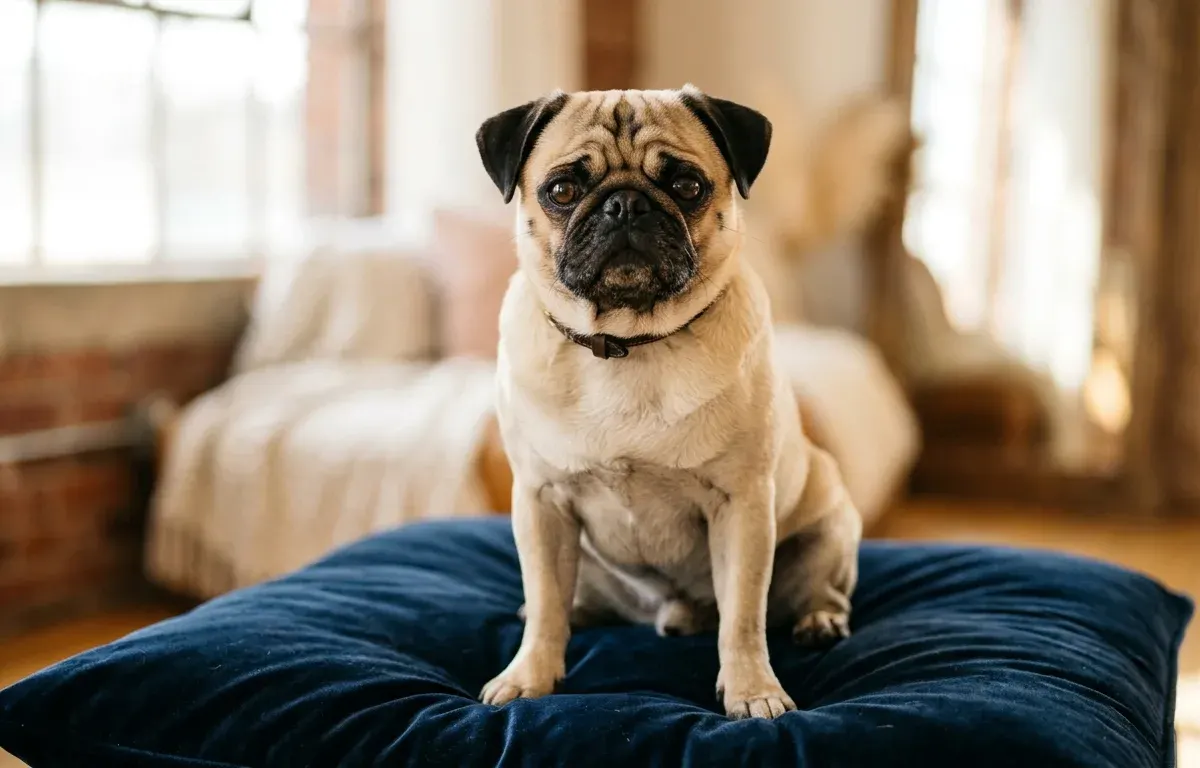
When determining what type of dog is a pug, major registries officially classify the breed as a toy dog and companion canine. Organizations such as the American Kennel Club (AKC) and The Kennel Club in the United Kingdom place the Pug in the Toy Group, while the United Kennel Club (UKC) lists it in the Companion Dog Group. The Fédération Cynologique Internationale (FCI) designates the Pug under Group 9 (Companion and Toy Dogs) as a small Molossian-type breed, recognizing its ancient ancestry, square frame, and short, wrinkled muzzle.
- The Pug belongs to the Toy Group in North America and the UK, and the Companion and Toy Group internationally.
- Adult Pugs weigh between 14 and 18 pounds (6.3 to 8.1 kg), making them one of the heaviest and most muscular toy breeds.
- The FCI classifies the Pug anatomically as a small Molossian-type dog due to its broad head, compact bone structure, and deep chest.
- Pugs were originally bred in ancient China exclusively as imperial lap companions, not for hunting, guarding, or working duties.
What the pug is and is not
When asking what type of dog is a pug, the most straightforward answer rests on its primary role: the Pug is a purpose-bred companion dog. Across international kennel organizations, this breed belongs to the toy or companion categories rather than working, herding, sporting, or hound groups.
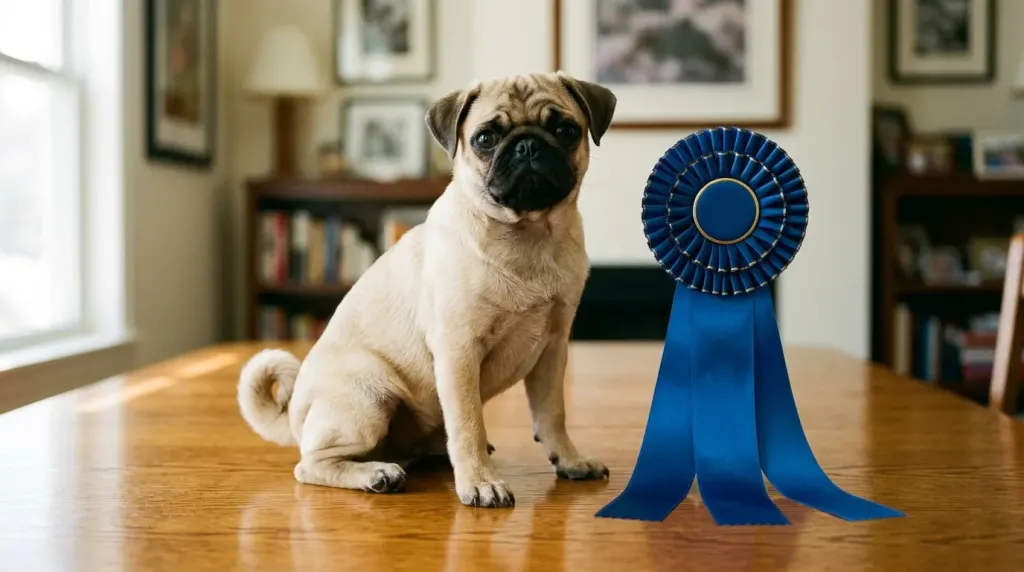
The American Kennel Club organizes recognized breeds into seven distinct groups based on historical function. In this system, answering what dog group is pug assigned to points directly to the Toy Group. While working breeds guarded property and sporting dogs retrieved waterfowl, toy dogs were cultivated solely to provide human companionship, comfort, and indoor presence.
Despite its toy status, the breed defies typical expectations of delicate lap pets. When prospective owners question is pug a toy dog, they often picture fragile pets weighing under six pounds. In official classification, a pug is considered a toy dog because of its ancient heritage as an indoor companion, even though its dense, muscular frame is far sturdier than that of most miniature canines. The official Pug standard from the American Kennel Club establishes an ideal weight of 14 to 18 pounds for both males and females. Pugs carry a dense, cobby body with a broad chest, straight legs, and strong bone density. Evaluating their growth through Pug height and weight milestones confirms that a healthy adult is remarkably solid, exhibiting a muscular density rarely seen in other toy breeds. The Latin phrase multum in parvo, meaning “a lot of dog in a small space,” summarizes the Pug. This build gives them the physical presence of a larger mastiff-type canine packed into a portable, apartment-friendly frame.
Their personality reinforces their classification. Because they lack hunting drives, guard instincts, or high-stamina herding urges, they focus their daily energy on following family members from room to room, reflecting their long lap dog heritage and close bonding habits.
Origins and breed behind the pug
To understand what kind of dog is pug from a historical standpoint, you must trace the breed back more than two thousand years to ancient China. During the Han and Song dynasties, Chinese emperors kept short-muzzled lap dogs as luxury pets within imperial palaces. Common citizens were strictly forbidden from owning or breeding them.
These imperial favorites were bred alongside other flat-faced Asian companions, including the ancestors of the Pekingese and the Shih Tzu. Historical research into the ancient origins of the Pug in China shows that emperors prized facial wrinkles that resembled the Chinese character for “prince” (王).
During the late sixteenth and early seventeenth centuries, Dutch merchants with the Dutch East India Company brought these dogs to Europe. In the Netherlands, the breed became the mascot of the Royal House of Orange after a Pug named Pompey reportedly saved Prince William the Silent by barking to warn of approaching Spanish assassins. Exploring the ancestral breeds that helped create the Pug shows how selective European breeding refined the modern black and fawn varieties while maintaining the ancient companion temperament.
Physical traits and breed standards
The physical blueprint of the Pug is defined by compact geometry and distinct brachycephalic facial features. Official breed standards from the AKC, UKC, and FCI share close agreement on essential physical measurements:

| Attribute | Standard Specification | Notes on Proportions |
|---|---|---|
| Ideal Weight | 14 to 18 pounds (6.3 to 8.1 kg) | Muscular and cobby, not fat or lean |
| Head Structure | Large, massive, round | Not apple-headed, with distinct wrinkles |
| Muzzle Profile | Short, blunt, square | Flat without an upward tilt |
| Bite Type | Slightly undershot | Lower teeth project slightly beyond upper teeth |
| Coat Type | Short, fine, smooth | Double coat that sheds regularly |
| Tail Formation | Tightly curled over hip | A double curl is considered ideal in show standards |
A complete understanding of the wrinkled facial structure and physical appearance of the Pug requires examining their deep skin folds and large, dark, globular eyes. These expressive traits give the dog an alert, soft, and slightly comical demeanor without sacrificing symmetry.
Temperament and care
The Pug temperament is famously even-tempered, playful, and affectionate. They are remarkably social animals that adjust well to multi-pet homes, children, and apartment living. Unlike terriers or working breeds that require high-intensity tasks to avoid destructive habits, Pugs are satisfied with moderate daily activity.
Daily management involves specific care routines suited to their anatomy:
- Facial Fold Hygiene: Clean facial wrinkles two to three times weekly using a damp cotton pad or fragrance-free dog wipe, then dry the skin folds thoroughly to prevent yeast and bacterial dermatitis.
- Temperature Regulation: Because their shortened airways make cooling through panting inefficient, keep Pugs in climate-controlled indoor environments when ambient temperatures exceed 80 degrees Fahrenheit (27 degrees Celsius).
- Controlled Exercise: Provide two brisk 15-to-20-minute daily walks on flat ground. Avoid strenuous running or repetitive jumping, which strains their compact joints.
Note: Always use a well-fitted harness rather than a neck collar during walks. Collars press against the trachea and can aggravate brachycephalic airway sensitivity.
Pug in dog shows and groups
In competitive conformation, how registries classify the breed determines the ring where they compete. When evaluating what class of dog is a pug across international registries, the consensus remains consistent:
- American Kennel Club (AKC): Toy Group
- The Kennel Club (UK): Toy Group
- United Kennel Club (UKC): Companion Dog Group
- Canadian Kennel Club (CKC): Group 5 (Toys)
- Fédération Cynologique Internationale (FCI): Group 9, Section 11.1
Under the FCI Standard No. 253, the Pug is categorized as a “Small Molossian-type dog.” This term links the breed structurally to ancient Molossian dogs, which also gave rise to the Mastiff family. Although tiny compared to an English Mastiff, the Pug retains the heavy jaw, wide chest, and broad cranial shape typical of Molossian lineages.
In the show ring, judges evaluate sound movement, level toplines, and balanced compactness. Pugs have earned prestigious national wins, as seen in the show history of Pugs winning top honors at major all-breed conformation events.
Health considerations and lifespan
The compact, brachycephalic anatomy that defines the Pug also creates specific health vulnerabilities. Prospective and current owners should monitor several known breed conditions:
- Brachycephalic Obstructive Airway Syndrome (BOAS): Elongated soft palates, stenotic (narrowed) nares, and redundant pharyngeal tissue can cause audible breathing, snoring, and heat sensitivity. Familiarity with upper airway respiratory sounds and snorting helps owners distinguish normal breathing from respiratory distress.
- Corneal Ulcers and Dry Eye: Because their large eyes sit prominently in shallow sockets, Pugs are vulnerable to scratches, corneal ulcers, and keratoconjunctivitis sicca.
- Orthopedic and Spine Issues: Hemivertebrae (malformed spinal bones) and patellar luxation can occur due to their compact skeletal frame.
- Pug Dog Encephalitis (PDE): An idiopathic inflammatory central nervous system condition unique to the breed, for which DNA screening is available.
According to The Royal Kennel Club breed guidelines, Pugs typically have a life expectancy of 12 to 15 years when supported by sound breeding, routine veterinary care, and healthy weight management, as detailed in Pug lifespan and longevity factors.
Diet and daily care signals
Because Pugs have a sturdy skeletal frame and a strong appetite, obesity is the single greatest preventable threat to their longevity. Excess body fat narrows their upper airway passages and strains their hips and knees.
- Measured Caloric Intake: According to pet caloric guidelines from the Association for Pet Obesity Prevention, an adult dog requires roughly 25 to 30 calories per pound of body weight daily, totaling approximately 400 to 500 calories per day for an adult Pug weighing 14 to 18 pounds. Follow daily Pug feeding guidelines using a kitchen gram scale or measured cup rather than free-feeding.
- Low-Calorie Treats: Reserve training treats for healthy items such as green beans or small carrot pieces rather than high-fat processed chews.
- Dental Maintenance: Crowded teeth within their shortened jaws make daily tooth brushing and periodic professional dental cleanings essential.
Frequently asked questions about what type of dog is a pug
What is a pug classified as?
A Pug is classified as a toy breed and companion dog. Major registries like the AKC and UK Kennel Club place the Pug in the Toy Group, while the FCI classifies it under Group 9 as a small Molossian-type companion dog.
What dog group is a pug in?
The Pug is in the Toy Group in the AKC, CKC, and UK Kennel Club. In the UKC, it is placed in the Companion Dog Group, reflecting its exclusive history as a household pet.
Are pugs toy dogs?
Yes, Pugs are officially recognized as toy dogs. Although they are sturdier and heavier than many other toy breeds, weighing 14 to 18 pounds, their historical purpose and size place them squarely in the toy category.
What were pugs bred for?
Pugs were bred in ancient China to serve as pampered lap companions for emperors and royal families. They were never used for hunting, herding, or guarding tasks.



Leave a Reply