
Table of Contents
The German Shepherd is a medium-to-large purebred herding dog (Canis lupus familiaris) that originated in Germany in 1899. When asking what breed is a German Shepherd and which category it belongs to, official kennel registries place it in the Herding Group (American Kennel Club, United Kennel Club) or Pastoral Group (The Kennel Club in the United Kingdom). Developed by Captain Max von Stephanitz from traditional continental sheepdogs, the breed combines high intelligence, protective instincts, and athletic endurance.
- Purebred status: Standardized in Germany in 1899 by Captain Max von Stephanitz as a distinct working breed.
- AKC breed group: Classified in the Herding Group since 1983, when the American Kennel Club split herding breeds from the Working Group.
- Global classifications: Categorized under Group 1 (Sheepdogs and Cattledogs) by the FCI, the Pastoral Group by The Kennel Club (UK), and the Herding Dog Group by the UKC.
- Functional purpose: Originally bred to tend sheep flocks, now serving worldwide in police, military, search-and-rescue, and service roles.
- Lineage divergence: Modern dogs split into high-drive working lines and conformation-focused show lines.
Introduction to the German Shepherd Classification
The German Shepherd Dog stands among the most recognizable and widely registered canines globally. Canine enthusiasts and prospective owners frequently investigate how formal kennel clubs categorize this versatile animal. Understanding its exact taxonomy clarifies its daily behavioral drives, exercise requirements, and training needs.
Unlike companion toy breeds whose modern lineages focus on indoor companionship, such as what is a French Bulldog, the German Shepherd was engineered for demanding outdoor labor and protection. National registries evaluate the breed against precise functional standards that govern coat texture, physical proportions, gait efficiency, and temperamental stability.
Kennel registries categorize canines by their primary functional heritage, distinguishing utility working breeds from small brachycephalic companion types like what type of dog is a Pug. This structured classification system ensures prospective owners understand the instinctual drives of their chosen canine.
Underneath the Name: What Breed Is a German Shepherd?
Is the German Shepherd a Pure Breed or a Species?
Scientifically, every domestic dog belongs to the subspecies Canis lupus familiaris. A German Shepherd is not a distinct biological species, but rather a strictly standardized purebred dog. Purebred status means that generations of pedigree-recorded breeding produce offspring with predictable physical and behavioral traits.
The formal development of the breed began in Karlsruhe, Germany, in April 1899. Captain Max von Stephanitz purchased a four-year-old working dog named Hektor Linksrhein, which he renamed Horand von Grafrath. Stephanitz registered Horand as the foundational entry in the breed’s initial German studbook. By crossing native sheepdogs from Thuringia, Franconia, and Württemberg, Stephanitz established a uniform working standard prioritizing utility, intelligence, and anatomical soundness.
Just as researchers trace the ancestral breeds of French Bulldogs back to 19th-century Toy Bulldogs and local ratters, Captain von Stephanitz selected distinct regional sheepdogs to establish the German Shepherd breed standard. Establishing a standardized studbook created genetic consistency across purebred lines, differing from ancient lineage origins explored in what dogs make a Pug.
German Shepherd vs. Alsatian: One Breed, Two Names
Readers in the United Kingdom, Ireland, and parts of the Commonwealth often encounter the name “Alsatian.” This alternative name refers to the exact same purebred dog rather than a separate variety or crossbreed.
The dual naming arose from geopolitical tensions during and after World War I. British kennel authorities and military handlers grew concerned that the word “German” would trigger anti-German sentiment and diminish public appreciation for the heroic wartime messenger dogs. In 1919, The Kennel Club in the United Kingdom officially renamed the breed the “Alsatian Wolf Dog,” borrowing the regional name of the French-German border territory of Alsace-Lorraine.
The suffix “Wolf Dog” was dropped in the 1920s to prevent unfounded fears that the dogs were wild wolf hybrids. In 1977, after persistent lobbying by dedicated fanciers, The Kennel Club reinstated the official title of German Shepherd Dog, allowing the bracketed name “(Alsatian)” until full historical alignment returned.
Understanding the Purpose: What Type of Dog Is German Shepherd?
The Ultimate Working Dog
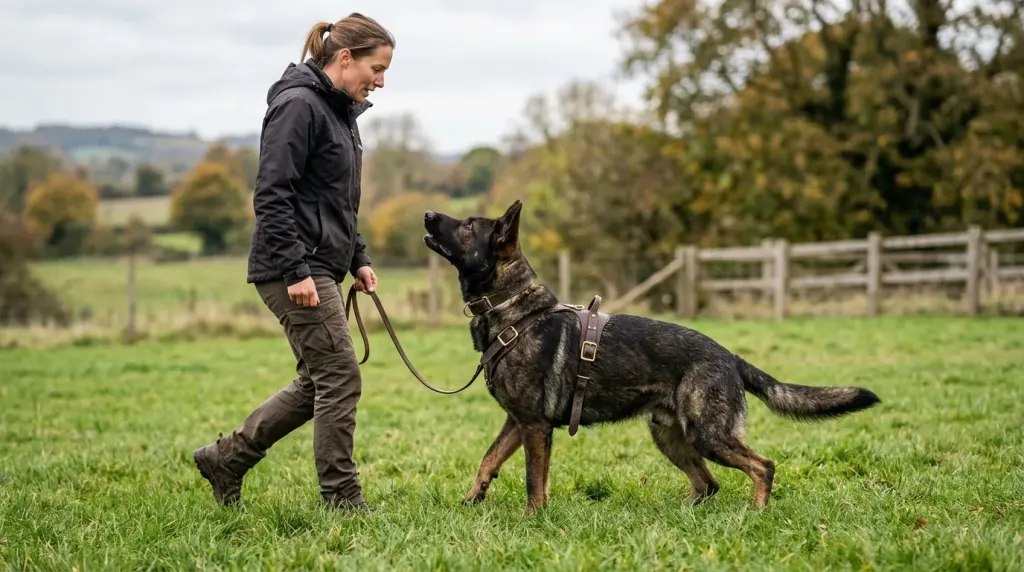
When evaluating functional typology, the German Shepherd is an all-purpose working and guardian dog. In standardized canine working intelligence assessments, the breed ranks third among all domestic dogs, trailing only the Border Collie and Poodle in obedience and working trainability.
Their high drive and need for structured duty stand in stark contrast to urban ratting and companion duties documented in what French Bulldogs were bred for. The German Shepherd was engineered for endurance, scent tracking, and handler loyalty. Their mental adaptability allows them to succeed across diverse specialized fields:
- Law enforcement: Apprehension, narcotics detection, building search, and tracking.
- Military service: Patrol, explosives detection, and tactical scout duties.
- Search and rescue (SAR): Wilderness tracking, avalanche rescue, and disaster rubble searches.
- Assistance and guide work: Guide dogs for visually impaired handlers and medical alert partners.
Captain Max von Stephanitz, the primary architect of the breed, consistently emphasized that the German Shepherd must be preserved primarily as a working utility dog rather than a purely ornamental companion. While German Shepherds excel in modern companion roles, their innate working drives require dedicated mental stimulation alongside physical activity. Owners who channel these instincts through obedience or scent games report significantly fewer behavioral challenges.
The Divergence: Working Lines vs. Show Lines
Over the past six decades, selective breeding created distinct sub-types within the purebred population. Although all share the same genetic baseline, working lines and show lines exhibit noticeable differences in structure, energy levels, and drive intensity.
- West German Show Lines: Bred primarily for conformation dog shows following traditional German breed standards. They feature rich red-and-black saddle patterns, a sweeping backline, and moderate working drive suited for active pet homes.
- West German Working Lines: Focused on high prey drive, structural stability, and balanced nerve strength for Schutzhund (IGP) sport and police deployment. Typical coat colors include sable, bi-color, and solid black.
- Czech and East German Lines: Developed in state-controlled breeding programs for strict border surveillance and military duties. Within working bloodlines, distinct regional variants developed for specific tasks, such as the resilient DDR German Shepherd bred for border patrol work in East Germany, known for deep dark pigment, broad heads, and formidable defensive drive.
- American Show Lines: Bred under national conformation standards, characterized by extreme rear angulation, extreme side-gait suspension, and a lighter bone structure.
Kennel Club Classifications: What Group Is the German Shepherd In?
The Shift from Working to Herding Group
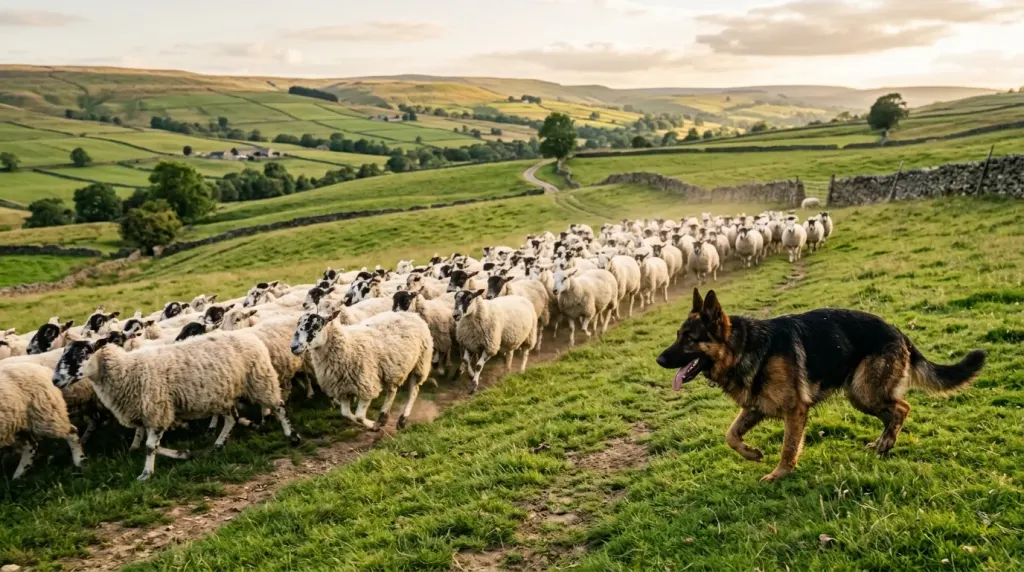
In the United States, the American Kennel Club officially places the German Shepherd Dog in the Herding Group. However, historical records reveal that this placement was not always the case.
When the AKC recognized the German Shepherd Dog in 1908, all pastoral and utility breeds were placed together within the broad Working Group. As registrations expanded and distinct canine functions were refined, the AKC recognized that sheep-tending and livestock-driving dogs possessed unique instinctual movement patterns compared to draft or guard breeds like the Mastiff, Boxer, or Great Dane.
Historical breeding priorities influenced whether dogs guarded estates, tended flocks, or served royal households, as seen in what Pug dogs were bred for. In 1983, the AKC formally established the Herding Group as its seventh show category, moving German Shepherds, Collies, Corgis, and Old English Sheepdogs out of the Working Group. This structural change reflected their original agricultural heritage as living fences (boundary shepherds) that managed grazing livestock.
How Other Global Registries Classify the Breed
International kennel organizations organize breeds according to their own historical taxonomies. In the United Kingdom, The Kennel Club Pastoral Group standard categorizes the German Shepherd alongside other herding and droving dogs. The term “Pastoral” represents the traditional European agricultural definition of working with grazing livestock.
International registries maintain distinct structural categories, contrasting pastoral trotting builds with non-sporting and companion conformations seen in what a French Bulldog looks like. In continental Europe and across most international member nations, the Fédération Cynologique Internationale (FCI) places the German Shepherd in Group 1: Sheepdogs and Cattle Dogs, specifically under Section 1 (Sheepdogs). The FCI classification mandates a working trial certification for championship titles, ensuring breeding stock maintains functional capability.
What Group Are German Shepherds In According to Major Registries?
The Definitive Registry Comparison Table
The following comparison details how the world’s leading canine registries categorize the German Shepherd Dog:
| Registry / Kennel Club | Official Group Placement | Core Function Emphasized |
|---|---|---|
| American Kennel Club (AKC) | Herding Group (since 1983) | Livestock boundary control and high biddability |
| United Kennel Club (UKC) | Herding Dog Group | Total dog performance, agility, and stamina |
| The Kennel Club (UK) | Pastoral Group | Pastoral herding and livestock guarding |
| Fédération Cynologique Internationale (FCI) | Group 1: Sheepdogs and Cattledogs (Section 1) | Working utility, herding trials, and obedience |
| Canadian Kennel Club (CKC) | Group 7: Herding Dogs | Livestock management and trainability |
Group assignments reflect functional anatomy; while Toy group standards prioritize compact pet proportions as detailed in what a Pug dog looks like, the Herding Group evaluates gait suspension, bone density, and working drive.
Herding Instincts in Modern Family Companions
Even when raised in suburban homes without exposure to sheep, German Shepherds display recognizable herding behaviors. Unlike heading dogs that gather stock by stalking (such as Border Collies), German Shepherds act as boundary herders. In traditional farming, they patrolled the perimeter between crop fields and grazing areas, preventing sheep from trampling crops without requiring fencing.
In a family setting, these instincts manifest in several typical patterns:
- Circling and grouping: Keeping family members close together during neighborhood walks or outdoor gatherings.
- Heel nudging: Gently guiding children by nudging legs with their snouts when exciting activities occur.
- Perimeter alertness: Monitoring entryways and property boundaries to ensure household stability.
Owners must interpret subtle body language and posture during boundary patrolling, much like recognizing canine stress signals when decoding what it means when dogs put their ears back. Early socialization and clear leadership help owners direct these natural herding and guarding drives into constructive family habits.
German Shepherd Exercise and Daily Management
Understanding the athletic heritage of the German Shepherd informs daily care. Healthy adult dogs require 60 to 90 minutes of daily physical exercise paired with structured mental training. Without productive outlets, excess energy can manifest in nuisance barking, digging, or pacing.
Providing proper containment and resting spaces requires careful equipment selection; while compact breeds need smaller enclosures like those evaluated in proper crate sizes for French Bulldogs, an adult German Shepherd requires a heavy-duty 42-inch or 48-inch wire crate.
High-drive working breeds that lack physical and mental stimulation can develop anxious behaviors, mirroring challenges seen when analyzing what causes dogs to pace restlessly. Incorporating agility drills, nose work games, and daily obedience sessions channels their high intelligence while maintaining joint strength and cardiovascular health.
Note: Kennel club breed standards establish structural and temperament benchmarks for health and performance. Prospective owners should consult recognized breed clubs when evaluating pedigree health certifications.
Frequently Asked Questions About German Shepherds
Is a German Shepherd a purebred dog or a mixed breed?
A German Shepherd is an officially recognized purebred dog. The breed was standardized in 1899 in Germany and possesses an unbroken pedigree registry maintained by kennel clubs worldwide.
When did German Shepherds move to the AKC Herding Group?
The American Kennel Club moved the German Shepherd Dog into the Herding Group on January 1, 1983. Prior to 1983, the breed was categorized in the AKC Working Group alongside draft and guard dogs.
Are German Shepherds considered working dogs or herding dogs?
German Shepherds are both. In formal registry classifications (AKC and UKC), they belong to the Herding Group based on their agricultural heritage. In general function, their trainability makes them premier working dogs in police, military, and search-and-rescue roles.
Why were German Shepherds called Alsatians in the United Kingdom?
The name “Alsatian Wolf Dog” was adopted by The Kennel Club in the UK in 1919 to protect the breed from anti-German sentiment following World War I. The name was later restored to German Shepherd Dog in 1977.


Leave a Reply