
Table of Contents
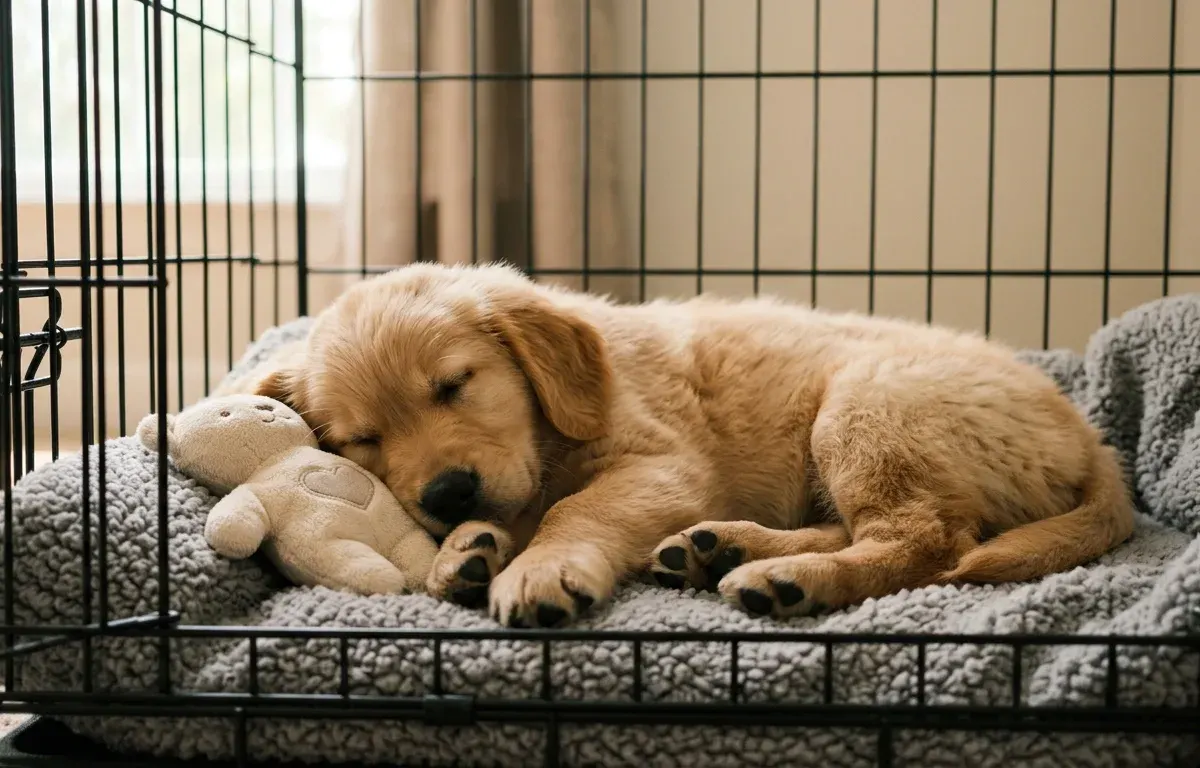
Exactly how much sleep do puppies need depends on age, but young puppies typically require 18 to 20 hours of sleep every 24 hours. Their daily rest is divided between short daytime naps lasting 30 to 120 minutes and longer nighttime stretches. Sleep requirements change as puppies grow, decreasing from 20 to 22 hours in newborn litters to 12 to 14 hours by adulthood. Establishing a structured daily rhythm of feeding, playtime, potty breaks, and crate naps ensures puppies get adequate restorative rest.
- Young puppies need 18 to 20 hours of daily sleep to support brain, muscle, and immune growth.
- Total sleep decreases gradually by age, reaching an adult baseline of 12 to 14 hours around one year.
- Daytime rest consists of multiple naps lasting 30 minutes to 2 hours after active wake windows.
- Overtired puppies often exhibit hyperactivity, excessive biting, and difficulty settling down.
- Predictable daytime schedules and calm bedtime routines prevent nighttime sleep disruptions.
How Much Sleep Do Puppies Need by Age?
Canine sleep needs evolve rapidly during the first year of life. While adult dogs spend roughly half their day resting, young puppies spend the vast majority of their time asleep. Understanding sleep requirements at each developmental milestone helps owners distinguish normal puppy tiredness from potential wellness concerns.
| Age Group | Total Daily Sleep | Daytime Nap Schedule | Nighttime Sleep Pattern |
|---|---|---|---|
| 0-1 Month (Newborns) | 20-22 hours | Continuous cycles of nursing and 1-2 hour naps | Wakes frequently to nurse every 2-3 hours |
| 1-3 Months (8-12 Weeks) | 18-20 hours | 30-120 minute naps every 1-2 waking hours | 6-8 hours with 1-2 nighttime potty breaks |
| 3-6 Months (Juvenile) | 16-18 hours | 2-3 scheduled naps (1-2 hours each) | 7-9 hours, often sleeping through the night |
| 6-12 Months (Adolescent) | 14-16 hours | 1-2 longer afternoon naps (1-2 hours) | 8-10 hours uninterrupted night sleep |
| 1+ Year (Adult Baseline) | 12-14 hours | 1-2 midday rest periods (total 3-5 hours) | 8-9 hours continuous nighttime sleep |
0 to 1 Month (Newborn Puppies)
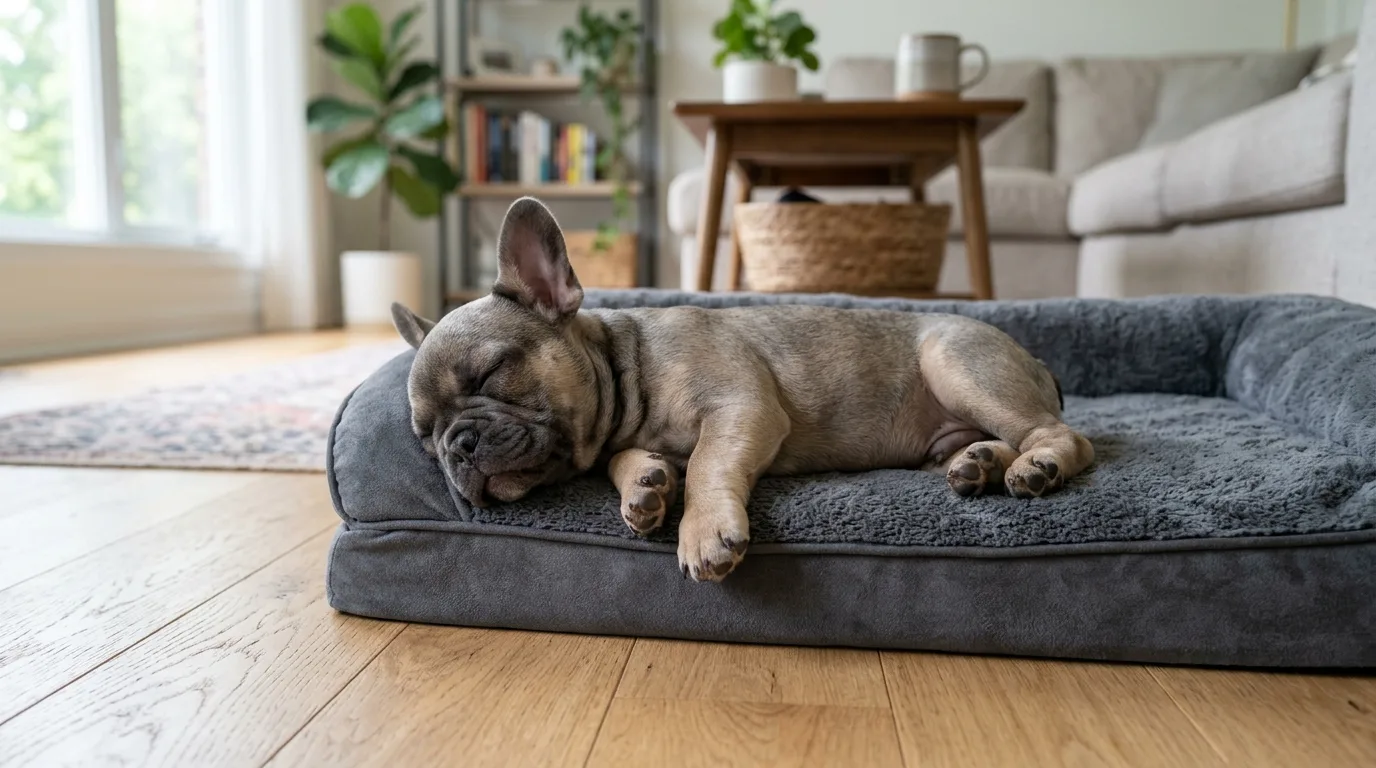
Newborn puppies spend nearly their entire day asleep, logging between 20 and 22 hours of daily rest. During the first two weeks, their eyes and ears remain closed, and their central nervous system is in its earliest development phase. Sleep cycles occur in short bursts alongside their mother and littermates, interrupted only by nursing and maternal grooming. Newborn puppies sleep in dense clusters with their dam and siblings. When managing French Bulldog litter sizes, maintaining a dedicated, temperature-controlled whelping box ensures every pup can nurse and rest without competing for warmth.
Twitching, whimpering, and sudden jerks during newborn sleep are completely normal. These involuntary movements represent activated sleep, which builds neural pathways and strengthens developing muscle fibers before the puppy can walk steadily.
1 to 3 Months (8 to 12 Weeks Old)
When young puppies transition to their new homes during the eight-to-twelve-week window, they need between 18 and 20 hours of sleep per day. According to AKC puppy sleep guidelines, young puppies require 18 to 20 hours of sleep each day to support brain development, immune health, and muscle growth.
At this stage, a puppy can only handle about 30 to 60 minutes of active awake time before needing to rest. Adhering to routine Pug puppy care guidelines helps new owners balance early social handling with structured downtime so the puppy does not become overwhelmed.
3 to 6 Months (Juvenile Stage)
During the three-to-six-month stage, total sleep requirements moderate to approximately 16 to 18 hours per day. Puppies in this juvenile phase develop longer attention spans and can comfortably stay active for 60 to 90 minutes between naps.
Daytime sleep begins to consolidate into two or three predictable blocks rather than erratic micro-naps. Nighttime sleep also stabilizes, with many puppies sleeping 7 to 8 hours straight as their bladder capacity increases and their digestive rhythm matures.
6 to 12 Months (Adolescent Puppies)
During adolescence, puppies average 14 to 16 hours of daily sleep. While adolescent dogs often match adult dogs in physical height and weight, their bones, joints, and hormonal systems are still actively developing.
Adolescent puppies typically shift toward one or two substantial afternoon naps. Ensuring adequate rest during this stage helps prevent adolescent behavior regressions, such as sudden reactivity, demand barking, or restlessness around the house.
After 1 Year (Adult Dog Baseline)
Once dogs reach physical maturity around one year of age, their sleep requirements settle at 12 to 14 hours per day. Working breeds and companion dogs adjust their daily rhythms based on household activity levels. Fully grown adult canines typically rest in the early afternoon and sleep soundly throughout the night.
Why Do Puppies Need So Much Sleep?
Puppies do an extraordinary amount of growing in a very short window. During deep sleep, the pituitary gland releases growth hormones that rebuild tissue, strengthen bones, and repair muscle fibers. Without sufficient rest, physical development can slow down, and the immune system becomes vulnerable to environmental stressors.
Sleep also plays a primary role in cognitive consolidation. Every waking minute exposes a young puppy to novel sights, sounds, scents, and training cues. During rapid eye movement (REM) sleep, the canine brain organizes these experiences into long-term memories and emotional coping mechanisms.
Balancing physical downtime with tailored nutrition, such as monitoring Pug food portions, fuels cellular repair without overwhelming a small pup’s digestive system before naptime. Because puppies experience dramatic physical transformation in their first twelve months, tracking French Bulldog growth milestones shows how deep rest directly fuels rapid bone remodeling and muscle development. Sleep deprivation in young puppies quickly triggers behavioral regression, including increased mouthing, reluctance to follow basic cues, and emotional reactivity. Providing structured downtime rather than waiting for a puppy to collapse from exhaustion preserves cognitive focus and prevents chronic stress.
Signs a Puppy Is Getting Enough Sleep vs. Overtired
Puppies rarely put themselves to bed when they feel tired because the household environment is full of stimulating activity. As a result, many puppies become chronically overtired, leading owners to mistake exhaustion for hyperactivity.
| Well-Rested Puppy Indicators | Overtired Puppy Indicators |
|---|---|
| Alert, curious, and receptive during wake windows | Frantic running, sudden zoomies, and inability to settle |
| Takes treats gently and responds to known cues | Hard biting, ankle nipping, and chewing on furniture |
| Plays cooperatively with family members | Irritable growling, sudden tantrums, or excessive whining |
| Settles smoothly into naps after quiet handling | Paces around the room, vocalizes, and resists confinement |
| Consistent appetite and steady digestion | Loss of focus, glazed eyes, and clumsiness during play |
Overtired puppies frequently display frantic mouthiness and hard nipping, a behavioral phase often intensified during teething stages in French Bulldog puppies when gum irritation makes relaxing difficult. Recognizing subtle signs of exhaustion is a core component of daily French Bulldog care practices, helping owners step in with mandatory rest before physical fatigue turns into behavioral distress.
How to Establish a Healthy Puppy Sleep Routine
Creating a predictable daily schedule is the most effective way to ensure a puppy receives adequate rest. Puppies thrive on routine, which aligns their internal biological clock with the household schedule.
Sample Daily Sleep and Activity Schedule
A balanced puppy schedule alternates active wake windows with structured nap times throughout the day:
- 7:00 AM – Morning Wakeup: Immediate outdoor bathroom trip, followed by breakfast and fresh water.
- 7:30 AM – Calm Interaction: Gentle walk, short training session, and social bonding.
- 8:30 AM – Morning Nap: Crate nap in a quiet, darkened room for 1.5 to 2 hours.
- 10:30 AM – Midday Outing: Bathroom break, brief indoor exploration, and puzzle toys.
- 11:30 AM – Second Nap: Rest period lasting 1 to 2 hours.
- 1:30 PM – Lunch and Play: Lunchtime meal, outdoor potty break, and light yard play.
- 2:30 PM – Afternoon Nap: Deep rest period lasting 2 hours.
- 4:30 PM – Evening Interaction: Potty break, family playtime, and basic obedience practice.
- 5:30 PM – Short Rest: Brief 45-minute power nap before evening activities.
- 6:30 PM – Dinner and Walk: Evening meal, followed by a post-dinner bathroom break and casual walk.
- 8:00 PM – Wind-Down Time: Chew toy session in a quiet area; restrict water bowl access 2 hours before bed.
- 10:00 PM – Final Potty & Bedtime: Final bathroom trip, praise, and placement into the sleeping crate for the night.
Crate Training for Undisturbed Sleep
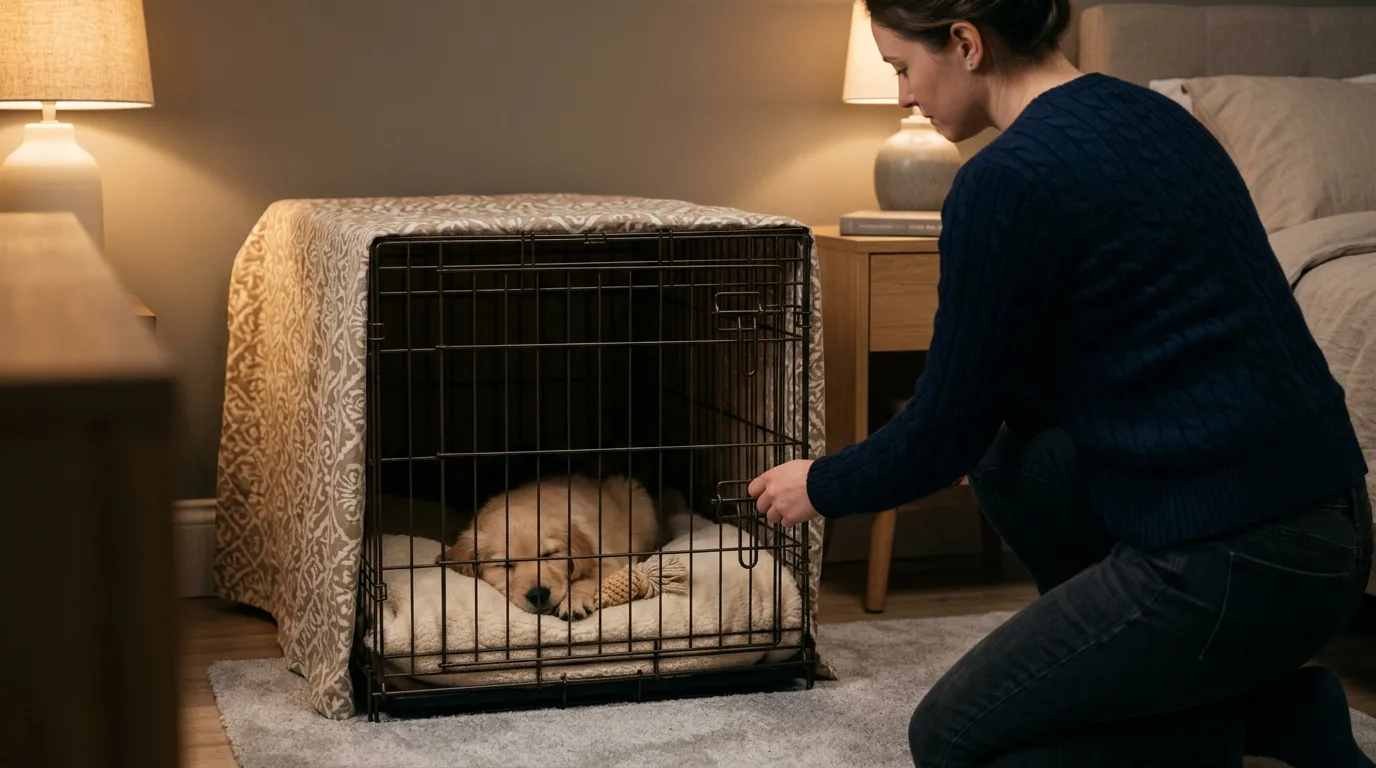
A crate provides a secure, den-like environment where a puppy can rest without household distractions. Placing the crate in a low-traffic corner of a bedroom or living area keeps the puppy feeling included while preventing sleep interruptions. Introducing a quiet crate or playpen early establishes positive resting boundaries, aligning with proven methods for training a bulldog puppy to settle calmly inside a designated safe zone.
To make the crate comfortable, line the bottom with a chew-resistant fleece blanket and consider using a soft cover over wire crates to block visual stimulation. A ticking clock or a plush heartbeat toy can also provide soothing auditory cues that mimic sleeping near littermates.
Night Waking and Bathroom Management
Young puppies have small bladders and cannot hold their urine through an entire eight-hour night. Consistent overnight bathroom breaks form the bedrock of potty training a French Bulldog puppy, teaching young pets that nighttime outings are strictly for elimination rather than social play.
When the puppy whines at night, quietly leash them, carry them outside to their designated potty spot, and wait for them to eliminate. Keep the lights dim, avoid talking or playing, and return the puppy directly to the crate immediately afterward. This teaches the puppy that nighttime awakenings are strictly for bathroom needs, not playtime.
Note: Young puppies younger than 16 weeks lack complete voluntary bladder control and may need one or two quick, silent bathroom trips during the night. Keeping these interactions quiet and dim prevents nighttime outings from turning into play sessions.
When to Consult a Veterinarian About Puppy Sleep Habits
While extensive sleeping is normal, extreme lethargy can indicate underlying medical issues such as hypoglycemia, parasitic infections, dehydration, or systemic illness. Owners should understand the difference between a sleepy puppy and an unresponsive one.
Puppies that pant heavily or struggle to settle comfortably may be overheating; knowing effective steps for cooling down a French Bulldog can quickly restore normal resting respiration in warm climates. If severe lethargy is accompanied by uncoordinated movement, head pressing, or seizures, seek immediate veterinary evaluation and screening for Pug Dog Encephalitis or acute infectious conditions.
Schedule a veterinary evaluation if you observe any of the following symptoms:
- Inability to wake the puppy or extreme difficulty rousing them for meals.
- Weakness, uncoordinated movement, or sudden collapse upon standing.
- Complete lack of interest in food, water, or social interaction during wake windows.
- Sleeping paired with vomiting, persistent diarrhea, pale gums, or fever.
- Labored breathing, rapid shallow breaths, or heavy wheezing while resting.
Frequently Asked Questions About Puppy Sleep
Can a puppy sleep too much?
A puppy that sleeps 18 to 20 hours per day is entirely within normal physiological parameters. Sleep only becomes a concern if the puppy lacks energy when awake, refuses meals, or appears uncoordinated and unresponsive. If your puppy wakes up alert, plays enthusiastically, and eats normally, their long sleeping hours are healthy.
How long can an 8-week-old puppy sleep through the night?
Most 8-week-old puppies can sleep between 3 and 5 hours before needing a bathroom break. As a general guideline, a puppy can hold their bladder for roughly one hour per month of age plus one hour. By 16 weeks of age, many puppies can sleep for 6 to 8 hours without waking for a nighttime potty break.
Why does my puppy twitch and breathe fast while sleeping?
Twitching paws, whisker quivering, rapid breathing, and soft whimpers are normal signs of REM (rapid eye movement) sleep. During this phase, puppies process daily experiences and consolidate memories. These involuntary movements are harmless and indicate healthy neurological activity.
Should I wake my puppy up from a nap to go potty?
It is generally best to let a sleeping puppy rest undisturbed. However, if you are establishing a strict daytime house-training schedule and a nap exceeds two hours during the day, gently waking the puppy and immediately taking them outside helps maintain your feeding and bathroom routine.
Leave a Reply