

Table of Contents
When evaluating how many puppies do French Bulldogs have, veterinary registries confirm they typically have 1 to 4 puppies per litter, with an average of 3 puppies. Their compact body frame, narrow pelvic canal, and large fetal head size make larger litters uncommon. Over 80 percent of French Bulldog deliveries require scheduled or emergency Cesarean sections to ensure the safety of the mother and her puppies.
- The typical French Bulldog litter size ranges from 1 to 4 puppies, with 3 being the statistical average.
- First litters are usually smaller, often consisting of 2 to 3 puppies.
- More than 80 percent of French Bulldog births require a surgical Cesarean section due to narrow pelvic anatomy.
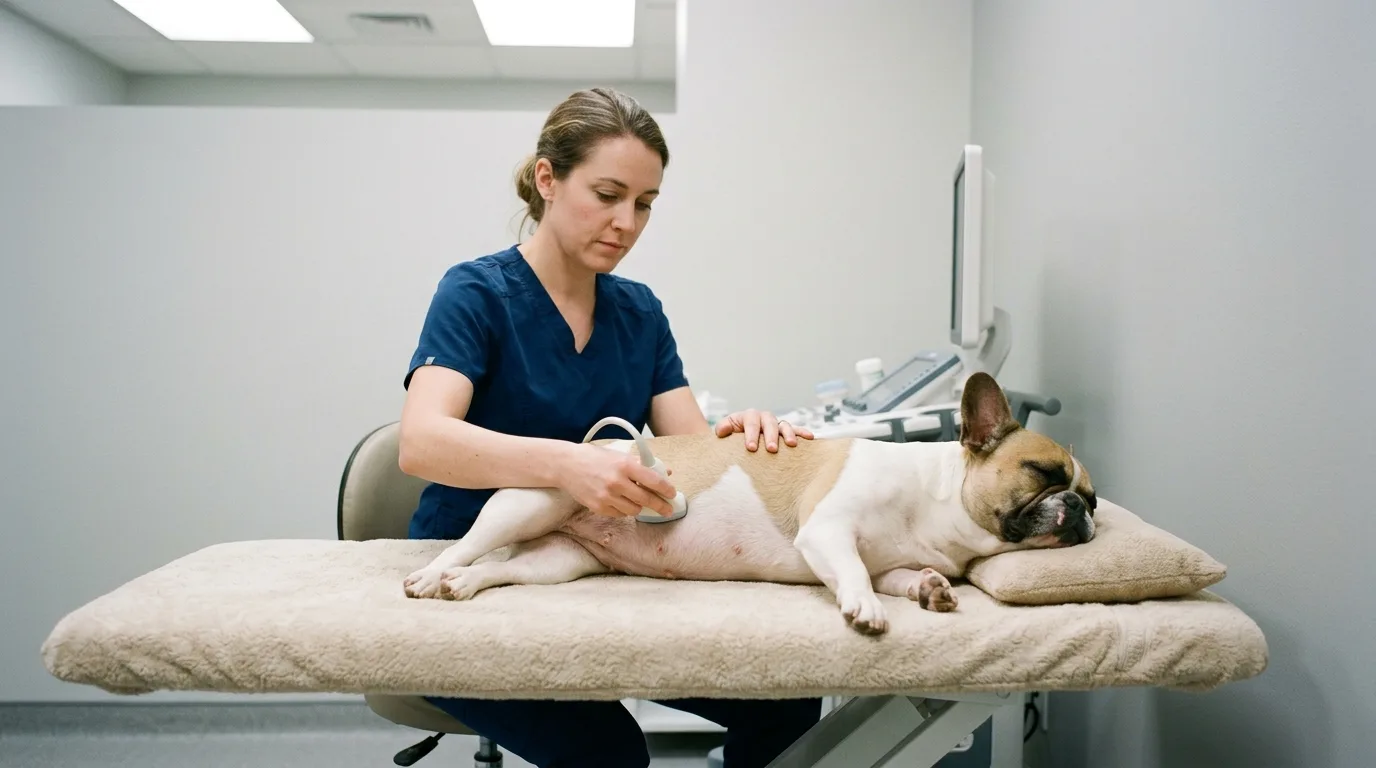
- Diagnostic ultrasound at day 25 to 30 and abdominal X-rays from day 55 onward accurately verify puppy count before delivery.
- Veterinary guidelines recommend limiting a female French Bulldog to 2 or 3 lifetime litters to minimize surgical scarring risks.
Litter size overview for French bulldogs
When dog owners and prospective breeders ask how many puppies do French bulldogs have, veterinary data confirms that litters are consistently small. According to breed survey data from the American Kennel Club, French Bulldogs produce an average of 3 puppies per pregnancy, with most litters ranging between 2 and 4 pups. While larger working and sporting breeds frequently give birth to 8 or 10 puppies, toy and small companion breeds carry far fewer fetuses.
Single-puppy litters (commonly known as singleton litters) occur regularly in the breed. Conversely, litters of 5 to 7 puppies represent the rare upper boundary of typical natural litters and place intense physiological pressure on the dam. Although extremely uncommon, outlier record litters of up to 13 puppies have been documented in rare individual cases, such as the 2020 litter delivered by Roxy in Glasgow and a 2022 case in Kentucky. Understanding the historical conformation and what French Bulldogs were bred for highlights how selective breeding for compact, heavily muscled bodies and large, broad heads directly constrained the breed’s natural pelvic dimensions.
| Metric | Typical Range | Veterinary Context |
|---|---|---|
| Average litter size | 2 to 4 puppies (mean: 3) | Small uterine horn capacity and brachycephalic anatomy |
| First-litter average | 2 to 3 puppies | Younger dams ovulate fewer ova during initial fertile cycles |
| Large natural litters | 5 to 7 puppies | Rare upper range; carries elevated risk of maternal exhaustion |
| Maximum recorded litter | 13 puppies | Exceptional outlier cases documented in Glasgow (2020) and Kentucky (2022) |
| C-section prevalence | Exceeds 80% | Standard protocol to prevent fatal dystocia and fetal hypoxia |
| Recommended lifetime litters | 2 to 3 litters total | Prevents severe abdominal adhesions from repeated surgical incisions |
Factors that influence French bulldog litter size
Several biological, genetic, and environmental determinants establish how many puppies can a French bulldog have in a specific pregnancy:
- Maternal age: Female dogs reach peak reproductive efficiency between 2 and 4 years of age. Litters conceived during a dam’s first fertile cycle or after 5 years of age are frequently smaller due to lower ovulation rates.
- Parity (prior litters): A dam’s second and third litters generally yield 1 or 2 more puppies than her maiden pregnancy.
- Mating timing and ovulation tracking: Precise progesterone blood testing identifies the exact luteinizing hormone surge. Insemination performed at peak fertility optimizes fertilization rates and embryo implantation across the uterine horns. Following proper French Bulldog breeding practices helps ensure mating occurs within the optimal fertile window.
- Sire fertility and sperm quality: Semen motility, morphology, and concentration directly influence the number of fertilized ova.
- Maternal nutrition and physical fitness: Proper preconception body condition supports placental vascularization. Maintaining sensible exercise limits for French Bulldogs prevents excessive gestational weight gain without causing cardiovascular overheating.
A multicenter reproductive study published in Frontiers in Veterinary Science evaluated reproductive outcomes across 80 dog breeds, demonstrating that maternal body weight, age, and parity serve as the primary determinants of total litter size across canine populations.
Health considerations during pregnancy and whelping
Reproduction in brachycephalic breeds involves substantial clinical risks. French Bulldogs possess a high incidence of dystocia (obstructed labor) caused by fetal-pelvic disproportion, where the broad, square skull and wide shoulders of the puppy cannot navigate the dam’s narrow birth canal.
According to Dr. Dan O’Neill, Associate Professor in Companion Animal Epidemiology at the Royal Veterinary College, epidemiological research shows that French Bulldogs face 15.9 times the odds of dystocia compared to crossbred bitches (odds ratio: 15.9, 95% CI: 9.3-27.2). This anatomical reality makes unassisted natural whelping hazardous.
In peer-reviewed research published in the Journal of Small Animal Practice, analysis of canine reproductive records revealed that over 80 percent of French Bulldog litters are delivered via surgical Cesarean section. Elective C-sections scheduled with a veterinary surgeon before the onset of active labor prevent uterine inertia, maternal exhaustion, and neonatal mortality. Singleton litters present a distinct clinical hazard. When a female carries only one fetus, the lack of sibling competition in the uterus allows the single puppy to grow disproportionately large. Furthermore, a single puppy often produces insufficient hormonal signaling to initiate natural labor, making surgical intervention necessary.
Whelping care and decision guidance
Preparing for a French Bulldog delivery requires disciplined veterinary planning and monitoring:

- Pregnancy confirmation (Day 25 to 30): An abdominal ultrasound confirms embryonic vesicles and detects fetal heartbeats, verifying pregnancy status.
- Skeletal radiography (Day 55 onward): According to clinical protocols published in Today’s Veterinary Practice, fetal bone mineralization begins around day 42 to 45 of gestation, but an abdominal radiograph taken from day 55 onward in the final week provides the definitive count of fetal skulls and vertebral columns. Performing radiography before day 55 carries a significant risk of undercounting due to incomplete mineralization, whereas imaging at day 55 or later ensures accurate puppy counts so the veterinary team can prepare adequate resuscitation equipment.
- Progesterone monitoring for delivery timing: Serial blood progesterone tests determine the precise timing for a scheduled C-section, ensuring puppies are fully mature while avoiding emergency labor distress.
- Whelping area setup: Prepare a temperature-controlled whelping box with supplemental radiant heat. Newborn puppies cannot regulate their core body temperature and require an ambient temperature of 85°F to 90°F (29°C to 32°C) during their first week of life. Practicing structured routines and how to train a French Bulldog with calm settling cues before delivery ensures the dam accepts the whelping enclosure quietly without agitation.
Note: Because French Bulldogs are prone to airway compromise under general anesthesia, pre-operative blood work, intravenous fluid support, and dedicated post-operative airway monitoring are essential components of safe surgical delivery.
Diagnostic and Care Timeline:
Day 0: Ovulation / Progesterone timing
Day 25-30: Diagnostic ultrasound (confirms pregnancy and fetal viability)
Day 55+: Abdominal X-ray (provides definitive skull and spine count)
Day 58-62: Daily temperature tracking (a drop below 99°F signals labor within 24 hours)
Day 63: Scheduled Cesarean section / neonatal resuscitation
Breeding ethics and breed health considerations
Ethical breeding requires strict pre-breeding health testing, including spine radiographs for hemivertebrae, cardiac evaluations, and airway assessments (BOAS scoring). Understanding when French Bulldogs go into heat allows owners to track cycle regularity without rushing into premature breeding during an immature first heat.
Because delivery involves major abdominal surgery, female dogs should be limited to 2 or 3 litters during their lifetime. After concluding her reproductive career, scheduling when to neuter a French Bulldog protects the female from pyometra (life-threatening uterine infection) and reproductive cancers.
Frequently asked questions about French bulldog litter size
What is the average litter size for French bulldogs?
The average litter size for French Bulldogs is 3 puppies, with the vast majority of litters containing between 1 and 4 puppies. Litters of 5 or more are rare.
Can French bulldogs have more than 5 puppies?
Yes, French Bulldogs can occasionally have 5, 6, or even 7 puppies, but litters of this size are uncommon. Larger litters increase physiological strain on the dam and make elective Cesarean delivery imperative. Exceptional record litters of up to 13 puppies have been documented in rare outlier cases.
What factors affect French bulldog litter size?
Key factors include maternal age, parity (number of previous litters), exact ovulation timing, sire sperm quality, maternal body condition, and overall reproductive health.
How many puppies do French bulldogs have in their first litter?
In their first litter, French Bulldogs typically have 2 to 3 puppies. Maiden dams generally ovulate fewer mature eggs than females in their second or third reproductive cycle.



Leave a Reply