
Table of Contents
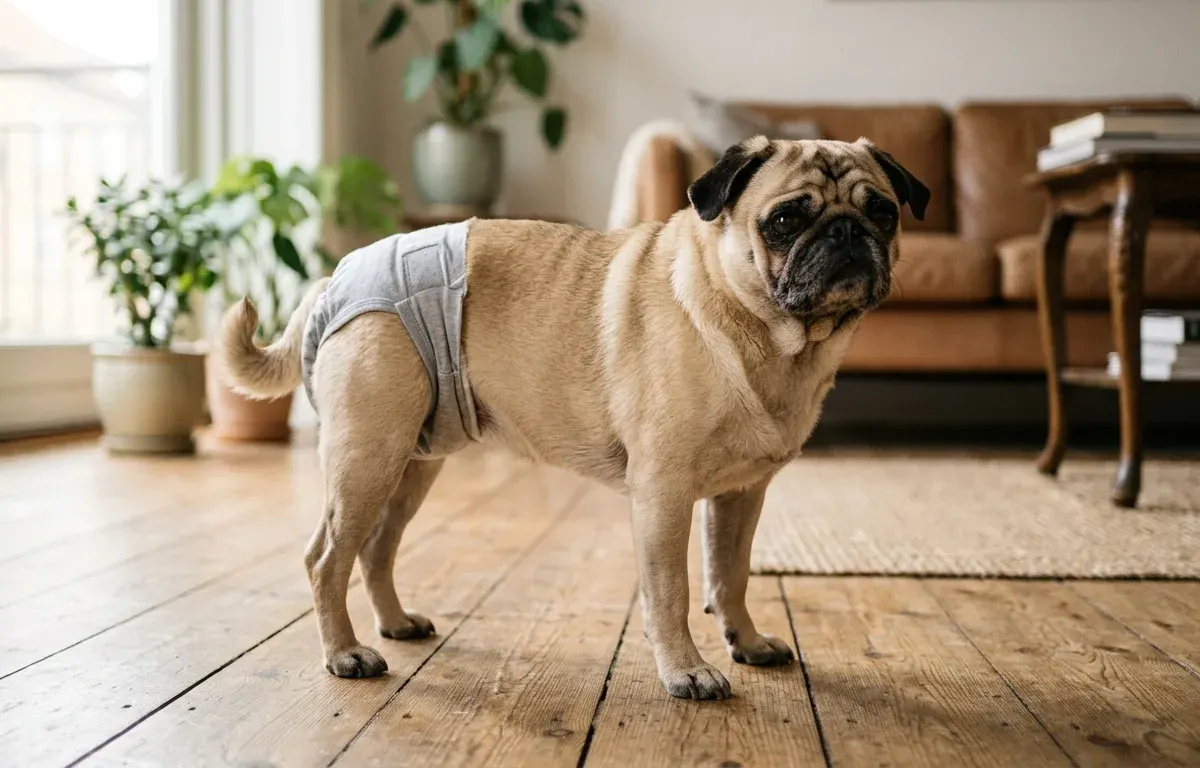
When deciding what size dog diaper for Pug dogs to wear, most adult Pugs fit a size Small dog diaper or male wrap, corresponding to a waist circumference of 14 to 18 inches and a body weight of 14 to 18 pounds. Smaller adult females and slender young Pugs often fit an Extra Small (XS), while broader or stocky Pugs may require a Medium (M). Because Pugs have a compact, barrel-shaped body with narrow hips, you must measure your dog's waist girth directly in front of the hind legs rather than relying only on scale weight.
- Standard adult Pugs (14 to 18 lb) typically wear size Small diapers with a 14 to 18 inch waist range.
- Young Pug puppies under 6 months (8 to 12 lb) generally require Extra Small (XS) or Petite sizes.
- Waist circumference measured while your dog stands on all four paws is the most reliable sizing metric.
- Male Pugs dealing with marking or urinary leakage only need belly bands, while females require full diapers.
- Never use human diaper rash creams containing zinc oxide, which is toxic to dogs if licked.
Understanding the Pug and Diaper Sizing
Selecting the right diaper size for a Pug requires looking closely at breed anatomy. When owners ask what size of dog is pug on diapers, they often assume weight alone determines the box to buy. However, Pugs possess a distinct physical build compared to other toy breeds. According to the American Kennel Club Pug breed standard, the standard weight for a mature Pug ranges between 14 and 18 pounds. Pugs carry this weight on a short, cobby frame featuring a deep chest and a thick waistline.
A 16-pound Pug has a significantly wider belly girth than a 16-pound Miniature Pinscher or Italian Greyhound. Standard commercial diaper weight brackets group dogs into broad categories that often fail to accommodate the Pug’s thick midsection. A package labeled for dogs weighing 12 to 20 pounds might assume a slender 12-inch waist, leaving your Pug squeezed uncomfortably. Understanding typical Pug adult dimensions and weight helps put these measurements into perspective before you order supplies.
| Life Stage & Body Type | Typical Weight | Waist Circumference | Recommended Size | Garment Style |
|---|---|---|---|---|
| Young Puppy (3 to 6 months) | 8 to 12 lb | 10 to 13 in | Extra Small (XS) / Petite | Full diaper with tail hole |
| Petite Adult Female | 12 to 14 lb | 12 to 15 in | Extra Small (XS) or Small | Full female diaper |
| Standard Adult Male / Female | 14 to 18 lb | 14 to 18 in | Size Small (S) | Male belly band / Female diaper |
| Broad or Stocky Adult Pug | 19 to 23 lb | 17 to 20 in | Size Small (S) or Medium (M) | Male belly band / Female diaper |
| Senior Incontinent Pug | 14 to 19 lb | 14 to 19 in | Size Small (S) | Washable wrap with booster pad |
The primary cause of diaper leakage in Pugs is choosing a size based purely on scale weight instead of waist circumference. Because Pugs carry a high ratio of abdominal volume relative to their spine length, waist girth must always serve as your primary sizing benchmark.
Measuring Your Pug for the Right Fit
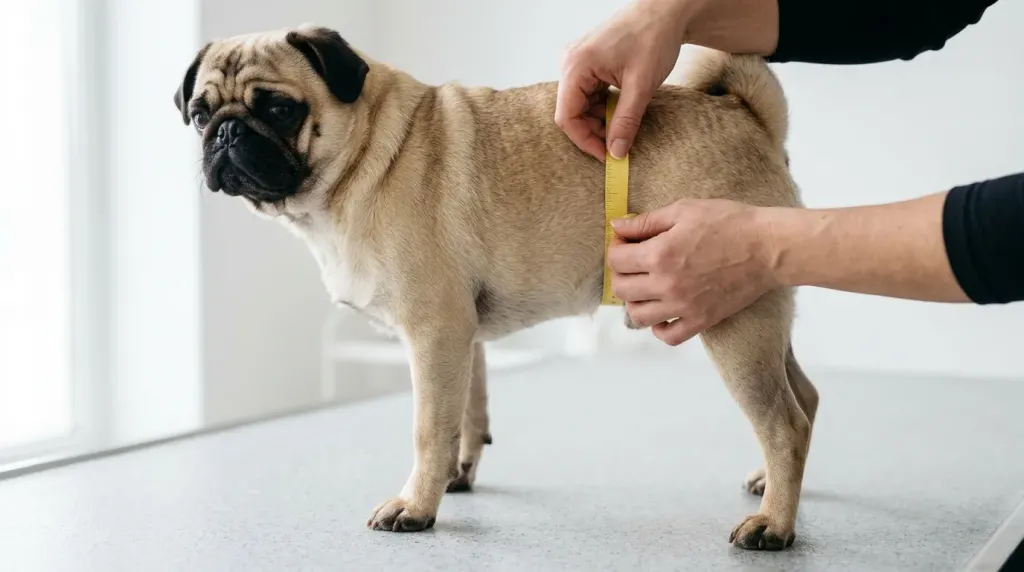
Obtaining accurate body numbers takes less than two minutes with a flexible fabric measuring tape. Keep your dog standing squarely on all four paws on a flat floor. Measuring a sitting or lying dog gives an inaccurate waist reading because the abdominal muscles relax and spread outward.
To measure waist girth, wrap the tape around your Pug’s belly at the narrowest point directly in front of the rear legs. The tape should rest flat against the fur without pinching the skin. Slide two fingers flat beneath the tape to ensure the waistband will not constrict breathing.
For full female diapers, you also need the back length measurement. Place the start of the tape at the base of the tail and measure forward along the spine to the natural waistline. This ensures the tail opening aligns with your Pug’s curled tail without tugging the rear down. If your dog is fidgety, offering a small healthy treat aligned with balanced Pug feeding and diet helps keep them calm and steady during the process.
Common Sizing Mistakes to Avoid
- Measuring while the dog is seated or curled up, which inflates the waist measurement by 1 to 2 inches.
- Pulling the tape measure too tight, leading to leg elastic that pinches sensitive groin skin.
- Ignoring gender-specific anatomy and buying full diapers for male dogs when belly bands provide superior comfort.
- Assuming all pet brands use identical size definitions across their product lines.
- Forgetting to re-measure puppies every three weeks during active growth phases.
Selecting Brands and Adjustments
Diaper dimensions differ noticeably across commercial pet supply manufacturers. A size Small in one brand may have a 12 to 16 inch range, while another brand covers 14 to 19 inches. Pet Parents, Simple Solution, Paw Inspired, and Hartz all cut their leg openings and waistband wings with slight structural variations.
When choosing between disposable and reusable washable diapers, consider the fastening system. Washable fabric wraps feature wide hook-and-loop velcro strips that allow up to 2 inches of micro-adjustment. Disposable options offer repositionable fur-safe tabs that work well for travel or temporary heat cycles. If your Pug’s waist measures exactly 14 inches, resting right on the boundary between XS and Small, choose size Small for washable wraps and size XS for disposables that stretch generously.
Fit Check and Comfort
Once you put the diaper on your Pug, check the fit from three angles. First, verify that the waistband sits securely around the midsection without digging into the soft belly tissue. You should be able to slide one or two fingers easily under the top edge.
Second, examine the leg gathers. The elastic should hug the thigh contours closely without leaving deep red indentations on the skin. Third, observe your Pug walking across the room. A properly fitted diaper allows natural stride mechanics, letting the dog walk, trot, and sit without hitching their rear legs or freezing in place.
Practical Diapering Guide for Pugs
Integrating dog diapers into daily life requires a structured routine to maintain skin health and home cleanliness. Pugs wear diapers for several distinct reasons, ranging from seasonal estrus to medical recovery. Unspayed females going through seasonal heat cycles benefit from full diapers that protect home furniture from bloody discharge. Male dogs sometimes wear wraps to curb indoor territory marking while behavioral training is underway. Temporary belly wraps also catch sudden greeting leaks, since identifying why Pugs pee when excited helps owners separate emotional triggers from genuine bladder control problems.
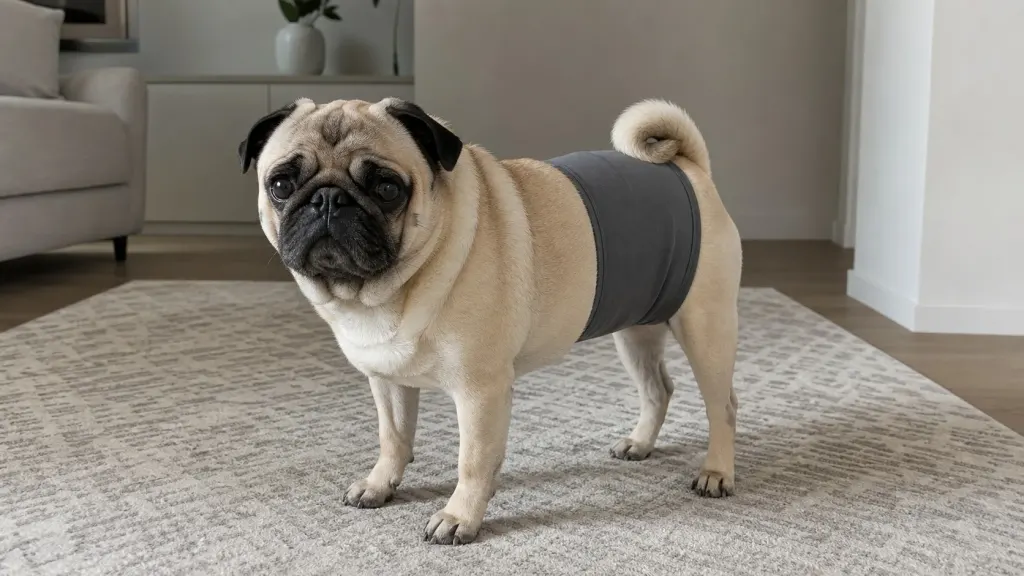
Older Pugs often require diapers due to age-related urinary leakage. Tracking when Pugs reach senior age helps caregivers anticipate physical changes that accompany aging, including weakened bladder sphincter tone.
Sample Daily Diapering Schedule:
07:00 AM: Morning wake-up: Remove overnight diaper, clean skin, outdoor potty trip.
08:00 AM: Apply fresh daytime wrap or diaper after breakfast.
12:30 PM: Midday check: Replace soiled wrap, apply skin balm if needed, outdoor walk.
05:30 PM: Evening change: Inspect groin skin, allow 30 minutes of diaper-free air time.
10:00 PM: Bedtime preparation: Clean area thoroughly, fit fresh overnight diaper with high-absorbency core.
Safety and Hygiene Tips
Urine containment is practical, but prolonged moisture contact against canine skin causes chemical irritation known as urine scald. According to American Kennel Club veterinary guidance on dog incontinence, pet diapers must never become a passive substitute for regular outdoor elimination trips. Check your Pug’s diaper every two to four hours, and replace it immediately whenever it is wet or soiled.
Clean the genital area and groin folds during every change using unscented, alcohol-free pet wipes or a damp washcloth. Thoroughly pat the skin dry before fastening a fresh diaper. If the skin shows mild redness from friction, apply a thin layer of plain petroleum jelly or a veterinarian-recommended canine barrier ointment.
Note:
Never apply human diaper rash creams containing zinc oxide to your dog. Dogs frequently lick around their diaper bands, and ingested zinc oxide causes acute gastrointestinal distress and toxic red blood cell destruction.
When to Avoid Diapers
Diapers serve as supportive hygiene garments, not permanent solutions for unresolved health or training problems. You should avoid relying on diapers in the following situations:
- Puppy House Training: Putting diapers on a healthy young puppy confuses their natural instinct to eliminate outdoors and substantially delays potty training progress.
- Undiagnosed Urinary Incontinence: Sudden frequent urination, cloudy urine, strong odors, or painful straining indicate a potential urinary tract infection, bladder stones, or diabetes. These conditions require veterinary treatment rather than diaper coverage.
- Severe Skin Infections: If your Pug develops active hot spots, fungal dermatitis, or broken skin in the groin area, keep diapers off until the skin heals under veterinary care.
Troubleshooting Common Issues
Even with careful measuring, Pug owners frequently face practical fit challenges. The Pug’s rounded body shape, absence of prominent hip bones, and tightly curled corkscrew tail create unique diapering hurdles.
Leaks and Overflows
Side leakage usually occurs when the diaper’s absorbent pad shifts away from the urinary opening or when the garment is too loose around the thighs. If urine consistently escapes along the leg elastic, the leg openings are too wide, signaling that your Pug needs a smaller size or a diaper with double-elastic ruffles. Diapers also twist out of position during couch burrowing. Because of typical lap dog nesting tendencies, friction against cushions and blankets can roll the waistband downward, allowing fluid to escape along the hips.
For male Pugs wearing belly bands, position the wrap slightly forward so that the entire penile sheath remains fully covered even when your dog sits down. For high-volume overnight wetters, insert an adhesive disposable pet booster pad into the center of a washable wrap to double the fluid capacity without increasing the outer waistband size.
Troubleshooting Guide for Diaper Leaks:
- Leaking from the top waistband: Diaper is too loose; tighten velcro tabs to achieve a two-finger fit.
- Leaking from the leg openings: Diaper is too large; downsize one bracket or choose high-elastic cuffs.
- Diaper sliding down over the hips: Straight Pug hip structure; use canine diaper suspenders.
- Urine escaping from the tail hole: Female diaper hole too large; fold or tape excess tail hole space.
Diaper Rash and Skin Care
Diaper dermatitis develops when warmth, moisture, and bacteria remain trapped against the skin. Pugs have sensitive skin and dense coats that retain dampness easily. Incorporating groin inspection into your routine Pug skin and coat care helps you catch friction marks before they develop into painful sores.
Allow your Pug at least 20 to 30 minutes of diaper-free time every day in an easily cleanable room or outdoors. This air exposure dries the skin surface naturally. If you observe persistent redness, hair loss, or a sour odor around the groin, consult your veterinarian for medicated topical foam or antimicrobial wipes.
Practical Sizing Considerations and Related Breed Traits
A Pug’s daily behavior and physical characteristics directly influence how a diaper performs over several hours of wear. Factoring these lifestyle details into your sizing choices ensures lasting comfort.
How Body Structure and Wrinkles Impact Diaper Fit
The trademark Pug body features compact muscle mass, a wide ribcage, and loose pelvic skin folds. When fitting a diaper, ensure the waistband rests smoothly over skin folds rather than trapping a fold tightly beneath the edge, which causes rapid chafing.
Because Pugs lack defined waist indents behind the ribs, diapers tend to slip backward when the dog walks. Dog diaper suspenders that cross over the shoulders provide a gentle, effective way to anchor garments in place without having to overtighten the waist.
Sleep Habits, Breathing, and Overnight Diaper Security
Pugs are known for relaxed sleeping habits and distinctive breathing sounds. Observing Pug snoring and sleeping habits reveals that Pugs often sleep curled in tight balls or stretched flat on their sides. Diapers must remain flexible enough to maintain a seal across both sleeping positions without compressing the lower abdomen.
Pugs also exhibit heavy abdominal breathing effort due to their brachycephalic airway anatomy. Listening to Pug respiratory snorting sounds highlights why waistbands must never be fastened tightly. An overly snug waistband restricts diaphragmatic expansion, making breathing noticeably harder for your dog.
Managing Excitement Peeing and Activity Levels
Many companion Pugs experience minor urine leakage during energetic greetings or social excitement. Using a lightweight belly band provides temporary indoor protection while you reinforce calm greeting routines and positive behavioral habits.
Furthermore, Pugs love burrowing into blankets, rugs, and soft cushions. Constant friction against upholstery can snag loose diaper tabs and peel them open. Selecting diapers with wide, recessed hook-and-loop fasteners ensures the garment stays firmly fastened throughout energetic digging sessions.
Frequently Asked Questions About Pug Diaper Sizes
How do I stop my Pug’s diaper from slipping off?
Pugs have narrow, straight hips and a rounded torso that allow diapers to slide backward easily. To keep diapers secure, adjust the waistband to allow a snug two-finger gap, choose models with elasticized back waistbands, or use adjustable canine diaper suspenders that clip over your Pug’s shoulders.
What diaper size does a 15-pound Pug take?
A 15-pound adult Pug almost always wears a size Small dog diaper or male wrap. However, if your 15-pound dog has a slender 13-inch waistline, an Extra Small (XS) might provide a better seal around the legs. Always confirm your dog’s waist measurement in inches against the manufacturer chart before purchasing.
Do male Pugs need full diapers or belly bands?
For urinary issues such as territory marking, excitement urination, or senior bladder leaks, male Pugs should wear male belly bands. Belly bands wrap around the midsection to cover the penile area without restricting the tail or hind legs. Full diapers are only necessary for male dogs dealing with fecal incontinence.
Can you use human baby diapers for a Pug?
You can use human baby diapers in a size 2 or size 3 for an adult Pug as an economical alternative, but you must cut a customized tail hole for female dogs. However, purpose-built dog diapers fit canine leg anatomy better and feature re-fastenable tabs designed not to stick to dog fur.
How often should you change a Pug’s diaper?
You should check your Pug’s diaper every two to four hours and change it immediately once it becomes wet or soiled. Leaving a wet diaper on for extended periods traps moisture and bacteria against the skin, leading to painful urine scald and bacterial infections.
Leave a Reply