
Table of Contents
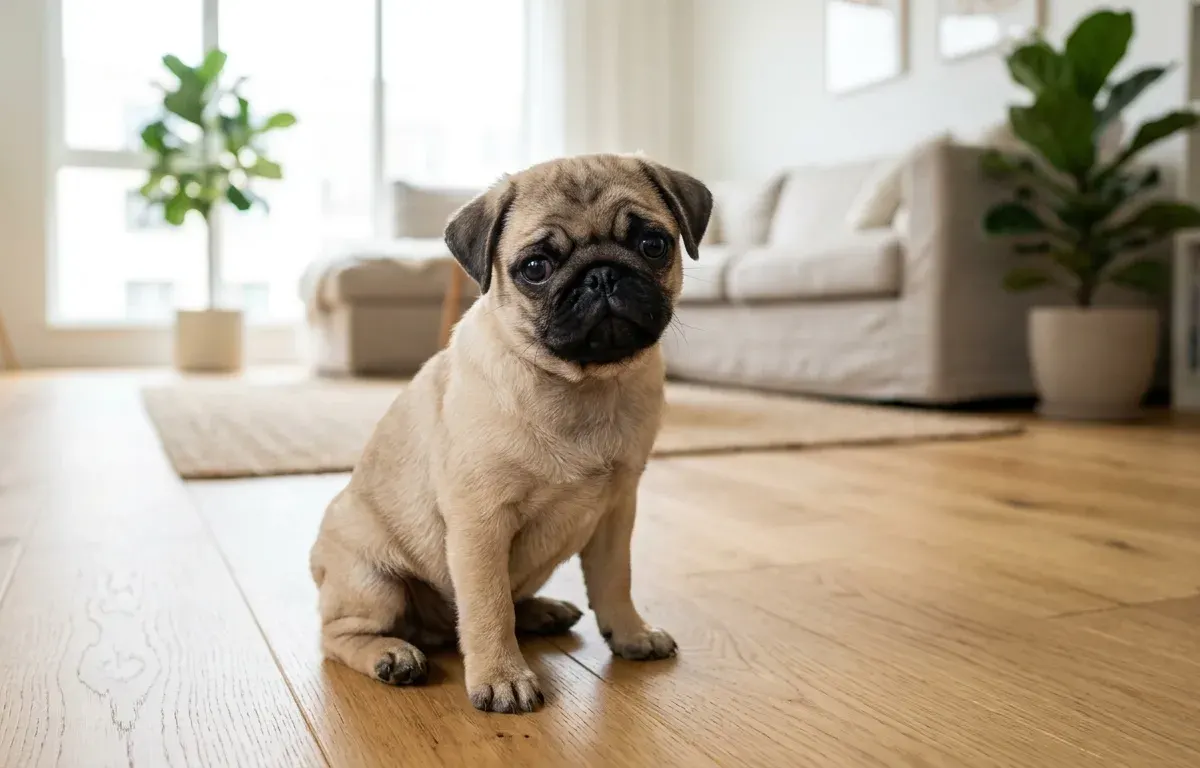
A Pug's eyeball does not completely detach or drop out on its own, but concerned owners frequently ask why a flat-faced dog's eye appears to fall forward when injured. The eye can protrude forward out of its socket during sudden physical trauma, a critical emergency known as ocular proptosis. Because Pugs are a brachycephalic breed with shallow bony orbits and wide eyelid openings, physical collision, scruffing, or pulling firmly on a neck collar can force the eyeball forward past the eyelids. Immediate emergency veterinary intervention is needed to replace the eyeball and protect vision.
- Proptosis occurs when trauma or sudden orbital pressure forces the eyeball forward past the eyelids.
- The eyeball remains connected to the skull by the optic nerve, extraocular muscles, and blood vessels.
- Getting medical care within 60 to 120 minutes provides the highest probability of saving eyesight.
- Never attempt to push the eyeball back into the socket at home, as this causes severe tissue trauma.
- Walking Pugs with a chest harness rather than a neck collar protects them from sudden ocular pressure spikes.
Can a Pug’s Eyes Really Fall Out?
The short answer is no; a pug dog’s eyes do not fall out or roll across the floor on their own. While owners often worry about whether trauma can cause pug dogs’ eyes to pop out of place or why an eye might fall forward after an impact, their concern stems from a real veterinary emergency called ocular proptosis. In these cases, the organ does not disconnect from the head, but facial pressure forces the globe forward past the eyelids.
The Medical Term: What Is Ocular Proptosis?
In veterinary medicine, proptosis refers to the anterior displacement of the globe beyond the orbital rim. Concerned owners often wonder why this displacement happens so much more readily in flat-faced dogs, and the answer lies in their unique facial anatomy. When a Pug experiences sudden head trauma or facial pressure, the organ moves forward. The eyelids then spasm and contract behind the equator of the globe. This muscle contraction traps the structure forward, preventing it from sliding back into place naturally.
According to veterinary ophthalmology literature in the Merck Veterinary Manual, proptosis impairs venous drainage while arterial blood flow continues. This imbalance rapidly causes severe tissue swelling, conjunctival edema, and corneal drying.
Why Proptosis Is a True Veterinary Emergency
Proptosis requires immediate attention at an emergency clinic. As the eyelids remain trapped behind the protruding globe, exposed tissues dry out within minutes. The stretching of the optic nerve and extraocular muscles can cause permanent nerve trauma or rupture blood vessels.
Without rapid veterinary care, the exposed cornea develops ulcerations, and the optic nerve suffers irreversible damage, leading to permanent loss of sight.
Why Pugs Are More Vulnerable to Eye Displacement Than Other Breeds
Not all dog breeds face the same risk of ocular trauma. While a Golden Retriever or German Shepherd rarely suffers from proptosis outside of massive car accidents, Pugs can experience globe displacement from relatively minor physical incidents.
Shallow Bony Orbits and Wide Eyelid Openings
The primary reason Pugs are prone to orbital proptosis lies in their skull anatomy. Pugs are a brachycephalic breed, characterized by a shortened facial skeleton. This unique structure directly influences pug appearance, resulting in flat faces and unusually shallow sockets.
Ophthalmology specialists at the Royal Veterinary College note that brachycephalic dogs possess shallow bony orbits alongside shallow orbital depths. Consequently, less physical force is required to displace the globe forward compared to mesocephalic or dolichocephalic breeds. Additionally, Pugs have macroblepharon, meaning their eyelid openings are unusually wide, providing less structural support around the globe.
Because of this unique anatomy, owners frequently wonder how easily globe displacement can occur during everyday play. In flat-faced dogs, even moderate pressure on the neck or a minor collision during activity can displace the globe forward, whereas long-muzzled dogs have deeper bony sockets that protect their facial organs.
Other Brachycephalic Breeds Facing Similar Risks
This vulnerability is not limited to Pugs. Other flat-faced dogs, including Pekingese, Shih Tzus, and Boston Terriers, share similar anatomical traits. The same anatomical features linked to pug snorting causes and narrow upper airways also create these ocular vulnerabilities. The combination of shallow bony sockets, wide eyelid apertures, and tight facial skin means that facial pressure which would only cause a mild bruise in a long-muzzled dog can trigger globe displacement in a Pug.
Note: Young Pugs and playful puppies require extra supervision around larger pets to avoid head injuries during rough play.
Causes of Eye Proptosis in Pug Dogs
Understanding what triggers proptosis helps owners protect their pets from sudden accidents. Physical force applied directly to the head, face, or neck is the underlying cause in almost every case.
| Primary Cause | Mechanism of Injury | Prevention Strategy |
|---|---|---|
| Dog Fights & Rough Play | Bites or pressure near the head and neck | Supervise interactions with larger dogs |
| Neck Traction & Scruffing | Restraint pressure squeezing facial tissues | Use a body harness instead of a neck collar |
| Blunt Trauma & Falls | Direct impact to the skull or orbital rim | Secure dogs during car rides and prevent falls |
Trauma From Dog Fights or Blunt Impact
The most frequent cause of proptosis in flat-faced dogs is physical conflict with larger animals. A bite to the back of the neck or facial compression during a scuffle can instantly push the globe forward.
Accidental collisions, such as being struck by a toy, falling off furniture, or motor vehicle impacts, can also exert enough force to displace the globe. Understanding how pugs interact with other dogs and managing play sessions helps minimize the chance of unexpected fights.
Excessive Scruffing or Heavy Neck Restraint
Restraining a Pug incorrectly can also trigger an emergency. Restraining a dog by scruffing the loose skin behind the neck pulls the facial skin backward while increasing pressure around the head. In brachycephalic dogs with shallow sockets, firm scruffing or pulling sharply on a tight neck collar can force the globes forward.
Recognizing the Signs and Immediate First Aid at Home
Recognizing proptosis immediately and taking the correct action within the first few minutes directly impacts whether your Pug will retain visual function.
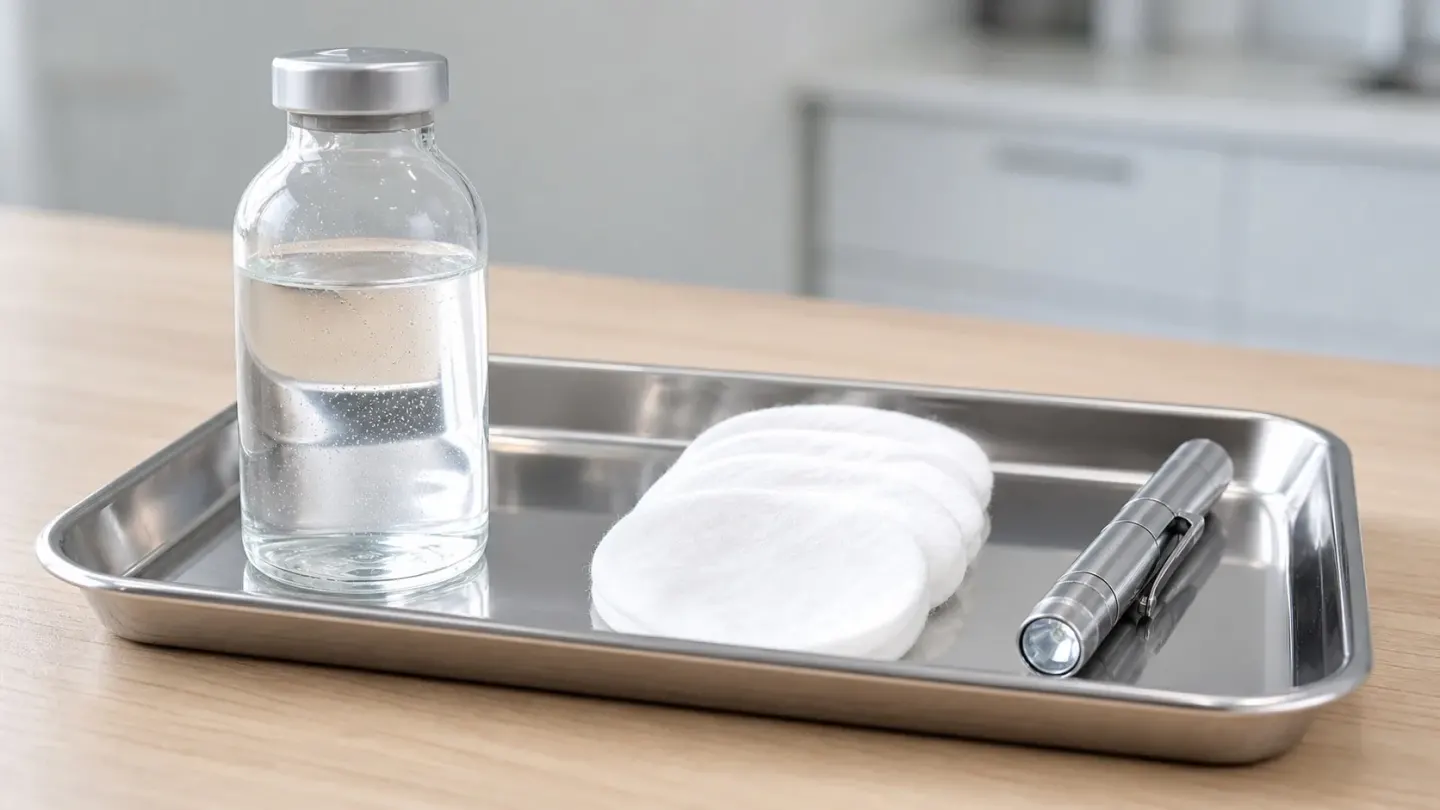
Critical Steps to Take Immediately
If you notice your dog’s eyeball protruding beyond the eyelids, act swiftly:
- Keep Exposed Tissues Moist: Apply sterile saline solution, artificial tears, or clean water over the exposed globe immediately. You can saturate a clean gauze pad with saline and gently place it over the area without pressing.
- Apply an E-Collar: Place an Elizabethan collar on your Pug right away to prevent them from scratching or pawing at the injured area.
- Keep Your Dog Calm: Minimize stress and movement to prevent blood pressure spikes that worsen tissue swelling.
- Transport to a Vet Immediately: Drive directly to the nearest veterinary hospital or emergency clinic.
Paying attention to subtle behavioral shifts, much like tracking why pugs lick excessively due to discomfort, ensures you catch discomfort before complications worsen.
Actions You Must Avoid At All Costs
When handling an ocular injury, certain mistakes can cause irreversible damage:
- Do NOT try to push the globe back in: Attempting to force the displaced tissue into the socket without anesthesia can rupture the eyeball or damage the optic nerve.
- Do NOT apply dry cloths: Dry towels or tissues will stick to the sensitive corneal epithelium, stripping away delicate cells.
- Do NOT use medicated human eye drops: Never apply human ophthalmic medications, steroid drops, or contact lens solutions containing preservatives.
Caution: Time is the most critical factor in proptosis emergencies. Treatment within 1 to 2 hours of injury dramatically increases the probability of preserving sight.
How Veterinarians Treat Ocular Proptosis
Veterinary management of proptosis depends on the severity of tissue damage, the duration of exposure, and whether the optic nerve remains intact.
Globe Replacement and Temporary Suture (Tarsorrhaphy)
If treated quickly and internal structures remain undamaged, the veterinarian will perform surgical reduction under general anesthesia:
- Flushing and Decontamination: The exposed globe is thoroughly irrigated with sterile saline and antiseptic solutions to remove debris.
- Globe Reduction: The surgeon gently lifts the trapped eyelid margins outward while guiding the eyeball back into the bony orbit.
- Temporary Tarsorrhaphy: The upper and lower eyelids are sutured together temporarily using non-absorbable sutures. This holds the globe securely inside the socket while swelling subsides over 2 to 3 weeks.
- Post-Operative Support: Antibiotic ophthalmic ointments, oral anti-inflammatory drugs, and pain medications are prescribed. Providing proper nutrition through a balanced pug diet supports tissue healing during recovery.
When Surgical Eye Removal (Enucleation) Is Necessary
In severe cases, saving the physical globe is not medically possible. The veterinarian will recommend surgical removal (enucleation) under the following conditions:
- The optic nerve is severed or extensively torn.
- Multiple extraocular muscles are torn from the globe.
- The eyeball has collapsed due to severe rupture.
- The tissue was exposed dry for many hours, resulting in extensive necrosis.
Enucleation removes the damaged organ and permanently closes the eyelids. Dogs adapt remarkably well to single-eye vision and live comfortable, pain-free lives following recovery.
Prognosis and Long-Term Visual Recovery
The overall outlook for a Pug following proptosis depends on how quickly medical care was provided. Because Pugs have shallow sockets, their optic nerves sometimes suffer less acute tearing during mild displacement than long-snouted dogs, giving flat-faced breeds a slightly better chance of preserving the affected globe.
| Factor | Favorable Prognosis | Guarded to Poor Prognosis |
|---|---|---|
| Time to Treatment | Under 2 hours | Over 4 hours |
| Ocular Appearance | Clear cornea, intact pupil reflex | Clouded cornea, hyphaema (internal bleeding) |
| Muscle Integrity | Most extraocular muscles intact | Multiple torn muscles, globe torn free |
Even when the physical globe is successfully saved and replaced, long-term complications can develop. Common post-recovery issues include dry eye syndrome (keratoconjunctivitis sicca), corneal scarring, and reduced visual acuity. Regular monitoring is essential, particularly in senior pug dogs who may already have age-related visual changes.
Why a Pug’s Eyes May Look Crooked Even Without Trauma
Many pet owners wonder why pug dogs look like their eyes are crooked when viewing them head-on. It is common for flat-faced breeds to have eyes that do not point in the exact same direction, even when no physical trauma or medical emergency has taken place.
Mild Strabismus in Short-Muzzled Dogs
It is common for Pugs to exhibit a slight outward or downward globe deviation, known as strabismus. This condition is often congenital and related to the shape of the brachycephalic skull.
The shallow orbital anatomy alters the pull angle of the extraocular muscles, causing one or both globes to appear slightly misaligned. As long as the misalignment is constant from puppyhood, painless, and not accompanied by swelling or discharge, it is a harmless physical characteristic rather than a medical emergency.
How to Reduce Eye Injury Risks in Daily Pug Care
Preventing ocular proptosis and corneal trauma in Pugs requires consistent daily management focused on anatomical protection and pressure reduction.
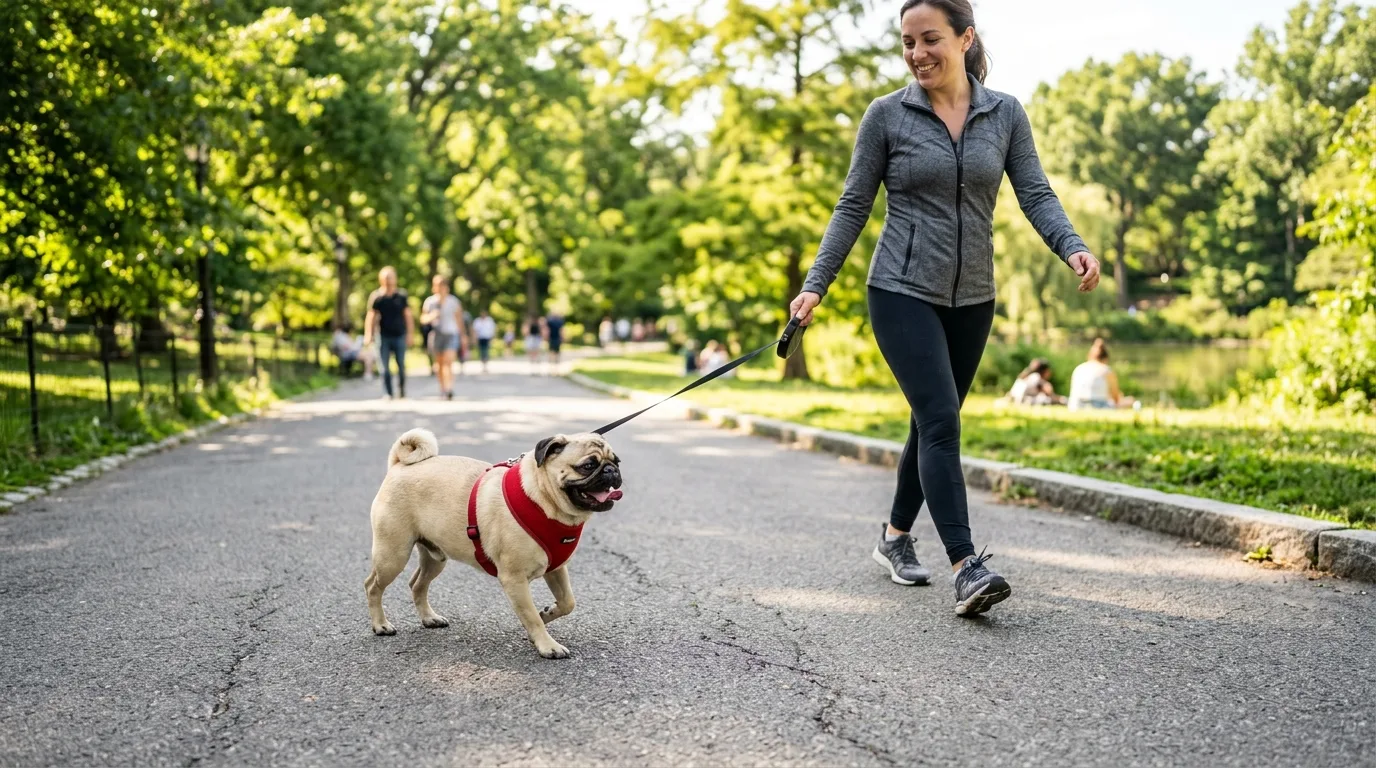
- Switch from Neck Collars to Chest Harnesses: Always walk a Pug using a well-fitted Y-shaped or step-in chest harness. Traditional neck collars compress the jugular veins when pulled, causing an immediate spike in intraocular pressure (IOP) that can dislodge the globe from its shallow bony socket.
- Eliminate Neck Scruffing and Firm Head Restraints: Never grasp, lift, or restrain a Pug by the scruff of the neck during training, grooming, or veterinary exams. Pulling the loose nape skin pulls facial tissues backward and forces the eyeballs forward.
- Supervise Play and Manage Multi-Pet Scuffles: Keep close watch during interactions with larger canines or cats. Sudden bites to the nape, rough tumbling, or sharp cat scratches represent leading causes of traumatic proptosis and corneal perforations.
- Pug-Proof the Home Environment: Cushion sharp furniture corners at eye level and trim low-hanging thorny indoor plants. Because Pugs lack a protective nasal bridge, their eyes lead their exploration and collide easily with low obstacles.
- Maintain Daily Ocular Hygiene and Hydration: Make gentle eye checks and saline wiping a routine part of daily pug dog care to flush out debris, clear nasal fold buildup, and catch early signs of redness or corneal irritation.
- Focus on Early Recall and Impulse Control: Build strong obedience habits when training a pug puppy so your dog responds reliably to verbal recall cues before approaching unfamiliar animals or hazardous areas.
Frequently Asked Questions about Pug Eye Proptosis
Can a proptosed eye go back in on its own?
No, a proptosed globe cannot slide back into the socket on its own. Once the eyeball moves forward, the eyelids contract behind it and trap it in place. Waiting for the structure to self-correct causes severe swelling, corneal drying, and tissue death. Immediate veterinary intervention under anesthesia is required to replace the globe safely.
How much does veterinary treatment for proptosis cost?
The cost of treating proptosis varies based on whether the globe can be saved with a tarsorrhaphy or requires surgical removal (enucleation). Expenses usually cover emergency exam fees, general anesthesia, surgical repair, pain management, and follow-up visits. Emergency treatment typically ranges from several hundred to a few thousand dollars depending on clinic location and surgical complexity.
If a Pug has had proptosis once, is it likely to happen again?
A Pug that has experienced proptosis has a higher chance of recurrence if subjected to similar physical force. Because the underlying anatomy of shallow orbits remains unchanged, and stretching of surrounding tissues may reduce structural support, owners must strictly use a harness and avoid neck pressure to protect their pet.

Leave a Reply