
Table of Contents
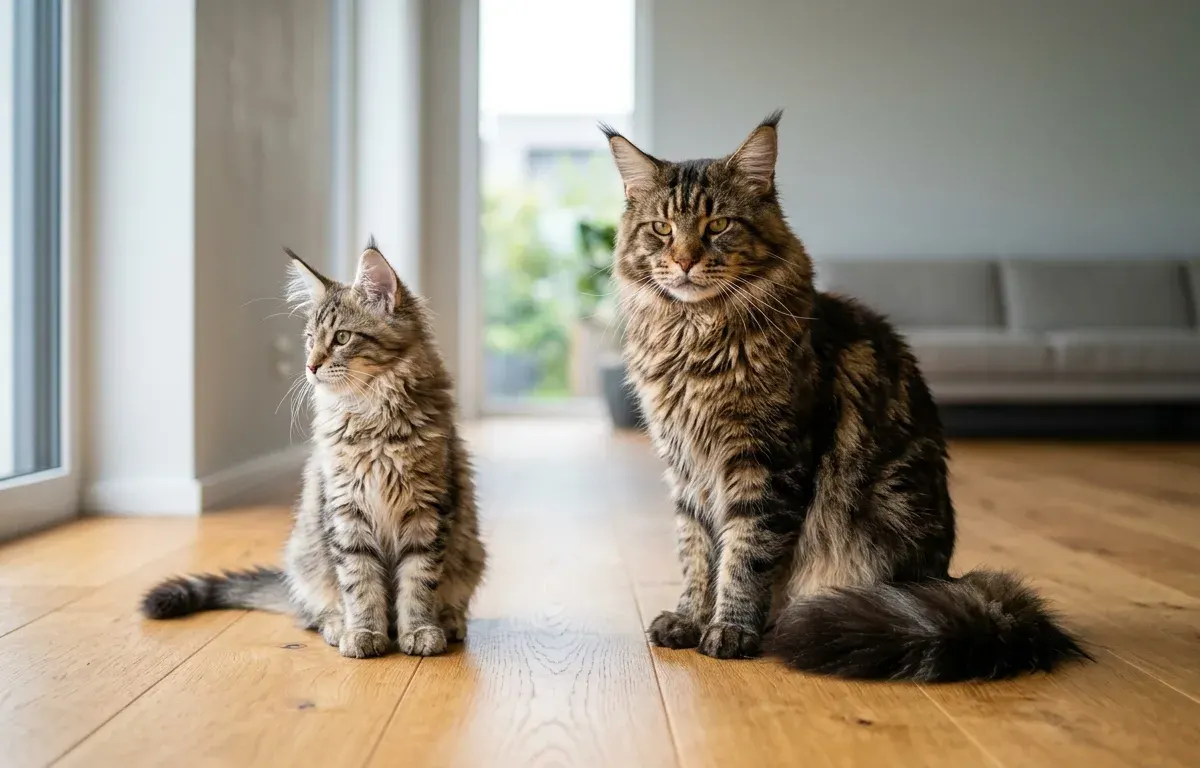
When determining when do Maine Coons stop growing, most cats reach full adult maturity between 3 and 5 years of age. Unlike standard domestic cats that reach full adult size by 12 to 18 months, Maine Coons are a slow-maturing breed whose skeletal frame, muscle mass, and dense coat require 36 to 60 months to complete development. Skeletal length and height largely finalize around 2 to 3 years of age, while muscle density and chest width continue filling out until age 5.
- Maine Coons continue developing for 3 to 5 years, making them one of the slowest-maturing cat breeds.
- Skeletal length growth slows between 18 and 24 months, followed by muscle mass and chest broadening through age 4 or 5.
- Adult males generally reach 15 to 25 pounds (6.8 to 11.3 kg), whereas adult females average 8 to 15 pounds (3.6 to 6.8 kg).
- Sexual maturity occurs between 10 and 16 months, preceding full physical and skeletal maturity by several years.
- Balanced nutrition with controlled caloric density supports steady bone growth without inducing orthopedic strain.
Maine Coon growth timeline (how long they grow)
Tracking a Maine Coon kitten requires patience because their developmental arc extends across several distinct phases. Knowing when do maine coons stop growing helps owners set realistic expectations for food intake, veterinary monitoring, and weight tracking.
How long does maine coon grow (typical timeline by age)?
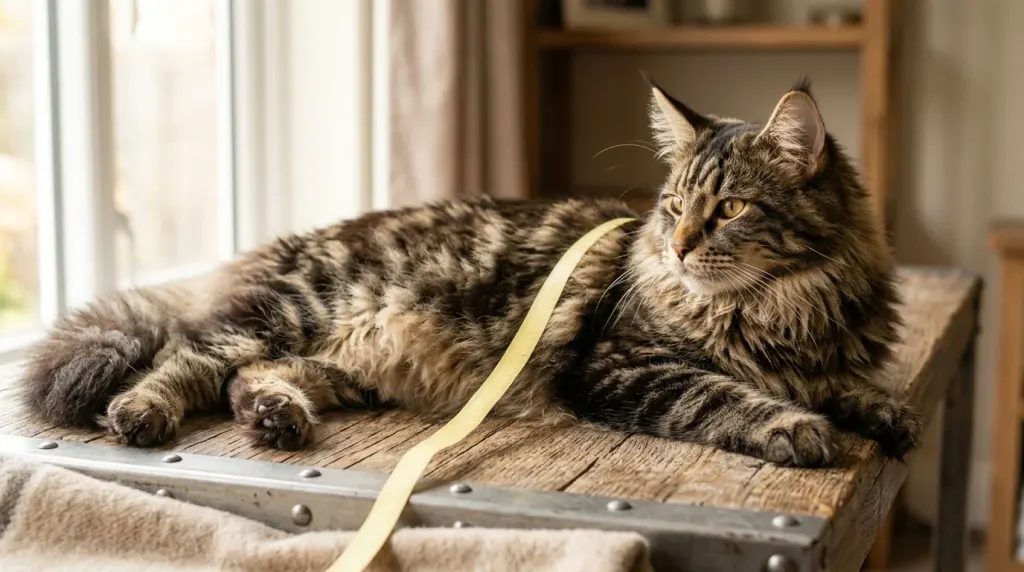
A Maine Coon grows steadily across five distinct age milestones:
| Age Phase | Typical Weight Range (Males) | Typical Weight Range (Females) | Key Developmental Milestones |
|---|---|---|---|
| 0 to 3 Months | 3 to 5 lbs (1.4 to 2.3 kg) | 2.5 to 4.5 lbs (1.1 to 2.0 kg) | Rapid initial bone elongation, weaning, deciduous teeth emergence |
| 4 to 6 Months | 6 to 10 lbs (2.7 to 4.5 kg) | 5 to 8 lbs (2.3 to 3.6 kg) | Juvenile growth spurt, primary coat density begins developing |
| 7 to 12 Months | 11 to 15 lbs (5.0 to 6.8 kg) | 8 to 11 lbs (3.6 to 5.0 kg) | Reaches 70% to 80% of adult frame; permanent teeth locked in |
| 13 to 24 Months | 14 to 19 lbs (6.4 to 8.6 kg) | 9 to 13 lbs (4.1 to 5.9 kg) | Skeletal growth slows; long-bone epiphyses begin consolidating |
| 25 to 60 Months | 15 to 25+ lbs (6.8 to 11.3+ kg) | 8 to 15 lbs (3.6 to 6.8 kg) | Full muscle thickening, broad chest development, mane and ruff maturity |
From kitten stage to adolescent growth rate (what commonly happens first)
During the first 12 months, Maine Coon kittens experience a steep growth curve, gaining an average of 1 to 2 pounds per month between months three and eight. Physical milestones in young companion animals often follow distinct developmental markers, much like tracking when French Bulldog ears stand up during cartilage hardening stages. For Maine Coons, ear tufts, large paws, and prominent bone structure appear early, but the body remains slender and lanky throughout the juvenile period.
When growth starts to slow (weight and length gains taper)
Between 18 and 24 months, the rapid vertical and longitudinal growth rate begins to taper. At this stage, your cat will have achieved approximately 90% of its final skeletal length, but its ribcage, shoulders, and hips remain narrow. Weight gains shift from sudden weekly jumps to steady, subtle monthly increments.
How long do maine coon cats grow (growth phases)?
The physical growth of a Maine Coon follows two overarching developmental stages: the skeletal expansion phase (0 to 24 months) and the muscle density consolidation phase (24 to 60 months).
Near-adult size vs fully grown (why people disagree)
Confusion about the breed’s growth endpoint often stems from the difference between reaching near-adult size and achieving complete physical maturity. A two-year-old Maine Coon may look like a full-sized cat to the casual observer, yet handling the animal reveals a lean frame that has not yet packed on dense muscle across the back, shoulders, and chest. Full maturity encompasses complete skeletal frame development, adult coat texture, a dense frontal ruff, and muscular thickness.
Common milestones owners can track (body condition, size changes)
Owners can track progress using a digital scale and body condition scoring (BCS) every two to four weeks. During adolescent checks, owners should assess whether ribs are easily palpable beneath a thin layer of fat without protruding excessively.
How long does maine coon grow (typical range)?
Most Maine Coons grow actively for 36 to 48 months, with large-boned males continuing subtle physical development up to 60 months (5 full years).
Provide a short expectation range and explain uncertainty
- Average female Maine Coon: 36 to 42 months (3 to 3.5 years)
- Average male Maine Coon: 42 to 48 months (3.5 to 4 years)
- Exceptionally large pedigree male lines: up to 60 months (5 years)
Individual variation depends on parental lineage, overall health status, and nutritional quality during growth phases.
How long for a maine coon to be full grown (full-size vs maturity)?
Somatic maturation involves both endocrine and musculoskeletal milestones. A peer-reviewed study on feline breed maturation in Life classifies Maine Coons as a late-maturing breed, noting that sexual maturity typically occurs between 10 and 16 months of age, in contrast to early-maturing breeds that reach puberty as early as 6 months.
Full maturity can lag behind near-adult size
Just as owners often monitor when French Bulldogs go into heat to gauge sexual maturity in young pets, Maine Coon owners must recognize that puberty arrives long before the cat finishes developing skeletal frame and muscle density. Reproductive maturity is an endocrine checkpoint, whereas complete skeletal ossification and muscle hypertrophy require an additional two to three years.
Health and nutrition effects on the timeline
Providing a protein-dense, moderate-fat diet formulated for large-breed kittens or all life stages ensures that bones develop at an even pace. Deficiencies in essential amino acids (such as taurine and lysine) or improper calcium-to-phosphorus ratios can impair bone density or cause premature growth plate anomalies.
Maine Coon size expectations (when they are full grown)
When a Maine Coon reaches full maturity, it represents one of the largest domestic feline breeds registered by international registries such as CFA and TICA.
How long for a maine coon to be full grown (what full grown means)?
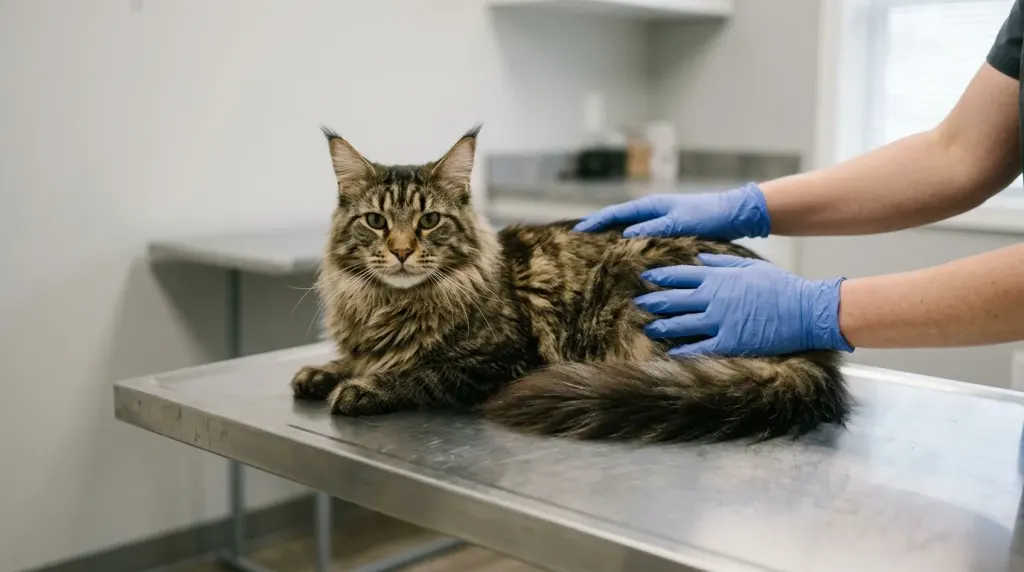
Being full grown encompasses three primary physical measurements:
- Body weight: Healthy adult males weigh between 15 and 25 pounds (6.8 to 11.3 kg), with some exceptional individuals reaching 26 to 28 pounds without being obese. Healthy adult females weigh between 8 and 15 pounds (3.6 to 6.8 kg).
- Body length: Measured from the tip of the nose to the end of the tail, mature Maine Coons span 30 to 40 inches (76 to 101 cm), with some championship males exceeding 45 inches.
- Standing height: Shoulder height typically measures 10 to 16 inches (25 to 40 cm).
Weight alone is an incomplete metric for assessing whether a Maine Coon is full grown. A long, broad-framed male carrying 20 pounds of lean muscle may possess an ideal Body Condition Score of 5/9, whereas a smaller-framed cat weighing 18 pounds could be clinically overweight. True maturity is marked by a solid, muscular chest, thick bone structure, and fully formed facial cheeks and muzzle.
When growth appears to stop in real life (signs you are in the tapering phase)
You can tell your Maine Coon is entering the final growth stage when several physical markers align:
- Weight stability: Monthly weigh-ins fluctuate by less than 0.2 to 0.4 pounds over a six-month window.
- Skull and muzzle width: The square muzzle and cheek structure have fully widened, giving the characteristic mature expression.
- Coat maturity: The frontal ruff (mane) around the neck and the long, water-repellent guard hairs on the back reach their full volume and texture.
- Growth plate closure: Long-bone epiphyseal plates have fully fused.
Similar to questions regarding when to neuter a French Bulldog to protect joint development, the timing of gonadectomy in large cats can slightly influence when long-bone growth plates close. Early neutering before 6 months may delay physeal closure, resulting in slightly longer limbs, whereas waiting until physical maturity preserves natural hormonal timing.
Because large breeds mature slowly over 3 to 5 years, their life stages shift accordingly, unlike smaller companion breeds where owners need to track when Pugs are considered senior dogs much earlier in life.
Maine Coon growth stages (when they stop growing)
Understanding each stage of Maine Coon development allows pet parents to adjust feeding portions, activity routines, and preventive veterinary care appropriately.
When do maine coons stop growing (typical age window)?
The typical age window for growth cessation falls between 36 and 60 months.
Define stop growing (tapering vs hard stop)
Growth in domestic felines does not end with an abrupt cutoff date. Instead, it follows an asymptotic deceleration curve. The skeletal framework establishes its maximum dimensions between 24 and 36 months, after which bone density, joint cartilage, and muscle fibers continue reinforcing until approximately age 5.
What counts as normal late growth
Between ages 3 and 4, it is normal for a Maine Coon to gain 1 to 3 pounds of lean muscle and for the chest circumference to broaden by 1 to 2 inches without any corresponding increase in body fat percentage.
When do maine coon stop growing (variations by kitten vs full size)?
Differences in lineage, sex, and individual metabolism create distinct growth rates across kittens within the same litter.
Sex differences in adult size and timeline
- Females: Female Maine Coons mature faster, typically completing skeletal and muscular growth between 3 and 4 years (36 to 48 months). Their overall frame is more refined and agile.
- Males: Males retain juvenile growth rates longer, often adding muscle thickness, broad head development, and torso volume until 4 to 5 years (48 to 60 months).
Genetics and lineage variations
Genetic inheritance from the sire and dam is the single largest determinant of ultimate size. Traditional American lines tend to develop steady, muscular builds, whereas European lines often emphasize heavier boning, exaggerated ear tufts, and longer facial muzzles.
When does a maine coon stop growing (what stop means)?
Even after longitudinal skeletal growth ceases, metabolic shifts can alter your cat’s physique.
Why weight may change even after length growth slows
Once height and length growth plateau around year two or three, an unchanged high-calorie kitten diet can lead to excess adipose tissue accumulation in the primordial abdominal pouch. Monitoring caloric intake and maintaining active playtime ensures that weight gain during years three through five consists of muscle mass rather than visceral fat.
When do maine coons stop growing (what can delay or accelerate the timeline)?
Several physiological and nutritional factors directly impact the growth timeline.
Nutrition and health factors
- Caloric balance: Overfeeding does not accelerate skeletal growth; it increases biomechanical stress on immature joints and can elevate the risk of hip dysplasia.
- Kitten diet duration: Because Maine Coons grow for multiple years, many veterinarians recommend feeding high-protein kitten food or all-life-stages wet food for the first 12 to 18 months, followed by measured adult maintenance food.
- Underlying health conditions: Genetic conditions like Hypertrophic Cardiomyopathy (HCM) or Spinal Muscular Atrophy (SMA) require regular screening to support long-term vigor.
When to ask a vet about abnormal growth
Adolescent pets frequently display developmental behaviors; for example, understanding why Pug dogs pee when excited or what it means when dogs pull their ears back helps pet owners distinguish temporary juvenile excitement from underlying medical distress.
Note: Consult your veterinarian if your Maine Coon kitten stops gaining weight for two consecutive weeks during its first year, displays persistent limping, or shows signs of lethargy. Routine wellness exams should include physical palpation of hips and patellas to verify normal joint development.
Frequently asked questions about Maine Coon growth
When do Maine Coons stop growing?
Most Maine Coons stop growing between 3 and 5 years of age. Skeletal length and height are largely complete by age 2 to 3, while muscle mass, chest width, and coat density continue developing until age 4 or 5.
When does a Maine Coon stop growing?
A Maine Coon reaches its finalized physical dimensions around 36 to 48 months for females and 48 to 60 months for large males. At this point, bone plates have fused, body weight stabilizes, and the adult coat and facial contours reach full maturity.
How long does a Maine Coon grow?
A Maine Coon grows actively for 3 to 5 full years. During the first year, growth is rapid and length-focused; during years two through five, growth transitions into muscle development and structural broadening.
How long do Maine Coon cats grow?
Maine Coon cats grow for 36 to 60 months, which is three to four times longer than standard domestic cat breeds that finish growing around 12 to 18 months.
How long for a Maine Coon to be full grown?
It takes approximately 3 to 5 years for a Maine Coon to become completely full grown in weight, length, skeletal structure, and coat fullness.
Leave a Reply