

Table of Contents
Female Golden Retrievers usually have their first heat cycle between 9 and 14 months of age, although some individuals begin as early as 8 months or as late as 18 to 24 months. Because Golden Retrievers are a large sporting breed, physical and hormonal maturation takes longer than in smaller companion dogs. The entire heat cycle lasts about 3 weeks, beginning with 7 to 10 days of active bloody discharge before entering the peak fertile window.
- Golden Retrievers generally enter their first heat between 9 and 14 months of age, with normal developmental variations extending up to 24 months.
- The total heat cycle spans 2 to 4 weeks (averaging 21 days) across four biological phases: Proestrus, Estrus, Diestrus, and Anestrus.
- Active bleeding occurs during the initial Proestrus phase (7 to 10 days) and transitions to a lighter, watery discharge during fertile Estrus.
- Ovulation happens when discharge lightens, meaning a female Golden Retriever is most receptive to mating after her heaviest bleeding subsides.
- Irregular first cycles, including split heats or silent heats, are common developmental occurrences in young adolescent dogs.
Welcoming a female Golden Retriever puppy brings rapid physical growth, boundless energy, and eventually the milestone of sexual maturity. Recognizing the onset of your dog’s first estrous cycle helps you protect her health, prevent unintended pregnancies, and keep your home clean throughout the process.
Age at which Golden Retrievers begin their heat cycle (when do golden retrievers have their first heat)
Typical age window for a Golden Retriever’s first heat
Most female Golden Retrievers experience their first heat cycle between 9 and 14 months of age. As a large sporting breed, Golden Retrievers develop more slowly than toy or medium dogs, which frequently reach puberty around 6 months.
While 9 to 14 months represents the statistical median, the broader normal window spans from 8 to 24 months. A healthy Golden Retriever female who has not cycled by 12 months is rarely a cause for concern. Full skeletal and hormonal maturity takes up to two years in this breed, and reproductive milestones mirror that gradual timeline.
| Breed Category | Average Age at First Heat | Normal Range Window |
|---|---|---|
| Toy & Small Breeds | 6 months | 4 to 9 months |
| Medium Breeds | 7 to 10 months | 6 to 12 months |
| Large Breeds (Golden Retrievers) | 9 to 14 months | 8 to 24 months |
| Giant Breeds | 14 to 20 months | 12 to 24 months |
Why timing varies: genetics, body size, and growth rate
Several biological and environmental factors influence the exact month a young Golden Retriever enters puberty:
- Genetics and family lines: The age at which your puppy’s mother and grandmothers cycled is one of the strongest predictors of her timeline.
- Body condition and growth rate: Healthy, lean growth supports steady endocrine function. Overweight puppies or dogs experiencing significant nutritional deficits may cycle early or experience delayed puberty.
- Presence of other cycling females: Pheromonal cues from other intact adult female dogs in the home or neighborhood can trigger early or synchronized heat cycles.
- Overall health and systemic stress: Illness, major surgeries, intensive training stress, or environmental disruption can temporarily postpone reproductive cycling.
Tracking physical growth milestones provides valuable context for her overall development, just as observing tooth count milestones in juvenile French Bulldogs helps veterinarians evaluate adolescent maturity in companion breeds.
Early subtle signs you should not miss
Before noticeable bleeding begins, subtle developmental shifts signal that puberty is approaching:
- Increased vulvar licking: The dog grooms her genital area more frequently as hormonal shifts begin.
- Mild vulvar swelling: The external vulva gradually enlarges and softens over several days.
- Frequent urination: Estrogen surges stimulate a natural urge to scent-mark outdoor territory.
- Behavioral moodiness: Some adolescent Golden Retrievers become unusually clingy, easily startled, or momentarily distracted during training sessions.
Individual genetic lines strongly influence the onset of puberty, much like how inherited genetics dictate early physical trait expressions such as blue eye inheritance patterns in Ragdoll cats across specific bloodlines.
Signs of a Golden Retriever in heat and when the bleeding starts (when do golden retrievers get their period)
Canine heat bleeding vs human menstrual periods
Pet owners often ask when do golden retrievers get their period, comparing canine bleeding to human menstruation. Biologically, the two processes serve opposite functions.
In human menstruation, bleeding marks the end of a cycle, shedding the uterine lining because conception did not occur. In dogs, bleeding occurs at the beginning of the reproductive cycle (Proestrus). Estrogen levels rise, blood vessels in the uterine wall dilate, and red blood cells pass through into vaginal secretions. When your Golden Retriever starts bleeding, she is preparing to ovulate in the coming days, not concluding a cycle.
Physical and behavioral symptoms before and during bleeding
As the cycle progresses from early hormone elevation to active discharge, distinct physical and behavioral signs emerge:
- Swollen, turgid vulva: In the first week, the vulva swells to two or three times its resting size and feels firm to the touch.
- Red or dark bloody discharge: Bleeding begins as dark red or pink drops, most visible where the dog sleeps or on light flooring.
- Tucking The tail: During early bleeding (Proestrus), the female rejects male advances, often sitting down or tucking her tail between her hind legs.
- Appetite changes: Some females experience a temporary dip in appetite or mild nausea during peak estrogen surges.
Observing tail posture during estrus is an instinctive reproductive behavior, distinct from structural characteristics like tail mobility and anatomy in French Bulldogs where tail movement is naturally restricted.
Distinguishing early spotting from the fertile window
Understanding the progression of vaginal discharge helps owners identify risk levels for accidental mating:
| Cycle Stage | Typical Day Range | Discharge Appearance | Female Behavioral Receptivity | Fertility Risk Level |
|---|---|---|---|---|
| Proestrus | Days 1 to 9 | Dark red or bright bloody discharge | Rejects male dogs, tucks tail, may growl | Low immediate conception, but male interest high |
| Estrus | Days 10 to 15 | Light pink or straw-colored watery fluid | Receptive, moves tail to side (flagging) | Peak fertility and maximum pregnancy risk |
| Late Estrus / Early Diestrus | Days 16 to 21 | Diminished brownish or clear fluid | Stops accepting males, vulva swelling subsides | Decreasing fertility, transitioning to rest phase |
When heavy red bleeding lightens to a watery, yellowish-pink fluid, many owners mistakenly believe the heat cycle is finishing. In reality, this lightening marks the start of peak ovulation and maximum fertility.
Understanding the reproductive cycle of Golden Retrievers (cycle phases, duration, frequency)
According to The Royal Kennel Club’s guide on canine heat seasons, a dog’s reproductive cycle spans four distinct biological stages that dictate hormone levels, behavioral shifts, and fertility status.
The four distinct cycle stages: Proestrus, Estrus, Diestrus, and Anestrus
| Stage | Average Duration | Primary Hormonal Shift | Outward Physical Symptoms | Behavioral Characteristics |
|---|---|---|---|---|
| 1. Proestrus | 7 to 10 days | Sharp rise in estrogen | Swollen vulva, dark bloody discharge | Attracts males but firmly rejects mating advances |
| 2. Estrus | 5 to 9 days | Estrogen drops, progesterone rises | Light watery pink or straw discharge | Receptive to mating, displays tail flagging |
| 3. Diestrus | 60 to 90 days | Progesterone dominates | Swelling subsides, discharge disappears | Completely non-receptive to male advances |
| 4. Anestrus | 3 to 5 months | Hormonal baseline rest | Quiescent reproductive tract | Baseline daily social behavior |
- Proestrus (Average 7 to 10 days): Estrogen rises sharply. The vulva swells and produces bloody discharge. Male dogs show strong attraction, but the female growls, avoids contact, or sits down when approached.
- Estrus (Average 5 to 9 days, range 3 to 21 days): Estrogen drops as progesterone rises, triggering ovulation. Discharge turns watery and light pink or straw-colored. The female becomes receptive, holding her tail to the side (known as “flagging”) when touched along her lower back.
- Diestrus (60 to 90 days): The fertile period ends. Progesterone remains elevated whether or not the dog is pregnant. The vulva returns to normal size, and the female firmly rejects male dogs.
- Anestrus (3 to 5 months): The quiescent resting phase where hormones sit at baseline levels, allowing the uterus to rest before the next proestrus begins.
Cycle duration and expected frequency
An entire active heat (Proestrus plus Estrus) lasts approximately 21 days (3 weeks), with a normal range of 14 to 28 days.
Once mature, a Golden Retriever cycles approximately every 6 to 7 months (roughly twice per calendar year). During the first 12 to 18 months of cycling, interval lengths can fluctuate between 5 and 9 months before settling into a predictable rhythm.
Reproductive capacity and ovulation numbers differ widely across canine body sizes, where large sporting dogs routinely whelp larger litters compared to the modest litter sizes and puppy counts in French Bulldogs and other small breeds.
Setting up a heat tracking calendar
Maintaining a dedicated reproductive log on your phone or wall calendar ensures accurate records for veterinary appointments and future spay scheduling:
- Day 1 Entry: Record the exact date the first drop of blood or distinct vulvar swelling is observed.
- Discharge Transition Date: Note when discharge changes from red to light watery pink (indicating the onset of Estrus).
- Behavioral Notes: Log changes in appetite, energy, and reactivity toward neighborhood dogs.
- Cycle Completion Date: Mark the day discharge completely stops and the vulva softens back to its baseline size.
Preparing for a Golden Retriever’s first heat cycle (advice for first-time owners)
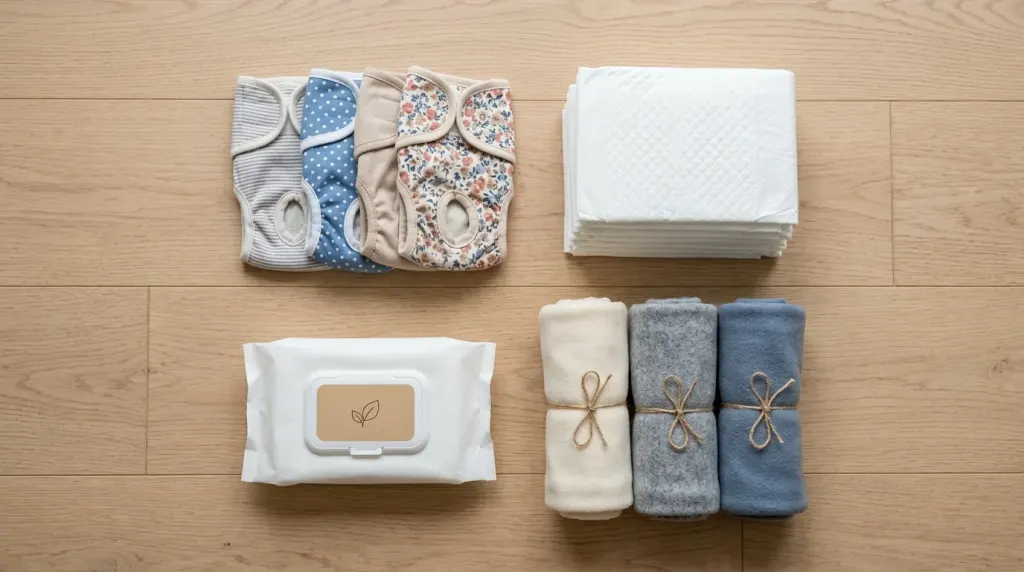
Essential supplies and home preparation checklist
Preparing your home before your Golden Retriever’s first heat minimizes stress, protects furniture, and ensures good hygiene:
- Reusable or disposable canine diapers: 3 to 4 pairs of breathable dog hygiene pants designed with a tail hole.
- Unscented panty liners or absorbent pads: Placed inside diapers for easy changing every 3 to 4 hours.
- Washable fleece blankets and towel covers: Placed over sofas, dog beds, and car seats.
- Enzymatic pet stain and odor remover: Breaks down biological pheromones and bloodstains effectively.
- Sturdy non-retractable 6-foot leash: Ensures physical control during outdoor bathroom breaks.
- High-value chew toys and puzzle feeders: Keeps your dog mentally engaged indoors when neighborhood walks are shortened.
Household routine adjustments during an active heat cycle can affect other pets, requiring quiet living spaces similar to households managing health issues in Maine Coon cats alongside active canine companions.
Preventing accidental mating and managing male dog interest
Intact male dogs can detect estrous pheromones from up to two to three miles away downwind. Accidental breedings occur swiftly, often in seconds:
- Never leave your dog unattended in a fenced yard: Male dogs can dig under, jump over, or mate through chain-link fences.
- Avoid dog parks and communal dog areas: Do not take a cycling female to training classes, daycare, or off-leash parks.
- Secure doors and gates: Ensure all household members double-latch exterior doors so the female cannot bolt in search of a mate.
- Separate intact male housemates completely: Solid doors, separate floors, or temporary boarding for intact males is mandatory during active heat.
Daily monitoring routine and symptom logging
Establishing a 5-minute daily check keeps you ahead of potential hygiene issues or complications:
- Inspect the vulva morning and evening for changes in discharge volume, color, or consistency.
- Remove diapers during supervised resting periods in easily sanitized areas (such as tile or hardwood rooms) to allow the skin to breathe and prevent moisture dermatitis.
- Clean the peri-vulvar fur gently with a warm, damp washcloth or unscented pet wipe daily.
Different phases & special cases: Silent heat and split heat (when do golden retrievers have their first heat)
Silent heat: Ovulation without visible outward signs
A silent heat occurs when a female Golden Retriever undergoes normal internal hormonal cycling and ovulates without producing outward physical signs such as significant vulvar enlargement or noticeable bloody discharge.
Silent heats are particularly common during a young dog’s first or second reproductive cycle. While the owner may notice little to no bleeding, male dogs can still detect airborne pheromones, and the female remains physiologically capable of becoming pregnant if mated.
Split heat: Interrupted signs and false starts in young dogs
A split heat is a benign developmental phenomenon where the body begins Proestrus but halts before ovulation occurs:
- Stage 1 (False Start): The dog develops swollen vulvar tissue and mild spotting for 3 to 7 days.
- Intermission: Symptoms suddenly subside completely for 2 to 6 weeks.
- Stage 2 (Complete Cycle): The dog restarts proestrus, progresses into estrus, and successfully ovulates.
Split heats are frequent in adolescent Golden Retrievers whose hypothalamic-pituitary-ovarian axis is still maturing. Adolescent developmental irregularities like split heats require close daily monitoring, similar to multi-pet families monitoring health conditions in Ragdoll cats to catch subtle physiological changes early.
Note on split heats: Split heats are a frequent source of confusion for first-time owners who assume the cycle has concluded after only a few days of light spotting. When managing young adolescent dogs, treat any recurring swelling or male interest within two months of a brief initial cycle as a continuation of active fertility.
When to consult a veterinarian for cycle irregularities
While minor timing variations are typical in adolescents, schedule a veterinary evaluation if your Golden Retriever:
- Shows no signs of a first heat cycle by 24 months of age.
- Remains in active bleeding for more than 28 consecutive days.
- Exhibits systemic lethargy, continuous vomiting, or refuses food for more than 24 hours.
Tips for managing a Golden Retriever in heat (behavior changes, home hygiene)
Handling moodiness, clinginess, and nesting behavior
Hormonal surges during proestrus and estrus affect temperament. Your Golden Retriever may display alternating periods of high clinginess and mild withdrawal. Provide a quiet, comfortable retreat area where she can rest undisturbed.
Gentle indoor games, food puzzle toys, and low-stress training sessions keep her mentally stimulated without exposing her to outdoor neighborhood distractions.
Home hygiene: diapers, bedding protection, and clean-up strategies
Canine diapers prevent stains on carpets and furniture, but proper hygiene management is essential to avoid bacterial skin infections:
- Change absorbent liners every 3 to 4 hours to keep the perianal area dry.
- Remove diapers whenever your dog goes outside for potty breaks.
- Wipe the hindquarters with dog-safe sanitizing wipes to prevent urine scalding and blood crusting.
- Wash bed covers and towels weekly in hot water with fragrance-free detergent.
Common mistakes to avoid during an active heat cycle
- Assuming bleeding cessation means safety: As bleeding lightens, the female enters peak fertility; she is most receptive when the red discharge fades.
- Relying solely on diapers to prevent mating: Diapers keep floors clean, but male dogs can easily push them aside to mate.
- Walking on long retractable leads: Always use a standard, fixed 6-foot leash to prevent sudden bolting toward other dogs.
When a female dog exhibits a mild decrease in appetite during estrus, offering safe fresh treats such as cucumbers as a low-calorie dog snack helps maintain essential hydration without adding excess fat. Pet owners can also provide small amounts of hydrating fruits like cantaloupe melon pieces for dogs to encourage fluid intake and support gentle digestion.
Fertility timing & breeding considerations (is it necessary to breed during heat?)
Pinpointing peak fertility relative to the onset of bleeding
In dogs, peak fertility occurs during Estrus, which typically lands between days 9 and 14 of the cycle, though it can occur anywhere from day 5 to day 21.
Because canine sperm can survive in the female reproductive tract for up to 5 to 7 days, a mating occurring late in proestrus can still result in fertilization once the ova mature 2 to 3 days after ovulation.
Tracking fertility signs vs veterinary ovulation testing
Visual tracking (watching discharge lighten and observing the dog flag her tail) provides general estimates, but responsible breeders utilize quantitative veterinary testing:
| Assessment Method | Indicator | Reliability Level |
|---|---|---|
| Visual Discharge Monitoring | Transition from dark red to straw-pink fluid | Moderate (Varies by individual) |
| Behavioral Flagging | Tail shifts sideways upon touch over the lumbar spine | Moderate (Some dogs flag early or late) |
| Serial Vaginal Cytology | More than 80% to 90% cornified superficial epithelial cells | High for cycle phase identification |
| Quantitative Serum Progesterone | Blood levels rising to 2.0 ng/mL (LH surge) and 4.0-8.0 ng/mL (Ovulation) | Gold standard for exact fertility timing |
Non-breeding management and minimizing unwanted pregnancy risks
It is never medically necessary to breed a Golden Retriever during her heat cycle. Bitches do not benefit emotionally or physically from having a litter of puppies. In fact, pregnancy and whelping carry substantial medical risks, including dystocia, uterine inertia, and emergency cesarean sections.
During post-estrus recovery, owners supporting canine nutrition should stick to balanced commercial diets and plain fresh additions such as fresh sliced peaches for dogs rather than rich table scraps that can trigger digestive upset.
For non-breeding companion dogs, discuss spay timing with your veterinarian. Current veterinary orthopedic research often recommends delaying elective gonadectomy in Golden Retrievers until skeletal growth plates close (typically 12 to 24 months of age) to reduce long-term risks of certain joint disorders and bone cancers.
When to seek veterinary assistance during a heat cycle
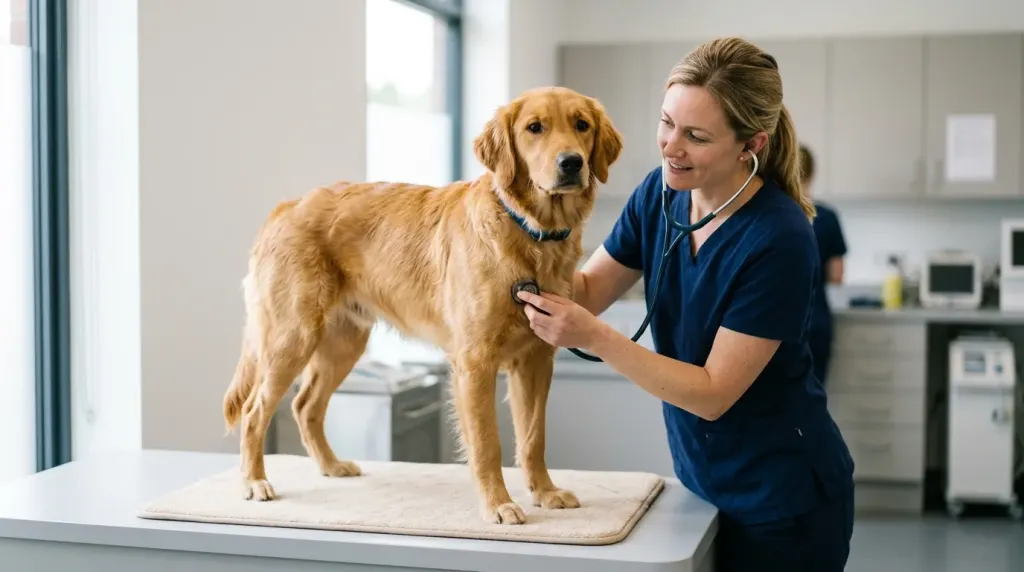
Warning signs: prolonged bleeding, abnormal discharge, and lethargy
While heat is a natural biological event, complications can arise. Contact your veterinarian promptly if your Golden Retriever displays any of the following clinical signs:
- Excessive or prolonged bleeding: Continuous heavy, bright red bleeding lasting beyond 21 days.
- Foul-smelling or purulent discharge: Thick, cloudy, milky, or pungent vaginal fluid (indicating infection).
- Extreme lethargy and anorexia: Complete refusal to eat, extreme weakness, or persistent vomiting.
- Elevated body temperature: Rectal temperature exceeding 103.0 degrees Fahrenheit (39.4 degrees Celsius).
- Severe abdominal pain or distension: Whining when the abdomen is touched or standing with a hunched posture.
While reproductive emergencies like pyometra require immediate care in intact females, dog owners routinely navigate distinct breed vulnerabilities such as hereditary health conditions in French Bulldogs throughout various life stages.
Medical conditions to rule out (Pyometra, vaginitis, and hormone imbalances)
Understanding the primary medical risks associated with the canine reproductive tract ensures swift intervention:
- Pyometra: A life-threatening bacterial infection of the uterus occurring primarily during Diestrus (2 to 8 weeks after heat) under the influence of prolonged progesterone. “Open” pyometra presents with foul vaginal drainage; “closed” pyometra traps pus inside the uterus, rapidly causing toxic shock, high thirst, and lethargy. Closed pyometra is a critical surgical emergency.
- Juvenile or Adult Vaginitis: Bacterial or inflammatory irritation of the vaginal vault causing localized discharge, redness, and frequent licking.
- Follicular Ovarian Cysts: Cysts that continuously secrete estrogen, causing a dog to stay in a perpetual, non-resolving heat cycle.
Understanding baseline vital signs helps distinguish heat-related panting from acute distress, which is especially critical when managing airway and breathing problems in flat-faced dogs during stressful medical situations.
Frequently asked questions about Golden Retriever heat cycles
How often do Golden Retrievers go into heat?
Adult female Golden Retrievers go into heat approximately every 6 to 7 months, which averages twice per calendar year. During the first two years of life, the interval between cycles may fluctuate between 5 and 9 months as the endocrine system establishes a regular rhythm.
Can a Golden Retriever get pregnant during her first heat?
Yes. A female Golden Retriever is fully fertile and biologically capable of conceiving during her very first heat cycle. However, adolescent females are neither physically nor mentally mature enough to carry and whelp a litter safely. Accidental matings must be strictly prevented.
Should you walk a Golden Retriever when she is in heat?
Yes, but with strict safety precautions. Keep walks short, quiet, and confined to low-traffic areas during off-peak hours. Always use a secure, non-retractable 6-foot leash. Never let your cycling dog off-leash or leave her alone in a yard, as male dogs can track her scent from miles away.
How long does the bleeding last in a Golden Retriever heat cycle?
Active bloody discharge typically lasts 7 to 10 days during the Proestrus stage. As the dog transitions into the fertile Estrus stage, the discharge changes from red to a lighter pink or straw-colored watery fluid, which persists for another 5 to 9 days.
Does a Golden Retriever feel pain or cramps during heat?
Dogs generally do not experience acute menstrual cramping in the manner humans do. However, the hormonal surges and pelvic congestion can cause mild abdominal discomfort, restlessness, or clingy behavior. If your dog exhibits obvious severe pain, crying, or abdominal guarding, contact your veterinarian.
What should you do if an accidental mating occurs?
If an unintended mating occurs, contact your veterinarian or a reproductive veterinary specialist immediately. Do not attempt to separate dogs while they are tied, as this can cause severe physical injury to both animals. Your veterinarian can evaluate medical pregnancy prevention protocols or discuss emergency spay options.

Leave a Reply