
Table of Contents
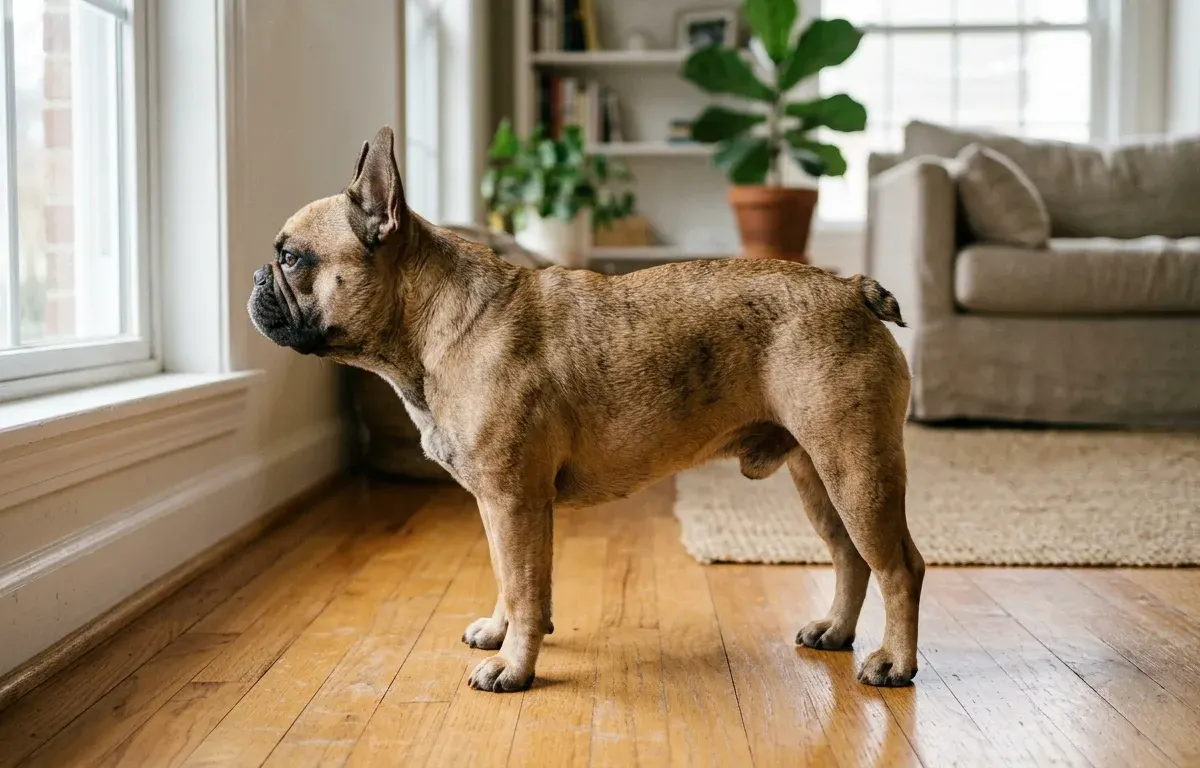
If you are wondering do French Bulldogs have tails, the answer is yes. While a French Bulldog walking away often looks completely tailless, they are born with a naturally short stub that is either straight or screwed (kinked). They do not undergo cosmetic docking. A genetic mutation in the DVL2 gene alters their spinal development, preventing a full tail column from forming. Because the short, stumpy nub sits tight against the rump, a skin pocket often forms underneath, requiring routine cleaning to prevent bacterial infections.
- Natural trait: The breed standard requires a naturally short rear appendage. Docking is prohibited.
- Two common shapes: The stump can point downward or take a corkscrew shape.
- The DVL2 gene: A specific frameshift mutation causes the missing vertebrae in Frenchies, Bulldogs, and Boston Terriers.
- Skin pocket care: The fold beneath the rump traps moisture and dirt, making routine cleaning necessary.
- Veterinary attention: A red, swollen, or foul-smelling rear crease indicates an infection that needs medical care.
Why French Bulldogs Look Tailless
Understanding their anatomy at birth
When looking at their compact rears, people often ask if French Bulldogs are born with a tail, or if the puppies enter the world completely without tails. For anyone asking whether the breed does have these appendages natively, the answer is yes. When a Frenchie puppy is born, it already has its permanent length. The nub is present, but it is extremely short compared to most dog breeds. The Federation Cynologique Internationale (FCI) breed standard specifies that the rear must be naturally short, ideally long enough to cover the anus, and set low on the rump.
This short stub is a defining characteristic that sets the French Bulldog breed apart from other companions. It is a structural requirement, not an aesthetic choice made by the breeder after birth.
Why a Frenchie can seem to have none
The stump often blends seamlessly into the dog’s rear profile. Because it is set low and remains thick at the base, a short straight version might just look like a small bump. If it is screwed, the bone curls tightly against the body and can be hidden entirely by the surrounding skin and fur.
This unique anatomy aligns with the history of what French Bulldogs were originally bred for, favoring a compact, muscular build over the long appendages seen in sporting dogs.
Normal French Bulldog Tail Types
Straight shape
A straight variation drops down over the rear without any kinks or curves. It is thick at the root and tapers quickly to a point. According to the breed standard, this straight appendage should remain low and never rise above the horizontal line of the back, even when the dog is active.
Screwed or corkscrew shape
The screwed type, or corkscrew, twists in on itself. It curls tightly and often rests completely flush against the dog’s body. The vertebrae here are fused together (ankylosed), meaning the bone cannot be straightened out. This fusion makes it rigid. Attempting to pull or uncurl a screw nub will cause the dog severe pain and can damage the spine. If a nerve is pinched during such rough handling, the sudden discomfort might even cause shaking episodes in your Frenchie.
Why Their Tails Are Naturally Short
Are French Bulldog appendages docked?
No, French Bulldogs do not have their rears docked. Docking is a surgical procedure where a portion of a dog’s spine is removed shortly after birth. In French Bulldogs, the short nub is entirely natural. In fact, cosmetic docking is strictly prohibited by major kennel clubs for this breed. If a Frenchie has no stump at all (anuria), it is considered a disqualifying fault in the show ring.
What the DVL2 finding does and doesn’t prove
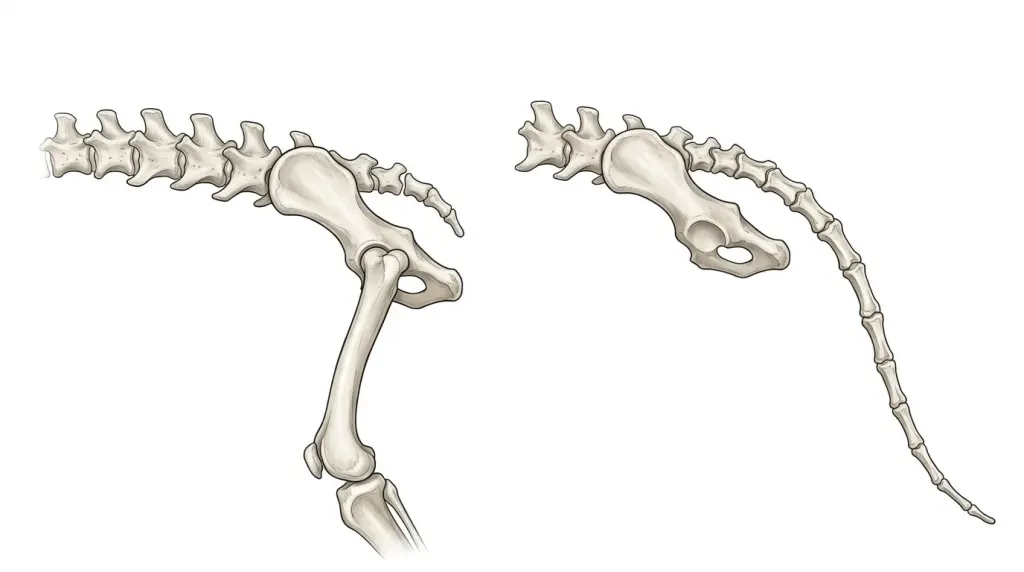
The shortened length is the result of genetics. Researchers at the UC Davis School of Veterinary Medicine discovered that French Bulldogs, English Bulldogs, and Boston Terriers share a frameshift mutation in the DVL2 gene.
Professor Danika Bannasch from UC Davis explained that these three breeds lack the normal vertebrae that make up a full rear bone. The DVL2 mutation alters a cellular signaling pathway crucial for tissue and skeletal development during embryonic growth. While this gene explains the missing vertebrae, it is also linked to the wider head shape and compact body typical of the breed. This genetic reality means the skeletal structure is altered throughout the dog’s body, which is why owners must be proactive about spinal health and learn to recognize the signs of IVDD in French Bulldogs to prevent severe back injuries.
Tail Pockets and Skin-Fold Health
What is a tail pocket?
A tail pocket is a skin fold that forms underneath or around the base of the rump. This pocket occurs because the short, rigid bone presses tightly against the rear, creating a crease. Not every Frenchie has one, but those with tight screwed nubs are highly prone to them.
This dark, warm fold traps dead skin cells, moisture, and dirt. It can also collect fecal matter if the stump sits directly over the anus. If left uncleaned, the pocket becomes a breeding ground for yeast and bacteria, leading to a condition known as skin fold dermatitis. The irritation can be uncomfortable enough to cause the dog to scoot on the floor or rub its rear against furniture. Since scooting is also a classic sign of impacted anal sacs, understanding the process of expressing a Frenchie’s anal glands will help you distinguish between a fold infection and an anal gland issue.
Veterinary Warning: A skin pocket infection requires medical diagnosis. If you notice a strong odor and your dog is scooting, do not assume it is just a hygiene issue. Severe pyoderma requires prescription antibiotics, and attempting DIY treatments can worsen the inflammation.
Signs that need a veterinary appointment
A healthy skin fold is dry and the same color as the rest of the dog’s skin. You should contact a veterinarian if you notice:
- Redness, swelling, or raw skin inside the fold.
- A foul, yeasty, or cheese-like odor.
- Brown or yellow discharge.
- The dog constantly biting at its rear or scooting.
- Pain or aggression when the area is touched.
In severe cases of recurrent pyoderma, a veterinarian may recommend an amputation to permanently remove the infected skin fold and improve the dog’s quality of life.
Safe everyday monitoring
Preventing infections requires routine hygiene. You should wipe the inside of the pocket two to three times a week using a damp cloth or a pet-safe grooming wipe. After wiping away any dirt, you must dry the fold completely. Moisture is the primary catalyst for yeast growth. Just as you would establish a regular schedule for cleaning your French Bulldog’s ears, adding a quick rear-pocket wipe to your grooming habits is a simple way to maintain their overall health.
When Tail Shape May Need More Investigation
Can a French Bulldog have a longer tail?
Occasionally, a French Bulldog is born with a protrusion that is longer than the standard bob. A longer version usually drops past the hocks. While this length disqualifies the dog from official conformation shows, it does not negatively impact the dog’s health. In fact, a longer appendage often means the dog does not have a tight skin pocket, completely eliminating the risk of fold dermatitis. A dog with a slightly longer rear often exhibits better balance, which is a noticeable advantage for owners wondering about a French Bulldog’s ability to run efficiently during exercise.
Why changes matter more than appearance
The exact shape of the rear matters less than how the dog interacts with it. If a dog with a previously quiet nub suddenly becomes sensitive, it indicates a medical issue. Spinal anomalies associated with the screwed shape can sometimes cause nerve pinching. If your dog experiences sudden pain, lethargy, or loss of rear leg coordination, or if systemic illness signs appear, such as frequent throwing up in French Bulldogs, an immediate veterinary assessment is necessary to rule out severe spinal or internal issues.
Common Questions About French Bulldog Tails
Are Frenchie tails curly?
No, their rears do not curl upward like a Pug or Akita. A Frenchie’s stub is either straight and pointing downward or tightly kinked and resting flat against the body. The breed standard dictates it should never rise above the back.
Are screw shapes painful?
The screwed shape itself is not inherently painful. However, because the bones are fused, the nub cannot be straightened. Bending or pulling it will cause severe pain and potential injury. The skin folds created by a tight corkscrew can also become painful if they develop a bacterial or yeast infection.
Do French Bulldogs wag their tails?
They have very limited rear mobility. A French Bulldog cannot wag its stump in wide arcs like a Labrador. When excited, they typically wiggle their entire rear end, sometimes producing a slight twitch or vibration in the nub.
Should I clean inside my dog’s skin fold?
Yes, if your dog has a deep pocket, you must clean it regularly. Use a gentle, unscented wipe to remove debris and dry the area completely afterward. If the fold is red, foul-smelling, or weeping fluid, do not attempt a DIY cleaning. Take the dog to a veterinarian for proper medical treatment.


Leave a Reply