

Table of Contents
French Bulldog breeding requires extensive reproductive planning, comprehensive pre-breeding health testing, and surgical intervention for delivery. Females reach breeding maturity at two years of age, and successful mating relies on quantitative progesterone testing paired with artificial insemination. Over 80 percent of litters require a planned Cesarean section to ensure maternal and neonatal safety.
- Female French Bulldogs should complete all Orthopedic Foundation for Animals (OFA) and DNA screenings before breeding at a minimum age of two years.
- Quantitative progesterone testing every 48 hours is essential to identify the precise 48-to-72-hour post-ovulation fertile window.
- Transcervical Insemination (TCI) and planned Cesarean sections are the clinical gold standards to prevent severe airway and pelvic complications.
- Gestation spans approximately 63 days from ovulation, requiring temperature monitoring and scheduled veterinary countdown radiographs.
- Postpartum care demands constant supervision, controlled environmental heating (85°F to 90°F in week one), and daily puppy weight tracking.
What Is French Bulldog Breeding and What Are the Proper Standards?
French Bulldog breeding is the deliberate process of pairing health-tested adult dogs to produce healthy, conformationally sound puppies that align with official breed standards. Unlike many working or sporting breeds that reproduce naturally without medical intervention, French Bulldogs are a brachycephalic, chondrodystrophic breed whose unique anatomy requires extensive reproductive assistance and clinical planning.
Responsible breeding focuses on improving breed vitality, expanding functional airway capacity, and eliminating debilitating inherited disorders. Commercial breeding for cosmetic trends, exaggerated flat faces, or unapproved coat colors often exacerbates health vulnerabilities. Prospective breeders must approach every litter with an emphasis on canine welfare, financial readiness for surgical interventions, and dedicated round-the-clock puppy care. Selective breeding preserves the affectionate traits that make French Bulldogs good family pets while actively working against conformational exaggerations that compromise their daily comfort.
Is Your French Bulldog a Suitable Candidate for Breeding?
Determining whether an individual dog should enter a breeding program involves objective medical evaluations rather than emotional attachment. A suitable candidate must demonstrate excellent physical stamina, stable temperament, and clearance from genetic health defects.
Before considering reproduction, evaluate the following fundamental criteria:
- Age and Maturity: Female dogs (dams) should be at least two years of age, allowing them to complete skeletal development and pass through at least two normal heat cycles. Males (studs) should be at least one to two years old with verified reproductive health.
- Functional Airway Quality: Dogs exhibiting severe respiratory distress, audible stridor while resting, or exercise intolerance should be excluded from breeding programs to avoid passing severe brachycephalic traits to offspring.
- Structural Soundness: Candidates must possess stable spinal conformation, straight limbs, and healthy joint articulation without signs of lameness or gait abnormalities.
If a dog exhibits chronic health challenges or fails screening benchmarks, a responsible owner should follow professional guidance on when to neuter a French Bulldog to ensure lifelong personal comfort and prevent the transmission of genetic defects.
When You Should Not Breed a French Bulldog
Certain medical conditions, anatomical traits, and life circumstances make breeding unsafe for the dog or unethical for the breed. Breeding should never occur under the following conditions:
- Severe BOAS or Stenotic Nares: Dogs requiring surgical soft palate resection or nares widening to breathe comfortably must not be bred.
- Spinal Malformations: Presence of hemivertebrae, severe lordosis, or early signs of disc degeneration creates extreme risks during pregnancy.
- Underage or Geriatric Dams: Breeding females younger than two years of age or those in advanced senior years substantially elevate the risk of uterine fatigue, dystocia, and maternal complications.
- Aggressive or Anxious Temperament: Behavioral instability has a documented heritable component and creates unsafe conditions for newborn litters.
- Lack of Emergency Financial Reserves: If an owner cannot immediately finance emergency veterinary surgery, specialized incubator equipment, and intensive neonatal medications, breeding should not be attempted.
Ethical breeding requires strict adherence to health selection over physical exaggeration. Selecting parent stock with longer muzzles, open nostrils, and sound spines directly reduces the incidence of respiratory distress in future generations.
Planning the French Bulldog Breeding Process Step by Step
Successful breeding requires months of proactive preparation before the female enters her reproductive cycle. Because natural ties are physically difficult and often dangerous for compact, heavy-chested dogs, breeders rely on structured veterinary protocols.
Step 1: Complete Health Screenings (OFA, DNA, Cardiac, Eye Exams)
Step 2: Track Estrus Cycle and Initiate Quantitative Progesterone Testing
Step 3: Perform Semen Analysis and Conduct Artificial Insemination (AI/TCI)
Step 4: Ultrasound Confirmation at Day 28-30 Post-Ovulation
Step 5: Pre-Whelping Radiograph at Day 55-58 to Confirm Puppy Count and Skull Sizes
Step 6: Execute Scheduled Cesarean Section on Ovulation-Calculated Due Date
Pre-Breeding Health Screening and Genetic Testing
Standard veterinary examinations alone are insufficient to clear a French Bulldog for reproduction. Comprehensive diagnostic screenings through recognized bodies such as the Orthopedic Foundation for Animals (OFA) are necessary to establish genetic baseline health.
The core pre-breeding health testing protocol includes:
| Health Assessment | Testing Method | Target Benchmark |
|---|---|---|
| Respiratory Function (BOAS) | Clinical respiratory grading under exercise | Grade 0 or Grade 1 (minimal airway obstruction) |
| Hip Conformation | Radiographic evaluation (OFA / PennHIP) | Fair, Good, or Excellent hip joint conformation |
| Patellar Soundness | Manual palpation by certified veterinarian | Normal bilateral patellar stability (no luxation) |
| Cardiac Health | Echocardiogram or specialized auscultation | Free of congenital cardiac disease or murmurs |
| Ophthalmic Exam | Eye examination by ACVO veterinary specialist | Clear of corneal dystrophy, juvenile cataracts, or PRA |
| DNA Panel | Blood or buccal swab laboratory panel | Clear/Non-carrier for Hereditary Cataracts (HSF4) and DM |
Rigorous diagnostic screening for French Bulldog health problems provides vital context on why these specialized evaluations protect the future health of the litter.
Determining the Optimal Mating Window
Estimating breeding dates by behavioral cues or physical vulvar swelling is unreliable in French Bulldogs. Successful conception depends on precise quantitative serum progesterone blood testing conducted every 48 hours starting on day 4 or 5 of the heat cycle.
- Progesterone Baseline: Anestrus and early proestrus levels measure below 1.0 ng/mL.
- Luteinizing Hormone (LH) Surge: Progesterone levels rise to approximately 2.0 to 3.0 ng/mL, signaling that ovulation will occur in 48 hours.
- Ovulation Point: Progesterone reaches 5.0 to 8.0 ng/mL. Canine ova require an additional 48 hours to mature and become fertilizable.
- Optimal Insemination Timing: Insemination is typically performed when progesterone levels climb between 10.0 and 20.0 ng/mL, usually 48 to 72 hours following ovulation.
Because natural mounting risks heat exhaustion, airway collapse, and spinal injury, breeders use Transcervical Insemination (TCI) or Surgical Insemination (SI) using fresh, chilled, or frozen semen administered directly into the uterus under veterinary guidance. For a comprehensive walkthrough of reproductive methods, consult our detailed guide on how to breed French Bulldogs safely.
Managing French Bulldog Pregnancy: Timeline and Monitoring
A canine pregnancy requires meticulous nutritional planning, environmental regulation, and medical monitoring. French Bulldog dams are particularly sensitive to heat stress and physical fatigue during gestation.
Key Pregnancy Milestones and Physical Changes
Understanding the full timeline helps breeders manage nutritional adjustments and schedule veterinary appointments accurately.
Week 1-3 (Days 1-21): Fertilization and embryo implantation in uterine horns.
Week 4 (Days 22-28): Embryos develop heartbeats; diagnostic ultrasound confirms pregnancy.
Week 5-6 (Days 29-42): Rapid fetal organ development; dam requires increased caloric density.
Week 7-8 (Days 43-56): Skeletal calcification; schedule veterinary countdown radiograph.
Week 9 (Days 57-63): Fetal maturation complete; daily temperature monitoring begins.
Tracking the estrus cycle from when French Bulldogs go into heat establishes the baseline calendar for calculating gestational milestones. Following ovulation, the French Bulldog pregnancy duration timeline averages 63 days, during which the dam transitions through distinct anatomical stages:
- Weeks 1 to 4: The dam maintains her normal high-quality diet and moderate activity routine. Avoid introducing unnecessary supplements or unprescribed medications. When offering fresh fruit treats to encourage appetite, verify whether French Bulldogs can eat strawberries or review safety guidelines on feeding oranges to French Bulldogs to avoid digestive upset during early gestation.
- Week 5 to 7: As fetal growth accelerates, gradually transition the dam to a nutrient-dense puppy formula or gestation-specific diet, feeding smaller, more frequent meals to prevent stomach compression.
- Weeks 8 to 9: Prepare the whelping area, record rectal temperature three times daily, and verify surgical team availability for delivery.
Common Pregnancy Risks in French Bulldogs
Gestation places substantial physical strain on a compact canine body. Breeders must monitor dams closely for common gestational complications:
- Respiratory Compromise: As developing puppies expand within the abdomen, pressure against the diaphragm reduces lung expansion. Dams require air-conditioned environments and minimal physical exertion.
- Gestational Diabetes or Hypocalcemia: Metabolic imbalances can develop during late pregnancy, requiring immediate veterinary electrolyte management.
- Spinal Pressure: The additional weight of a pregnant abdomen stresses the vertebral column. Breeders must monitor the dam for disc compression and protect her from high-impact movement.
Note: Never supplement calcium before active labor or Cesarean delivery begins. Pre-partum calcium supplementation suppresses the dam’s parathyroid gland, significantly increasing the risk of life-threatening postpartum eclampsia (puerperal tetany).
Whelping and Delivery: Artificial Insemination to Birth
The whelping phase is the most critical stage of the breeding process. Due to anatomical constraints, unassisted home deliveries present severe risks to both the dam and her offspring.
Natural Birth vs. Planned Cesarean Section
Prospective breeders must evaluate whether French Bulldogs can give birth naturally before initiating a pregnancy. In over 80 percent of cases, French Bulldogs cannot deliver safely without surgical intervention.
Primary factors necessitating planned Cesarean sections include:
- Fetal-Pelvic Disproportion: French Bulldog puppies possess broad, brachycephalic skulls and wide shoulders, which frequently exceed the interior diameter of the dam’s narrow pelvic canal.
- Primary Uterine Inertia: The dam’s uterine muscles often fail to initiate or maintain strong contractions, leaving puppies trapped in the birth canal.
- Maternal Airway Fatigue: Extended labor causes rapid panting, airway swelling, hyperthermia, and respiratory collapse.
| Delivery Method | Safety Level in French Bulldogs | Primary Considerations |
|---|---|---|
| Planned Cesarean Section | High (Recommended Gold Standard) | Scheduled precisely via progesterone timing; minimizes puppy hypoxia and maternal exhaustion |
| Emergency Cesarean Section | Moderate to High Risk | Occurs after labor complications begin; higher incidence of puppy distress and uterine trauma |
| Unassisted Natural Delivery | Extremely High Risk | High rate of puppy mortality, fetal entrapment, and life-threatening maternal dystocia |
Preparing the Whelping Area and Emergency Supplies
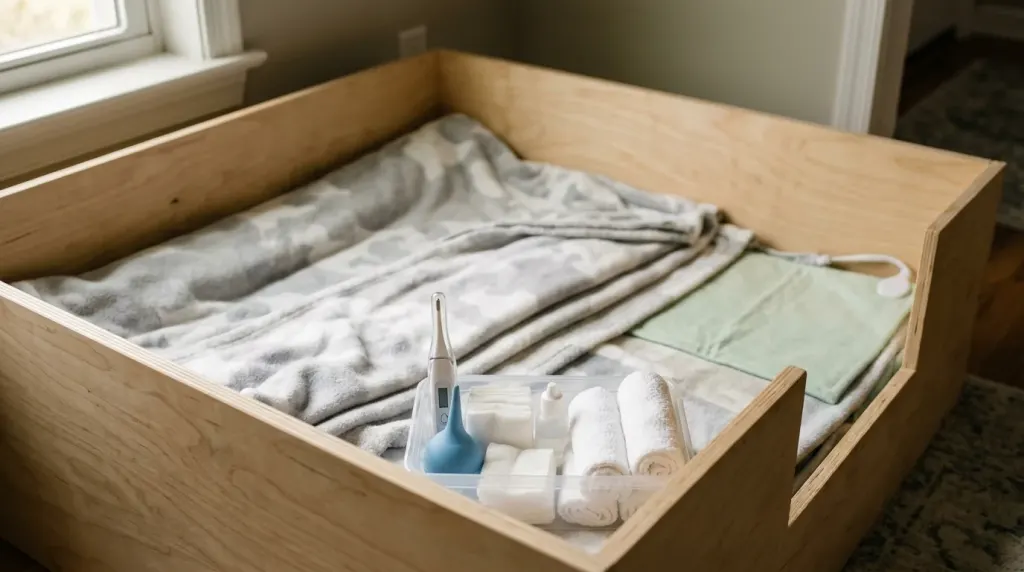
Whether a delivery is planned at a surgical clinic or managed under close veterinary supervision, prepare a clean, dedicated whelping area well in advance.
Essential equipment includes:
- Commercial Whelping Box with Pig Rails: Protects puppies from being accidentally trapped behind the mother’s body.
- Controlled Heating Source: A medical-grade heating pad with a chew-proof cord or an infrared heat lamp positioned safely over one corner of the box.
- Sterile Neonatal Care Kit: Surgical clamps, blunt-end scissors, unwaxed dental floss (for umbilical cords), iodine antiseptic solution, sterile gauze, and bulb suction aspirators.
- Digital Gram Scale: Accurate to single grams, essential for tracking 12-hour puppy weight gains.
- Emergency Milk Replacer and Tube Feeding Supplies: Specialized canine milk replacer, sterile feeding tubes, and feeding syringes in case the dam experiences delayed lactation.
Evaluating expectations around typical French Bulldog litter sizes assists in preparing sufficient identification collars, feeding supplies, and nursery space.
Postpartum Care: Dam Recovery and Puppy Management to Weaning
The postpartum period requires round-the-clock vigilance. Newborn French Bulldog puppies are poikilothermic, meaning they cannot regulate their own internal body temperature and depend entirely on external heat sources.
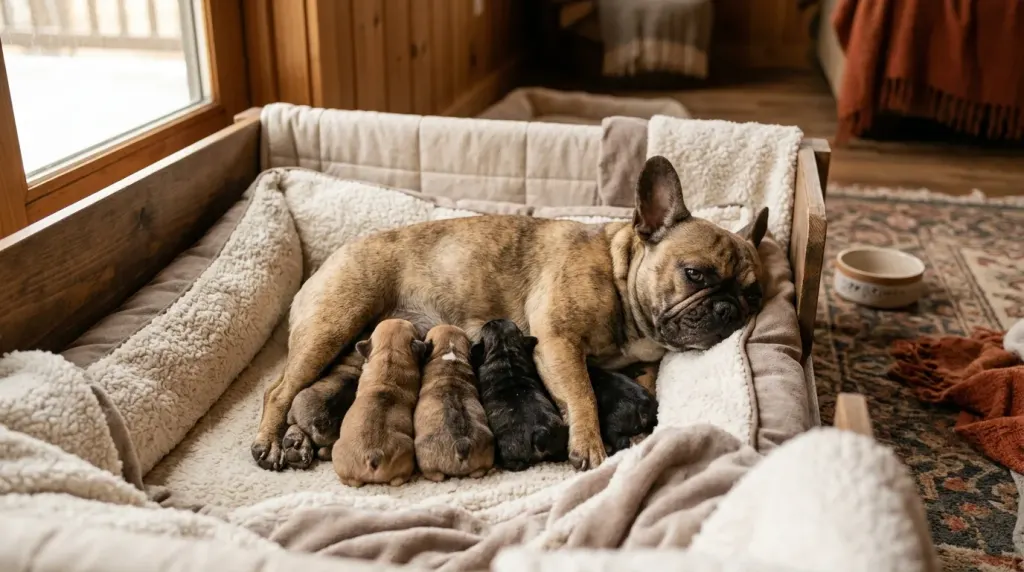
Monitoring Dam Health and Surgical Recovery
Following a Cesarean section, the mother requires careful monitoring as anesthetic agents clear her system:
- Surgical Incision Care: Inspect the abdominal suture line twice daily for swelling, redness, discharge, or dehiscence. Keep the bedding clean and dry.
- Lactation and Mastitis Monitoring: Check all mammary glands daily for warmth, hardness, pain, or discolored milk. Normal milk appears clean and off-white; stringy or bloody milk indicates mastitis requiring veterinary antibiotics.
- Monitoring for Eclampsia (Milk Fever): Watch for acute symptoms such as muscle spasms or twitching. Identifying clinical causes of French Bulldog shaking helps owners recognize early tremors associated with calcium depletion before severe seizures occur.
- Maternal Instinct Oversight: Some dams recovering from anesthesia may not immediately recognize their puppies or may accidentally lay on them due to their heavy, compact body structure. Never leave newborn puppies unsupervised with the dam during the first two weeks.
Newborn Puppy Nursing, Warmth, and Early Feeding Schedules
Newborn puppy survival relies on immediate colostrum intake, stable environmental warmth, and consistent weight monitoring:
Week 1: Ambient temperature 85°F-90°F (29.4°C-32.2°C); nurse every 2 hours; puppies sleep 90% of time.
Week 2: Ambient temperature 80°F (26.7°C); eyes and ears begin opening; puppy weights should double birth weight.
Week 3: Ambient temperature 75°F (23.9°C); early standing attempts; teeth begin erupting.
Week 4-5: Introduce warm puppy weaning mash; puppies begin consuming solid food while nursing.
Week 6-8: Complete transition to solid puppy food; administer initial veterinary vaccinations and deworming.
Healthy puppies should gain 5 to 10 percent of their birth weight daily. Any puppy that loses weight over a 24-hour period requires immediate supplemental tube feeding and veterinary evaluation.
Establishing solid foundational routines according to long-term French Bulldog care guidelines ensures that the growing puppies receive age-appropriate social, dietary, and developmental support through weaning.
Essential French Bulldog Breeding Checklist
Maintaining organized medical and operational checklists minimizes errors during critical reproductive stages.
Quick Pre-Breeding and Whelping Checklist
Use this practical checklist to verify readiness at each stage:
- [ ] Both dam and stud have reached at least 24 months of age with documented OFA/DNA health clearances.
- [ ] Baseline quantitative progesterone testing protocol established with a local veterinary clinic.
- [ ] Reproductive veterinarian and 24-hour emergency surgical facility confirmed on standby.
- [ ] Whelping box constructed with functional pig rails and calibrated supplemental heating pad.
- [ ] Neonatal resuscitation kit assembled, including bulb suction, unwaxed floss, and antiseptic.
- [ ] Canine milk replacer, sterile feeding tubes, and digital gram scale tested and ready.
- [ ] Countdown radiograph completed at day 55 to confirm puppy skull size and count.
- [ ] Temperature monitoring log maintained three times daily starting at day 56 of gestation.
Critical Health, Mating, and Litter Records to Maintain
Accurate documentation is essential for veterinary decision-making and registry compliance. Breeders evaluating breed demographics and public interest often review structured analytical frameworks documented in search analysis studies to organize data systematically.
Maintain the following primary logs:
- Ovulation and Progesterone Tracking Log: Record dates, exact progesterone values in ng/mL, and specific insemination times.
- Semen Evaluation Report: Document sperm motility, morphology, and concentration data from the veterinary reproduction laboratory.
- Dam Weight and Nutritional Log: Track weekly weight changes throughout gestation and lactation.
- Litter Birth Record: Record exact delivery times, birth weights in grams, gender, collar colors, and individual puppy markings.
- Daily Weight Progression Chart: Log individual puppy weights twice daily for the first 14 days, then once daily until weaning at 8 weeks.
- Orthopedic Conformation File: Maintain records on spinal stability and screenings to manage French Bulldog IVDD vulnerability across generational pedigrees.
Breed-Specific Health Risks Impacting Reproduction
French Bulldogs possess genetic and conformational predispositions that complicate reproduction and recovery.
Brachycephalic and Orthopedic Complications in Breeding Stock
Reproduction accentuates the following structural vulnerabilities:
- Severe BOAS Aggravation: Increased blood volume and metabolic demands during pregnancy elevate airway resistance. Managing parent stock with severe French Bulldog breathing problems is vital to avoid laryngeal edema, hyperthermia, and respiratory distress during whelping.
- Hemivertebrae and Spinal Instability: Screw-tail conformation is genetically linked to vertebral malformations. Carrying a heavy litter exacerbates spinal curvature and disc compression.
- Pelvic Stenosis: Narrow pelvic dimensions create complete physical barriers to natural passage, resulting in fatal obstructive dystocia if surgical delivery is delayed.
When to Contact an Emergency Veterinarian
During gestation and whelping, prompt veterinary intervention saves lives. Contact an emergency veterinary hospital immediately if you observe any of the following clinical thresholds:
- The dam’s rectal temperature drops below 99°F (37.2°C) and more than 24 hours pass without the onset of active labor.
- Green, black, or foul-smelling vaginal discharge appears before the delivery of the first puppy.
- The dam experiences strong, active abdominal contractions for more than 30 minutes without delivering a puppy.
- More than two hours elapse between delivered puppies with known fetuses remaining on radiograph.
- The dam exhibits extreme lethargy, pale gums, continuous vomiting, muscle tremors, or collapse.
- A newborn puppy exhibits continuous crying, hypothermia (body temperature below 96°F), or failure to nurse within two hours of birth.
Frequently Asked Questions About French Bulldog Breeding
Can French Bulldogs give birth naturally?
Natural birth is rare in French Bulldogs due to fetal-pelvic disproportion and high rates of uterine inertia. Over 80 percent of French Bulldog litters require a planned Cesarean section performed by an experienced veterinary surgeon to prevent fatal delivery complications for the dam and puppies.
When do French Bulldogs go into heat and when should they be bred?
French Bulldogs typically reach their first estrus cycle during their first year of development, with cycles recurring at regular intervals depending on individual hormonal patterns. However, females should not be bred until reaching full physical maturity at two years of age, ensuring sufficient structural development and completion of all pre-breeding orthopedic and genetic health clearances.
How many puppies are in a typical French Bulldog litter?
An average French Bulldog litter consists of 3 to 5 puppies. Smaller litters of 1 or 2 puppies carry an elevated risk of singleton syndrome and oversized fetal skulls, while larger litters of 6 or more require intensive supplemental nursing support.
What pre-breeding tests are mandatory for French Bulldogs?
Mandatory screenings include OFA evaluations for hips, patellas, and cardiac function, an eye examination by an ACVO veterinary ophthalmologist, an airway assessment for BOAS, and DNA panel testing for Hereditary Cataracts (HSF4) and Degenerative Myelopathy.



Leave a Reply