

Table of Contents
The history of where did the golden retriever come from begins in the Scottish Highlands at the Guisachan estate during the mid-to-late 19th century. The breed was founded by Sir Dudley Marjoribanks (later Lord Tweedmouth), who in 1868 bred a yellow Wavy-Coated Retriever named Nous with a Tweed Water Spaniel named Belle. This cross created an athletic gundog with a water-repellent coat and a gentle retrieving mouth, purpose-built to retrieve waterfowl and upland game across Scotland's rugged wetlands and heather hills.
- Developed in 1868 by Sir Dudley Marjoribanks (Lord Tweedmouth) at Guisachan Estate in Inverness-shire, Scotland.
- The foundation cross paired "Nous" (a yellow Wavy-Coated Retriever) with "Belle" (a Tweed Water Spaniel).
- Key contributing breeds include the Tweed Water Spaniel (now extinct), Irish Setter, Bloodhound, and Flat-Coated Retriever.
- The popular Victorian myth of descent from Russian circus dogs was conclusively debunked by Lord Tweedmouth's private studbooks published in 1952.
- Officially recognized by The Kennel Club (UK) in 1913 and the American Kennel Club (AKC) in 1925.
The Golden Retriever is among the most recognizable and beloved dog breeds in the world today. While millions of families know the breed for its golden coat, gentle temperament, and playful loyalty, its existence is the result of a calculated Victorian breeding program. Understanding where the Golden Retriever came from requires stepping back into the nineteenth-century Scottish Highlands, where aristocracy, changing hunting technology, and meticulous canine genetics converged.
The Scottish Highlands Origin: Lord Tweedmouth and Guisachan Estate
The true birthplace of the Golden Retriever is Guisachan Estate, located in the remote wilderness of Glen Affric near Tomich, Inverness-shire, Scotland. The breed was developed by British aristocrat, businessman, and Liberal Member of Parliament Sir Dudley Marjoribanks, who was later elevated to the peerage as the 1st Baron Tweedmouth in 1881.
In 1854, Marjoribanks purchased the vast Guisachan property, spanning thousands of acres of rugged moorland, dense pine forests, rocky hillsides, and fast-flowing streams. As an enthusiastic sportsman, he hosted extensive seasonal hunting parties for red deer, grouse, and wild waterfowl. However, the existing retrievers and setters of the mid-nineteenth century struggled with the harsh Highland climate. Cold lochs, marshy bogs, and heavy upland cover quickly exhausted dogs lacking specialized water-resistant coats or stamina.
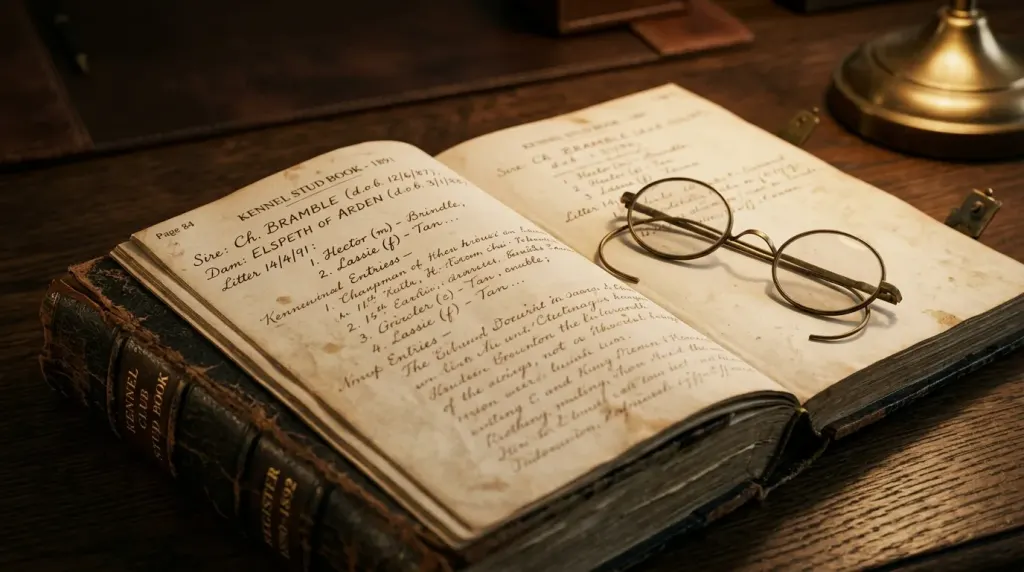
Lord Tweedmouth set out to create the ultimate gentleman’s gundog: a powerful swimmer capable of navigating frigid Scottish waters, possessing superior scenting ability, exceptional trainability, and a soft mouth to retrieve shot birds without tearing their flesh. Between 1868 and 1890, Guisachan served as the private laboratory where he recorded every mating, litter, and selection in his leather-bound kennel studbook.
Today, the granite ruins of Guisachan House remain a historic pilgrimage destination for canine historians and breed enthusiasts from across the globe, celebrated as the ancestral home where every purebred Golden Retriever traces its roots.
Where Were Golden Retrievers First Bred?
Golden Retrievers were first bred on the private grounds of Guisachan Estate in Glen Affric, Scotland. The estate’s distinct geographical mixture of boggy wetlands, cold rivers, and dense heather terrain provided the working conditions that shaped the physical build, dense undercoat, and retrieving instinct of the foundation dogs.
What Country Are Golden Retrievers From?
Golden Retrievers are from Scotland, which is part of the United Kingdom (Great Britain). While modern bloodlines have flourished across North America, Europe, and Australia, developing distinct regional variations over the past century, the genetic foundation of the entire breed was established exclusively on Scottish soil.
How Were Golden Retrievers Made? Lord Tweedmouth’s 1868 Breeding Program
The creation of the Golden Retriever began with a specific mating in 1868, supported by meticulous crossbreeding over the subsequent two decades. The program began when Lord Tweedmouth acquired a handsome yellow dog named “Nous” around 1865.

Nous was the sole yellow puppy born in an otherwise all-black litter of Wavy-Coated Retrievers (an ancestral precursor to the modern Flat-Coated Retriever). Lord Tweedmouth purchased Nous in Brighton, England, from a local cobbler who had accepted the pup from a gamekeeper in settlement of a debt. Lord Tweedmouth brought Nous north to his Guisachan estate, recognizing the dog’s solid bone structure, intelligent disposition, and distinct yellow coat.
In 1868, Lord Tweedmouth bred Nous to “Belle”, a Tweed Water Spaniel gifted to him by his cousin David Robertson of Ladykirk on the River Tweed. Tweed Water Spaniels were renowned across the Scottish Borders for exceptional water retrieving ability, remarkable intelligence, and calm temperaments.
This foundational mating produced a historic litter of four yellow female puppies:
- Cowslip: Retained at Guisachan and bred extensively to advance the core lineage.
- Crocus: Given to Lord Tweedmouth’s son, Edward Marjoribanks.
- Primrose: Retained for breeding and field work on the estate.
- Ada: Given to Lord Tweedmouth’s nephew, the 5th Earl of Ilchester, establishing the influential Melbury line of retrievers.
When Were Golden Retrievers First Bred?
Golden Retrievers were first bred in the spring of 1868. That year marks the birth of the foundational litter produced by Nous and Belle at Guisachan Estate, establishing the documented maternal and paternal ancestry for all modern descendants.
The Original Purpose: Why Lord Tweedmouth Bred Them
Lord Tweedmouth designed the Golden Retriever specifically to solve practical challenges created by advancements in nineteenth-century hunting firearms. The introduction of percussion ignition and centerfire breech-loading shotguns allowed hunters to shoot game birds and wildfowl at significantly longer distances.
Consequently, shot birds frequently fell across rivers, deep lochs, or dense marshlands hundreds of yards away. Pointers and setters could locate living birds but were not bred for heavy water retrieving, while traditional water spaniels lacked the physical size to retrieve heavy upland game through thick brush. Understanding what Golden Retrievers were originally bred for highlights how Lord Tweedmouth combined spaniel swimming endurance with retriever tracking to create an obedient, dual-purpose gundog.
The Foundation Breeds: What Breeds Make a Golden Retriever?
Developing the Golden Retriever required carefully planned outcrosses between 1868 and 1890 to strengthen specific field qualities while maintaining a uniform golden coat color. Lord Tweedmouth used four distinct foundation breeds to craft the ancestral lineage.
The table below outlines the primary foundation breeds, their functional contributions, and their modern historical status:
| Foundation Breed | Historical Role in Breeding Program | Key Traits Contributed | Modern Status |
|---|---|---|---|
| Yellow Wavy-Coated Retriever | Foundational Sire (Nous, 1868) | Body frame, retrieving drive, soft mouth, golden coat pigment | Evolved into the modern Flat-Coated Retriever |
| Tweed Water Spaniel | Foundational Dam (Belle, 1868) | Powerful swimming, water-repellent wavy coat, high biddability | Extinct since the late 19th century |
| Irish Setter | Outcross Sire (“Sampson”, 1871) | Enhanced upland scent tracking, athletic speed, rich coat coloring | Active modern sporting breed |
| Sandy Bloodhound | Outcross Selection (Late 1870s) | Superior olfactory scenting power, heavy bone structure, tracking focus | Active modern hound breed |
| Black Wavy/Flat-Coated Retriever | Periodic Line Infusions (1880s) | Maintained biddable work drive, coat density, and retrieving stamina | Active modern sporting breed |
Each breed played a deliberate functional role:
- Yellow Wavy-Coated Retriever: Provided the base retriever conformation, strong retrieving instincts, natural willingness to please, and the core yellow coloration that separated the lineage from standard black gundogs.
- Tweed Water Spaniel: Contributed dense, curly, water-shedding hair, exceptional aquatic endurance, and a calm disposition. Because the Tweed Water Spaniel is now extinct, the Golden Retriever serves as the primary living repository of its working genetics.
- Irish Setter: In 1871, Lord Tweedmouth bred Cowslip to an Irish Setter (often referred to as a Red Setter) named Sampson. This outcross enhanced natural hunting drive in upland cover and deepened the rich golden and amber tones of subsequent generations.
- Sandy-Colored Bloodhound: Introduced during the late 1870s to sharpen trailing capabilities. The Bloodhound added superior olfactory scenting power, increased body mass, and heavier bone density.
- Flat-Coated Retriever: Reintroduced in subsequent breeding cycles to stabilize coat quality, maintain soft-mouth retrieval, and refine head conformation.
The systematic pairing of a specialized water spaniel with a tracking hound and a land retriever produced an athletic canine with versatile capabilities. This multi-breed foundation allowed the dog to transition smoothly between cold river waterfowl retrieves and upland moor tracking.
These genetic foundations explain why sports enthusiasts examining modern field lines and working field Golden Retrievers still observe intense tracking drive and natural swimming ability in active gundogs today.
Debunking the Russian Circus Dog Myth: Historical Studbook Evidence
For nearly a century, the origin of the Golden Retriever was shrouded in a colorful Victorian legend known as the Russian circus dog myth. According to this popular story, Sir Dudley Marjoribanks visited a traveling circus in the seaside town of Brighton in 1858. Captivated by a demonstration troupe of Russian tracker sheepdogs (supposedly called Russian Yellow Retrievers or Russian Trackers), he allegedly purchased the entire pack of eight dogs and brought them to Guisachan to establish his kennel.
This myth was widely published in early twentieth-century canine literature and accepted as fact by many sporting authorities, including the Earl of Chichester.
| Historical Topic | The Russian Circus Legend (Disproved) | The Guisachan Studbook Reality (Verified) |
|---|---|---|
| Origin Year | 1858 at a Brighton circus show | 1868 foundational mating at Guisachan |
| Foundation Stock | A pack of 8 Russian circus tracker sheepdogs | Single yellow retriever (Nous) and Tweed Water Spaniel (Belle) |
| Breeding Method | Inbreeding a distinct foreign sheepdog strain | Methodical crossing of British gundogs, spaniels, and hounds |
| Primary Evidence | Oral storytelling and romantic Victorian folklore | Handwritten 1868-1890 kennel records verified in 1952 |
The Russian circus myth was completely disproved in 1952. Giles Fox-Strangways, the 6th Earl of Ilchester and great-nephew of Lord Tweedmouth, discovered his great-uncle’s original, handwritten Guisachan kennel studbooks covering the years 1868 through 1890.
Lord Ilchester presented these comprehensive records to The Kennel Club in London and published his historical findings in Country Life magazine. The studbooks documented every mating, name, coat color, and puppy distribution, confirming beyond doubt that the breed was developed from British hunting stock rather than performing Russian circus dogs. Historical research by canine author Elma Stonex further authenticated the Guisachan records, establishing the definitive historical lineage recognized across modern kennel registries.
Official Recognition: From Guisachan to Global Popularity
Following Lord Tweedmouth’s death in 1894, the lineage continued to be cultivated by dedicated British breeders, most notably Lord Harcourt of the Culham kennel and Mrs. Winifred Charlesworth of the Noranby kennel.
Lord Harcourt first exhibited Golden Retrievers at English dog shows in 1908, entering them in field trials and conformation rings under the provisional label of “Yellow Retrievers”. Recognizing their distinct appearance and field abilities, Mrs. Charlesworth spearheaded the creation of the first specialty breed association, The Golden Retriever Club, founded in England in 1911.
Official kennel club milestones followed rapidly:
- 1913: The Kennel Club (UK) official breed registry officially recognized the breed as a distinct variety, registered under the classification “Retriever (Golden or Yellow)”.
- 1920: The official British standard removed the word “Yellow”, formally establishing the standardized breed title as “Retriever (Golden)”.
- 1925: According to the American Kennel Club (AKC) breed history archives, the AKC officially registered its first Golden Retriever, recognizing the dog within the Sporting Group.
- 1938: The Golden Retriever Club of America (GRCA) was founded, establishing the North American breed standard.
Throughout the mid-twentieth century, the breed expanded from aristocratic Scottish shooting estates into broader working roles, including search and rescue, guide dog assistance, and family companionship. When reviewing the overall Golden Retriever breed standard and profile, one can observe how the breed’s physical symmetry and gentle expression directly reflect Lord Tweedmouth’s 1868 vision.
For owners exploring the broader historical development of sporting gundogs across our directory of sporting and working dog breeds, comparing the Golden Retriever with the related Labrador Retriever gundog lineage reveals how selective nineteenth-century British breeding created specialized retrievers for distinct hunting terrains.
Frequently Asked Questions About Golden Retriever Origins
What was the name of the first Golden Retriever?
The foundational sire of the Golden Retriever was a yellow Wavy-Coated Retriever named “Nous”, purchased by Lord Tweedmouth in Brighton during the mid-1860s. The direct ancestral generation began with the four female puppies born to Nous and Belle in 1868: Cowslip, Crocus, Primrose, and Ada.
Is the Tweed Water Spaniel still around today?
No, the Tweed Water Spaniel is an extinct dog breed. Native to the Scottish Borders and the River Tweed region during the nineteenth century, these athletic water dogs possessed dense curly coats and exceptional swimming power. While the pure Tweed Water Spaniel vanished before 1900, its physical stamina and water-resistant coat live on genetically through the modern Golden Retriever.
Why do some Golden Retrievers look darker red or lighter cream?
Coat color variations in modern Golden Retrievers trace directly back to their historical foundation stock. The introduction of the Irish Setter in 1871 introduced rich mahogany, red, and deep amber tones, while original yellow Wavy-Coated Retrievers and Tweed Water Spaniels contributed lighter golden and honey shades. Today, British and European kennel club standards permit lighter cream coats, whereas American and Canadian standards emphasize rich, lustrous shades of gold.

Leave a Reply