
Table of Contents
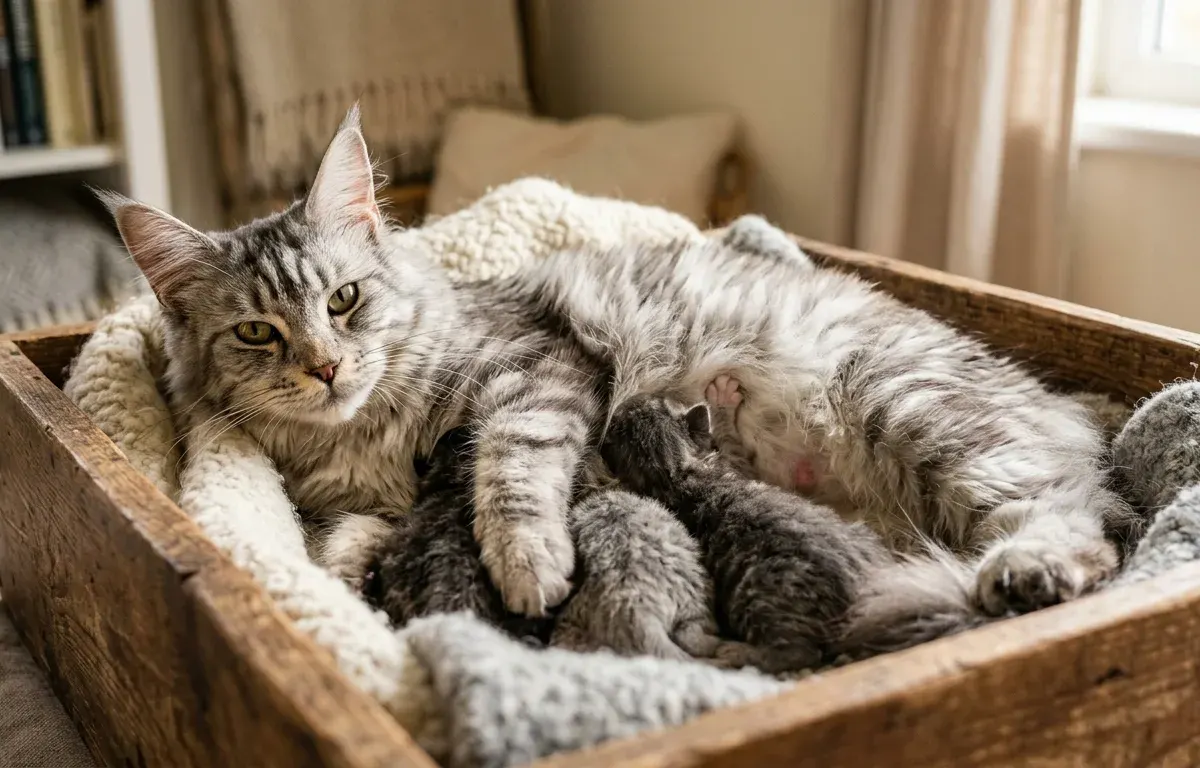
In answering how many kittens do Maine Coons have, veterinary records show that a queen typically gives birth to 3 to 6 kittens per litter, with an overall average of 4 to 5 kittens. Veterinary studies focusing on purebred Maine Coons document a mean litter size ranging between 4.2 and 5.3 kittens. Litter size can range anywhere from a single kitten up to 8 or more depending on the queen's age, physical health, genetics, and maternal parity.
- Most healthy Maine Coon litters consist of 3 to 6 kittens.
- Peer-reviewed veterinary studies establish a benchmark mean of 4.2 to 5.3 kittens per litter.
- First-time mothers (primiparous queens) often deliver smaller litters of 1 to 3 kittens.
- Full-term feline pregnancy spans approximately nine weeks (around 65 days), with delivery timing varying by maternal health and litter size.
- Veterinary abdominal radiographs after day 45 provide the most accurate fetal count before delivery.
Average Maine Coon Litter Size: What Veterinary Studies Show
A healthy Maine Coon queen usually delivers between 3 and 6 kittens in a standard litter. Because the Maine Coon is one of the largest domestic cat breeds, many owners wonder whether their substantial physical build translates into significantly larger litters than typical domestic cats. Veterinary research confirms that while Maine Coons can carry large litters, their statistical average aligns closely with other purebred cats, centered around 4 to 5 kittens.
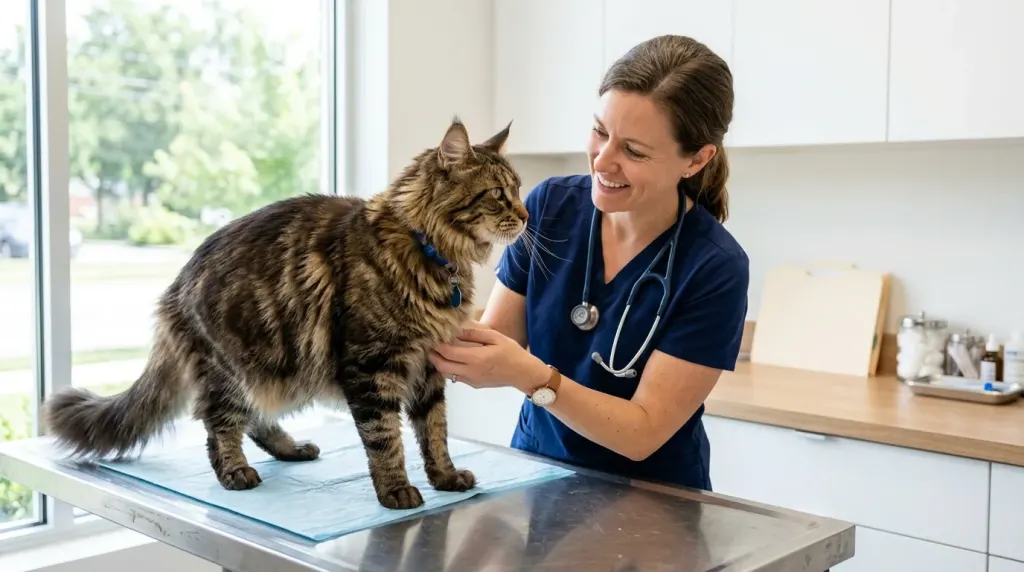
According to a study published in the Polish Journal of Veterinary Sciences examining 52 purebred Maine Coon litters, the mean litter size was 5.3 ± 2.3 kittens. The observed litter sizes in the cohort ranged from singletons (1 kitten) up to 10 kittens. The study noted that queens carrying larger litters experienced slightly shorter gestation lengths, as increased fetal volume triggers earlier hormonal signaling for labor.
Broader multi-breed feline research published in the Journal of Feline Medicine and Surgery evaluated purebred reproductive performance across multiple breeds including Maine Coons, reporting an overall mean litter size of 4.2 ± 1.8 kittens. Across established feline registries such as the Cat Fanciers’ Association and TICA, breeders report that litters of 4 or 5 kittens represent the most frequent outcome for prime-age queens.
Prospective owners often evaluate developmental benchmarks across large breeds, noting how big Ragdoll cats get alongside Maine Coons when assessing physical growth curves and adult space needs. Cross-species comparisons highlight distinct reproductive baselines, as how many puppies French Bulldogs have shows that small brachycephalic canines average 3 to 4 offspring whereas large felines naturally deliver 4 to 5 kittens.
The table below illustrates how Maine Coon reproductive metrics compare with purebred benchmarks and general domestic feline populations:
| Source / Registry | Sample Group | Mean Litter Size (± SD) | Typical Observed Range |
|---|---|---|---|
| Polish Journal of Veterinary Sciences (2019) | 52 Maine Coon litters | 5.3 ± 2.3 kittens | 1 to 10 kittens |
| Journal of Feline Medicine and Surgery (2019) | Purebred feline survey | 4.2 ± 1.8 kittens | 1 to 8 kittens |
| Feline Registry Standards (CFA / TICA) | Registered purebred queens | 4.5 kittens | 3 to 6 kittens |
| Domestic Cat Baseline | Mixed-breed domestic queens | 4.0 kittens | 1 to 9 kittens |
Understanding these baseline figures helps owners distinguish normal reproductive variation from potential complications.
Key Factors That Influence Maine Coon Litter Size
Several biological, genetic, and environmental factors determine how many kittens a Maine Coon queen conceives and successfully carries to term.
Age and Parity (First-Time vs. Experienced Queens)
Maternal age and breeding experience (parity) play a significant role in litter size. Primiparous queens (females giving birth for the first time) frequently produce smaller litters, often between 1 and 3 kittens. Their reproductive tracts and hormonal feedback loops are maturing, which can limit the number of successfully ovulated and implanted eggs.
Experienced mothers (multiparous queens) between 2 and 6 years of age represent the peak fertility window, producing the highest average litter sizes. As queens age beyond 6 or 7 years, ovulation rates naturally decline, uterine tissue elasticity decreases, and embryonic resorption rates rise, resulting in smaller litters. Because feline fertility naturally declines as queens mature, monitoring reproductive longevity alongside broader health parameters mirrors discussions regarding how long Ragdoll cats live and how senior feline vitality influences late-life wellness.
Genetics and Parental Health
Litter size depends equally on the reproductive viability of both parents. In cats, induced ovulation means that physical mating triggers the release of eggs from the ovaries. Multiple matings during estrus often increase the number of ovulated ova and maximize fertilization rates.
Parental health screenings are important before any planned breeding. The Cat Fanciers’ Association emphasizes screening breeding stock for hereditary feline conditions such as Hypertrophic Cardiomyopathy (HCM), Spinal Muscular Atrophy (SMA), and Pyruvate Kinase Deficiency (PKDef). Healthy, genetically screened queens maintain stronger uterine environments that support full-term embryo development. Confirming certified breed lineage is equally important as verifying physical breed standards, similar to the process of how to identify a Ragdoll cat through registered pedigree documentation and verified ancestry.
Nutrition and Maternal Body Condition
A queen’s nutritional status before mating directly affects ovulatory success and placental development. Queens with a sub-optimal Body Condition Score (underweight or severely overweight) face higher risks of small litters, embryonic loss, or pregnancy toxemia.
Maintaining a healthy adult weight provides the metabolic foundation needed for gestation. Underweight queens struggle to meet the intense caloric demands of fetal tissue growth, while obese queens experience higher rates of uterine inertia and birthing difficulties.
Seasonality and Heat Cycles
Felines are seasonally polyestrous, meaning their reproductive cycles respond to daylight length (photoperiod). Natural spring and summer light cycles stimulate higher follicular activity and stronger estrus cycles compared to late autumn and winter. While indoor temperature and artificial lighting moderate this effect in domestic environments, seasonal photoperiods still influence overall fertility and litter viability.
How to Accurately Determine Litter Size Before Birth
Knowing the exact number of kittens before delivery allows owners and veterinarians to recognize when labor has concluded or if an unborn kitten remains trapped inside the birth canal.
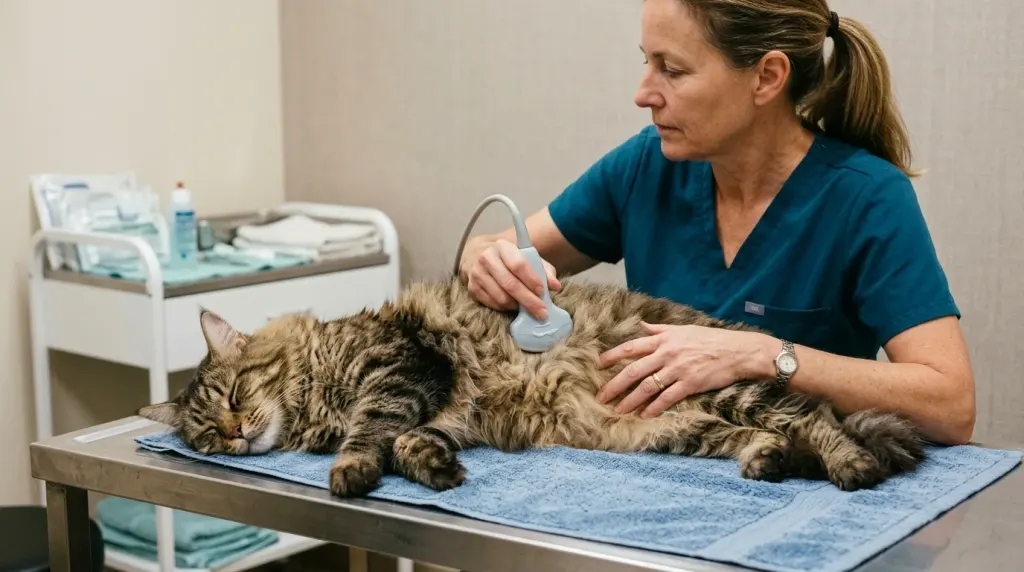
- Abdominal Palpation (Days 20 to 30): An experienced veterinarian can gently feel the queen’s abdomen to detect distinct, marble-sized embryonic swellings. However, manual palpation provides only an estimate and cannot confirm exact numbers in large litters. Non-professionals should never attempt palpation, as excessive pressure can damage developing embryos or cause placental detachment.
- Veterinary Ultrasound (Days 25 to 35): Ultrasound is ideal for confirming pregnancy and checking fetal heartbeats to verify viability. However, ultrasound can easily miss or double-count kittens because fetuses can shift behind one another in crowded uterine horns.
- Abdominal Radiography / X-ray (Day 45 onwards): Radiographs represent the clinical gold standard for counting litter size. Around day 45, fetal skeletons begin calcifying, making skull and spine structures clearly visible on X-ray imaging. Counting the distinct skulls on a radiograph gives an exact number with near 100 percent accuracy.
Budgeting for comprehensive prenatal diagnostics, including mid-term ultrasound scans and late-stage X-rays, forms a standard part of responsible breeding expenses, reflecting why pedigree kitten investments vary when assessing how much Ragdoll cats cost or evaluating purebred adoption fees. Veterinarians also examine pelvic width and abdominal capacity relative to fetal head size, a clinical consideration that parallels how veterinarians evaluate structural dimensions and how big French Bulldogs get when planning safe delivery protocols. Counting kittens through ultrasound can underestimate litter size in large breeds like Maine Coons because fetuses can hide behind one another in crowded uterine horns. An abdominal X-ray performed by a veterinarian after day 45 to 50 provides an accurate count because fetal skeletal ossification makes every spine and skull visible.
Maine Coon Pregnancy and Queening Timeline
According to feline reproductive research published in the Journal of Feline Medicine and Surgery, purebred queen gestation lasts an average of 64.7 ± 2.4 days, typically spanning 63 to 68 days. Because Maine Coons are large and slow to mature, tracking physical milestones ensures the queen receives proper support throughout her pregnancy.
| Gestation Stage | Developmental & Physical Signs | Recommended Care & Diagnostic Actions |
|---|---|---|
| Weeks 1-3 (Days 0-21) | Fertilization and blastocyst implantation occur; nipples enlarge and turn pink around day 21 | Provide a calm domestic routine; maintain a balanced adult maintenance diet without overfeeding |
| Weeks 4-5 (Days 22-35) | Rapid organogenesis begins; individual gestational ampullae become detectable | Schedule a veterinary ultrasound scan to confirm cardiac motion and fetal viability |
| Weeks 6-7 (Days 36-49) | Fetal skeletal calcification accelerates; abdominal swelling becomes prominent | Transition queen to high-calorie kitten food; perform abdominal radiography after day 45 for exact fetal count |
| Weeks 8-9 (Days 50-65) | Fetal maturation finishes; mammary glands develop and nesting behaviors emerge | Prepare a clean queening box in a quiet room; monitor daily body temperature for pre-labor drops |
This timeline contrasts with canine gestational patterns, where how long French Bulldogs are pregnant reflects comparable sixty-day fetal development periods across companion animals. Tracking specific maternal hormonal shifts and rectal temperature drops is equally critical in predicting whelping dates, as seen in clinical guides detailing how long Pug dogs are pregnant and how temperature fluctuations signal imminent labor.
During the final three weeks of gestation, developing fetuses undergo rapid growth, putting substantial pressure on the queen’s abdominal cavity. Queens require frequent, nutrient-dense meals transitioning to high-calorie gestation and kitten formulas.
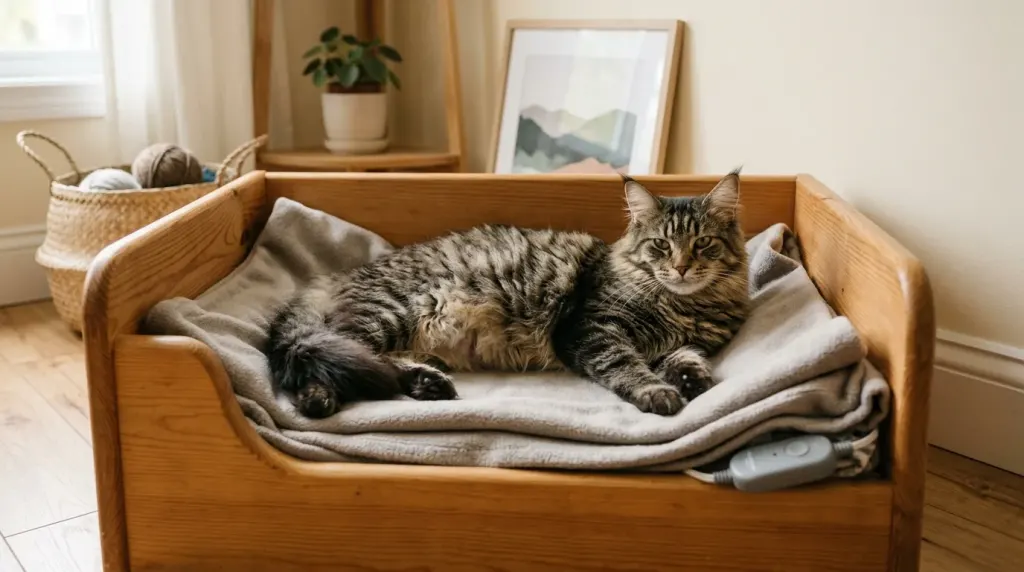
Setting up a quiet queening box 10 to 14 days before the expected delivery date allows the queen to acclimate. Because Maine Coons reach substantial adult lengths, the nesting box must be spacious, draft-free, and lined with clean, washable fleece or towels to provide ample space for the mother to stretch out without crowding her newborns.
Labor and Delivery: When to Seek Immediate Veterinary Care
Feline labor progresses through three distinct stages:
- Stage 1 (Cervical Dilation): Lasts 12 to 24 hours. The queen becomes restless, purrs loudly, grooms excessively, and nests. Her rectal temperature often drops by 1 to 2 degrees Fahrenheit roughly 24 hours before active labor.
- Stage 2 (Fetal Expulsion): Active abdominal contractions push each kitten through the birth canal. Kittens are typically delivered at intervals of 15 to 60 minutes.
- Stage 3 (Placental Delivery): The queen passes a placenta following each kitten, which she instinctively consumes while chewing through the umbilical cord and licking the kitten to stimulate breathing.
Establishing direct contact with an emergency veterinary hospital ensures prompt guidance, mirroring protocol guidelines in how to care for a French Bulldog during high-risk physical events.
While most Maine Coon births proceed without human intervention, dystocia (difficult labor) can occur. Recognizing medical red flags is critical for maternal and kitten survival:
| Condition / Observation | Clinical Significance | Immediate Action Required |
|---|---|---|
| Strong active straining > 30 minutes | Possible fetal obstruction or malposition | Contact emergency vet immediately |
| Interval > 2 hours between kittens with known fetuses remaining | Uterine inertia or fatigue | Call vet for clinical guidance |
| Greenish-black vaginal discharge before first kitten | Premature placental separation | Seek urgent veterinary evaluation |
| Muscle tremors, staggering, or extreme weakness | Suspected hypocalcemia (eclampsia) | Transport queen to clinic immediately |
Note: Dystocia in queens requires prompt veterinary intervention. If your Maine Coon queen experiences intense active contractions for more than 30 minutes without delivering a kitten, or if more than 2 hours pass between kittens while unborn kittens remain, contact your emergency veterinary clinic immediately.
Postpartum Care for Queen and Newborn Kittens
Following delivery, monitor the queen and her litter closely during the first 48 hours. Newborn Maine Coon kittens typically weigh between 90 and 140 grams at birth, slightly heavier than average domestic kittens.
Weigh each kitten daily at the same time using a digital kitchen scale. Healthy kittens should gain 10 to 15 grams per day. Continuous crying, failure to nurse, or weight loss indicates insufficient milk intake or illness requiring supplemental feeding.
Newborn kittens spend up to 90 percent of their first two weeks sleeping between nursing sessions, a developmental milestone that mirrors how much sleep puppies need during their initial neonatal growth phase. Ensuring the queen receives high-protein, calorie-dense nutrition supports continuous lactation and maternal stamina, forming an integral component of daily care similar to guidelines for taking care of a Pug dog and maintaining peak animal vitality.
Keep the nursery warm and draft-free. Newborn kittens cannot regulate their own body temperature during their first two weeks of life. Maintain an ambient nesting temperature of 85 to 90 degrees Fahrenheit (29 to 32 degrees Celsius) during the first week, gradually reducing the temperature by 5 degrees each subsequent week.
Frequently Asked Questions about Maine Coon Litter Sizes
Can a Maine Coon have only 1 kitten?
Yes, Maine Coons can deliver a single kitten, known as a singleton litter. Singleton pregnancies occur more frequently in young queens giving birth for their first time or in older queens near the end of their breeding years. Single kittens often grow unusually large in the uterus because they absorb all maternal nutrients without competition, which can increase the risk of birthing difficulties and may require a Cesarean section.
What is the largest recorded Maine Coon litter?
While the average litter size is 4 to 5 kittens, exceptional litters of 9 to 11 kittens have been documented in healthy, mature Maine Coon queens. In very large litters, the queen may not have enough functional teats or milk volume to support every kitten equally, requiring owners to assist with supplemental bottle-feeding using commercial kitten milk replacer.
At what age can a Maine Coon get pregnant?
A female Maine Coon can reach sexual maturity and experience her initial heat cycle during her first year of life, occasionally before completing her adolescent growth. However, Maine Coons are exceptionally slow-maturing cats that require several years to achieve full skeletal and muscular development. Veterinarians and pedigree breed registries recommend delaying any planned breeding until a queen reaches full physical maturity, typically around two years of age.
Do Maine Coons need help during birth?
Most Maine Coon queens deliver their kittens instinctively without needing direct human intervention. However, owners should quietly observe the birth from a short distance to ensure each kitten is freed from its amniotic sac, begins breathing, and nurses successfully within the first hour. Keep emergency veterinary contact numbers readily accessible in case signs of dystocia occur.
Leave a Reply