
Table of Contents
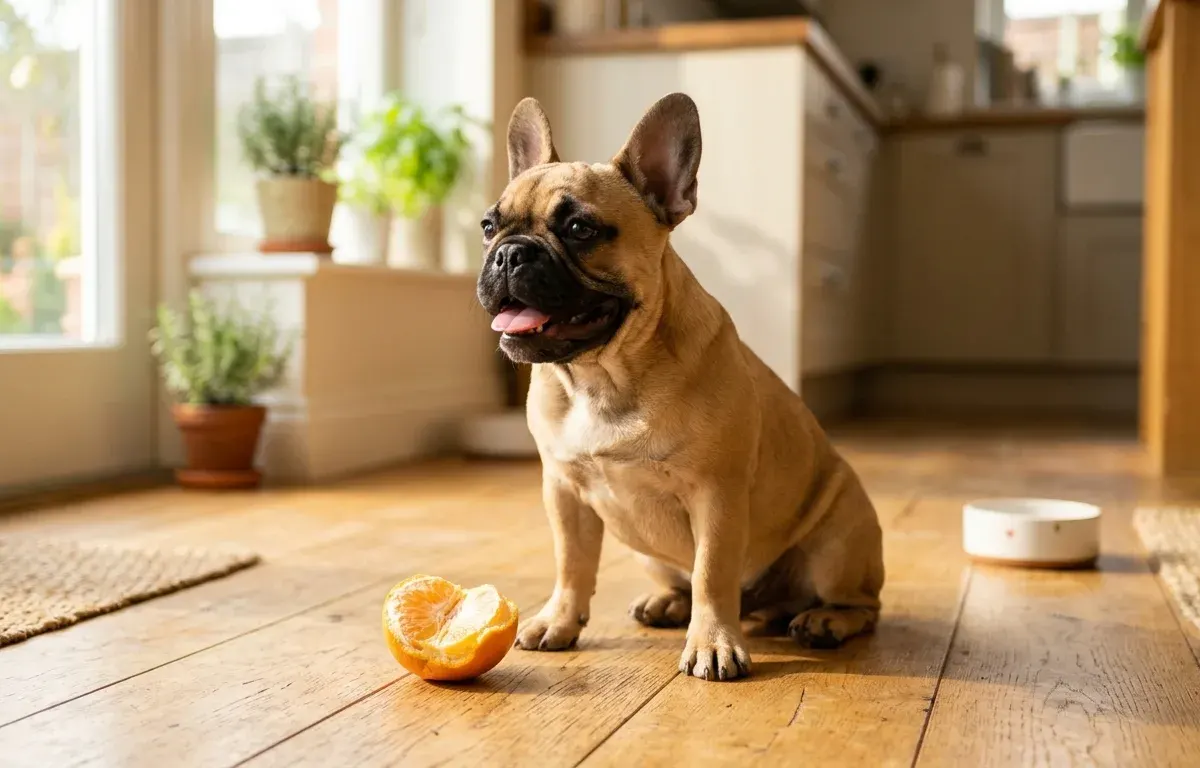
Many owners ask, can French Bulldogs eat oranges? Most healthy French Bulldogs can have a little plain orange flesh as an occasional treat, provided it is peeled, seedless, and introduced slowly. It is not a nutritional necessity, and its sugar and acidity make it a poor choice for some dogs or any dog that shows digestive upset.
- Fresh, seedless orange flesh is generally safe in small amounts.
- Do not feed the peel, seeds, or plant parts.
- Limit portions to one segment or less for a small dog.
- Avoid orange juice, marmalade, and sweetened dried orange.
- Skip citrus entirely if your dog has diabetes or a sensitive stomach.
Quick answer: what is safe and what is not
Offer only a small piece of plain, fresh orange flesh. Do not intentionally feed peel, seeds, juice, marmalade, candy, or dried sweetened orange; these add choking, digestive, concentrated-sugar, or ingredient concerns.
The ASPCA lists the orange plant as toxic because the peel and plant material contain essential oils and psoralens, while its own entry states the fruit is edible and only the skins and plant material cause problems.
| Okay in a tiny treat | Do not offer |
|---|---|
| Fresh, peeled orange flesh | Orange peel and pith |
| Seedless segments | Orange seeds |
Is orange flesh safe for a Frenchie?
A small amount of peeled, seedless orange flesh is fine for a healthy dog that tolerates it. It provides fiber, potassium, and vitamin C. However, a complete and balanced dog food should already supply what a Frenchie needs; orange is an optional extra alongside balanced staples, similar to the guidelines in a French Bulldog rice feeding guide and our broader guide on what French Bulldogs can eat. According to the AKC, orange is an occasional, small-quantity food rather than a daily requirement.
Why can the peel, seeds and plant parts be a problem?
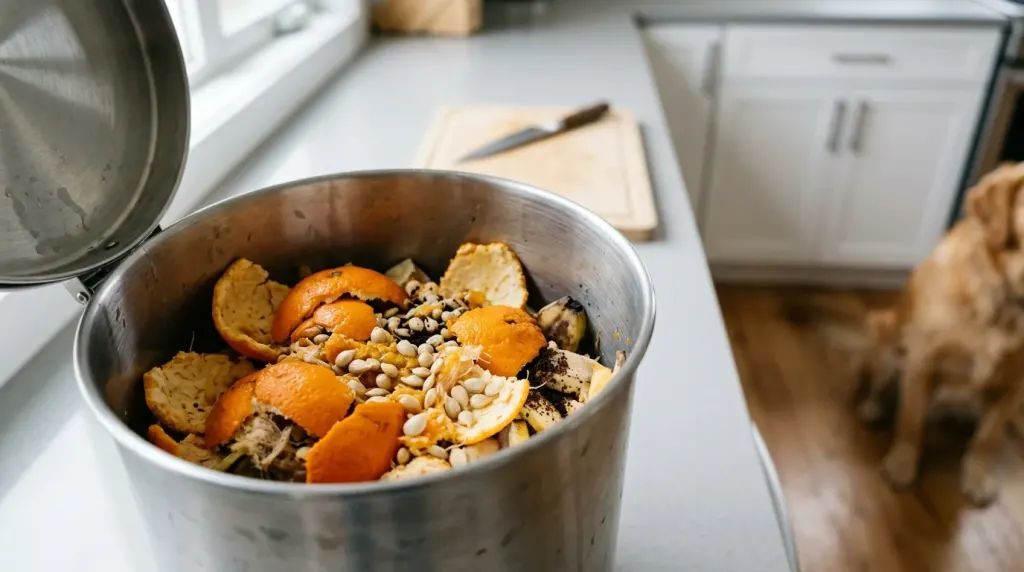
The key is the part consumed. The ASPCA lists orange as toxic because the peel and plant material contain essential oils and psoralens, with possible vomiting, diarrhea, depression, and dermatitis, although the fruit itself is edible. The peel also contains limonene and citric acid, and the seeds can cause intestinal blockages, so both must be completely removed.
How much orange can a French Bulldog have?
Start with a single bite-sized piece of peeled, seedless flesh. If the dog stays well, keep orange as an occasional treat and count it inside the daily treat budget. Because Frenchies are small, they need far less than a large breed, roughly half a segment to one segment, not a handful.
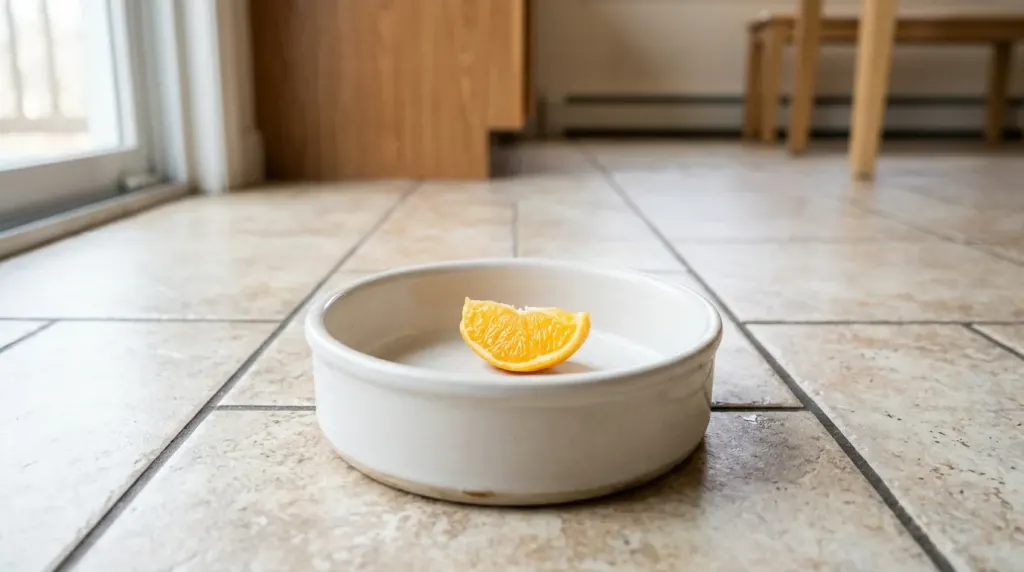
Frenchies vary in size and calorie needs. Trial the smallest practical amount first. Distinguish a one-off trial from a recurring portion, and offer oranges one to two times a week rather than daily. The AKC and Purina recommend keeping all treats under 10% of daily calories, which means a small breed receives only a tiny fraction of what a larger dog might have. This same principle applies to rich treats; a French Bulldog peanut butter treat guide explains how to budget calories. Similarly, when contrasting a fresh fruit treat with salty human food treats, you can refer to a French Bulldog ham safety guide to see why portion control is vital.
Start with a tolerance test, not a full serving
- Wash the orange thoroughly.
- Peel it completely, removing all the white pith.
- Remove every seed from the flesh.
- Separate a small piece of flesh and offer only that piece when the dog is otherwise well. Do not introduce it alongside other new foods.
- Over the next 24 hours, watch for changes in appetite, stool quality, vomiting, itching, or unusual behavior, and stop if a reaction appears.
Should a Frenchie have orange every day?
No fixed daily orange allowance suits every Frenchie. A smaller, less active, overweight, sensitive, or medically managed dog may be better off skipping it entirely. Even a healthy dog that tolerates a small piece does not need orange daily; once or twice a week is plenty because of the sugar and acidity content.
Prepare orange safely before serving
The safest version is plain, washed orange flesh. Rinse the fruit, peel it completely, remove the pith and every seed, cut it into small pieces, and serve it without juice, sugar, salt, yogurt coating, or chocolate. Preparation matters as much as portion size. Apply the same “plain, prepared, small-piece” principle seen in a French Bulldog cantaloupe serving guide. If you want a lower-sugar fresh alternative that suits the dog, consider a French Bulldog cucumber safety guide.
- Rinse the orange before peeling to prevent transferring dirt.
- Discard the peel and seeds safely out of reach.
- Cut the flesh small to reduce gulping and choking risks.
- Serve fresh, and refrigerate any leftovers for no more than one to two days.
- Use water, not juice, for hydration.
Orange juice, dried orange and flavoured foods are not equivalents
Guidance for a tiny piece of fresh flesh does not apply to orange juice, marmalade, sweetened dried fruit, baked goods, or sweets. These concentrate sugar or add unsuitable ingredients, making them inappropriate as an orange substitute. Purina advises against orange juice because it concentrates sugar and citric acid; offer plain water instead if you want your dog to drink more.
| Fresh flesh | Processed orange product |
|---|---|
| Contains water and natural fiber | Juice removes fiber and concentrates sugar |
| Allows portion control | Sweets and baked goods add toxic risks |
| Safe in tiny amounts | Dried orange contains concentrated sugar |
When should a French Bulldog skip oranges?
Skip orange and ask the vet first if the dog has diabetes, needs weight management, follows a prescribed diet, has ongoing gastrointestinal signs, or has reacted poorly to citrus before. For a healthy dog, stop immediately if a first trial causes vomiting, diarrhea, or clear discomfort.
Natural sugar matters for calorie-controlled and diabetic dogs. Citric acid can be poorly tolerated, and a dog with a current upset stomach should not undergo a food trial. Repeated vomiting needs a medical assessment rather than another food experiment, as explained in resources covering why your French Bulldog keeps throwing up. Monitoring new foods is especially important in a dog prone to gas, which you can read about in guides on why French Bulldogs fart so much.
| Skip for now | Ask the vet first | Stop and monitor |
|---|---|---|
| Dog currently has an upset stomach | Dog has diabetes | Dog vomits after the first taste |
| Dog has a history of citrus sensitivity | Dog is on a prescribed medical diet | Dog shows signs of itching |
| Dog is overweight | Dog requires strict calorie control | Dog develops loose stool |
What signs mean “stop”, and what needs a vet?
Stop feeding orange after mild digestive changes and return to the usual diet unless a vet advises otherwise. Contact a veterinarian promptly for repeated vomiting, persistent diarrhea, marked lethargy, abdominal pain, breathing trouble, collapse, or suspected consumption of significant peel or seeds. The ASPCA advises veterinary or poison-control contact after suspected toxic ingestion of the plant material.
Benefits in context: useful nutrients, not a need
Orange contains fiber, potassium, and vitamin C, but these do not make it necessary for a Frenchie. Dogs get their nutrition from a complete diet, and unlike people, dogs synthesize their own vitamin C. The practical question is simply whether the individual dog tolerates an optional treat.
A treat should never displace balanced food. As another example of judging a whole food by preparation, portion, and the individual dog, review a French Bulldog parsnip serving guide. Furthermore, a protein-rich food is a separate safety and preparation question, covered in a French Bulldog salmon feeding guide.
| Contains | Does not prove |
|---|---|
| Vitamin C | Immune-boosting properties |
| Potassium | Need for citrus supplementation |
| Fiber | Detoxification benefits |
FAQ
Can Frenchie puppies have a small piece of orange?
A puppy may tolerate a very small, peeled, seedless piece, but new foods are best introduced cautiously because puppies have smaller bodies and are more prone to digestive upset. Keep the puppy’s complete growth diet the priority and ask a vet before adding treats if there are growth or digestion concerns.
Are mandarins, clementines and tangerines the same as oranges?
They are citrus fruits with the same practical concerns. Offer only a tiny amount of plain flesh if the dog tolerates it, and remove the peel, pith, and seeds. Do not assume that a Frenchie who tolerates one citrus fruit will tolerate every citrus food or product.
My dog refuses orange, should I keep trying?
No. Orange is optional, and some dogs dislike the strong citrus smell or tart taste. Do not coax, force-feed, or hide it in high-calorie foods; simply choose a treat the dog already tolerates.
Can orange replace a meal or hydration?
No. Orange is a treat, not a meal replacement, and fresh water is the right hydration choice. Do not use orange juice to make a dog drink more, because it is concentrated in sugar and citric acid.


Leave a Reply