
Table of Contents
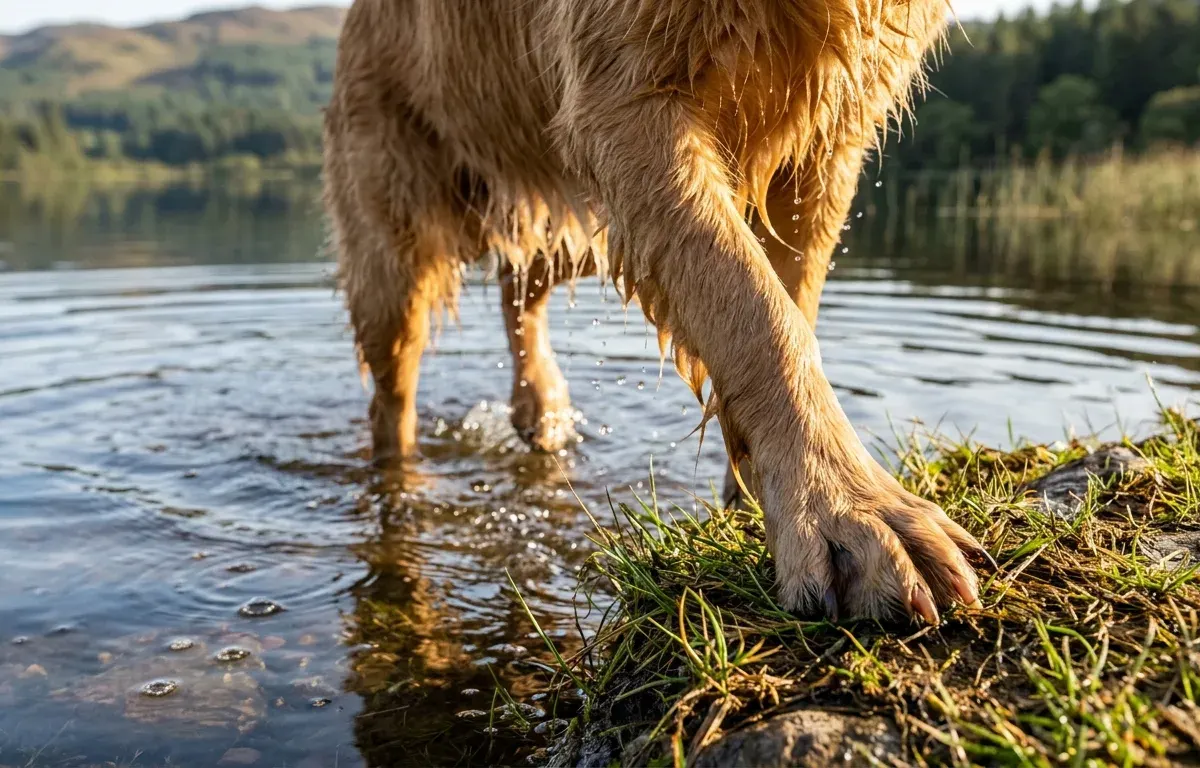
Do Golden Retrievers have webbed feet? Yes, they possess flexible connective tissue called interdigital webbing that links their toes. Bred in 19th-century Scotland to retrieve waterfowl from icy lochs, this partial webbing functions like built-in swim fins in the water and snowshoes on soft terrain.
- Golden Retrievers possess partial interdigital webbing that expands foot surface area for swimming and stability.
- Lord Tweedmouth developed the breed in 1868 by crossing a yellow retriever with the extinct Tweed Water Spaniel.
- The official AKC standard describes the feet as round, compact, and well knuckled up, without explicitly writing the word webbed.
- Webbed paw folds can trap moisture, requiring owners to rinse, dry, and inspect paws regularly to prevent pododermatitis.
Golden Retrievers are famous for their boundless energy, cheerful temperament, and legendary love for water. If you look closely between your Golden’s toes, you will notice a thin, flexible layer of skin connecting their digits. This anatomical feature is interdigital webbing, and it plays a vital role in both aquatic performance and terrestrial endurance.
Do Golden Retrievers Have Webbed Feet? The Anatomy of Golden Paws
The quick and definitive answer is yes. Golden Retrievers have webbed feet, featuring a specialized skin membrane extending along the digits of all four paws. To understand why this structure exists, one must explore canine paw biology and how selective breeding shaped these appendages.
What Exactly Are “Webbed Feet” in Dogs?
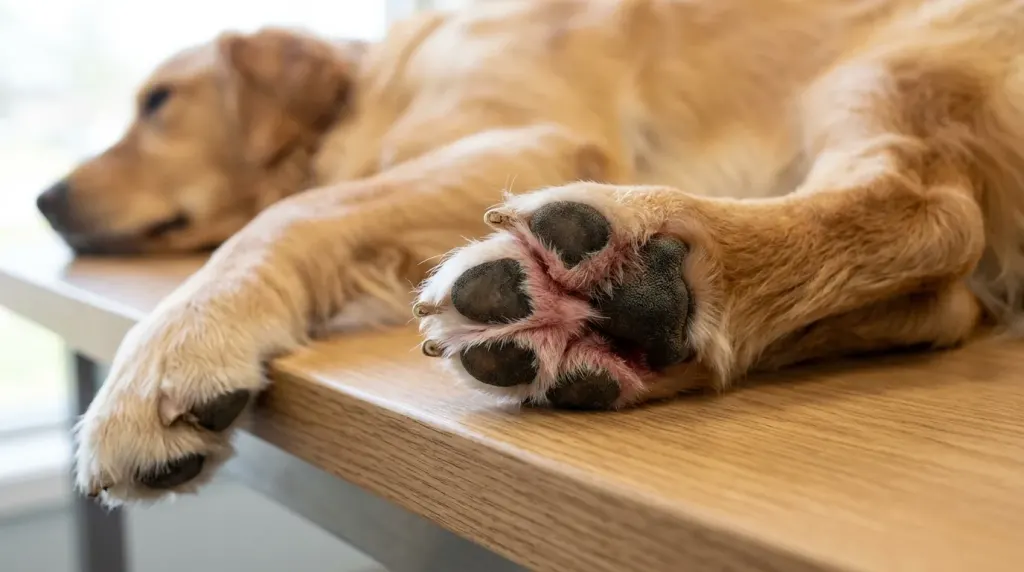
In canine anatomy, webbed feet do not resemble the rigid, leathery paddles found on ducks or amphibians. Instead, canine webbing consists of an elastic interdigital membrane composed of connective tissue, skin folds, and microscopic capillaries.
This membrane bridges the gaps between the metacarpal and phalangeal bones. When a dog bears weight or pushes through water, the toes spread outward, stretching this membrane taut. This action significantly expands the total surface area of the paw, turning the foot into a dynamic paddle that generates forward thrust.
Do All Dogs Have Webbed Feet?
Biologically speaking, almost all domesticated dogs have a tiny amount of webbing between their toes. During embryonic development, vertebrate paws start as paddle-like buds, and interdigital tissue gradually recedes through programmed cell death.
In some breeds, this recession is nearly complete, leaving only minimal skin between tight digits. Just as selective breeding produced unique traits where French Bulldogs have no tails due to genetic selection for a screw tail, working dogs retained specialized foot structures tailored to their historical tasks. Breeds selected for swimming, water retrieval, or traversing muddy wetlands retain prominent, highly functional webbing.
The Golden Retriever’s Partial Webbing
Golden Retrievers have what veterinarians classify as partial webbing. The connective membrane extends roughly halfway to two-thirds up the length of each digit.
This partial configuration strikes an ideal balance. Giant water dogs like the Newfoundland have extensive webbing designed for heavy swimming power. In contrast, the Golden Retriever requires both aquatic propulsion and swift agility on dry land. The partial webbing provides sufficient paddle area in the water without compromising the tight, arched foot structure needed for sprinting across fields.
The Historical Purpose: Why Do Golden Retrievers Have Webbed Feet?
The webbed feet of the Golden Retriever are not an accidental genetic quirk. They are the deliberate outcome of nineteenth-century selective breeding designed for upland game and waterfowl retrieval.
Bred for Scottish Highlands Waterfowl Retrieval
During the mid-1800s in Great Britain, hunting technology advanced rapidly with the introduction of long-range percussion rifles. Hunters could shoot game birds at greater distances, but fallen fowl frequently dropped into deep, marshy bogs and icy Scottish lochs where traditional retrievers struggled.
In 1868, Dudley Marjoribanks (later known as Lord Tweedmouth) began developing the ultimate retriever at his Guisachan estate in Inverness-shire, Scotland. He crossed a yellow Wavy-Coated Retriever named “Nous” with a Tweed Water Spaniel named “Belle.” The Tweed Water Spaniel, now extinct, was renowned for its water-repellent coat, endurance, and prominent webbed paws.
Subsequent infusions of Flat-Coated Retriever, Irish Setter, and Bloodhound genetics refined the Golden Retriever into an all-weather companion with superior scenting ability, a soft mouth, and strong webbed feet. While companion breeds experience small litters as seen in average French Bulldog puppy litter sizes, 19th-century gundog breeding programs prioritized strong lineage development to produce resilient working retrievers capable of enduring harsh Scottish winters.
The Ultimate Aquatic Toolkit
Interdigital webbing works in harmony with several other breed traits:
- Water-Repellent Double Coat: A dense, oily undercoat keeps the skin dry and warm, while a flat outer coat repels moisture and debris.
- Heavy Rudder Tail: The thick base and muscular action of the tail allow the Golden to steer precisely during choppy water swims.
- Broad Paw Pads: Thick, shock-absorbing digital pads protect against submerged rocks and riverbed debris.
When swimming, the dog extends its paws during the backward power stroke, spreading the toes wide to maximize water resistance and propel the body forward. On the recovery stroke, the dog pulls its toes together, collapsing the webbing to minimize drag.
Beyond Swimming: Surprising Advantages of Webbed Paws on Land
While swimming is the most obvious benefit of webbed feet, this anatomical trait provides major advantages during terrestrial activities across varied landscapes.
Natural “Snowshoes” for Sand, Mud, and Snow
On soft surfaces like marshland mud, deep sand dunes, or winter snow, a standard narrow paw tends to sink deep into the ground. Each step requires extra muscular effort to pull the limb out of the depression, causing rapid fatigue.
The interdigital membrane of a Golden Retriever functions like a natural snowshoe. By distributing the dog’s body weight over a broader surface area, the webbing reduces ground pressure. This prevents the dog from sinking deeply, conserving stamina during lengthy field excursions or beach runs.
Active sporting dogs burn substantial calories during heavy exercise and benefit from hydrating treats. Many owners offer low-calorie cucumbers for dogs after runs, or share small slices of peaches in moderation to replenish moisture safely without heavy sugars.
Enhanced Digging and Traction
When negotiating slippery riverbanks, loose gravel, or steep grassy inclines, the flexible interdigital tissue allows the paw to conform dynamically to uneven ground.
Furthermore, if a Golden needs to clear away brush or dig into soft soil, the expanded paw acts like a scoop shovel. The webbing captures and displaces a larger volume of earth with each stroke compared to non-webbed breeds.
The Official AKC Breed Standard: A Surprising Omission
One of the most intriguing aspects of Golden Retriever conformation is how their webbed feet are handled in official documentation.
| Standard Category | Official AKC Description | Functional Interpretation |
|---|---|---|
| General Foot Shape | Medium size, round, and compact | Prevents splay-footed weakness and injury |
| Knuckling | Well knuckled up with thick pads | Arched toes maintain structural shock absorption |
| Interdigital Webbing | Not explicitly mentioned in standard text | Concealed naturally within the tight, compact foot |
What the Breed Standard Actually Says
According to the official American Kennel Club breed standard, the Golden Retriever foot is described concisely:
“Feet medium size, round and compact, well knuckled up, with thick pads. Excess hair may be trimmed to show natural size and contour. Splay or hare feet are faults.”
Nowhere in the official AKC standard will you find the word “webbed.” This omission frequently surprises new owners and canine enthusiasts who assume such a hallmark trait would be explicitly listed.
Why Webbing Fits the Standard Perfectly
The absence of the word “webbed” is intentional rather than an oversight. In canine conformation terminology, judges evaluate structural skeletal soundness. A “splay foot” is a serious conformational defect where the toes spread apart loosely while standing, weakening the foot and inviting orthopedic injury.
The Golden Retriever standard demands a “compact, well knuckled up” foot, meaning the skeletal digits remain arched and held tightly together when resting on flat ground. The flexible interdigital skin folds neatly underneath and between the knuckled toes. When the dog stands, the foot appears round and firm; when the dog swims, the elastic webbing expands fully.
Unlike brachycephalic companion dogs where compact conformation often links directly to French Bulldog breathing complications, the Golden’s tight foot structure protects joint integrity while preserving full athletic performance.
The Downside of Webbed Feet: Health and Hygiene Risks
While interdigital webbing provides physical advantages, the deep skin folds between the digits require mindful maintenance.
Moisture Trapping and Fungal Infections
The primary health vulnerability associated with webbed feet is moisture retention. When a Golden Retriever swims in a lake, walks on damp grass, or steps in puddles, water becomes trapped inside the interdigital pockets beneath dense hair tufts.
Dark, warm, and moist environments provide ideal breeding grounds for Malassezia pachydermatis (yeast) and opportunistic bacteria like Staphylococcus pseudintermedius. As highlighted in veterinary pododermatitis research, chronic moisture in canine interdigital folds triggers inflammation, erythema, and secondary bacterial infections. Chronic paw licking and brown staining on light Golden fur are clear clinical indicators of yeast colonization within the interdigital webbing, rather than simple boredom.
Proactive hygiene is critical across all domestic pets prone to anatomical sensitivities, whether managing French Bulldog health conditions in facial skin folds or monitoring chronic Maine Coon cat health issues.
Vulnerability to Cuts and Parasites
The thin skin of the interdigital membrane is more vascular and delicate than the tough, keratinized bottom paw pads.
During outdoor adventures, sharp river rocks, broken shells, submerged fishing hooks, and glass can lacerate the webbing. In addition, plant awns such as foxtails can penetrate the interdigital webbing, migrating deeper into the paw tissue and forming painful abscesses. The sheltered folds between webbed toes also represent a common hiding spot for blood-feeding ticks.
How to Clean and Pamper Your Golden’s Webbed Paws
Maintaining healthy webbed paws requires a consistent, straightforward grooming routine. Following these practical steps will protect your Golden from painful infections and injuries.

Post-Swim Rinsing and Deep Drying
Whenever your Golden swims in lakes, rivers, ocean salt water, or chlorinated pools, always rinse their paws thoroughly with clean, fresh tap water. Rinsing washes away abrasive sand, irritating chlorine, and environmental bacteria.
After rinsing, drying is essential:
- Use an absorbent microfiber towel to press gently between each digit.
- Separate the toes with your fingers to absorb moisture from the deep interdigital skin folds.
- In wet climates or after heavy baths, use a low-heat pet dryer to ensure the webbing base is completely dry.
Nail Trimming and Interdigital Hair Grooming
Golden Retrievers naturally sprout dense tufts of hair between their paw pads and webbed toes. While this hair offers mild protection, excessive matting holds mud, traps moisture, and collects winter ice balls.
- Use small, round-tipped grooming scissors or an electric paw trimmer to trim hair flush with the pad surface.
- Keep toenails clipped short. Overly long nails force the toes to splay unnaturally, straining the interdigital ligaments.
- Regular nail and paw maintenance should be paired with broader wellness routines, including routine brushing and checking canine dental hygiene and tooth count to maintain overall health.
Moisturizing Paw Pads
Hot asphalt in summer and road salts in winter can cause canine paw pads to dry out, crack, and bleed. After intensive outdoor exercise, offering refreshing treats like chilled cantaloupe melon slices helps keep active dogs hydrated while topical balms soothe dry foot tissue.
Note: Apply a thin layer of all-natural, dog-safe paw balm containing beeswax, shea butter, or coconut oil to cracked pads. Avoid human lotions containing zinc oxide or artificial fragrances, which can be toxic if licked.
Conclusion: A Perfect Blend of Form and Function
The webbed feet of the Golden Retriever reflect purposeful breeding and functional anatomy. From the chilly lochs of 19th-century Scotland to modern backyard swimming pools, this partial webbing provides essential swimming propulsion, mud stability, and land traction.
Understanding comparative anatomy and breed predispositions, much like evaluating Ragdoll cat health conditions, highlights how distinct physical traits shape health and daily care routines across domestic companion animals. By keeping your Golden’s webbed paws clean, dry, and well-groomed, you ensure your loyal companion stays active, comfortable, and ready for every adventure.



Leave a Reply