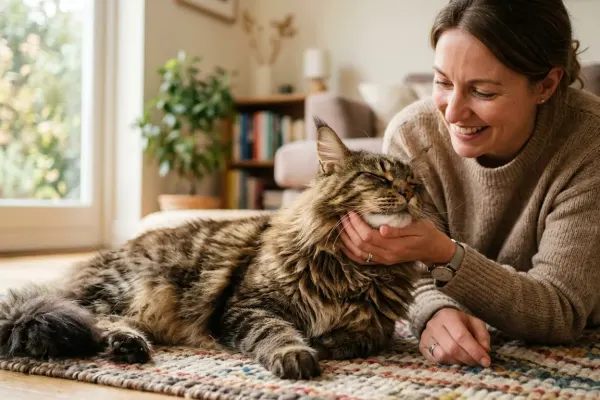
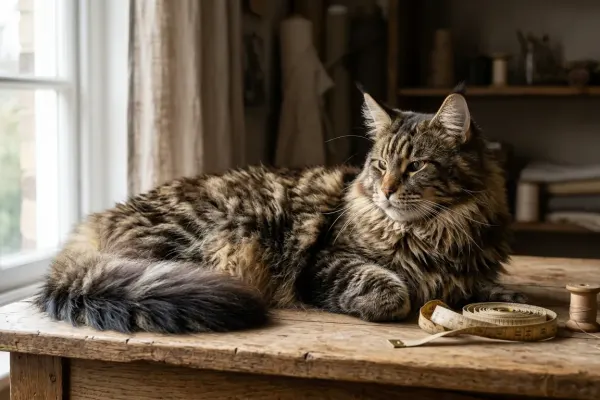
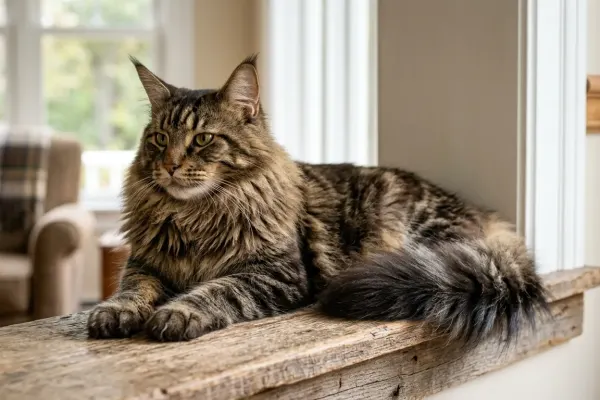
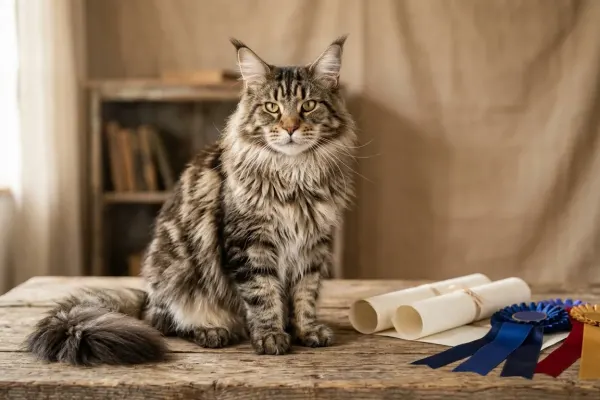
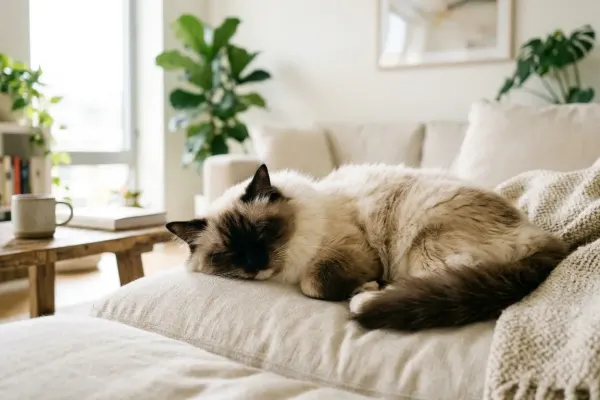
Yes, if you are asking are Maine Coons friendly, these cats are widely celebrated as one of the most sociable, gentle, and affectionate breeds in the feline world. Often called the "gentle giants" of the cat fancy, they thrive in family environments and naturally get along well with children, dogs, and other cats.
August 31, 2026
By Dr. Jenny Max, DVM
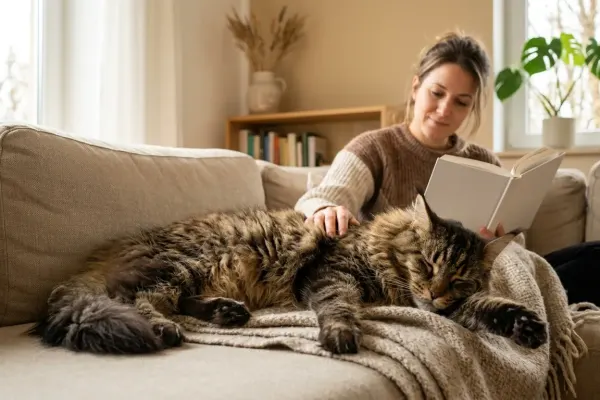
Maine Coons are exceptionally cuddly and affectionate companions, though their cuddling style is usually companionable rather than demanding. Most Maine Coons prefer lounging closely beside you on the sofa, resting their head against your arm, or following you from room to room instead of sitting directly on your lap. Their dense double coat and substantial 11 to 25 pound body frame make direct lap sitting warm and cramped, leading them to favor side-by-side cuddling.
August 30, 2026
By Dr. Jenny Max, DVM
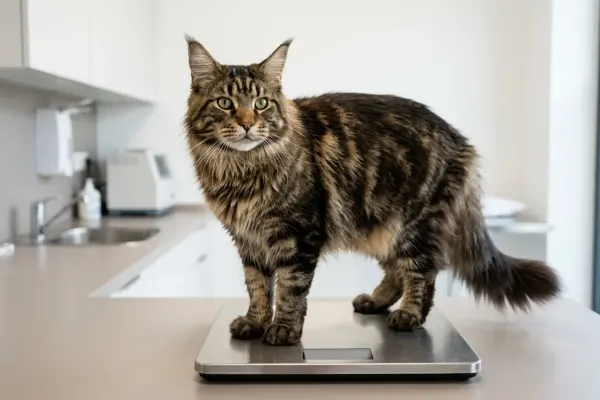
An adult Maine Coon cat typically weighs between 8 and 25 pounds (3.6 to 11.3 kg), depending primarily on biological sex and genetics. Mature male Maine Coons generally weigh between 15 and 25 pounds (6.8 to 11.3 kg), while adult females average between 8 and 15 pounds (3.6 to 6.8 kg). Unlike standard domestic felines that reach full size by 12 months, Maine Coons develop slowly and require 3 to 5 years of steady physical growth to reach their full adult frame, bone density, and muscle mass.
August 29, 2026
By Dr. Jenny Max, DVM
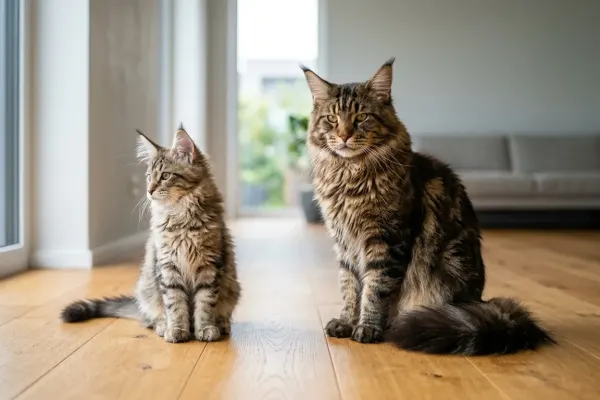
When determining when do Maine Coons stop growing, most cats reach full adult maturity between 3 and 5 years of age. Unlike standard domestic cats that reach full adult size by 12 to 18 months, Maine Coons are a slow-maturing breed whose skeletal frame, muscle mass, and dense coat require 36 to 60 months to complete development. Skeletal length and height largely finalize around 2 to 3 years of age, while muscle density and chest width continue filling out until age 5.
August 28, 2026
By Dr. Jenny Max, DVM
When evaluating how big do Maine Coon cats get, adult males typically weigh between 15 and 25 pounds (6.8 to 11.3 kg), while adult females range from 8 to 15 pounds (3.6 to 6.8 kg). Standing 10 to 16 inches (25 to 41 cm) tall at the shoulder, their total body length spans 30 to 40 inches (76 to 101 cm) or more from nose to tail tip. While standard domestic cats finish growing by their first birthday, Maine Coons develop gradually across several years depending on bloodline and sex to build their heavy bone structure and dense muscle frame.
August 27, 2026
By Dr. Jenny Max, DVM
The Maine Coon cat breed is one of the largest domesticated feline breeds, known for its sturdy build, dense water-resistant coat, and sociable nature. Fully domestic in origin, adult males can weigh 20 pounds or more. Prospective owners can expect a lifespan extending well into the teens (typically 12 to 15 years depending on individual health), prioritize proactive health screenings for hereditary conditions like hip dysplasia and hypertrophic cardiomyopathy, and anticipate purebred adoption costs typically ranging from $1,500 to $3,500.
August 25, 2026
By Dr. Jenny Max, DVM
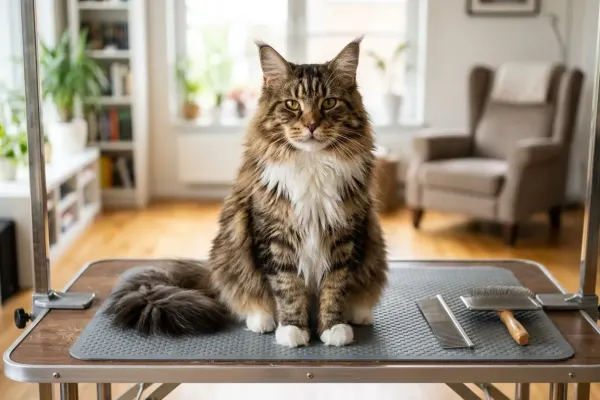
Understanding how to groom a Maine Coon requires combing their dense, semi-long double coat several times each week according to individual coat thickness, using a wide-tooth metal comb and slicker brush. Full maintenance includes trimming sharp claw tips as they grow, checking ears for wax, and bathing only when the coat becomes noticeably greasy or soiled. Always work through tangles gently from the tips inward and never use household scissors near feline skin.
August 25, 2026
By Dr. Jenny Max, DVM
Are Maine Coon cats rare? Officially, no. Maine Coon cats are not biologically rare, consistently holding the number two spot among the most registered pedigreed cat breeds worldwide, trailing only the Ragdoll according to annual registry statistics. While the breed is widely established, prospective owners often perceive them as scarce due to high demand, lengthy breeder waitlists, and purebred adoption prices between $1,500 and $4,000. True rarity applies only to specific genetic coat variations, including black smoke, chinchilla silver, and solid white.
August 25, 2026
By Dr. Jenny Max, DVM
For owners asking how long do ragdoll cats live, the largest breed-specific study to date by Royal Veterinary College VetCompass found a median lifespan of 12.85 years, with some individuals living past 21 years of age. Half died younger and half older. While informal breed overviews often suggest lifespans extending well into the teens, this 12.85-year median reflects typical outcomes for purebred cats overall. An individual cat's longevity depends heavily on inherited genetics, lifelong body condition, comprehensive dental care, and maintaining a safe indoor environment.
August 24, 2026
By Dr. Jenny Max, DVM

 Dr. Jenny Max, DVM