

Table of Contents
If you find yourself asking why does my Golden Retriever grunt, the cause is most often benign contentment, such as deep relaxation, full-body stretching, and affectionate attention-seeking. However, persistent grunting during physical transitions often signals joint stiffness or osteoarthritis. If grunting presents as a harsh, raspy noise during inhalation, it warrants prompt veterinary evaluation for upper airway conditions such as laryngeal paralysis.
- Grunting during petting or settling down is a normal canine expression of contentment.
- Sudden, rhythmic snorting episodes usually indicate harmless reverse sneezing triggered by mild airway irritation.
- Groaning when lying down or rising in dogs over seven years old frequently points to joint inflammation.
- A raspy, roaring sound on inhalation (stridor) is a classic indicator of laryngeal paralysis.
- Blue or pale gums accompanied by open-mouth gasping represent an emergency requiring immediate veterinary attention.
Golden Retrievers are famously expressive dogs that communicate through a broad palette of vocalizations, ranging from high-pitched whines to deep grunts and sighs. If you find yourself wondering why does my Golden Retriever grunt during daily routines, identifying the context behind each sound is vital for distinguishing normal canine relaxation from underlying physical distress. Evaluating your dog’s overall posture, respiratory rhythm, and daily activity level provides essential clues regarding whether a grunt reflects simple satisfaction or an emerging medical issue.
Common Reasons: Why Does My Golden Retriever Grunt?
Understanding why your Golden Retriever grunts begins with evaluating their emotional state and immediate environment. Grunts are low-frequency, non-threatening vocalizations produced when air passes across the vocal folds during exhalation. In healthy dogs, these sounds accompany positive emotional states or mild physical exertion.
Expressions of Contentment and Relaxation (The Golden “Purr”)
The most frequent cause of canine grunting is profound contentment. As documented in the American Kennel Club guide on canine communication, dogs use guttural grunts and groans to signal contentment, relaxation, and emotional state transitions during tactile interactions. When you stroke your Golden Retriever’s ears, scratch their chest, or when they settle into their favorite dog bed after a long walk, they often emit a soft, guttural groan that many canine behaviorists compare to a cat’s purr.
During these moments, observe your dog’s accompanying body language. A contented Golden Retriever displays loose, pliable muscles, half-closed or soft eyes, a relaxed mouth, and gentle tail wags. The sound indicates that the parasympathetic nervous system is active, allowing heart rate and muscle tension to decrease. This affectionate behavior is common among retriever breeds, much like the familiar clingy French Bulldog habits observed in companion dogs that seek constant close physical contact with their human family.
How Golden Retrievers Vocalize for Attention
Golden Retrievers are highly social sporting dogs bred to work closely with humans. When they want affection, playtime, or their scheduled meal, they often use vocal cues to initiate interaction. A targeted attention-seeking grunt is typically shorter, higher in pitch, and paired with direct eye contact or gentle nudging.
If an owner consistently responds to these vocalizations with petting, conversation, or treats, the dog quickly learns that grunting produces a rewarding outcome. This operant learning mechanism reinforces expressive communication, a trait that explains why French Bulldogs are so popular as companions and why retrievers maintain such engaging, interactive household personalities.
Grunting While Stretching or Dreaming at Night
Physical tension release regularly produces audible vocalizations. When your Golden Retriever wakes from a nap and executes a downward-dog stretch, the deep exhalation frequently culminates in a low groan. This sound simply marks the mechanical release of diaphragm pressure as muscles lengthen.
Similarly, during rapid eye movement (REM) sleep, dogs process daily experiences through dream cycles. You may observe your Golden’s paws twitching, whiskers trembling, and soft grunting or muffled barks escaping their lips. These nocturnal noises are physiological and reflect healthy neurological activity during deep rest.
When Grunting Is a Harmless Respiratory Reflex: Reverse Sneezing
Not all grunting sounds originate from the vocal cords. In many instances, what owners describe as a sudden, loud grunt or snort is actually an episode of reverse sneezing, known clinically as paroxysmal respiration.
The Mechanism of Paroxysmal Respiration
During a normal sneeze, air is forcefully expelled outward through the nasal cavity to dislodge irritants. In a reverse sneeze, the dog rapidly pulls air inward through the nose and nasopharynx with a closed or partially closed mouth. This rapid inward airflow causes the soft palate and pharyngeal tissues to vibrate, producing a distinctive honking, grunting, or snorting sound.
According to veterinary specialists at the Cornell University Riney Canine Health Center guidance on reverse sneezing, reverse sneezing is a spasmodic reflex triggered by irritation of the soft palate and upper airway tissues. While the dramatic sound can alarm owners, individual episodes are almost always benign and resolve spontaneously within 30 to 60 seconds without lasting adverse effects.
Common Nasal and Pharyngeal Irritants
Reverse sneezing occurs when sensitive nerve endings in the nasopharyngeal mucosa encounter microscopic irritants or mechanical triggers, including:
- Environmental allergens such as pollen, mold spores, and outdoor dust.
- Household aerosols, cleaning chemicals, perfumes, and ambient smoke.
- Sudden excitement or rapid drinking of cold water.
- Sudden pressure against the windpipe from pulling hard on a neck collar.
While upper airway conformations in short-snouted breeds create distinct breathing sounds (as seen in why Pug dogs snort), Golden Retrievers have elongated muzzles that primarily experience airway noises through acute environmental irritation rather than anatomical brachycephaly.
How to Help Your Dog Stop a Reverse Sneezing Episode
When your dog enters a reverse sneezing cycle, remaining calm prevents secondary panic. Creating a reassuring environment eases the spasm, much like settling an agitated pet when addressing anxious nesting rituals such as a Pug digging in blankets before rest.
You can help abort the spasm using simple physical techniques:
- Gently massage the throat: Stroking the neck downward encourages the swallowing reflex, which helps relax the pharyngeal muscles.
- Momentarily cover the nostrils: Placing your fingers over both nostrils for one to two seconds forces your dog to open their mouth to breathe, instantly breaking the nasopharyngeal spasm.
- Offer a small drink of water: Swallowing resets the soft palate position and clears transient mucosal irritants.
Laryngeal Paralysis and GOLPP Syndrome in Older Golden Retrievers
When grunting sounds transition into harsh, raspy breathing noises in middle-aged and older Golden Retrievers, the underlying cause is frequently a serious upper airway condition known as laryngeal paralysis.

Medical Anatomy: When the Voice Box Fails to Open
The larynx (voice box) contains two arytenoid cartilages that act as gates to the trachea. Under normal conditions, these cartilages pull wide open (abduct) when the dog inhales, allowing unrestricted airflow into the lungs, and close tightly when swallowing to prevent food and liquid from entering the airway.
In laryngeal paralysis, the recurrent laryngeal nerves lose function, preventing the muscles from pulling the cartilages open. Consequently, when the dog inhales, the airway remains narrow and restricted, creating turbulent airflow and audible respiratory sounds. Sporting breeds like Golden Retrievers and Labrador Retrievers over seven to eight years of age carry the highest breed predisposition for this condition.
Inspiratory Stridor: The Characteristic Roaring Noise
The hallmark clinical sign of laryngeal paralysis is inspiratory stridor, a harsh, raspy roaring noise produced exclusively when the dog breathes in. According to clinical veterinary studies published in PMC veterinary research on laryngeal paralysis, laryngeal paralysis involves the failure of arytenoid cartilages to abduct during inhalation, creating a characteristic raspy inspiratory stridor.
Owners frequently report the following progressive symptoms:
- A noticeably altered, hoarse, or raspier bark.
- Chronic low-grade throat clearing or dry coughing after drinking water.
- Reduced exercise tolerance, where brief walks induce loud, labored breathing.
- Exaggerated grunting sounds whenever the dog pants in warm weather.
GOLPP as a Progressive Polyneuropathy
Veterinary neurologists recognize that laryngeal paralysis in older retrievers is rarely an isolated disease. Instead, it represents the initial presentation of Geriatric Onset Laryngeal Paralysis Polyneuropathy (GOLPP).
GOLPP is a slow, progressive neurodegenerative disorder affecting the longest nerves in the canine body. Because the recurrent laryngeal nerve is among the longest peripheral nerves, airway dysfunction appears first. Over subsequent months or years, with progression rates varying widely among individual dogs, nerve degeneration gradually extends to the hindlimbs, causing weakness, scuffing of the rear paws, muscle wasting, and balance difficulties. Differentiating general neuromuscular decline from painful acute conditions like French Bulldog shaking from pain requires careful orthopedic and neurological mapping.
Treatment Options and Post-Surgical Aspiration Pneumonia Risks
Mild cases of laryngeal paralysis are managed conservatively with strict heat avoidance, weight loss, anti-inflammatory medications, and calm lifestyles. However, dogs experiencing significant airway restriction often require surgical intervention known as unilateral arytenoid lateralization (“tieback surgery”).
In a tieback procedure, a veterinary surgeon permanently sutures one arytenoid cartilage into an open position, securing a reliable airway passage. While this surgery provides immediate respiratory relief, it permanently eliminates the larynx’s ability to seal completely during swallowing. As a result, dogs undergoing tieback surgery face a lifelong risk of aspiration pneumonia, where ingested food or liquids enter the lungs, necessitating strict feeding protocols.
Musculoskeletal Pain: Why Goldens Grunt When Lying Down or Standing Up
If your Golden Retriever grunts primarily when changing elevation, such as lying down on the floor or getting up after a nap, the primary suspect is orthopedic discomfort.
Osteoarthritis and Hip Dysplasia Warning Signs
Golden Retrievers are genetically susceptible to developmental orthopedic conditions, particularly hip dysplasia and elbow dysplasia, which inevitably lead to secondary osteoarthritis as dogs enter their senior years.
As articular cartilage deteriorates, bone-on-bone friction creates chronic inflammation and stiffness. When a dog with arthritis lowers their body onto the floor, the sudden compression on sore hip, elbow, and stifle joints generates a brief burst of discomfort, prompting an involuntary grunt or heavy sigh.
Accompanying Behavioral Clues of Joint Discomfort
To confirm whether positional grunting stems from orthopedic pain, watch for these subtle behavioral modifications:
- Hesitation or circular pacing before committing to lying down.
- Pushing up predominantly with the front limbs while leaving the rear legs stationary.
- Morning stiffness that gradually eases after 10 to 15 minutes of gentle movement.
- Reluctance to climb stairs, jump into vehicles, or stand on slippery hardwood floors.
- Excessive, localized licking over the wrist (carpal) or knee (stifle) joints, comparable to excessive Pug licking behaviors seen in canines dealing with chronic discomfort or anxiety.
| Clinical Feature | Benign Contentment Grunt | Orthopedic Pain Grunt | Laryngeal Airway Stridor |
|---|---|---|---|
| Timing | During petting, cuddling, stretching | During standing up or lying down | Constant during panting/exercise |
| Sound Quality | Soft, low-pitched, brief sigh | Dull, heavy groan on movement | Harsh, raspy roar on inhalation |
| Body Posture | Completely relaxed, soft gaze | Stiff posture, guarded limbs | Extended neck, flared nostrils |
| Activity Impact | No limitation on exercise | Reluctance to jump or run | Rapid fatigue on short walks |
| Breathing Effort | Normal chest excursions | Normal resting respiratory rate | High inspiratory effort, panting |
Inherited Swallowing Disorders: Cricopharyngeal Dysfunction in Golden Retrievers
A lesser-known yet clinically significant cause of post-prandial grunting and gagging in Golden Retrievers is an inherited condition called cricopharyngeal dysfunction.
Upper Esophageal Sphincter Malfunction in the Breed
Swallowing is a complex reflex requiring precise neuromuscular coordination. The cricopharyngeus muscle forms the upper esophageal sphincter, which must relax open at the exact millisecond a food bolus leaves the pharynx to allow passage into the esophagus.
In dogs with cricopharyngeal dysfunction, this sphincter muscle fails to open properly (achalasia) or opens out of sequence (dyssynchrony). As a result, food becomes trapped in the throat, causing the dog to make repetitive guttural grunts, exaggerated swallowing motions, and gagging sounds immediately after eating. This upper-airway transit failure is distinct from gastrointestinal issues such as chronic French Bulldog vomiting, which involves forceful abdominal contractions rather than pharyngeal retention.
Silent Inheritance Patterns Identified by UC Davis and UPenn
Genetic research conducted at veterinary institutions including UC Davis and the University of Pennsylvania indicates that cricopharyngeal disorders in Golden Retrievers follow complex autosomal recessive inheritance modes.
Clinically normal breeding dogs carrying recessive alleles can produce litters with affected puppies. Dogs with this condition frequently show symptoms from weaning onward, though mild cases may not be diagnosed until adulthood when solid kibble consistently triggers post-meal gagging and grunting. Ethical breeding programs recommend screening bloodlines and excluding affected dogs from breeding stock.
Diagnosis via Dynamic Video Fluoroscopy
Standard static X-rays are usually uninformative because cricopharyngeal dysfunction occurs without generalized esophageal enlargement (megaesophagus).
The definitive diagnostic gold standard is dynamic video fluoroscopy (a moving X-ray study). During this evaluation, the dog ingests food mixed with liquid barium while a fluoroscopy unit records real-time swallowing mechanics at 30 frames per second, allowing veterinary radiologists to pinpoint the exact failure of sphincter relaxation.
Home Care and Daily Management for Grunting Golden Retrievers
Managing a Golden Retriever that exhibits frequent grunting requires tailored environmental and lifestyle adjustments to protect both airway mechanics and joint longevity.
Strict Temperature and Humidity Management
For dogs diagnosed with early laryngeal paralysis or chronic airway sensitivity, heat and humidity represent major environmental risks. Dogs cool themselves exclusively through panting; when ambient temperatures rise, increased respiratory effort exacerbates mucosal swelling in the throat, creating a dangerous cycle of narrowing airways.
- Maintain indoor living spaces below 72°F (22°C) with low relative humidity.
- Restrict outdoor walks to early mornings and late evenings during summer months.
- Carry portable water bottles and avoid strenuous games of fetch in warm weather.
Transitioning Exclusively to a Chest Harness
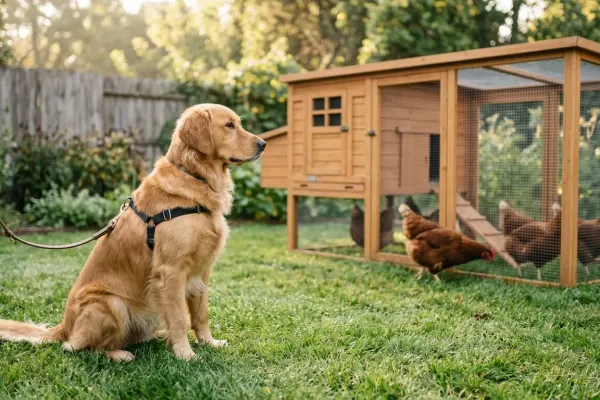
Traditional neck collars exert concentrated mechanical force directly against the thyroid cartilage, larynx, and trachea whenever a dog pulls on the leash. For any Golden Retriever exhibiting respiratory grunts, immediately switch to a wide, padded chest harness (such as a Y-shaped or no-pull harness) that distributes pulling pressure evenly across the sternum and ribcage.
Anti-Aspiration Feeding Adjustments and Weight Control
If your dog suffers from swallowing difficulties, throat weakness, or has undergone tieback surgery, adopting protective feeding strategies is essential for preventing aspiration pneumonia:
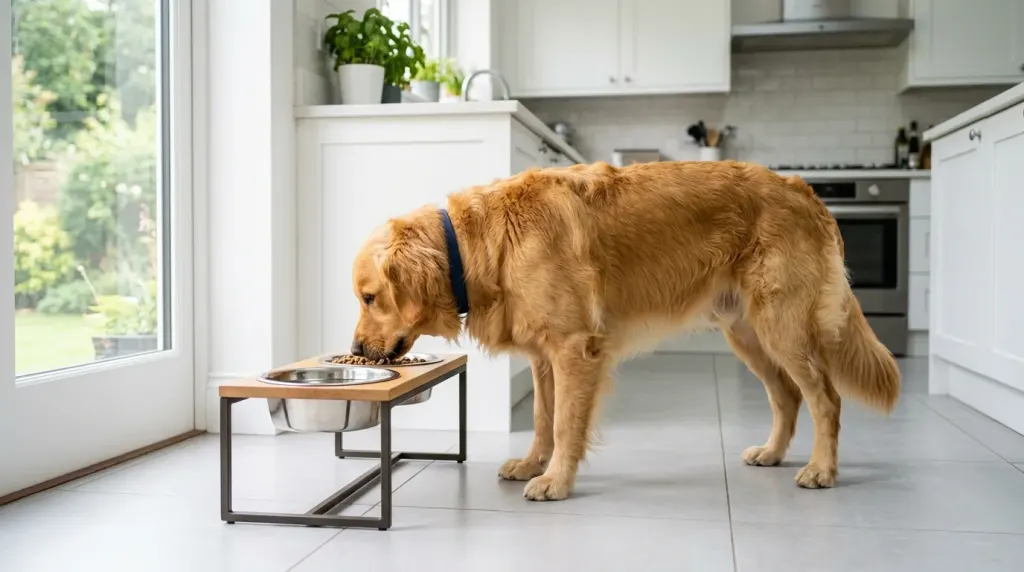
- Elevate food and water bowls: Position feeding dishes 4 to 6 inches off the floor to promote smooth gravitational transit through the pharynx.
- Modify food texture: Form canned food into compact meatballs or soften dry kibble with warm water to prevent dry food particles from scattering into the airway.
- Keep your dog upright after meals: Maintain an elevated or sitting posture for 15 minutes post-feeding.
- Maintain lean body mass: Excess body fat restricts chest expansion and increases joint loads, while secondary aerophagia can cause systemic issues like French Bulldog flatulence from swallowing air. Keeping your Golden at an ideal Body Condition Score of 4 to 5 on a 9-point scale significantly lowers overall physical strain.
When to Seek Immediate Emergency Veterinary Care (Red Flags)
While most grunts reflect benign contentment or manageable chronic conditions, sudden respiratory deterioration requires rapid, decisive action.
Life-Threatening Signs of Acute Respiratory Distress
Transport your Golden Retriever to the nearest veterinary emergency clinic immediately if you observe any of the following clinical signs:
- Cyanotic or pale mucous membranes: Inspect your dog’s gums and tongue. If they appear blue, purple, dark grey, or stark white, the dog is suffering from severe systemic hypoxia.
- Orthopneic posture: The dog stands with its neck rigidly outstretched, head held low, and elbows flared wide away from the chest to maximize airflow.
- Severe abdominal effort: The abdomen heaves forcefully inward with each breath while the ribcage fails to expand smoothly.
- Sudden collapse or weakness: Inability to stand combined with loud, frantic breathing.
- Systemic distress signs: Excessive ocular redness or scleral engorgement, similar to acute red eyes in French Bulldogs under respiratory duress, signaling high vascular pressure and distress.
In cases of severe upper airway obstruction, home remedies and over-the-counter medications are ineffective and waste valuable time. Emergency veterinary teams provide immediate oxygen therapy, sedation to reduce respiratory panic, cooling protocols, and temporary airway stabilization.
Frequently Asked Questions About Golden Retriever Grunting
Why do Golden Retrievers groan when petted?
Golden Retrievers groan when petted as an expression of contentment and relaxation. The tactile stimulation of gentle petting triggers the parasympathetic nervous system, causing muscle tension to drop and producing a soft vocal exhalation analogous to a feline purr.
Why do Goldens groan when they lie down?
A young, active Golden Retriever may groan when lying down as a harmless release of physical fatigue after a busy day. In dogs older than seven years, however, groaning during positional transitions frequently indicates joint inflammation, hip dysplasia, or spinal osteoarthritis.
What causes a reverse sneeze in dogs?
Reverse sneezing is caused by transient spasms of the soft palate and nasopharynx, triggered by dust, pollen, chemical scents, or rapid temperature changes. The dog rapidly pulls air inward through the nose, creating a loud, rhythmic honking or snorting sound that resolves within a minute.
Is grunting a sign of pain?
Grunting can be a subtle sign of pain when accompanied by tense body language, reluctance to move, guarded postures, or rapid, shallow breathing. Unlike relaxed contentment grunts, pain-induced grunting occurs during physical effort or when pressure is applied to tender body regions.
Leave a Reply