

Table of Contents
When do Golden Retrievers lose their baby teeth? Golden Retriever puppies typically begin losing their deciduous baby teeth around week 12 through week 16 of puppyhood (starting around the third or fourth month), beginning with the front incisors, though exact timing varies depending on the individual puppy's development. Most young Golden Retrievers complete the teething process with all 42 permanent adult teeth fully erupted by the eighth month.
- Golden Retriever puppies shed their 28 needle-sharp milk teeth gradually from about the third month through the seventh month.
- The shedding progression starts with front incisors, moves to canines around the fourth or fifth month, and finishes with premolars and molars by the eighth month.
- Teething officially finishes around the seventh or eighth month of life once all 42 permanent adult teeth emerge.
- Puppies frequently swallow their shed baby teeth, which is safe and causes no digestive complications.
- Persistent baby teeth that remain alongside emerging adult teeth require prompt veterinary inspection to avoid bite misalignment.
Bringing home a Golden Retriever puppy brings boundless affection, playful energy, and a phase of intense, relentless chewing. As your puppy explores everything with their mouth, you will quickly notice their razor-sharp baby teeth making contact with toys, clothes, and furniture. Understanding when these temporary teeth fall out helps you manage normal mouthing behaviors, comfort tender gums, and identify dental complications before they cause permanent issues.
When Do Golden Retrievers Lose Their Baby Teeth?
Golden Retriever puppies begin shedding their deciduous teeth (commonly called milk teeth or baby teeth) around week 12 through week 16 of age, though the pace varies according to each puppy’s individual growth rate. Born without teeth, puppies develop their initial set of 28 temporary teeth during their first few weeks of life, typically emerging fully by week 6 while nursing. These baby teeth lack deep roots by design, allowing the developing adult teeth underneath to push them out smoothly as the puppy grows.
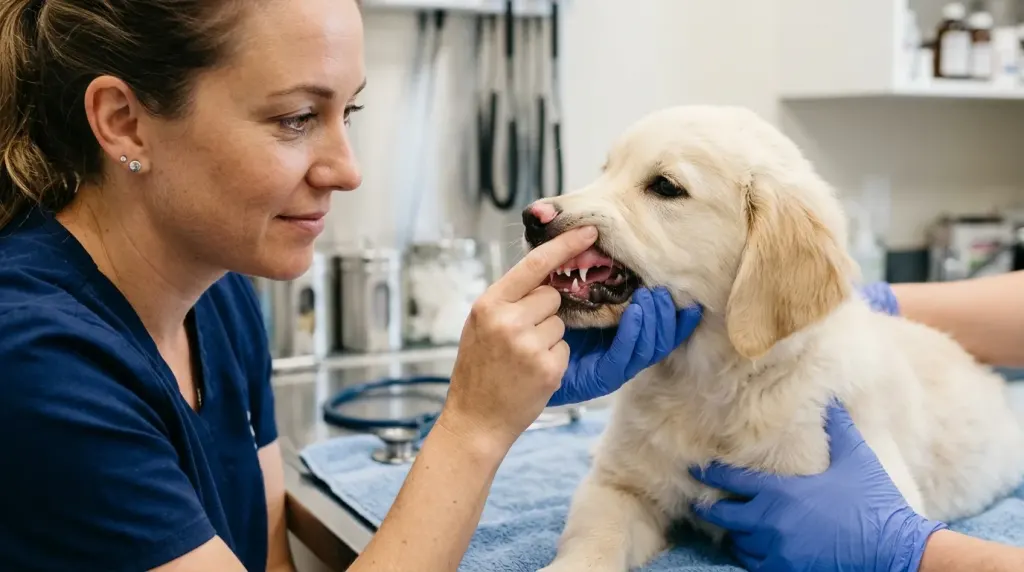
Understanding the broader Golden Retriever breed profile helps explain why this sporting breed exhibits strong oral curiosity. Bred historically to retrieve waterfowl with a gentle grip, young Golden Retrievers naturally use their mouths to interact with their environment. Just as specific physiological milestones occur on a predictable timeline, such as the developmental period when French Bulldog ears stand up during puppyhood, a Golden Retriever’s transition from deciduous teeth to permanent dentition follows a clear chronological pattern across three primary development phases.
12 to 16 Weeks (3 to 4 Months): Incisors Begin to Shed
The earliest baby teeth to fall out are the incisors, the small front teeth located between the canines on both the upper and lower jaws. You may notice tiny gaps in your puppy’s front smile or find miniature rice-grain-sized teeth on the living room rug.
During this stage, your puppy starts experiencing mild itching and pressure in the front of their mouth. They will begin chewing on soft fabrics, rubber toys, and your hands with increased frequency. Gum bleeding at this stage is usually minimal, appearing as faint pink smudges on tug ropes or plush toys.
16 to 20 Weeks (4 to 5 Months): Canine Teeth Transition
Around the fourth and fifth months of age, the sharp, needle-like baby canine teeth (the fangs) loosen and drop out, with timing influenced by the puppy’s jaw development. This stage brings noticeable gum tenderness because the roots of deciduous canines are longer than those of the incisors.
As the large permanent canines begin pushing through the gumline, puppies often experience heightened oral discomfort. You may observe increased drooling, mild gum swelling, and a strong preference for cool surfaces or chilled chews.
20 to 28 Weeks (5 to 7 Months): Premolars, Molars, and Permanent Teeth Eruption
The final shedding stage involves the premolars and the emergence of adult molars in the back of the mouth. Unlike humans, dogs have no deciduous precursor teeth for their molars; permanent molars erupt directly from the jawbone behind the existing premolars.
From week 20 through week 28, the vast majority of baby teeth have fallen out, and the adult premolars and molars lock into their permanent positions as the puppy matures. Jaw growth during this phase accommodates the wider, heavier permanent teeth, completing the physical transition to an adult canine jaw.
When Do Golden Retrievers Stop Teething?
Golden Retrievers officially stop teething around the sixth to eighth month of age, though individual timing varies depending on genetics and skeletal maturity. At this milestone, all 28 deciduous baby teeth have shed, and the full set of 42 permanent adult teeth has completely erupted through the gums.
Every dog matures at an individual pace influenced by genetics, nutrition, and overall skeletal growth. Tracking this milestone alongside the broader Golden Retriever puppy developmental timeline ensures your young dog progresses normally through both skeletal and oral development. Furthermore, dental maturation marks the onset of canine adolescence; just as breeders monitor when French Bulldogs go into heat to assess reproductive maturity, reaching a complete set of permanent teeth indicates your Golden is leaving early puppyhood behind.
Age Milestones for Complete Adult Teeth Set (All 42 Teeth Erupted)
An adult Golden Retriever possesses 42 teeth: 20 on the upper jaw (maxilla) and 22 on the lower jaw (mandible). This adult dental structure consists of:
- 12 Incisors (6 upper, 6 lower) for nibbling and grooming.
- 4 Canines (2 upper, 2 lower) for grasping and holding.
- 16 Premolars (8 upper, 8 lower) for shearing and breaking food.
- 10 Molars (4 upper, 6 lower) for crushing hard kibble and bones.
By the 8-month mark, your veterinarian should confirm during an adolescent wellness check that all 42 adult teeth are present and properly positioned without crowding.
How to Tell When Your Golden Retriever Has Finished Teething
You can confirm your Golden Retriever has completed the teething process by observing physical changes in their mouth and shifts in their daily behavior:
- Visual inspection: The gums appear pale pink, firm, and smooth without redness, swelling, or double rows of teeth.
- Tooth shape: The slender, translucent baby teeth are replaced by thick, opaque, ivory-white adult teeth with rounded tips.
- Chewing intensity drops: While Golden Retrievers remain active chewers throughout adulthood, the frantic, destructive chewing driven by gum irritation noticeably subsides.
- No blood spotting: Saliva returns to a clear consistency with zero pink tint on chew toys.
Golden Retriever Teething Timeline and Development Stages
The following timeline details each milestone of a Golden Retriever puppy’s dental development, behavioral changes, and corresponding owner actions:
| Puppy Age | Teeth Shedding & Erupting | Typical Behavior | Owner Action & Care |
|---|---|---|---|
| 2 to 4 Weeks | 28 baby teeth begin erupting through gums | Nursing, gentle mouthing on mother and littermates | Monitor nursing comfort; no human intervention needed |
| 5 to 8 Weeks | Full set of 28 sharp milk teeth in place | Exploring weaning kibble, playful biting | Introduce soft rubber puppy toys and bite inhibition training |
| 12 to 16 Weeks (3-4 Mos) | Deciduous incisors loosen and fall out; adult incisors emerge | Increased mouthing, chewing on furniture edges, slight drool | Provide chilled rubber toys; redirect biting from hands to toys |
| 16 to 20 Weeks (4-5 Mos) | Deciduous canines shed; permanent canines push through | Intense chewing, red gums, mild blood spots on toys | Offer frozen wet washcloths and ice cubes; check for loose fangs |
| 20 to 28 Weeks (5-7 Mos) | Premolars shed; adult premolars and molars erupt | Strong jaw pressure, chewing harder materials | Transition to durable rubber chews; inspect for retained teeth |
| 28 to 32 Weeks (7-8 Mos) | All 42 permanent adult teeth fully erupted | Calmer chewing habits, stable adult bite alignment | Begin daily enzymatic toothbrushing routine; schedule vet exam |
Tracking tooth loss week by week allows owners to distinguish normal developmental pain from dental abnormalities. A puppy who suddenly refuses hard food at 18 weeks is likely reacting to emerging canines, whereas persistent mouth odor or asymmetric jaw swelling signals an issue requiring medical evaluation.
Growth windows differ substantially across domestic pets. For instance, studying how Maine Coon cats grow shows that large feline breeds require three to five years to reach full skeletal size, whereas a Golden Retriever completes both dentition and rapid skeletal expansion within their first twelve months.
Common Signs and Symptoms of Teething in Golden Retrievers
Recognizing the physical and behavioral indicators of teething ensures you can support your puppy with appropriate soothing methods rather than scolding them for natural instincts.

Teething Symptoms Checklist
- Heavy chewing on wood, baseboards, and shoes
- Pink blood stains on white rope toys or bedding
- Drooling and excessive pawing at the muzzle
- Mild gum inflammation along erupting tooth lines
- Temporary reluctance to crunch dry kibble
- Restlessness or slight whining during chew sessions
Excessive Chewing, Mouthing, and Destructive Behavior
Chewing provides mechanical counter-pressure that relieves the throbbing ache inside swollen gum tissue. Without guidance, puppies will target chair legs, baseboards, leather shoes, and electrical cords.
During intense chewing bouts, young dogs may display high excitability. When overstimulated during play, some puppies exhibit stress responses similar to when Pug dogs pee from excitement or lose focus during basic obedience cues. Calming your puppy and offering an authorized chew toy redirects this nervous energy productively.
Red, Swollen Gums and Mild Blood Spotting on Chew Toys
Inflammation naturally accompanies tooth eruption. As sharp enamel edges pierce the gingival tissue, the gums become bright red and sensitive to touch.
Finding small streaks of blood on a chew toy or in your puppy’s water bowl is completely normal. However, active bleeding that continues for more than a few minutes or pools in the mouth is abnormal and warrants veterinary attention.
Increased Drooling and Temporary Appetite Changes
Sore gums stimulate the salivary glands, leading to noticeable drooling. Puppies may also drop hard kibble from their mouths or eat more slowly than usual.
Observing physical posture and facial cues helps evaluate your dog’s comfort level. Understanding body language, such as what it means when dogs put their ears back during uncomfortable situations, helps owners differentiate general oral soreness from severe distress.
Safe Ways to Soothe a Teething Golden Retriever Puppy
Helping your puppy navigate teething requires a combination of temperature-based soothing, durable chew items, and proactive environmental management.
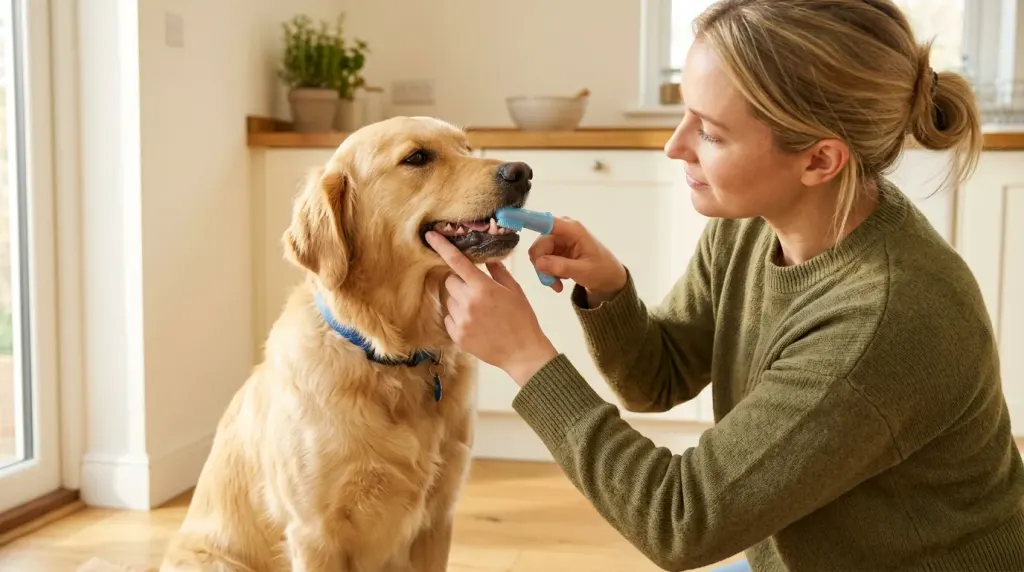
Soothing Strategies for Teething Puppies
- Freeze KONG toys filled with soaked kibble or pureed pumpkin.
- Wet a clean cotton washcloth, twist it, and freeze it solid.
- Offer frozen peeled carrot sticks as low-calorie edible chews.
- Apply pet-safe bitter deterrent spray to baseboards and furniture legs.
- Store shoes, remote controls, and cords inside closed cabinets.
Puppy-Safe Chew Toys and Frozen Rubber Toys (KONG)
Cold temperatures numb painful gum tissue and constrict local blood vessels, offering fast relief. Natural rubber toys like the classic KONG can be filled with wet puppy food, plain canned pumpkin, or unsweetened applesauce and frozen overnight.
Avoid brittle plastic toys, cooked bones, or hard nylon chews during the teething stage. Baby teeth and newly erupted adult teeth have fragile enamel that can fracture under excessive pressure. Establishing safe chewing boundaries early protects oral health for life, preventing the dental fractures commonly treated when Pugs become senior dogs after years of chewing improper materials.
Cold Treats and Edible Dental Chews
Frozen whole carrots serve as an excellent, vitamin-rich teething chew. The cold vegetable numbs sore gums while providing safe fiber. Ice cubes made from low-sodium bone broth also offer an engaging, hydrating treat.
When selecting commercial dental chews, confirm they are certified for puppies over 3 months old. Supervise all chewing sessions to ensure your puppy does not break off and swallow large chunks that could cause choking or intestinal blockage.
How to Puppy-Proof Your Home Against Destructive Chewing
Preventing household destruction requires removing temptation before your puppy finds it:
- Keep shoes, electrical cables, children’s toys, and laundry off the floor.
- Treat wooden baseboards, table legs, and door frames with an alcohol-free bitter apple spray.
- Restrict access to unsupervised rooms using sturdy baby gates or an exercise pen.
- Keep a designated chew toy in every room so you can immediately redirect improper chewing without delay.
Potential Teething Problems and When to See a Vet
While most Golden Retrievers shed their milk teeth without complication, developmental dental problems can occur. Early detection prevents lifelong malocclusions and chronic oral infections.
When to Contact Your Veterinarian
- Baby tooth persists more than 2 weeks after adult tooth emerges
- Asymmetric jaw growth or traumatic bite misalignment
- Persistent foul breath (halitosis) unrelated to diet
- Extreme lethargy, fever, or refusal to eat for over 24 hours
- Fractured baby tooth with exposed pink pulp cavity
Retained Deciduous Teeth (Double Teeth / Shark Teeth)
A retained deciduous tooth occurs when a baby tooth fails to fall out as the permanent tooth pushes through the gumline. This issue most commonly affects the upper canine teeth, creating a “double tooth” or “shark tooth” appearance where two teeth occupy the same socket.
Retained teeth crowd the dental arch, trap food debris, and force the permanent tooth into an abnormal angle. If the baby tooth remains firmly rooted two weeks after the adult tooth emerges, a veterinarian must extract it under general anesthesia. Pet owners frequently schedule this minor extraction alongside routine procedures, such as when to neuter a French Bulldog or other young companion dogs during their standard 6-month surgical window.
Misaligned Bites and Swollen Gum Infections
As permanent teeth erupt, structural changes in the skull and jawbone must align correctly. Bite abnormalities, such as base-narrow canines (where lower fangs poke into the roof of the mouth) or severe overbites, cause chronic soft-tissue trauma. Prompt veterinary assessment allows for interceptive orthodontics or crown reductions if necessary.
Preventing Canine Periodontal Disease and Daily Dental Hygiene
Establishing an oral hygiene routine during puppyhood prevents severe dental disease later in life. According to canine dental disease guidelines from the PDSA, plaque accumulation starts forming on teeth within 24 hours of eating, eventually hardening into tartar and causing painful gingivitis if left untreated.
Note: Never use human toothpaste on dogs. Human dental products contain foaming detergents and artificial sweeteners like xylitol (birch bark extract), which are toxic to dogs. Use only pet-formulated enzymatic toothpaste.
Introduce toothbrushing gradually while your puppy is young:
- Let your puppy lick a pea-sized dab of poultry-flavored enzymatic toothpaste from your fingertip.
- Rub your finger gently along their outer gums and teeth for 15 seconds.
- Introduce a soft-bristled finger brush or dog toothbrush, focusing on the outer surfaces of the upper premolars and canines.
- Reward your puppy with praise and play immediately after each session.
Frequently Asked Questions About Golden Retriever Teething
Do Golden Retrievers swallow their baby teeth?
Yes, Golden Retriever puppies swallow the vast majority of their shed baby teeth. Tooth loss usually happens while chewing kibble or playing with toys, causing the small tooth to slide down the esophagus with food or saliva. Deciduous teeth are tiny, have resorbed roots, and dissolve or pass harmlessly through the gastrointestinal tract without causing internal injury.
Can teething cause a Golden Retriever puppy to lose weight or appetite?
Mild reluctance to eat dry kibble is common when gums are inflamed, but teething should never cause noticeable weight loss, lethargy, or complete refusal of food. If your puppy turns away from hard kibble, soften their meal with warm water or bone broth. If appetite loss persists beyond 24 hours or is accompanied by vomiting or diarrhea, consult your veterinarian immediately.
What should I do if my Golden Retriever’s baby teeth do not fall out?
If an adult tooth has emerged alongside a baby tooth for more than two weeks, schedule a veterinary examination. Retained baby teeth do not fall out on their own once the root calcifies, and they quickly trap bacteria that trigger early periodontal disease. Your veterinarian will safely extract the retained tooth under anesthesia to allow the adult tooth to settle into its proper alignment.
How can I stop my teething Golden Retriever from biting hands and furniture?
Stop puppy biting by consistently redirecting their mouth onto appropriate chew toys. When your puppy mouths your skin or clothing, emit a sharp, high-pitched “ouch,” immediately withdraw your hands for 5 seconds to pause play, and then hand them a textured rubber toy or chilled chew. Pair this redirection with daily physical exercise, mental puzzle games, and crate management when you cannot supervise them.



Leave a Reply