
Table of Contents
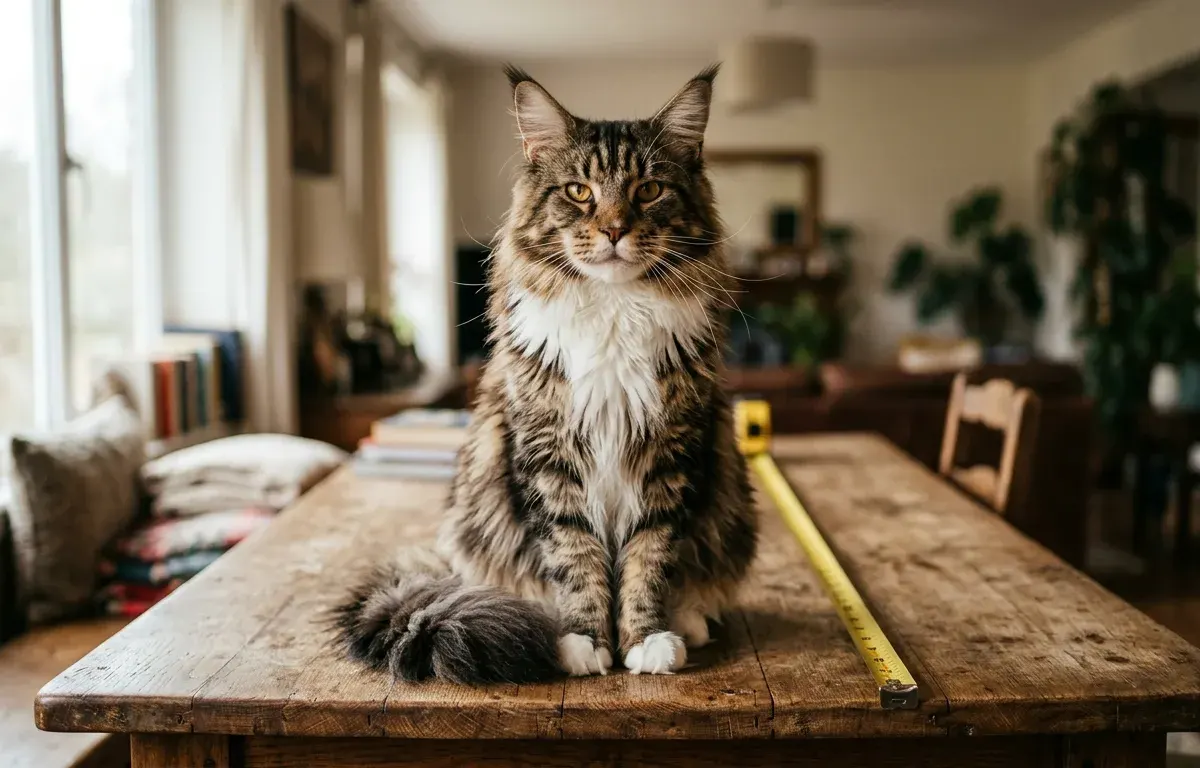
In answering what is the biggest Maine Coon cat on record, official documentation recognizes Stewie (Mymains Stewart Gilligan), who measured 123 cm (48.5 inches) from the tip of his nose to the tip of his tail. Typical healthy adult males measure 38 to 40 inches in total length and weigh 15 to 25 pounds, while slow skeletal maturation extends development up to 5 years.
- Stewie holds the all-time Guinness World Record length for a domestic cat at 48.5 inches (123 cm).
- Barivel holds the record for the longest living domestic cat at 47.2 inches (120 cm).
- Standard adult male Maine Coons weigh 15 to 25 pounds, while females average 10 to 15 pounds.
- Full skeletal and muscular development is uniquely prolonged, often taking up to 5 years rather than concluding in a single year as with typical domestic cats.
What Is the Biggest Maine Coon Cat on Record?
When evaluating what is the biggest maine coon cat in documented history, length serves as the primary scientific standard rather than mass. Domestic felines vary widely in body condition, but skeletal length provides an objective benchmark for extreme size.
The longest domestic cat ever verified by Guinness World Records was a male Maine Coon named Stewie (full pedigree name Mymains Stewart Gilligan). Verified on August 28, 2010, in Reno, Nevada, Stewie measured 123 cm (48.5 inches) from the tip of his nose to the tip of his tail bone. Stewie also held a separate record for the longest tail on a domestic cat at 41.5 cm (16.34 inches). At his peak healthy condition, Stewie weighed approximately 34.6 pounds (15.7 kg), demonstrating the massive bone structure that characterizes record-breaking individuals. A feline of this stature rivals toy canines, creating a substantial visual presence when compared against what a pug dog looks like on the living room floor.
The record for the longest living domestic cat belongs to Barivel, an Italian Maine Coon from Vigevano. Certified on May 22, 2018, Barivel measured 120 cm (47.2 inches) in length. Despite his enormous frame, his owners maintain a strictly balanced diet to protect his joints and spine from unnecessary load.
Earlier record holders include Leo (Verismo Leonetti Reserve Red), who measured 121.9 cm (48 inches) in length in the late 1990s, and Ludo from the United Kingdom, who reached 118.33 cm (46.6 inches) in 2016.
| Cat Name | Record Title | Verified Measurement | Location & Year |
|---|---|---|---|
| Stewie (Mymains Stewart Gilligan) | Longest Cat Ever Recorded | 123 cm (48.5 inches) | Nevada, USA (2010) |
| Barivel | Longest Living Domestic Cat | 120 cm (47.2 inches) | Vigevano, Italy (2018) |
| Leo (Verismo Leonetti Reserve Red) | Former Longest Cat Record Holder | 121.9 cm (48 inches) | Chicago, USA (1997) |
| Ludo | Former Longest Living Cat | 118.33 cm (46.6 inches) | South Yorkshire, UK (2016) |
What Is the Largest Maine Coon Cat in Typical Breed Standards?
While individual record holders reach extraordinary lengths, prospective owners must understand what is the largest maine coon cat under standard breed registries. Breed registries emphasize functional conformation, muscular development, and overall structural proportion over sheer mass.
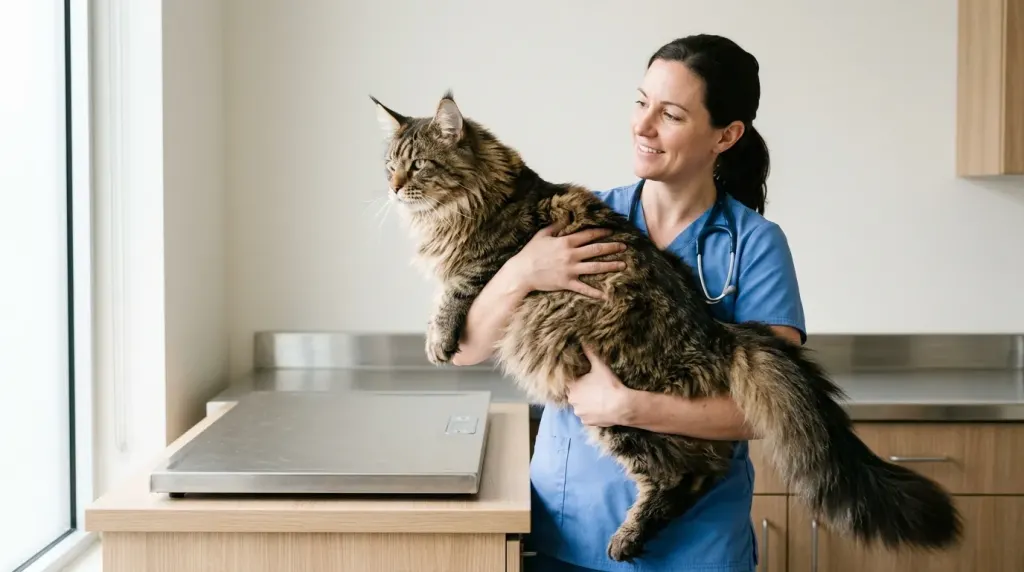
According to the official Cat Fanciers’ Association breed standard, the Maine Coon is a solid, rugged cat with a smooth, shaggy coat, a rectangular body profile, and a broad chest. The standard specifically notes that quality should never be sacrificed for size alone.
Healthy adult male Maine Coons typically weigh between 15 and 25 pounds (6.8 to 11.3 kg) and measure 38 to 40 inches in total length from nose to tail tip. Adult females are moderately smaller, typically weighing between 10 and 15 pounds (4.5 to 6.8 kg) with total lengths spanning 35 to 38 inches. Shoulder height for males ranges from 10 to 16 inches (25 to 40 cm), giving the breed a towering profile on the floor.
Understanding these dimensions helps differentiate natural large-breed feline genetics from other substantial domestic cats, such as Ragdoll cat breed characteristics. Both breeds feature impressive frames, yet Maine Coons carry heavier bone density and longer body proportions. Managing their growth requires precise caloric pacing, similar to managing the dietary needs of large cat breeds like Ragdolls, ensuring rapid weight gain does not outpace skeletal mineralization.
| Measurement Metric | Adult Male Standard | Adult Female Standard |
|---|---|---|
| Healthy Body Weight | 15 to 25 pounds (6.8 to 11.3 kg) | 10 to 15 pounds (4.5 to 6.8 kg) |
| Total Body Length (Nose to Tail) | 38 to 40 inches (96 to 101 cm) | 35 to 38 inches (89 to 96 cm) |
| Shoulder Height | 10 to 16 inches (25 to 40 cm) | 8 to 14 inches (20 to 35 cm) |
| Time to Full Skeletal Maturity | 3 to 5 years | 3 to 4 years |
Biological Factors Behind Maine Coon Cat Size and Growth
The impressive physical dimensions of the Maine Coon stem from centuries of natural selection in the harsh climate of coastal Maine, supplemented by careful selective breeding. Several biological mechanisms explain why this breed outgrows almost every other domestic feline.
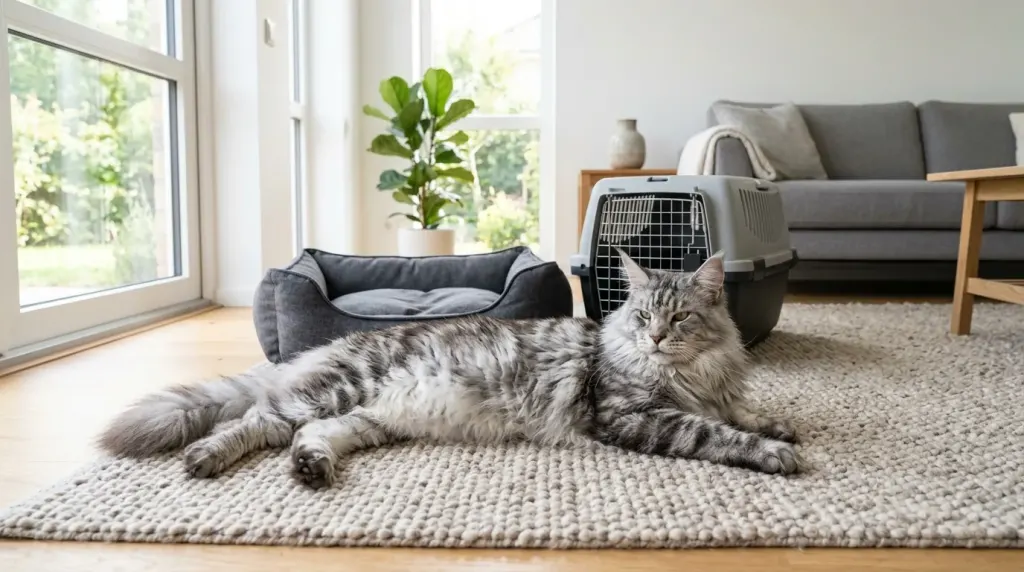
First, Maine Coons exhibit a prolonged growth timeline. Common domestic cats typically complete the majority of their skeletal growth around their first year of age. In contrast, Maine Coons continue to build bone density, broaden their ribcages, and add lean muscle mass through a prolonged maturation phase that often extends up to age 5. During the initial growth period, development concentrates on elongation and limb height, followed by a second phase of chest broadening and muscular maturation.
Second, the breed’s dense, three-layered water-repellent coat adds significant visual volume. The frontal ruff, long guard hairs, and substantial tail tufts create an appearance that looks even larger than the underlying frame, a trait also observed when examining dense coat genetics in mink Ragdoll cats.
In terms of pure physical presence, a 22-pound male Maine Coon frequently matches or exceeds the mass of popular small canines. Families with multi-pet homes often observe that an adult Maine Coon easily outweighs toy breeds like the Pug and approaches the scale of small companion dogs.
Practical Considerations When Living with a Giant Maine Coon
Accommodating a cat that can reach four feet in length requires specific adjustments to household equipment, nutrition, and preventive veterinary care.
Standard commercial cat accessories are rarely designed for a 20-pound feline. Standard litter trays cause confinement stress, prompting owners to use heavy-duty storage totes with custom entrance cutouts. Scratching posts must feature wide, weighted wooden bases and exceed 36 inches in vertical height to permit a full body stretch without tipping.
Transporting a giant Maine Coon also requires careful planning. Standard plastic cat carriers are frequently too cramped for long journeys. Experienced owners often rely on equipment sized according to crate size recommendations for a French Bulldog, providing adequate headroom and turning radius.
Nutrition and body condition require disciplined monitoring. Owners should balance high-protein meals with portion control, avoiding excess caloric intake just as pet parents monitor what French Bulldogs can safely eat to prevent joint strain from excess adipose weight. Weight management is critical in giant breeds. While large frames support substantial mass, excess body fat strains hip joints and cardiac health. A cat weighing 28 pounds is not automatically healthier than a cat weighing 20 pounds if the additional weight consists of adipose tissue.
Note: Routine veterinary screenings for hypertrophic cardiomyopathy (HCM) and hip dysplasia are recommended during annual checkups to support long-term musculoskeletal integrity.
Frequently Asked Questions About Maine Coon Cat Size
How much does the biggest Maine Coon cat weigh?
Verified record holders like Stewie reached approximately 34.6 pounds (15.7 kg) at peak size, but the typical healthy ceiling for pedigree males is 18 to 25 pounds. Unverified claims of 40-pound cats usually reflect either extreme clinical obesity or crossbreeding.
Is a 30-pound Maine Coon cat normal?
No, a 30-pound weight is exceptionally rare and usually unhealthy unless the individual possesses an extraordinary skeletal length exceeding 45 inches. For standard Maine Coons, weights above 25 pounds frequently indicate obesity, which increases the risk of diabetes and joint strain.
At what age do Maine Coons reach full size?
Maine Coons typically reach their primary frame length around their second or third year, while chest width, facial bone structure, and muscular density continue developing until around 5 years of age.
Leave a Reply