
Table of Contents
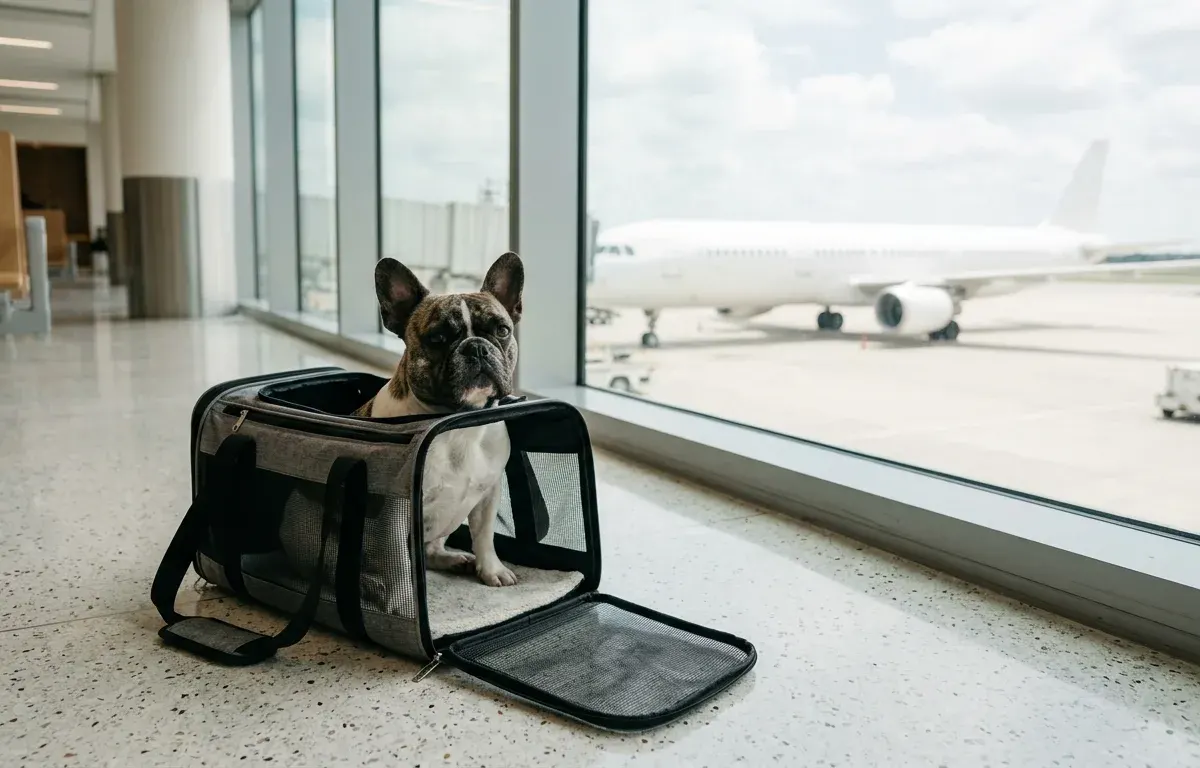
Can French Bulldogs fly on planes? Yes, French Bulldogs can fly on commercial airplanes, but almost exclusively within the passenger cabin. Major airlines prohibit French Bulldogs from traveling in the cargo hold or as checked baggage due to their brachycephalic anatomy, which creates severe risks of respiratory distress, heat stroke, and oxygen deprivation. To fly safely, a French Bulldog must fit comfortably inside an airline-approved, well-ventilated carrier stowed beneath the passenger seat in front of you.
- French Bulldogs are banned from checked cargo by major airlines due to severe brachycephalic respiratory risks.
- In-cabin pet travel requires an approved soft-sided carrier that stows completely under the forward seat.
- Combined weight limits for pet and carrier typically range from 15 to 20 pounds on participating airlines.
- The American Veterinary Medical Association strongly advises against sedating short-nosed dogs for flights.
- Domestic flights generally require veterinary health certificates issued within 10 days of departure.
Airline policy landscape for French bulldogs
Commercial aviation regulations regarding canine passengers depend heavily on breed anatomy, weight, and safety data. For French Bulldogs, airline policies across the globe are shaped primarily by airway physiology. Understanding what French Bulldogs were bred for explains their compact stature and shortened craniofacial structure, traits that give the breed its signature bat ears and flat face but also predispose dogs to Brachycephalic Obstructive Airway Syndrome (BOAS).
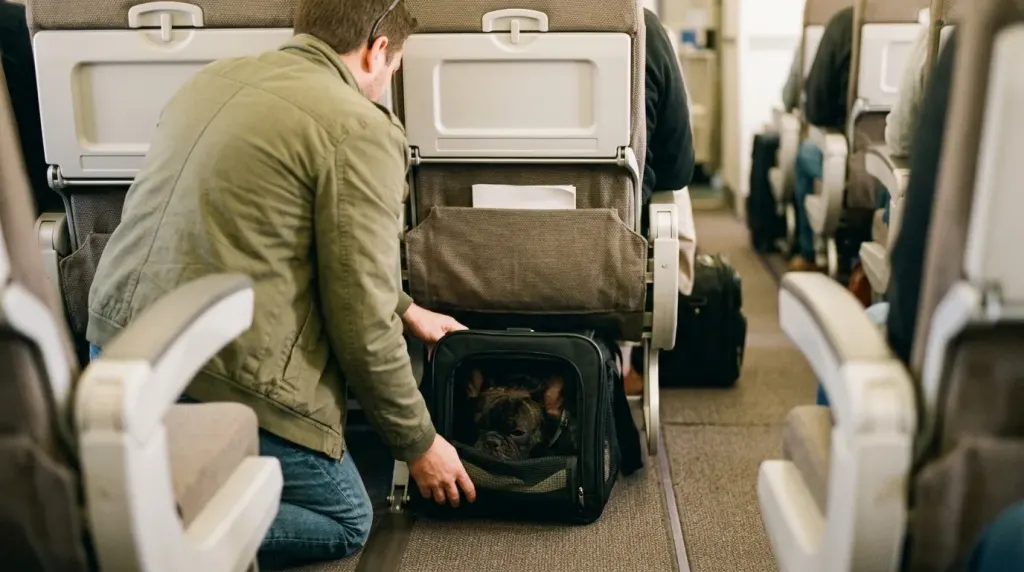
According to American Veterinary Medical Association guidance on short-nosed pets, brachycephalic breeds account for a disproportionate percentage of pet mortalities in airline transit, particularly when transported in non-passenger compartments. As a result, major domestic and international carriers have updated their pet travel rules to separate passenger cabin access from cargo hold transit.
In-cabin travel vs. cargo: risks and suitability
When evaluating whether French Bulldogs can fly safely, the distinction between the passenger cabin and the cargo hold is critical. The aircraft cabin maintains active temperature control, continuous air circulation, and human monitoring. In contrast, the cargo hold presents significant environmental hazards.
Even in pressurized cargo compartments, loading delays on tarmacs can expose animals to extreme heat or freezing drafts. Because French Bulldogs rely on efficient panting to thermoregulate, hot or humid air rapidly overwhelms their restricted upper airways. In the cabin, you can monitor your dog’s breathing rhythm, offer water, and adjust ventilation throughout the journey.
Crate and space requirements
Airlines mandate specific carrier dimensions to guarantee safe stowage during taxi, takeoff, turbulence, and landing.
- Carrier Style: Soft-sided carriers are strongly recommended over rigid plastic crates because their flexible fabric compresses slightly under lower seat frames.
- Standard Dimensions: Most major domestic airlines specify maximum exterior dimensions around 18 inches long, 11 inches wide, and 11 inches high (45 x 28 x 28 cm).
- Interior Space: Your French Bulldog must be able to stand up, turn around, and lie down naturally without touching the top of the carrier.
- Ventilation: The carrier must feature secure, tear-resistant mesh ventilation on at least three sides, though four-sided ventilation is preferable for flat-faced breeds.
- Leakproof Base: The bottom must be waterproof and lined with an absorbent pad to manage unexpected accidents.
Health considerations and documentation
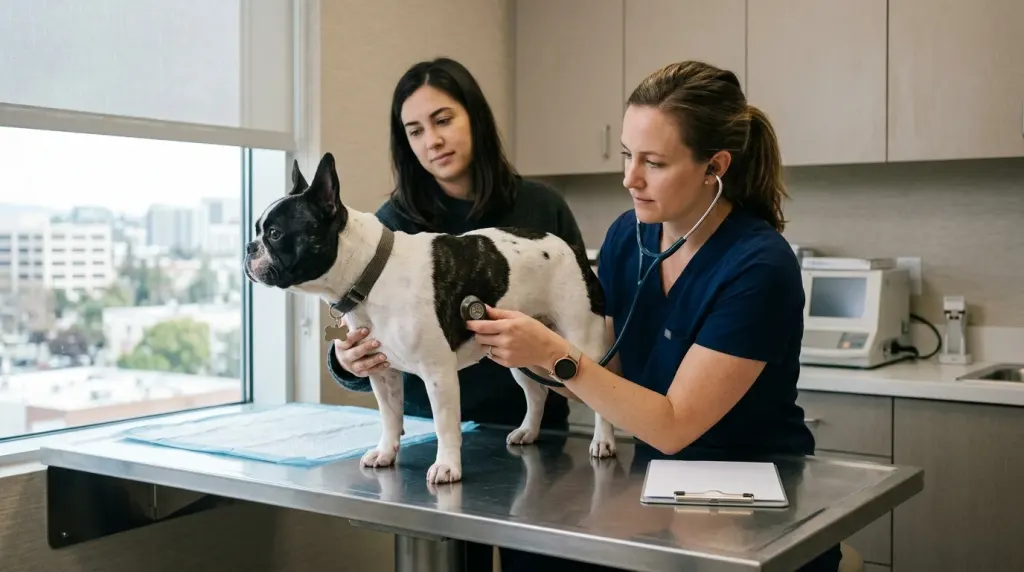
Flying with a French Bulldog requires formal veterinary clearance. Federal and state regulations dictate health verification before domestic or international boarding. According to USDA APHIS pet travel regulations, domestic interstate transit routinely requires a Certificate of Veterinary Inspection (CVI) issued by a USDA-accredited veterinarian within 10 days of travel.
During the pre-flight examination, your veterinarian evaluates airway stability, heart function, and spine health. Extended confinement in a compact carrier can aggravate pre-existing spinal conditions, making proactive care essential for managing French Bulldog IVDD before confirming airline reservations.
Preparation and travel-day checklist
Thorough preparation minimizes anxiety and physical strain on travel day. Conditioning your dog to the travel carrier weeks before departure reduces panic and rapid respiration at the airport. Familiarity with standard breed traits helps owners introduce positive associations through treat placement and short practice sessions inside the carrier.
- Carrier Acclimation: Leave the carrier open in your living room well in advance of travel, pacing training to your dog’s individual comfort level while feeding treats inside so your dog views it as a secure den.
- Pre-Flight Fasting: Feed your dog a light meal 4 to 6 hours before departure to reduce nausea and prevent vomiting caused by motion sickness or altitude shifts.
- Hydration Strategy: Offer small sips of water until boarding, but avoid heavy water intake right before security screening.
- Airport Security Check: At TSA security checkpoints, you will carry your dog in your arms while the empty carrier passes through the X-ray scanner. Keep a secure harness and leash attached.
- Post-Flight Care: Once you reach your destination, inspect your dog for fatigue or dehydration. Clean away accumulated moisture by gently checking your dog’s ears and wiping facial skin folds.
Alternatives and contingency planning
If your French Bulldog exceeds standard in-cabin weight thresholds or suffers from moderate-to-severe airway restriction, commercial air travel is not recommended. Ground transportation remains the safest choice. Climate-controlled pet transport services provide door-to-door relocation with scheduled exercise stops.
Additionally, because flat-faced dogs have reduced stamina and heightened heat sensitivity, a scenic road trip with regular air-conditioned rest breaks allows owners to manage temperature and hydration directly. For urgent long-distance travel, semi-private pet charter airlines permit dogs in open passenger cabins without under-seat crate confinement.
Case studies and evidence from veterinary bodies
Veterinary research consistently highlights the physiological challenges snub-nosed dogs experience during flights. At cruising altitudes, commercial aircraft cabins are pressurized to an equivalent altitude of 6,000 to 8,000 feet. This pressure change causes a 15 to 20 percent drop in partial oxygen pressure, requiring dogs to inhale more deeply.
Dr. Ashley Mitek, a veterinary specialist at the University of Illinois College of Veterinary Medicine, notes that for short-nosed breeds, flying in the passenger cabin is the safest option, provided that appropriate ventilation is maintained throughout the flight. Clinical veterinary data demonstrates that maintaining unrestricted airflow around the carrier’s mesh panels is essential to prevent localized heat buildup.
How to verify and compare airline policies
Airline pet policies vary regarding weight caps, carrier dimensions, and in-cabin fees. Reviewing individual carrier rules before purchasing passenger tickets ensures your dog meets every boarding requirement. Gate agents also monitor temperament at check-in, making an understanding of typical French Bulldog behavior helpful when assessing whether your companion can remain quiet and settled in busy airport terminals.
| Airline | In-Cabin Allowed | Cargo Allowed | Maximum Weight Limit | Carry-On Pet Fee (One-Way) | Key Requirement |
|---|---|---|---|---|---|
| Delta Air Lines | Yes | Banned | No published weight limit (must fit carrier) | $95 (US domestic) | Soft carrier recommended max 18 x 11 x 11 in |
| American Airlines | Yes | Banned | 20 lbs (9 kg) combined dog and carrier | $150 (US domestic) | Carrier replaces personal carry-on item |
| United Airlines | Yes | Banned | No published weight limit (must fit carrier) | $150 (US domestic) | Hard or soft-sided carrier must fit under seat |
| Southwest Airlines | Yes | Banned | Carrier must fit under forward seat | $125 (US domestic) | Six pets permitted per scheduled flight |
| Alaska Airlines | Yes | Banned | 20 lbs (9 kg) combined dog and carrier | $100 (US domestic) | Up to two pets of same breed in one carrier |
When booking an in-cabin pet reservation, always contact the airline by telephone immediately after selecting your ticket. Airlines restrict the total number of pet carriers per cabin, typically allowing only 2 to 6 pets per flight. Securing pet clearance before ticketing prevents last-minute gate denials.
Safety caveats and red flags
Certain health conditions make air travel unsafe for French Bulldogs, even in the passenger cabin. Identifying warning signs helps prevent medical emergencies in transit.
- Severe BOAS Symptoms: Chronic loud snoring, stenotic (pinched) nostrils, or a history of heat exhaustion indicate high risk during altitude pressure drops.
- Ambient Ground Temperature: Cancel or reschedule flights if tarmac or departure temperatures exceed 85 degrees Fahrenheit (29 degrees Celsius).
- Extreme Anxiety: Severe trembling and French Bulldog shaking elevate heart rate and body temperature, causing airway swelling.
- Digestive and Motion Upset: Altitude shifts and flight anxiety frequently cause nausea, where addressing episodes of frequent French Bulldog vomiting prior to travel prevents dehydration during transit.
- Age and Medical Recovery: Puppies under 10 weeks of age, elderly dogs with cardiac murmurs, and dogs recovering from recent surgery should not fly.
Safety Warning: Never administer prescription tranquilizers or over-the-counter sedatives to a French Bulldog before flying unless explicitly directed by your veterinarian for a specific clinical reason. Sedatives suppress the central nervous system, relax upper airway muscles, and impair your dog’s ability to maintain open airflow and body temperature at cabin altitudes.
Legal and ethical considerations
Airlines maintain the legal right to refuse transport at the boarding gate if an animal exhibits respiratory distress, aggressive behavior, or does not fit within its carrier. Attempting to force an overweight or distressed French Bulldog into an undersized bag violates airline carriage contracts and animal welfare standards. Respecting these boundaries aligns with the physical realities of the breed, where acknowledging limited French Bulldog running capacity and heat vulnerability guides owners toward responsible travel choices rather than pushing pets past safe physical limits.
Furthermore, representing a companion French Bulldog as a trained Service Animal to bypass carrier size limits or fees constitutes fraud under federal Department of Transportation (DOT) regulations. Honest compliance protects both your pet’s life and the safety of fellow passengers.
Summary and practical takeaway
French Bulldogs can travel safely by air when owners adhere strictly to in-cabin rules, select direct flights during cool morning or evening hours, and secure veterinary clearance beforehand. After arrival, inspect your companion for moisture buildup in facial folds and follow proper routines for cleaning French Bulldog ears to prevent post-travel infections. If your dog exceeds carrier dimensions or struggles with breathing, choosing climate-controlled ground transport remains the most responsible choice for your companion’s well-being.
Frequently Asked Questions
Can French Bulldogs fly at all?
Yes, French Bulldogs can fly on commercial passenger planes as in-cabin carry-on pets, provided they fit comfortably in an airline-compliant carrier under the forward seat. They are strictly banned from flying in cargo holds by major airlines.
What health documents do airlines require for travel?
Domestic flights in the United States generally require a Certificate of Veterinary Inspection (health certificate) issued by an accredited veterinarian within 10 days of travel, alongside current rabies vaccination records. International flights require destination-specific import permits, ISO microchips, and endorsed health certificates.
How should I acclimate my French bulldog to a travel crate?
Begin carrier acclimation well in advance of your flight date, pacing the training according to your dog’s individual comfort level. Place familiar bedding and high-value treats inside the carrier with the door open, allowing your dog to explore voluntarily. Gradually progress to closing the door for short periods while practicing gentle lifting.
What are the risks of air travel for brachycephalic breeds?
Short-nosed breeds face high risks of respiratory obstruction, hypoxia, and heat stroke due to their compressed upper airways. Cabin pressure changes at cruising altitudes reduce available oxygen, requiring extra respiratory effort that can cause airway inflammation if the dog becomes stressed or overheated.



Leave a Reply