

Table of Contents
If you are asking "can French Bulldogs eat ham", the answer is no; do not make it a regular treat. According to the American Kennel Club (AKC), ham is high in sodium and fat and is not recommended for dogs. While a healthy adult Frenchie can physically eat a tiny accidental piece of plain, fully cooked ham without immediate harm, a large, seasoned, glazed, cured, or bone-in serving presents significant health risks.
- Ham is very high in sodium and fat, offering no nutritional benefit to dogs.
- High-fat foods can trigger pancreatitis in susceptible French Bulldogs.
- Cured, smoked, and deli hams are especially dangerous due to salt and preservatives.
- Cooked ham bones splinter easily and can cause life-threatening internal injuries.
- Call a veterinarian if your dog eats a large amount, a bone, or ham with toxic ingredients like xylitol, onion, or garlic.
Why ham is a poor treat for French Bulldogs
Ham is a poor routine choice because it is usually cured or processed. It delivers far more salt and preservatives (including sodium-based nitrates) than a snack needs, and its high fat content offers no advantage to dogs. A single slice of deli ham can contain hundreds of milligrams of sodium, which quickly exceeds the daily allowance for a small breed like a Frenchie. Dogs need a complete and balanced diet, with treats making up under 10% of their daily calories. Calorie-dense extras undermine dietary balance, and high-fat foods can trigger pancreatitis in susceptible dogs. Furthermore, French Bulldogs are prone to joint issues and breathing difficulties, both of which are severely exacerbated by obesity. Adding fatty human foods like ham regularly contributes to unnecessary weight gain without providing essential vitamins or minerals that are not already present in their regular kibble.
| Ham characteristic | Why it matters |
|---|---|
| High sodium content | Dogs cannot process large amounts of salt; excess sodium can lead to dehydration or salt toxicosis. |
| High fat content | Fatty meals are a primary trigger for pancreatitis and contribute to obesity. |
| Preservatives (nitrates) | Processed meats contain chemical preservatives that are unnecessary and potentially harmful to dogs. |
For a leaner protein comparison, see whether French Bulldogs can eat salmon. Owners comparing simple carbohydrate additions can read Can French Bulldogs Eat Rice? Safety, Benefits, and How Much.
How salt and fat can affect a French Bulldog
A small amount of plain ham may cause no signs, but excess salt can cause vomiting and may progress to excessive thirst, frequent urination, weakness, diarrhea, tremors, and seizures in serious cases. The sudden influx of sodium draws water out of the dog’s cells, leading to severe cellular dehydration that affects brain function. According to the Merck Veterinary Manual, salt toxicosis requires professional treatment, often involving carefully monitored intravenous fluids to slowly restore the electrolyte balance. A fatty meal can also lead to gastrointestinal upset or pancreatitis. Pancreatitis occurs when the pancreas becomes inflamed from processing a sudden high-fat load, causing it to release digestive enzymes prematurely into the abdomen. Common signs include nausea, vomiting, lethargy, a hunched posture indicating severe abdominal pain, diarrhea, and a complete refusal to eat.
Note: Urgency depends on the amount eaten, the dog’s size, concurrent illnesses, and product ingredients. Salt toxicosis and pancreatitis cannot be diagnosed or treated at home. Contact a veterinarian promptly for concerning signs.
| Symptom or situation | Action |
|---|---|
| Tiny piece, no symptoms | Monitor at home and provide fresh water. |
| Mild gastrointestinal upset | Call a vet for same-day advice. |
| Repeated vomiting, tremors, severe pain, seizures | Go to an emergency veterinary clinic immediately. |
If vomiting becomes recurring rather than a one-off food exposure, read Why Does My French Bulldog Keep Throwing Up? Causes & When to Worry. Because tremors are a non-specific sign, Why Is My French Bulldog Shaking? Causes, Emergency Signs & What to Do explains when shaking is urgent.
Ham types and ingredients to avoid
Do not offer deli, cured, smoked, glazed, heavily salted, sauced, or bone-in ham. Cured, smoked, and deli ham are processed with excessive sodium and chemical preservatives meant for human taste, not canine health. Glazed holiday hams often contain brown sugar, maple syrup, cloves, or even xylitol in “sugar-free” versions. Xylitol is an artificial sweetener that causes a massive, rapid insulin release in dogs, leading to severe and potentially fatal hypoglycemia. Always check for onion and garlic in any seasoned meat, as these alliums damage a dog’s red blood cells and cause anemia. Furthermore, cooked ham bones are incredibly dangerous. The cooking process dries out the bone structure, making it brittle. When a dog chews a cooked bone, it splinters into sharp, needle-like shards that can easily pierce the esophagus, stomach lining, or intestines. There is no safe serving size for a cooked bone.
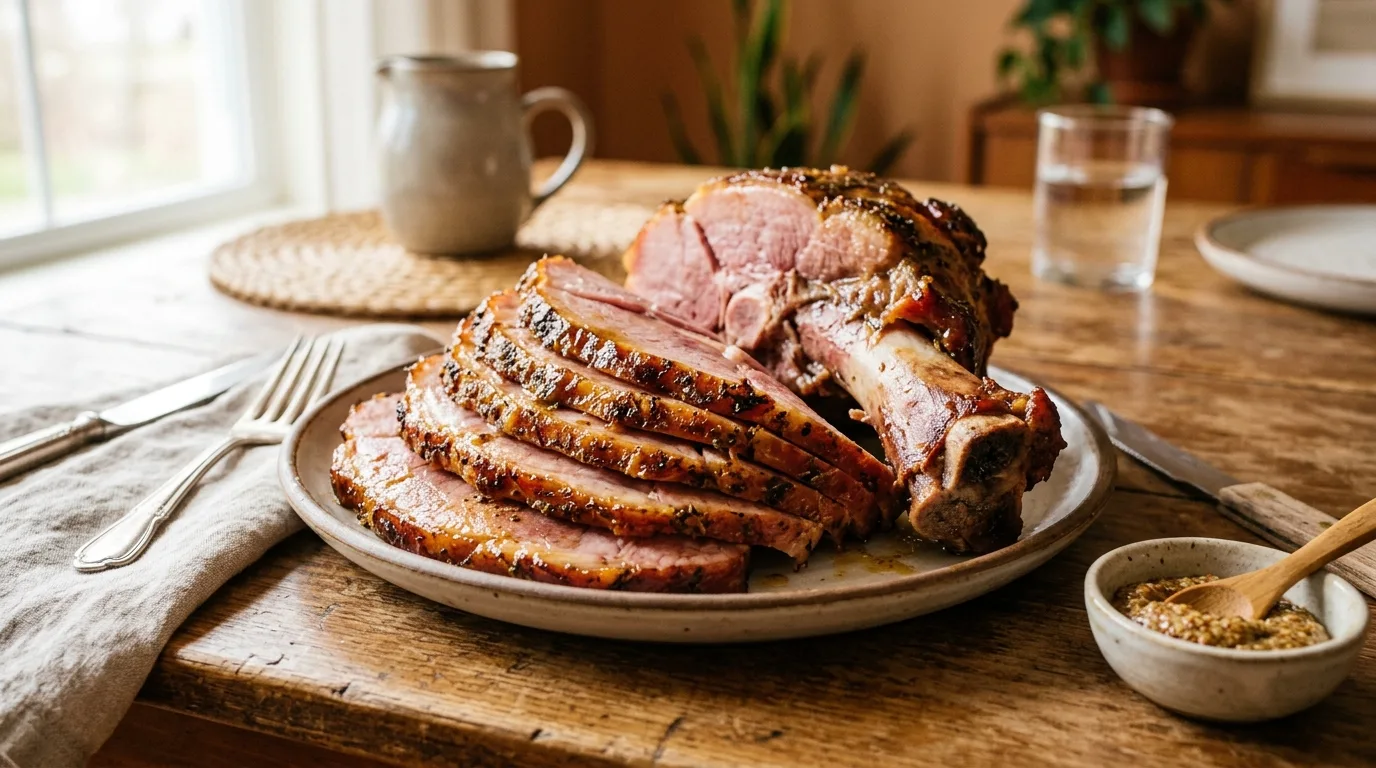
| Ham type or ingredient | Why to avoid it | What to check |
|---|---|---|
| Deli, cured, or smoked ham | Extremely high in sodium and preservatives. | Check the label for salt and nitrate levels. |
| Glazed or sauced ham | Adds unnecessary sugar and uncertain, potentially toxic ingredients. | Watch for onion, garlic, or xylitol (a deadly artificial sweetener). |
| Ham bones | Cooked bones splinter easily, risking choking or intestinal perforation. | Ensure no bones were swallowed; monitor for gagging or pain. |
| Raw ham | Carries a risk of bacterial contamination and parasites. | Do not feed raw pork products. |
For a crunchy snack with different preparation risks, see Can French Bulldogs Eat Popcorn?. For a plain vegetable alternative, see Can French Bulldogs Have Cucumbers? Safety, Benefits & Serving Guide.
What to do if your French Bulldog ate ham
Take away the remaining food, keep the packaging or recipe, identify whether a bone or risky ingredient was involved, provide fresh water, and call a veterinarian or a pet poison center for case-specific advice when the amount exceeds a tiny plain bite or the dog is vulnerable or symptomatic. Do not induce vomiting or attempt salt remedies unless a professional directs you.
- Remove access: Move the dog away from the remaining ham to prevent further ingestion. Check the floor for any dropped pieces or bone shards.
- Gather information: Record the exact product name, full ingredient list, estimated amount eaten, the time of ingestion, your dog’s current weight, and any immediate symptoms. Keep the packaging, especially if a sugar substitute like xylitol or spices like garlic powder might be involved.
- Offer water: Provide normal access to fresh water. A dog that has eaten salty ham will likely be very thirsty. Do not restrict water unless explicitly directed by a vet, as controlled water restriction in salt toxicosis is a strict clinical protocol, not a home instruction.
- Call for help: Contact your primary veterinarian, a local emergency clinic, or the ASPCA Animal Poison Control Center immediately if the dog ate a large amount, swallowed a bone, consumed known toxic ingredients, or shows any signs of distress. Have your gathered information ready when you call so the professionals can accurately triage the situation.
Call urgently now if you see:
- Repeated vomiting or diarrhea
- Severe lethargy or weakness
- Abdominal pain (hunched posture)
- Tremors or seizures
- Gagging, retching, or difficulty breathing (especially if a bone was swallowed)
For persistent gas after dietary indiscretion (which is not an emergency), read Why Do French Bulldogs Fart So Much?.
Better treat choices than ham
Choose a dog treat that fits the dog’s normal feeding plan, or a vet-approved plain food with no added salt, oil, seasoning, sauce, or bones. A tiny piece of plain, boiled chicken breast or turkey white meat offers high-quality protein without the dangerous fat and sodium levels found in processed pork. The World Small Animal Veterinary Association (WSAVA) strictly recommends that all treats should stay under 10% of a dog’s daily calories, with the remaining 90% coming from a complete, nutritionally balanced commercial or vet-formulated diet. Individual calorie needs vary significantly based on the dog’s age, activity level, and metabolism, so it is important to read treat labels carefully and count every extra snack in the daily calorie budget. Get individualized veterinary advice for dogs with ongoing weight issues, food allergies, kidney or heart disease, or any past history of pancreatitis, as these conditions often require strict dietary management.
| Better choice | Preparation guardrail |
|---|---|
| Plain cooked chicken or turkey (white meat) | Must be unseasoned, boneless, and fully cooked. |
| Dog-specific formulated treats | Follow package portion guidelines based on your dog’s weight. |
| Safe vegetables (like carrots or green beans) | Serve plain, chopped into bite-sized pieces to prevent choking. |
Before sharing a spread, check Can French Bulldogs Eat Peanut Butter?, since xylitol screening matters. For another plain cooked vegetable option, see Can French Bulldogs Eat Parsnips? Safety, Benefits & Serving Guide.
Frequently asked questions about can french bulldogs eat ham
Can French Bulldogs eat a small piece of cooked ham?
A tiny accidental piece of plain, fully cooked ham is generally less concerning than a meal-sized serving, deli slices, or glazed leftovers, but do not make it a regular snack because ham is high in salt and fat. Seek veterinary advice if the dog is a puppy, has a health condition, ate more than a small bite, or develops symptoms.
Can French Bulldogs eat ham bones?
No. Do not give a French Bulldog a ham bone, cooked or raw. Cooked bones splinter and can perforate the intestines, and there is no safe serving size. If a bone was swallowed, or the dog is gagging, drooling, retching, in pain, or struggling to breathe, contact a veterinarian urgently rather than inducing vomiting.
Is deli ham worse than plain ham for dogs?
Usually, yes. Deli, cured, and smoked ham are processed and especially high in sodium, and flavorings and preservatives add uncertainty. Plain unseasoned cooked meat differs from deli slices, but ham remains an unnecessary treat. Use the label to spot added salt, glazes, onion, garlic, or sugar-free sweeteners.
When should I call a veterinarian after my Frenchie eats ham?
Call promptly for individualized advice if your Frenchie ate a large amount, a bone, or ham containing onion, garlic, xylitol, or unknown ingredients, or if the dog is very young, medically vulnerable, or symptomatic. Seek emergency care for repeated vomiting, severe lethargy, abdominal pain, weakness, tremors, seizures, collapse, or breathing difficulty.



Leave a Reply