

Table of Contents
Golden Retrievers originated in the Scottish Highlands during the mid-to-late nineteenth century. The breed was developed by Sir Dudley Marjoribanks (Lord Tweedmouth) at his Guisachan estate in Glen Affric, Scotland, starting in 1868 by crossing a yellow retriever with a Tweed Water Spaniel.
- Golden Retrievers trace their geographical roots directly to Guisachan Estate in Inverness-shire, Scotland.
- The breed began in 1868 when Lord Tweedmouth bred a yellow retriever named Nous with a Tweed Water Spaniel named Belle.
- Subsequent selective breeding incorporated Red Setters, Labrador Retrievers, and Bloodhounds for tracking ability.
- The historical rediscovery of Lord Tweedmouth's studbook in 1952 disproved the popular myth of Russian circus ancestry.
- The Kennel Club in Britain recognized the breed in 1913, and the American Kennel Club granted recognition in 1925.
Many dog lovers asking where are golden retrievers from are surprised to discover a meticulously documented history tied to a single Scottish estate. Rather than emerging through ancient lineage or random crossbreeding, the Golden Retriever was intentionally engineered in Scotland to solve a specific sporting challenge of Victorian game shooting.
Origins and Geography: The Scottish Highlands and Guisachan Estate
To answer where do golden retrievers come from, one must look to the rugged terrain of Glen Affric in Inverness-shire, Scotland. In the mid-nineteenth century, wealthy landowner Dudley Coutts Marjoribanks (later elevated to the peerage as the first Lord Tweedmouth) purchased the Guisachan estate. The expansive property featured dense pine forests, fast-flowing rivers, and peaty lochs that demanded an exceptionally hardy, water-capable gundog.
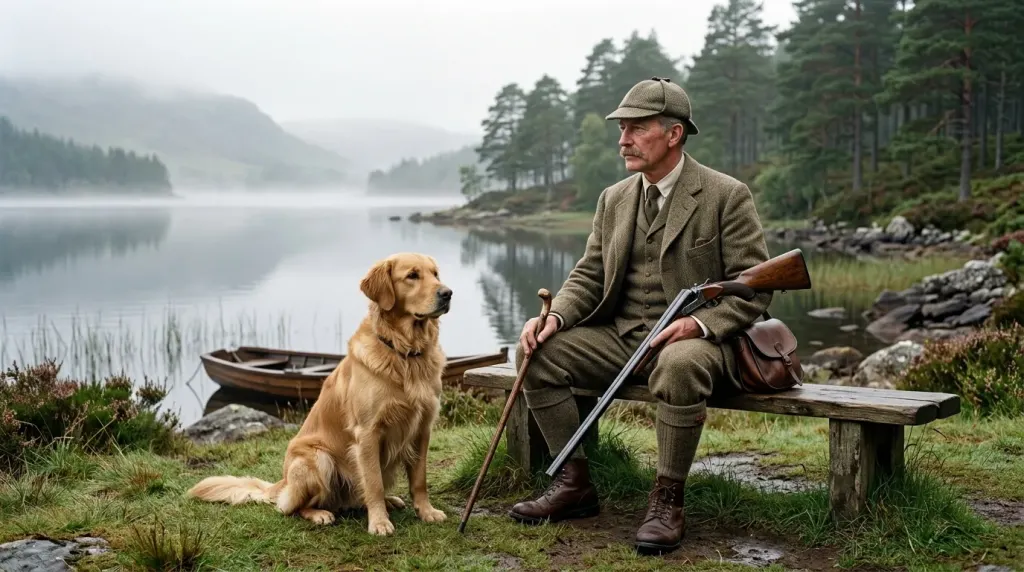
Victorian sportsmen frequently lost downed game birds in thick heather marshlands and deep Scottish lochs. Existing setters and pointers excelled at finding and pointing game on dry moors but lacked the physical build and dense coat required for repeated cold-water retrieves. Between 1868 and 1890, Marjoribanks set out at Guisachan to create a specialized hunting retriever capable of navigating the harsh climate of the Scottish Highlands. Understanding how distinct canine functions arose in specific regions provides similar insight into whether German Shepherds are related to wolves and wild ancestral traits. The geographic conditions of Glen Affric directly shaped the physical traits of the Golden Retriever. The cold waters of Scottish lochs necessitated a dense, water-repellent double coat, while the steep, rocky moors demanded substantial bone density and stamina.
Foundational Bloodlines and Crossbreeding History
The exact genetic foundation of the breed began with a single historic mating in 1868. Marjoribanks acquired an exceptional yellow-colored pup named “Nous” from a cobbler in Brighton. Nous was the only yellow puppy in an otherwise black litter of Wavy-Coated Retrievers. Marjoribanks brought Nous north to Guisachan to serve as his foundation sire.
In 1868, Nous was bred to “Belle”, a Tweed Water Spaniel gifted to Marjoribanks by his relative David Robertson. The Tweed Water Spaniel was a light liver-colored, curly-coated water retriever indigenous to the Scottish border regions along the River Tweed. The historic cross between Nous and Belle produced four yellow female puppies: Ada, Cowslip, Primrose, and Crocus. These four bitches formed the matriarchal bedrock of all modern Golden Retrievers. Lord Tweedmouth prioritized gentleness alongside retrieving drive, establishing the calm household manners seen in how friendly Pug dogs are with families.
Foundational Crossbreeding Timeline (1868-1890)
1868: Nous (Yellow Retriever) x Belle (Tweed Water Spaniel) -> 4 Foundation Females
1870s: Outcrosses to Tweed Water Spaniels and Flat-Coated Retrievers
1880s: Infusion of Red Setter (enhancing upland scenting drive)
1890s: Introduction of sandy-colored Bloodhound (improving trailing endurance)
Crossbreeding Lineage and the Tweed Water Spaniel
To refine scenting prowess, athletic conformation, and biddable temperament, Marjoribanks maintained an organized breeding program for more than two decades. He documented every litter in a leather-bound studbook that survives in The Kennel Club breed history archives.
The program judiciously integrated outcrosses to other working breeds:
- Tweed Water Spaniel: Contributed outstanding water retrieval drive, swimming strength, and calm disposition.
- Red Setter: Infused extra biddability, upland game finding capability, and rich golden pigment.
- Sandy-Colored Bloodhound: Introduced exceptional scenting acuity and tracking stamina.
- Labrador Retriever and Flat-Coated Retriever: Reinforced solid bone structure and soft-mouthed carrying manners.
Note: The Tweed Water Spaniel, an indispensable ancestor of the Golden Retriever, was a beloved Scottish working retriever that became extinct by the end of the nineteenth century.
The Russian Circus Dog Myth vs Historical Studbooks
For the first half of the twentieth century, popular folklore claimed that Golden Retrievers were descended from a troop of Russian tracking dogs purchased from a visiting circus in Brighton by Lord Tweedmouth. This colorful tale suggested that the majestic golden dogs were originally mountain sheepdogs from the Caucasus.
This romantic legend persisted until 1952, when the sixth Earl of Ilchester (Giles Fox-Strangways), a great-nephew of Lord Tweedmouth, discovered Tweedmouth’s original handwritten kennel studbooks dating from 1868 to 1890. Canine historian Elma Stonex evaluated the handwritten records and proved conclusively that the breed was entirely Scottish in development. The studbooks documented every mating, proving that no Russian sheepdogs were ever used in the Guisachan breeding program. The circus legend claimed the dogs served as fierce Caucasian livestock guardians, contrasting with their true gundog heritage and differing from whether Pugs make good guard dogs in domestic settings.
What Were Golden Retrievers Originally Bred For?
The primary motivation behind the development of the Golden Retriever was technological advancement in firearms. During the mid-nineteenth century, breech-loading shotguns using percussion caps allowed hunters to shoot birds at greater distances and in rapid succession. As shooting bags increased, Scottish hunting parties faced a major problem: dozens of downed grouse, partridge, and wildfowl fell into inaccessible marshland or swift rivers.
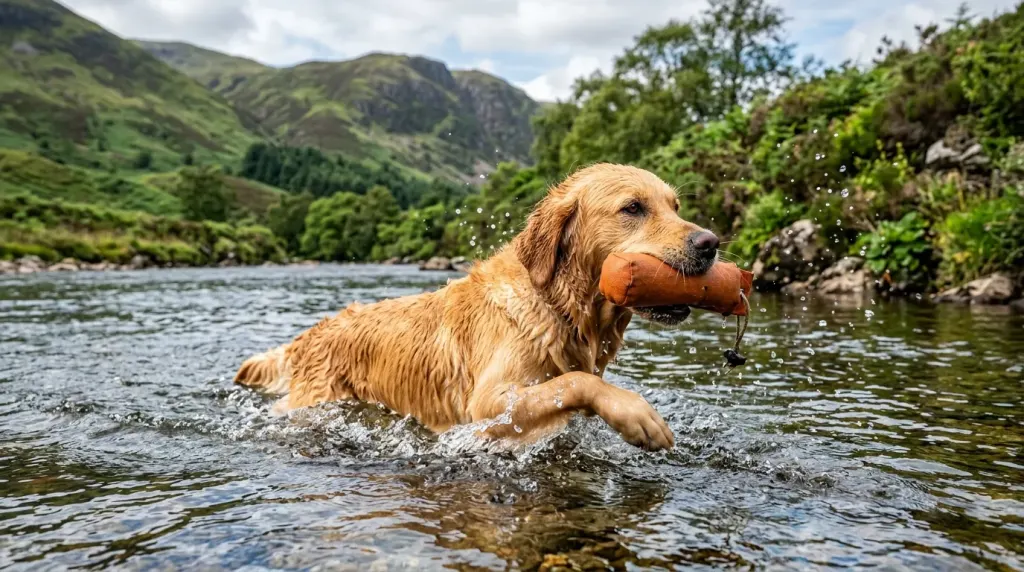
Marjoribanks aimed to produce a dog with:
- A Soft Mouth: The ability to retrieve tender game birds without biting down or puncturing the meat.
- Water-Repellent Double Coat: An oily, dense undercoat that insulated the dog against freezing Scottish burns and lochs.
- High Trainability and Focus: An innate desire to work closely with human handlers without becoming distracted by gunfire.
| Breed Requirement | Historical Victorian Purpose | Modern Expression |
|---|---|---|
| Soft-Mouth Grip | Bringing undamaged game birds to the huntsman | Gentle toy handling and safe household manners |
| Dense Double Coat | Protection against freezing Scottish rivers and briars | Weather resistance during outdoor activities |
| High Working Drive | Continuous retrieves across full-day estate shoots | High energy levels, contrasting with how active Pug dogs are |
| Biddable Temperament | Immediate compliance with whistle and voice commands | Success in obedience and service dog tasks |
Today, these same physical and mental attributes make the breed an exceptional companion. While canine problem-solving varies across breeds, as seen when assessing whether French Bulldogs are smart, Golden Retrievers consistently rank near the top of working canine intelligence rankings.
Modern Distribution and Global Spread
Following the death of Lord Tweedmouth in 1894, other British breeders continued cultivating the golden lines. In 1908, Lord Harcourt exhibited the dogs at the Crystal Palace under the class name “Retrievers (Golden or Yellow)”. In 1911, enthusiast Winifred Charlesworth helped establish the Golden Retriever Club in England, leading to official recognition by The Kennel Club in 1913 as a distinct breed.
Golden Retrievers arrived in North America in the 1920s and received official recognition from the American Kennel Club (AKC) in 1925. Their outstanding scenting ability and gentle nature helped them expand beyond traditional hunting estates into guide dog work, search and rescue, and search detection roles.
Global Golden Retriever Adaptation
- Working Roles: Guide dogs, diabetic alert dogs, search-and-rescue, agility competitors
- Domestic Environments: Thrives in suburban homes, active rural properties, and family households
- Companion Alignment: Excellent with children, sharing family appeal with whether Pugs are good family dogs
Today, when answering where do golden retrievers live, the breed thrives across the globe, ranking among the top three registered family companions in North America, Europe, Australia, and Asia. As companion preferences evolve and pet owners evaluate whether French Bulldogs make good pets, the Golden Retriever maintains an enduring status as a versatile, medium-to-large sporting dog for active households.
Frequently Asked Questions About Golden Retriever Origins
Where did golden retrievers originate?
Golden Retrievers originated in the Scottish Highlands at Guisachan Estate in Glen Affric, Inverness-shire, Scotland. The breed was established in 1868 by Sir Dudley Marjoribanks (Lord Tweedmouth).
What breeds were used to create the golden retriever?
The foundation cross was between a yellow Wavy-Coated Retriever named Nous and a Tweed Water Spaniel named Belle. Later infusions included the Red Setter, Labrador Retriever, and sandy-colored Bloodhound.
Where do golden retrievers live today?
Golden Retrievers live worldwide as one of the most popular dog breeds. They thrive in single-family homes, active rural environments, and working roles across North America, the United Kingdom, Europe, and Australasia.
When did kennel clubs officially recognize the breed?
The Kennel Club in the United Kingdom officially recognized the breed in 1913. The American Kennel Club (AKC) registered its first Golden Retriever in 1925.

Leave a Reply