
Table of Contents
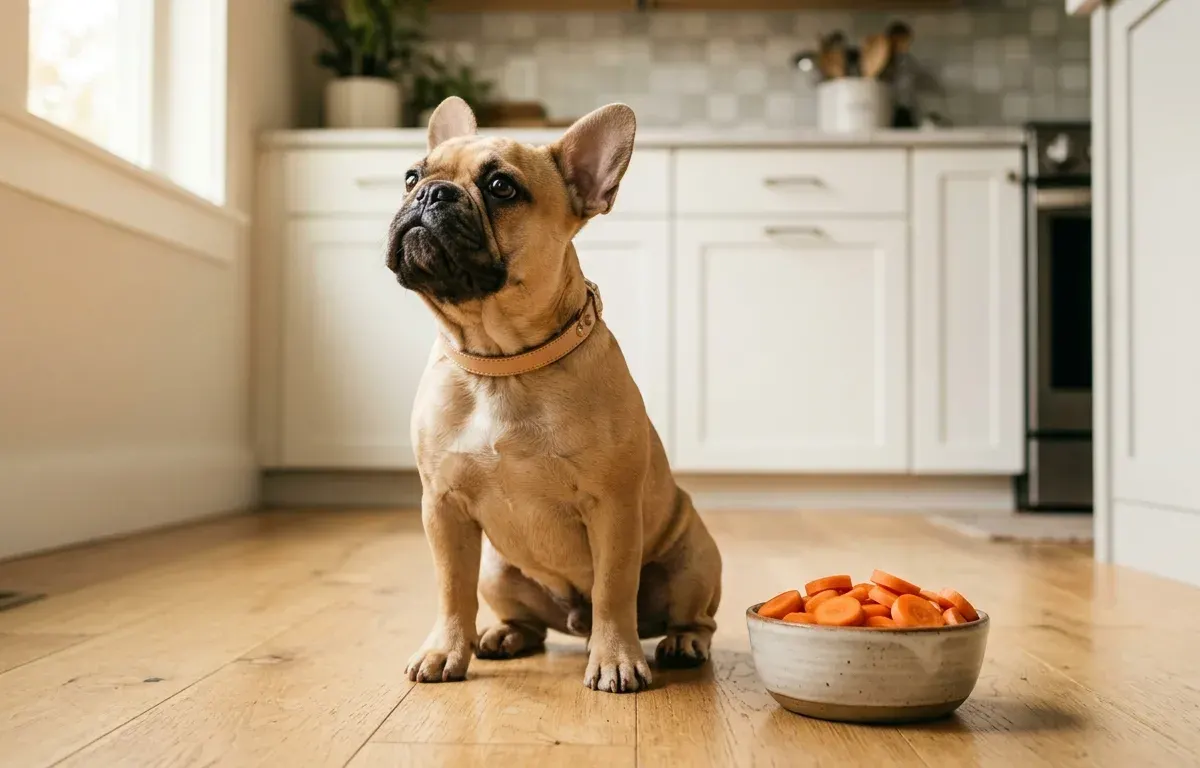
Can French Bulldogs eat carrots? Yes, French Bulldogs can safely have sliced carrots as an occasional, low-calorie snack. The crunchy root vegetable provides beneficial dietary fiber, potassium, and beta-carotene, which converts to vitamin A. However, because French Bulldogs have a shortened brachycephalic airway and an undershot jaw, large raw pieces present a mechanical choking hazard. You must always slice raw pieces into bite-sized discs or steam them until soft before serving, keeping portions under 10% of daily calories.
- The vegetable supplies dietary fiber and beta-carotene with only 41 calories per 100 grams.
- Whole or baby root chunks pose a severe choking hazard due to the breed's narrow trachea.
- Steaming softens tough cellulose walls and improves nutrient absorption without destroying vitamins.
- Safe daily portions range from 15 to 30 grams (1 to 2 baby-sized equivalents), finely sliced.
- Diabetic dogs or Frenchies with active digestive distress require strict veterinary oversight.
Carrot safety basics for French Bulldogs
Feeding fresh vegetables to companion dogs requires understanding both the nutritional value and the physical structure of the breed. French Bulldogs are anatomical brachycephalics. Their compressed facial bones, elongated soft palates, and narrow windpipes change how they eat and chew. Unlike long-snouted breeds that grind fibrous root vegetables with their molars, Frenchies often use an undershot jaw to snap and swallow large chunks whole.
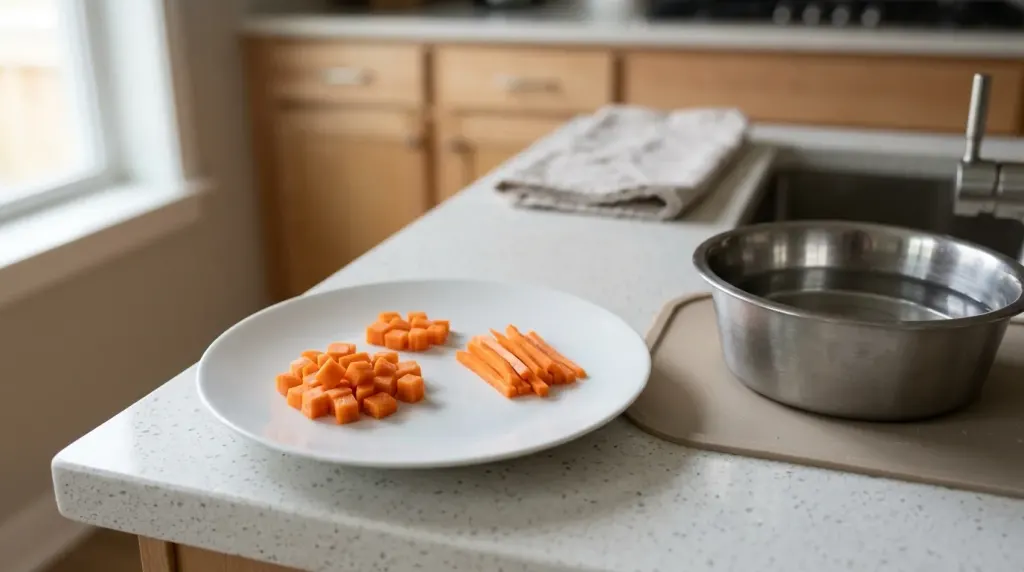
This tendency to gulp makes whole roots and standard baby varieties dangerous. A standard baby carrot matches the diameter of an adult French Bulldog’s trachea almost exactly. When a dog swallows an unyielding raw chunk without chewing, the piece can lodge at the tracheal opening or get stuck in the esophagus.
Beyond choking, rapid changes in fiber intake can disrupt the canine gastrointestinal tract. While moderate fiber promotes firm stools, feeding excessive raw chunks dumps indigestible cellulose into the colon. This sudden shift draws moisture into the bowel, causing osmotic diarrhea or painful flatulence. Owners noticing excessive bloating should evaluate why French Bulldogs produce excessive flatulence to determine whether snacks or swallowed air are responsible. Similarly, if your dog frequently regurgitates unchewed food, review common reasons for post-meal regurgitation or vomiting before introducing new snacks.
Mechanical airway obstruction is the primary risk when feeding hard root vegetables to French Bulldogs, far outweighing any biochemical concern. Cutting the vegetable into coin-thin slices or steaming it soft removes the physical risk entirely.
Are carrots nutritious for dogs?
When prepared and portioned properly, fresh carrots are good for French Bulldogs because they supply essential micronutrients and hydration without excess fat. According to nutritional data from the NutritionValue Food Database (sourcing USDA FoodData Central records), 100 grams of raw root contains:
-
41 calories
-
88% water
-
0.93 grams of protein
-
0.24 grams of total fat
-
9.58 grams of carbohydrates
-
4.74 grams of natural sugars
-
2.8 grams of dietary fiber
-
8,285 micrograms of beta-carotene
-
320 milligrams of potassium
The high beta-carotene concentration is especially valuable. Canines convert beta-carotene into active vitamin A in the intestinal wall and liver. Vitamin A supports retinal health, cell differentiation, and immune response. Unlike synthetic preformed vitamin A supplements that can accumulate to toxic levels, natural beta-carotene conversion slows when the dog’s body reaches optimal levels.
The mix of soluble and insoluble fiber supports colon health. Insoluble fiber creates firm, bulky stools that exert natural pressure on the anal sacs during defecation. This mechanical action aids owners managing Frenchies prone to impaction, complementing routines for expressing swollen anal glands. Meanwhile, the soluble fiber ferments into short-chain fatty acids that nourish colon cells. For a balanced diet, pair fibrous vegetables with whole-food protein sources like salmon.
Practical serving guidelines
Treats must remain a supplementary component of a complete commercial diet. According to Dr. Jerry Klein, DVM, Chief Veterinary Officer at the American Kennel Club (AKC), all supplemental treats combined should make up less than 10 percent of a dog’s total daily caloric intake.
To calculate safe portion sizes for a typical French Bulldog:
-
A moderately active 20-pound adult French Bulldog needs roughly 550 calories per day.
-
The 10% treat allowance equals a maximum of 55 calories daily.
-
100 grams of the raw root supplies 41 calories.
-
A safe daily serving of 15 to 30 grams supplies approximately 6 to 12 calories and 0.4 to 0.8 grams of fiber, staying comfortably within the treat budget.
| French Bulldog Weight | Recommended Daily Serving | Calorie Contribution | Preparation Format |
|---|---|---|---|
| 16 to 20 lbs | 15 grams (approx. 1 baby-sized piece) | ~6 kcal | Thin coins (<0.25 inch) or steamed mash |
| 21 to 25 lbs | 20 to 25 grams (1 to 1.5 baby-sized pieces) | ~8 to 10 kcal | Diced small cubes or steamed slices |
| 26 to 28 lbs | 30 grams (approx. 2 baby-sized pieces) | ~12 kcal | Steamed soft chunks or grated shavings |
Raw vs cooked carrots for French Bulldogs
Both raw and cooked preparations have a place in a canine diet, but their functional benefits differ significantly.
Raw slices provide a crisp, resistant texture that dogs enjoy chewing. The mechanical action of crunching firm pieces helps scrape soft plaque from tooth surfaces. However, dogs lack the salivary enzymes needed to break down raw plant cell walls. As a result, much of the raw vegetable passes through the digestive tract undigested, yielding lower vitamin absorption.
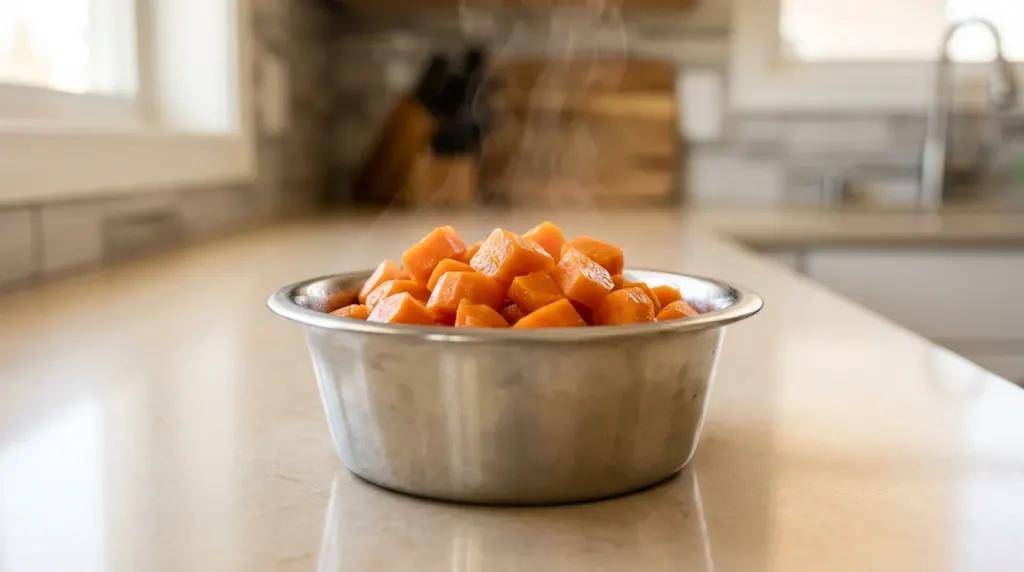
Steamed or boiled preparations break down tough cellulose fibers. Cooking makes the internal beta-carotene, potassium, and antioxidants readily available for absorption in the small intestine. Softened rounds also eliminate the mechanical choking hazard for fast eaters. For dogs requiring higher hydration during warm weather, you can rotate steamed root slices with hydrating cucumber slices. If your dog experiences mild gastrointestinal recovery, veterinarians often recommend combining pureed orange root with bland plain white rice.
Prep tips and serving formats
-
Wash and scrub: Rinse under cold running water to remove surface soil, bacteria, and pesticide residues.
-
Peeling: Peeling is optional, but peeling older, thicker roots removes bitter compounds and surface dirt.
-
Slice into thin discs: Never feed whole roots or thick chunks. Slice raw pieces into thin discs less than one-quarter inch thick.
-
Steam gently: Steam slices for 6 to 8 minutes until easily pierced with a fork. Steaming preserves more water-soluble vitamins than prolonged boiling.
-
Avoid all seasonings: Never prepare snacks with butter, oil, salt, garlic, onions, or human culinary spices. Garlic and onions contain disulfides that cause hemolytic anemia in canines.
Potential risks and when to avoid
Emergency note:
Contact your veterinarian, an emergency veterinary hospital, or a pet poison control helpline immediately if your French Bulldog shows any signs of airway distress (choking, gasping, pawing at the mouth, pale gums) or has ingested food prepared with toxic seasonings like garlic or onions. Never attempt to induce vomiting at home unless explicitly instructed by a veterinarian, and never wait for symptoms to worsen before seeking emergency care.
While plain root vegetables are non-toxic, certain clinical situations warrant withholding them:
-
Diabetes mellitus: The vegetable contains approximately 4.7 grams of natural sugars per 100 grams. In diabetic canines, unmetered sweet snacks can trigger glycemic spikes.
-
Acute gastrointestinal inflammation: Canines experiencing active diarrhea, colitis, or vomiting should not receive high-fiber produce, which can irritate an inflamed intestinal lining. Discontinue extra treats and consult your clinic if loose stools persist beyond 24 hours.
-
Kidney disease or urinary stones: The leafy green tops contain moderate oxalate levels. Dogs prone to calcium oxalate bladder stones should avoid these greens entirely.
-
Food sensitivities: True root allergies are rare in dogs but can manifest as itchy paws, facial rubbing, or watery stools.
When offering produce to dogs with sensitive systems, you can also evaluate steamed parsnip alternatives under veterinary guidance, or monitor caloric density when portioning dense treats like peanut butter.
Subtopics: mixing with meals and frequency
You can incorporate prepared orange root into your French Bulldog’s meal plan in several ways:
-
Kibble topper: Add 1 tablespoon of finely grated or steamed diced pieces on top of morning kibble for extra moisture and flavor.
-
Frozen enrichment: Mix pureed steamed mash with plain water or low-sodium bone broth and freeze the mixture in a silicone feeding mat.
-
Training rewards: Use tiny raw matchsticks (cut to kibble size) as low-calorie rewards during positive reinforcement training sessions.
Limit vegetable feeding to 2 or 3 days per week rather than continuous daily heavy portions to maintain dietary variety.
Frequently asked questions about French Bulldogs and carrots
Can French Bulldogs eat raw carrots?
Yes, French Bulldogs can eat raw carrots, provided the vegetable is washed and sliced into thin, bite-sized coins or matchsticks. Never give a Frenchie a whole raw root, as their narrow windpipe creates a severe choking hazard if they swallow it whole.
How much carrot can a French Bulldog eat daily?
An adult French Bulldog weighing 20 to 25 pounds can safely consume 15 to 25 grams daily, which equals about 1 to 1.5 baby-sized pieces. This portion provides beneficial nutrients while keeping daily calories and fiber within safe thresholds.
Are baby carrots safe for French Bulldogs?
Whole baby carrots are not safe to feed straight from the bag because their cylindrical shape matches the diameter of a Frenchie’s airway. Always cut baby-sized roots lengthwise and crosswise into small quarters before serving.
Can carrots give French Bulldogs diarrhea?
Yes, feeding too many crunchy vegetables or introducing them too quickly can cause diarrhea or gas. The high fiber content draws extra water into the lower bowel, which can lead to loose stools in sensitive stomachs.
Can French Bulldog puppies eat carrots for teething?
Teething French Bulldog puppies can enjoy the cooling relief of chilled produce, but whole frozen chunks pose a fracturing and choking risk for brachycephalic pups. For teething puppies, steam the root soft, mash it into a puree, and freeze it on a lick mat.


Leave a Reply