

Table of Contents
French Bulldogs can safely eat cheese in strict moderation as an occasional reward. It should never exceed 10% of a dog's daily calorie allowance. Low-fat and low-lactose choices like plain mozzarella or cottage cheese are safest. Because Frenchies are prone to rapid weight gain and acute pancreatitis, high-fat, aged, or seasoned varieties must be avoided.
- This dairy treat is non-toxic to dogs but serves only as an occasional high-value reward.
- Plain low-fat mozzarella, cottage cheese, and Swiss options are the safest choices.
- Blue, brie, cream cheese, and garlic-flavored varieties are dangerous or toxic.
- Excess fat from dairy can trigger painful acute pancreatitis and exacerbate airway distress in brachycephalic dogs.
- Treat portions must be restricted to tiny 1/4-inch cubes based on daily weight limits.
Can French Bulldogs Eat Cheese Safely?
French Bulldogs can consume cheese in small amounts under controlled conditions. It provides dietary protein, calcium, vitamin A, essential fatty acids, and B-complex vitamins, making it a highly enticing training reward. However, this food is not a required component of a balanced canine diet and carries a high caloric density that requires strict portion control.
According to Dr. Jerry Klein, Chief Veterinary Officer at the American Kennel Club (AKC), while dairy treats can be fed to dogs safely, their high fat content means regular overfeeding can lead to rapid weight gain and obesity. For a small breed like the Frenchie, even a tiny extra portion adds significant calories. When planning daily meals, reviewing standard French Bulldog characteristics helps owners tailor dietary rewards to their dog’s compact body frame and lower exercise capacity.
Why Lactose Intolerance Affects French Bulldogs
Lactose intolerance is common among adult dogs, including French Bulldogs. After weaning off mother’s milk, puppies gradually lose the lactase enzyme needed to break down lactose, the sugar found in milk and dairy products. Undigested lactose passes into the lower intestinal tract, fermenting and causing gastrointestinal distress.
The severity of lactose intolerance varies between individual Frenchies:
- Mild sensitivity: Slight gas, softer stool, or minor stomach gurgling after eating rich dairy.
- Severe intolerance: Watery diarrhea, painful abdominal cramping, vomiting, and loss of appetite.
When offering cheese for the first time, give your Frenchie a single piece the size of a fingernail. If any digestive distress occurs, consult your veterinarian promptly before offering any further treats.
Which Types of Cheese Are Safe for French Bulldogs?
Selecting low-fat options minimizes digestive strain. Lower-fat and aged varieties contain reduced lactose levels, making them gentler on a canine stomach than soft, high-fat dairy items.
| Variety | Fat Content | Lactose Level | Safety Status | Feeding Recommendation |
|---|---|---|---|---|
| Plain Mozzarella (Low-Moisture) | Low to Moderate | Very Low | Safe | Best high-value reward; tear into tiny pieces. |
| Cottage Cheese (Plain, Low-Fat) | Low | Low | Safe | Excellent soft option; mix 1 tablespoon with kibble. |
| Swiss Cheese | Moderate | Very Low | Safe | Low lactose makes it gentle on sensitive stomachs. |
| Cheddar (Mild or Aged) | Moderate to High | Very Low | Safe in tiny amounts | Low lactose, but higher fat requires small portions. |
| Blue Cheese (Roquefort, Stilton) | High | Moderate | Dangerous | Toxic risk from Roquefortine C mold compound. |
| Brie & Camembert | Very High | Moderate | Unsafe | High fat triggers severe stomach upset and diarrhea. |
| Cream Cheese | High | Moderate | Unsafe | Greasy texture carries a high pancreatitis risk. |
| Processed Slices | High | High | Unsafe | Packed with sodium, emulsifiers, and preservatives. |
Plain low-fat mozzarella is often recommended because owners can easily shred it into tiny training rewards. Low-fat cottage cheese provides easily digestible protein and calcium with reduced caloric density.
Why is blue cheese dangerous for dogs?
Blue varieties such as Roquefort, Gorgonzola, and Stilton are produced using Penicillium roqueforti mold cultures. This fungus produces a harmful mycotoxin called Roquefortine C, which is toxic to dogs. Ingestion can cause muscle tremors, high fever, vomiting, severe diarrhea, and seizures. If your French Bulldog consumes blue cheese, contact your veterinarian or the ASPCA Animal Poison Control Center immediately.
How Much Cheese Is Safe for a French Bulldog?
According to veterinary nutritionists at PetMD, dog owners should follow the 10% treat rule: extra treats of any kind must not exceed 10% of a pet’s daily calorie budget, leaving 90% for complete, balanced food.
An adult Frenchie typically weighs between 16 and 28 pounds and requires approximately 400 to 750 calories daily depending on age and activity. Checking the average weight of a French Bulldog helps determine your dog’s exact target weight class. A single 1-inch cube of cheddar contains 70 to 80 calories, which represents nearly 15% to 20% of a smaller Frenchie’s daily allowance.
Safe serving guidelines for French Bulldogs:
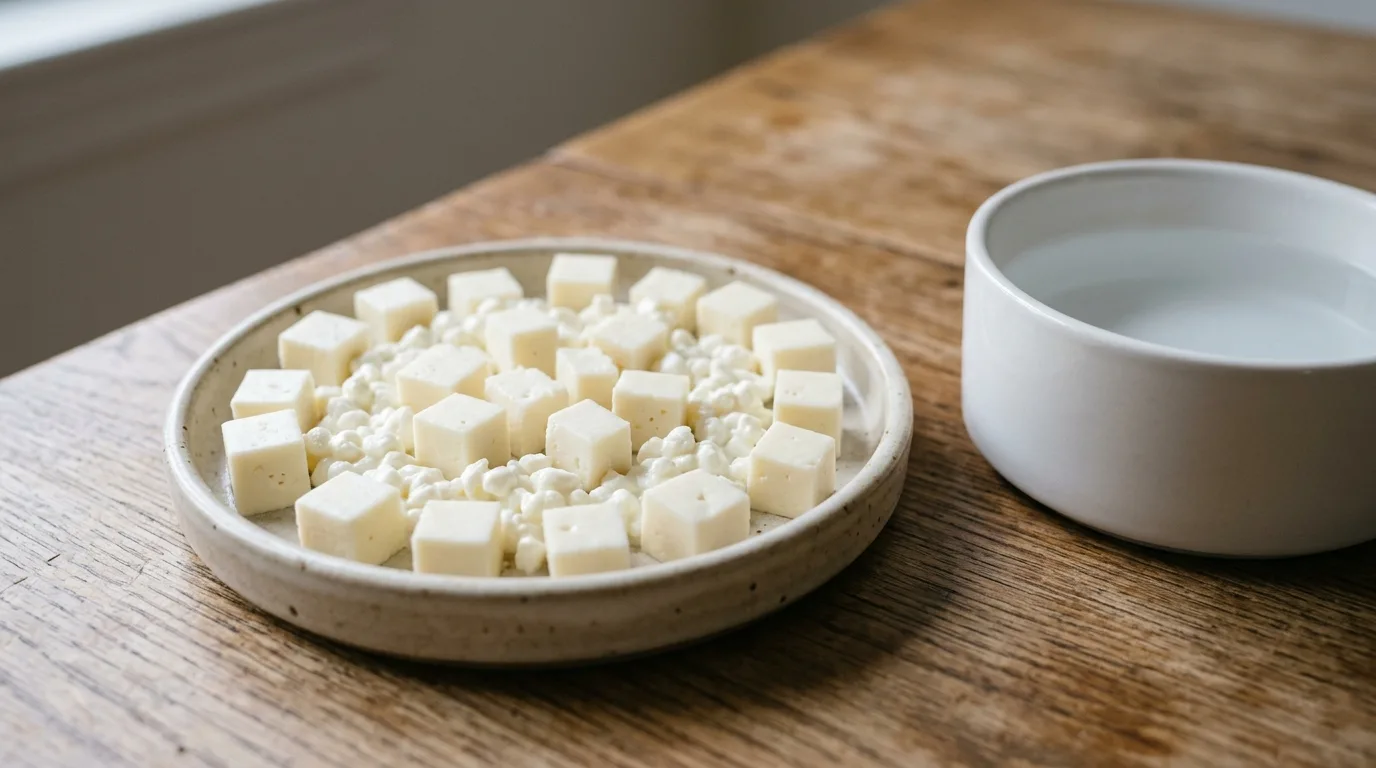
- Training rewards: Cut low-fat mozzarella or Swiss options into 1/4-inch cubes. Limit rewards to 2 or 3 tiny pieces per day.
- Meal topper: Add 1 tablespoon of plain low-fat cottage cheese to regular kibble once or twice a week.
- Pill hiding: Use a tiny speck of soft low-fat dairy just large enough to cover a tablet when administering medication.
Health Risks: Pancreatitis and Weight Gain in Frenchies
French Bulldogs possess unique physiological traits that make high-fat foods riskier for them than for many other breeds. French Bulldogs are particularly sensitive to dietary fats due to their compact build and delicate digestive systems. High-fat treats can rapidly trigger acute inflammation of the pancreas.

Note: Always consult a veterinarian if your French Bulldog displays signs of severe vomiting or abdominal tenderness after consuming dairy.
Acute pancreatitis linked to dietary fat in dairy
Pancreatitis occurs when high dietary fat levels cause digestive enzymes inside the pancreas to activate prematurely, leading to tissue inflammation. Symptoms include severe abdominal pain, back hunching, persistent vomiting, diarrhea, loss of appetite, and extreme lethargy. As documented in dietary studies published by VCA Animal Hospitals, feeding rich or greasy dairy products carries a real risk of triggering acute pancreatitis requiring emergency hospitalization.
Obesity worsening brachycephalic breathing problems
As a brachycephalic breed with flat faces and shortened airways, French Bulldogs face higher respiratory risks. Excess fat around the neck and chest narrows airways further, worsening brachycephalic breathing issues in French Bulldogs. Weight gain increases respiratory effort, reduces heat tolerance, and elevates the risk of exercise intolerance. Strict control over treat calories protects airway function and joint health.
Safe Alternatives to Cheese: Lean Protein
For Frenchies needing strict weight control, lean meat offers a safer reward with higher protein and far less fat than dairy. Plain boiled chicken breast contains no lactose and significantly lower fat per ounce.
Reviewing safe chicken portion sizes for French Bulldogs allows owners to offer satisfying meat rewards without triggering pancreatitis or stomach upset.
Safe Alternatives to Cheese: Fruits and Vegetables
Fresh fruits and vegetables provide crunchy, low-calorie options that satisfy a dog’s desire for treats without adding fat or excessive calories.
Fresh berries and apple slices make ideal low-calorie snacks:
- Check safe blueberry quantities for French Bulldogs for an antioxidant-rich fruit treat.
- Learn how to serve apples safely to French Bulldogs by removing core and seeds to prevent choking.
Can puppies eat cheese?
French Bulldog puppies can technically digest small amounts of dairy, but veterinarians recommend avoiding human treats for young puppies. A puppy’s delicate digestive system can suffer diarrhea or stomach upset from rich human foods. Stick to balanced puppy kibble during early growth.
Is cottage cheese better than regular cheese for dogs?
According to nutritional guidance from Petful, plain low-fat cottage cheese is generally better for dogs than hard or processed varieties. It contains lower fat and sodium levels along with reduced lactose while providing digestible protein and calcium. However, it should still be served in modest amounts to prevent stomach upset.
What should I do if my French Bulldog eats too much cheese?
Contact your veterinarian or emergency pet poison control immediately if your French Bulldog consumes a large amount of cheese or ingests toxic varieties like blue cheese or garlic-flavored products. Do not wait for severe symptoms like vomiting or diarrhea to appear, and never attempt to induce vomiting unless explicitly instructed by a veterinary professional. Provide access to fresh water and seek prompt medical guidance to prevent life-threatening complications.



Leave a Reply